Converting to Catholicism: What the process involves
Converting to Catholicism: What the process involves
Converting to Catholicism is usually a gradual process of faith, learning, prayer, and participation in a local parish.
People come to the Catholic Church for many reasons: a growing belief in Jesus Christ, a desire for the sacraments, admiration for Catholic teaching, marriage to a Catholic, or a long period of prayer and study. Some have never been baptized, while others were baptized in another Christian tradition. The Church does not treat every person’s situation in the same way, so your first step is a conversation with a parish priest or formation director.
You do not need to have every theological question settled before making contact. The early stage is meant for honest questions and discernment, not pressure. A parish should help you understand what the Catholic Church believes, consider whether you are ready to enter it, and identify any personal or sacramental circumstances that need attention.
For the Catholic Church, conversion is more than joining an organization or adopting a set of cultural practices. It means entering into a relationship with Jesus Christ and accepting the Church’s faith, worship, moral teaching, and sacramental life. Catholics understand the Church as a visible community guided by the bishops in communion with the pope and rooted in the apostles.
The ordinary Catholic life centers on the Sunday Eucharist, prayer, Scripture, service, and ongoing conversion. The sacraments are not simply ceremonies that mark membership. Catholics believe they are effective signs through which God gives grace, with the Eucharist holding a central place in the Church’s worship.
Conversion does not require pretending that your previous experiences were worthless. You may bring sincere faith, habits of prayer, biblical knowledge, and a love of Christian service from another tradition. The process asks you to examine those experiences in light of Catholic teaching and to become willing to live within the Church’s community and sacramental practice.
It is also normal to have unresolved questions. You may wonder about the role of Mary and the saints, confession, the pope, Catholic views on sexuality, the relationship between faith and works, or the meaning of the Eucharist. A good parish will make room for careful discussion rather than expecting instant certainty about every issue.
There is no entrance exam. You should be prepared to learn and make a serious decision, but you are not expected to arrive with perfect knowledge or a flawless spiritual life.
How the parish process usually begins
Contact a nearby Catholic parish and ask for a conversation about becoming Catholic. Many parishes have a staff member, deacon, priest, or volunteer who coordinates the process. In the United States, the formal formation process is commonly called the Order of Christian Initiation of Adults, or OCIA. You may still hear the older term RCIA, which stands for Rite of Christian Initiation of Adults.
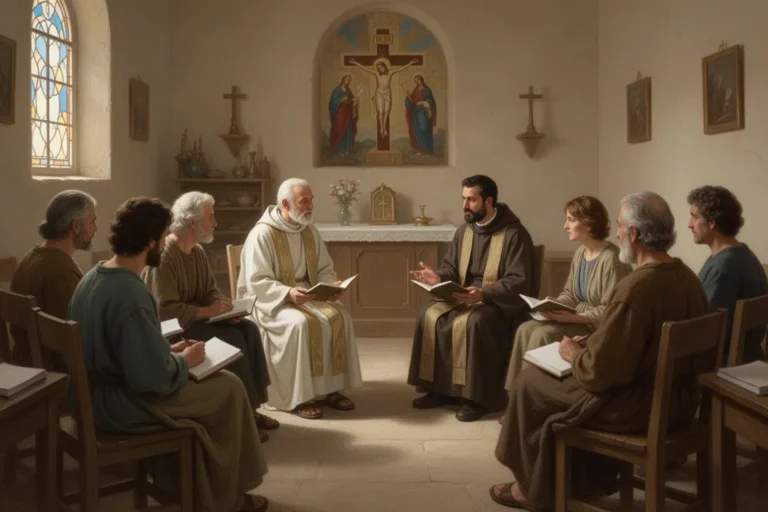
The first meetings are generally an inquiry period. You may attend informal gatherings, ask questions, meet other people exploring Catholicism, and learn the basic shape of the faith. Attendance at these meetings does not commit you to becoming Catholic. You can take time away, continue asking questions, or decide that the Catholic Church is not where you belong.
Parishes organize OCIA differently. Some meet weekly for several months, while others have a year-round process with different points of entry. The schedule may depend on the number of participants, the parish’s resources, the liturgical calendar, and whether you need the sacraments of initiation. Ask how often the group meets, who leads it, what topics are covered, and what the parish expects before the rites are celebrated.
A typical beginning includes several practical steps:
Make contact with a parish office, priest, deacon, or OCIA coordinator.
Explain your background, including any baptism, marriage, or previous religious affiliation.
Attend inquiry sessions and Sunday Mass as an observer or guest.
Ask direct questions about Catholic beliefs, moral teaching, and parish expectations.
Decide with freedom whether to continue into formal formation.
During Mass, you are welcome to participate in the prayers and listen to the readings. If you are not Catholic, or if you are Catholic but not prepared to receive Communion, you should not receive the Eucharist. Local customs differ regarding whether non-Catholics come forward for a blessing, so ask someone at the parish what is customary rather than feeling obligated to approach the altar.
Formation usually covers the Bible, the Creed, the sacraments, prayer, Christian morality, the Church’s history, and the meaning of Catholic worship. It should also address how Catholics interpret Scripture, how tradition functions in the Church, and how Catholic social teaching applies to care for the poor, human dignity, family life, work, peace, and public responsibility.
Which sacraments you receive depends on your baptism
Your baptismal status determines the path you take. The Catholic Church teaches that valid baptism is received only once, so a person who has already been validly baptized is not baptized again. The parish will ask what happened at your baptism and may request a record or other information.
If you have never been baptized
If you have never received baptism, you are generally prepared as a catechumen. You will learn the Catholic faith, participate in the life of the parish, and take part in liturgical rites that mark your progress. In many parishes, unbaptized adults receive Baptism, Confirmation, and the Eucharist during the Easter Vigil, though pastoral circumstances can lead to another time.
Baptism is the sacrament through which a person is incorporated into Christ and the Church, receives forgiveness of sins, and begins Christian sacramental life. The Church normally baptizes with water in the name of the Father, Son, and Holy Spirit. The priest or another authorized minister will discuss the preparation and the selection of a sponsor.
If you were baptized in another Christian church
If your baptism is recognized as valid, you generally become Catholic through a profession of faith, followed by Confirmation and first reception of the Eucharist. You are not treated as someone who is beginning Christianity from the beginning. Your previous baptism remains part of your Christian story.
The Catholic Church examines whether the baptism involved water and the Trinitarian formula, along with the basic intention to perform Christian baptism. A parish may need to contact the church where you were baptized or review its records. If documentation is unavailable, the priest or diocesan office can explain what evidence or testimony may be accepted.
If your baptismal situation is uncertain
Do not try to solve the question by arranging another baptism on your own. Tell the parish everything you know, including the name of the church, approximate date, minister, and words or actions used. The priest may consult the diocese and determine whether the earlier baptism can be recognized or whether conditional baptism is appropriate.
The Church’s concern is not paperwork for its own sake. Baptism has lasting theological and canonical significance, especially because it establishes a person’s Christian identity and cannot ordinarily be repeated. Accurate information helps the parish prepare you for the right sacraments without treating a valid baptism as if it had never happened.
Bring records when you can. A baptism certificate, confirmation record, marriage certificate, or church contact information can prevent delays, but missing documents do not automatically prevent you from beginning the conversation.
What formation and the initiation rites involve
Formal OCIA formation combines instruction with prayer and participation in parish life. The goal is not merely to memorize Catholic vocabulary. You are gradually asked to consider whether you believe what the Church teaches, whether you can live its sacramental and moral life, and whether you are ready to make a public commitment.
The Trinity and Jesus Christ: who God is and what Catholics mean by the Incarnation, death, resurrection, and saving work of Christ.
Scripture and Tradition: how the Bible and apostolic tradition belong together in Catholic teaching.
The Church: its marks, mission, authority, structure, and relationship to other Christians.
The sacraments: how Baptism, Confirmation, Eucharist, Reconciliation, Anointing of the Sick, Matrimony, and Holy Orders function in Catholic life.
Prayer and worship: the Mass, the Liturgy of the Hours, personal prayer, devotion to Mary, and the intercession of the saints.
Moral and social teaching: conscience, virtue, human dignity, family life, justice, mercy, and responsibility for neighbors.
Unbaptized participants may enter the catechumenate after the initial inquiry period. Later, often during Lent, they may participate in the Rite of Election, in which the bishop or a delegate formally recognizes their readiness for the sacraments. Other rites and scrutinies may accompany this period, especially for catechumens preparing for Easter.
Baptized candidates follow a related but distinct path. Because they are already Christian through baptism, they are not ordinarily placed in the exact same status as catechumens. The parish may celebrate a rite welcoming them into full communion or use another approved form, depending on local practice and their circumstances.
The initiation celebration normally includes three sacraments for an unbaptized adult: Baptism, Confirmation, and Eucharist. A baptized Christian normally receives Confirmation and Eucharist after making a profession of faith. The priest, formation team, and diocese determine the details in accordance with Church law and pastoral judgment.
After initiation comes mystagogy, a period of reflection on what you have received. New Catholics continue attending Mass, receiving the Eucharist appropriately, going to confession when needed, joining parish activities, and learning how the faith is lived beyond the formal classes. The end of the ceremony is not the end of formation.
A sponsor may accompany you through the process. This person should be a practicing Catholic in good standing who can answer practical questions, pray for you, attend important rites, and offer support after initiation. A sponsor is not meant to act as a substitute for your own discernment or as an expert who has every answer.
Personal circumstances that may affect your timeline
Some people can move through the process without additional documentation. Others need a private pastoral conversation before they can receive the sacraments. This is especially common when a person has been married, divorced, remarried, or is currently in a marriage that the Catholic Church needs to examine.
Catholic teaching treats marriage as a lifelong covenant. If you have been married before, the parish may need information about each prior marriage, including how and when it ended. This does not mean that you are being rejected. It means the Church must determine whether you are free to marry according to Catholic law or whether a prior bond requires a formal review.
People often use the word annulment for this review. A declaration of nullity is not a Catholic divorce and does not claim that a relationship was meaningless or that children are illegitimate. It is a judgment that, despite the appearance of a marriage, a valid marital bond was not established according to the Church’s understanding. The process belongs to a diocesan tribunal and can take time.
Do not wait until the last class to mention your marital history. Tell the priest or coordinator early, including civil marriages, religious weddings, common-law relationships where applicable, and current living arrangements. Early honesty allows the parish to give accurate guidance instead of creating an avoidable delay near the intended celebration.
Other circumstances may also require individual guidance:
A previous Catholic baptism, confirmation, or marriage that does not appear in parish records.
Participation in another religious community with vows, ordination, or formal membership obligations.
Questions about immigration, family pressure, or safety that make public participation difficult.
A spouse or household member who does not support your decision.
Disabilities, language needs, work schedules, or transportation barriers affecting formation.
The parish should handle personal information respectfully. You can ask who will have access to your records and how the parish protects sensitive details. If you feel pushed to conceal a major circumstance, rushed into a ceremony, or discouraged from asking questions, speak with the pastor or contact the diocesan office.
How to discern your decision and begin parish life
A sincere decision to become Catholic should include both intellectual and spiritual discernment. Read the Gospels, attend Mass regularly, pray honestly, and discuss your questions with Catholics whose lives show patience, charity, and integrity. You are not looking for people who have no weaknesses; you are looking for a community that takes the faith seriously and treats others with dignity.
Prayer can be simple. Ask God for truth, humility, courage, and freedom from fear. You might read one Gospel slowly, keep a list of questions, or spend a few quiet minutes after Mass. Catholic prayer practices such as the Rosary, Eucharistic adoration, and the Liturgy of the Hours may be introduced during formation, but you do not have to master them before starting.
Several habits can make the process more useful:
Write down questions as they arise instead of assuming they are too basic or too controversial.
Compare explanations with the Catechism of the Catholic Church, parish resources, and trustworthy Catholic teachers.
Attend consistently so you can understand the rhythm of worship and build relationships.
Meet privately with a priest when a question involves conscience, marriage, family conflict, or a past religious experience.
Notice the parish culture: how people welcome visitors, serve vulnerable neighbors, handle disagreement, and participate in worship.
Allow adequate time for questions and practical matters rather than choosing a date before you are ready.
At Mass, pay attention to the structure: gathering, readings, homily, prayers, presentation of the gifts, Eucharistic Prayer, Communion, and dismissal. Catholic worship is shaped by the Bible and by the Church’s liturgical tradition. The readings change throughout the liturgical year, while the central pattern of the Mass remains recognizable across Catholic parishes.
After becoming Catholic, begin with ordinary parish life rather than trying to do everything at once. Keep Sunday Mass as your foundation, learn how to receive the Eucharist reverently, make use of the Sacrament of Reconciliation, and find one way to serve. A Bible study, service ministry, small group, or parish class can help you form relationships beyond the OCIA group.
You may continue to experience uncertainty after entering the Church. Questions about doctrine, prayer, personal morality, or relationships do not disappear because you have received the sacraments. Bring them to a trusted priest, spiritual director, or knowledgeable Catholic mentor. Growth in faith usually happens through repeated prayer, worship, study, repentance, and concrete acts of love.
If you are considering converting to Catholicism, the most practical next step is simple: contact a parish and request an inquiry meeting. Share your baptismal and marital history honestly, attend without pressure, and give yourself time to discover whether you can freely embrace the Catholic faith and life.
Frequently asked questions
How long does it take to become Catholic?
There is no single required timeline for every adult. The process may last several months or longer, depending on your baptismal status, education, marital situation, parish schedule, and readiness. Many parishes celebrate initiation at the Easter Vigil, but another date may be appropriate. The goal is thoughtful preparation, not completing a fixed number of classes.
Can I attend Mass before I become Catholic?
Yes. Visitors are welcome to attend Mass, listen to the readings, pray, and observe the liturgy. You should not receive Holy Communion until you have entered full communion with the Catholic Church and are properly prepared. If you are uncertain about local customs, ask the parish about coming forward for a blessing or remaining in your pew.
Do I have to give up my cultural or family traditions?
Becoming Catholic does not require abandoning every cultural practice, family custom, or previous religious experience. The question is whether a practice conflicts with Catholic faith or worship. Your parish can help you distinguish between cultural identity and religious commitments that cannot be maintained together. Conversion may affect some practices, but it need not erase your background.
Can someone become Catholic if a spouse or family member disagrees?
Family disagreement does not automatically prevent conversion, but it can create practical and emotional challenges. Speak privately with a priest or formation coordinator about pressure, household conflict, or safety concerns. The parish may suggest a slower process, confidential support, or ways to participate without escalating conflict. You should not be rushed into a public decision that puts you at risk.

Leave a Reply