Catholic Christianity: beliefs, practices, and daily life
Catholic Christianity: beliefs, practices, and daily life
Catholic Christianity is the Christian faith lived through belief in Jesus Christ, the teachings of the Bible and apostolic tradition, and participation in the Catholic Church. Catholics worship one God in the Trinity, receive grace through the sacraments, and seek holiness through prayer, love of neighbor, moral living, and service.
The Catholic Church is both a community of believers and an organized body led by the pope and the bishops. Its faith is expressed in worship, doctrine, Scripture, prayer, sacred art, ethical teaching, and the daily lives of Catholics around the world.
The word Catholic means “universal.” It points to a faith intended for all peoples and places, not to a religion limited to one nation, language, or culture. Catholic Christianity includes many cultural expressions, but its central beliefs and sacraments are shared by Catholics across the world.
Catholics understand Christianity as the continuation of the community formed by Jesus and his apostles. The Church preserves and teaches the faith through Scripture, Tradition, and the teaching office of the bishops in union with the pope. These sources are not treated as competing authorities; together, they guide Catholic belief and practice.
At the center of Catholic life is the conviction that God became human in Jesus Christ. Jesus’ death and resurrection reveal God’s mercy and make salvation possible. Catholics believe that Christ remains present to the Church, especially through the Eucharist, the proclamation of the Gospel, and the gathered community of believers.
Central idea: Catholic Christianity is not only a list of doctrines. It is a relationship with God through Jesus Christ, lived within a sacramental community and expressed through faith, worship, moral action, and love.
The basic beliefs Catholics profess
Catholic beliefs are summarized in the Nicene Creed, the Apostles’ Creed, and the Church’s official teaching. Catholics believe in one God who is Father, Son, and Holy Spirit; in Jesus Christ as fully divine and fully human; in the Holy Spirit; in the Church; in forgiveness of sins; in resurrection; and in eternal life.
The following points provide a practical outline of Catholic belief:
One God in three persons: The Father, the Son, and the Holy Spirit are one God, sharing one divine nature.
Jesus Christ: Jesus is the Son of God, the Word made flesh, whose life, teaching, death, resurrection, and ascension are the heart of the Gospel.
Human dignity: Every person is created in God’s image and possesses inherent worth, regardless of ability, wealth, nationality, or social status.
Sin and redemption: Human beings are wounded by sin, but God offers forgiveness and reconciliation through Christ.
The Holy Spirit: The Spirit gives life to the Church, guides believers, and strengthens them for Christian witness.
The Church: The Church is the people of God, the body of Christ, and a visible community entrusted with teaching, worship, and service.
The sacraments: Christ works through seven sacramental signs that communicate grace at important moments of Christian life.
Resurrection and eternal life: Catholics believe that death is not the end and that God will bring the dead to resurrection and judgment.
How Scripture, Tradition, and Church teaching work together
The Bible is essential to Catholic Christianity. Catholics read the Old and New Testaments as the inspired word of God and see the entire Bible as pointing toward Christ. Scripture is proclaimed at Mass, studied in homes and parishes, used in prayer, and interpreted in the context of the Church’s faith.
Catholics also rely on Sacred Tradition, meaning the living transmission of the faith received from the apostles. Tradition includes worship, doctrine, moral teaching, and the Church’s way of understanding the Gospel across generations. It does not simply mean customs such as particular foods or devotional habits.
The Church’s Magisterium, or teaching office, is exercised by the pope and the bishops. Its role is to guard and explain the deposit of faith rather than to create a new Gospel. Catholics believe this teaching authority serves the unity and continuity of the Church.
These elements should be understood together. Scripture is not separated from the apostolic community that preserved and proclaimed it, while Tradition is not detached from the biblical Gospel. Church teaching helps Catholics interpret both in a consistent way.
What Catholics believe about the Church
Catholics describe the Church as one, holy, catholic, and apostolic. These four marks summarize how Catholics understand the Church’s identity and mission.
One: The Church is united by one faith, one baptism, one Eucharist, and communion with the successors of the apostles.
Holy: The Church belongs to God and is made holy by Christ, even though its members remain capable of sin and failure.
Catholic: The Church possesses the fullness of Christian faith and is sent to every people and culture.
Apostolic: The Church is founded on the apostles and continues their teaching and ministry through bishops.
This understanding includes a distinction between the Church’s holiness and the conduct of every individual Catholic. The Church teaches that its members must repent and grow, and it has also acknowledged grave failures in its history. Catholic faith does not require pretending that Christians have always acted faithfully.
The Church’s mission is to announce the Gospel, celebrate worship, form disciples, care for the poor, defend human dignity, and work for justice and peace. Parishes, schools, hospitals, charities, monasteries, and missionary communities all express different parts of that mission.
The seven sacraments and what they signify
A sacrament is an effective sign of grace instituted by Christ and entrusted to the Church. Catholics believe that God uses visible signs, spoken words, physical elements, and communal rites to communicate invisible grace. The seven sacraments cover initiation, healing, and service.
Sacraments of Christian initiation
Baptism: Baptism begins Christian life, brings a person into the Church, and signifies new life in Christ. Catholic parishes baptize infants as well as children and adults who freely seek the faith.
Confirmation: Confirmation strengthens baptismal grace and deepens a person’s bond with the Holy Spirit and the Church. It calls the baptized to mature faith and public witness.
Eucharist: The Eucharist is the sacramental celebration of Christ’s presence and the central act of Catholic worship. Catholics receive the Body and Blood of Christ under the appearances of bread and wine.
Sacraments of healing
Reconciliation: Also called confession or penance, this sacrament offers forgiveness for sins through repentance and absolution. It restores communion with God and the Church.
Anointing of the Sick: This sacrament brings prayer, comfort, and spiritual strength to people facing serious illness, frailty, or significant medical treatment. It is not reserved only for someone who is dying.
Sacraments of service and vocation
Matrimony: Matrimony is the covenant by which a baptized man and woman establish a lifelong partnership ordered toward the good of the spouses and the raising of children.
Holy Orders: Holy Orders sets apart bishops, priests, and deacons for service in the Church. Their responsibilities differ, but each form of ordained ministry is directed toward worship, teaching, and pastoral care.
Among these sacraments, the Eucharist holds a distinctive place because Catholics call it the “source and summit” of Christian life. At Mass, the community hears Scripture, offers prayer, gives thanks, and receives Christ in Holy Communion. Catholics who are not prepared to receive Communion may still attend Mass and pray with the congregation.
Why the Mass is central to Catholic life
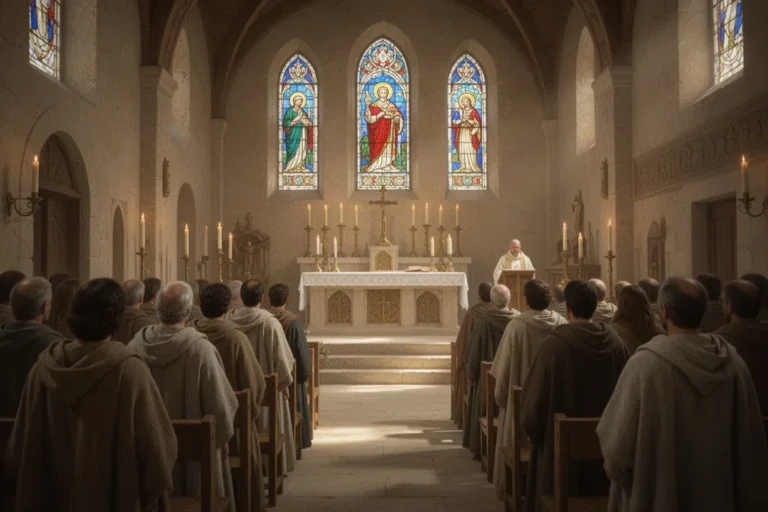
The Mass is the principal form of Catholic worship. It has two closely connected parts: the Liturgy of the Word and the Liturgy of the Eucharist. Scripture is proclaimed and explained, followed by the presentation of the gifts, the Eucharistic Prayer, and Holy Communion.
At Mass, Catholics do not view worship as a private performance or merely a teaching session. They gather as the Body of Christ to praise God, hear the Gospel, offer themselves with Christ, and receive spiritual nourishment. The congregation participates through responses, singing, silence, posture, prayer, and attentive listening.
Most Catholics attend Mass on Sundays because Sunday celebrates Jesus’ resurrection. The Church also identifies certain holy days when Catholics are called to participate in the Eucharistic celebration. Local obligations can vary, so parish calendars and diocesan guidance provide the practical details.
The basic flow of Mass includes:
Gathering: The community assembles, begins with prayer, and listens to an opening greeting and prayer.
Liturgy of the Word: Readings from Scripture, a responsorial psalm, the Gospel, a homily, the Creed, and prayers of intercession are included.
Liturgy of the Eucharist: Bread and wine are presented, and the priest leads the Eucharistic Prayer.
Communion: Catholics who are properly prepared receive the Eucharist and the assembly prays in thanksgiving.
Dismissal: The congregation is sent out to live the Gospel in daily life.
How Catholics pray in ordinary life
Catholic prayer includes personal conversation with God, formal prayers, meditation, silent attention, Scripture reading, and communal worship. Catholics may pray alone, with family, in a parish, or through devotional groups. No single style is required for every person.
Common Catholic prayers include the Our Father, the Hail Mary, the Glory Be, the Angelus, and prayers of thanksgiving or repentance. The Rosary combines repeated prayers with meditation on events in the lives of Jesus and Mary. Catholics may also practice adoration, spending time in quiet prayer before the Blessed Sacrament.
A simple daily pattern can help establish consistency:
Begin the day by offering your work, decisions, and relationships to God.
Read a short passage from one of the day’s Mass readings.
Pause during the day for a brief prayer of gratitude or help.
Examine your conscience in the evening and ask forgiveness for known failures.
Pray for people who are suffering, including those you find difficult to understand.
Prayer is not measured only by emotional intensity. Catholic spirituality makes room for joy, doubt, dryness, grief, silence, and perseverance. A person may pray faithfully even when prayer feels ordinary or difficult.
Mary, the saints, and Catholic devotion
Catholics honor Mary as the mother of Jesus and as a model of faithful discipleship. They do not worship Mary as God. Catholic devotion asks for her prayers and reflects on how her life points toward Jesus Christ.
The saints are Christians recognized by the Church as examples of holiness and members of the heavenly community. Catholics ask the saints to pray for them, much as a person might ask another Christian for prayer. This practice reflects the belief that death does not destroy the communion of believers in Christ.
Images, statues, medals, candles, pilgrimages, and feast days can support Catholic prayer. These objects are not considered gods. They serve as reminders of Christ, the saints, biblical events, or particular aspects of Christian faith. The honor shown to a sacred image is directed beyond the material object to the person or mystery represented.
Popular devotions vary by culture and region. Examples include the Rosary, the Stations of the Cross, the Divine Mercy chaplet, novenas, Eucharistic adoration, and prayers connected with particular saints. These practices enrich faith but do not replace the sacraments or the Sunday Eucharist.
How Catholic moral teaching approaches daily decisions
Catholic moral teaching begins with the dignity of the human person and the call to love God and neighbor. It does not reduce morality to a list of isolated prohibitions. Catholics are called to form a good conscience, seek truth, practice virtue, and choose actions that protect human life and promote the common good.
The Ten Commandments provide a foundational framework, while Jesus’ teaching about love of God and neighbor gives that framework its center. Catholic ethics also considers the motives behind an action, the circumstances, and the likely effects. A good intention does not automatically make a harmful act right.
Important areas of Catholic moral reflection include:
Human life: Catholics seek to protect human life from its beginning through natural death and to oppose violence, exploitation, and neglect.
Family and relationships: Marriage, fidelity, sexuality, parenting, and care for vulnerable family members are treated as serious responsibilities.
Justice: Catholics are called to defend the poor, workers, migrants, children, the elderly, and people who face discrimination or exclusion.
Stewardship: Care for creation and responsible use of resources are part of love of neighbor and concern for future generations.
Truthfulness: Honesty, respect for reputation, and responsible communication are moral duties.
Works of mercy: Feeding the hungry, visiting the sick, assisting prisoners, comforting the grieving, and forgiving others are concrete Christian practices.
Catholic moral life also includes the virtues, such as prudence, justice, courage, temperance, faith, hope, and love. These habits shape a person over time. Moral growth usually involves prayer, honest self-examination, wise guidance, and repeated effort rather than instant perfection.
Sin, forgiveness, and reconciliation in Catholic Christianity
Catholic teaching distinguishes between venial sin, which weakens a person’s relationship with God, and mortal sin, which seriously ruptures that relationship when serious matter, full knowledge, and deliberate consent are present. This distinction is intended to describe moral responsibility carefully, not to encourage fear or obsessive self-judgment.
God’s mercy is available through repentance. The Sacrament of Reconciliation gives Catholics a structured way to confess sins, receive counsel, perform a penance, and hear absolution. Catholics are also encouraged to forgive others, repair harm when possible, and accept the responsibilities that follow from their choices.
Practical guidance: If you are attending Mass as a visitor, you may participate in the prayers and remain in your seat during Communion if you are not Catholic or are not prepared to receive. You can speak with a priest afterward if you want personal guidance.
How the Catholic Church is organized
The Catholic Church is organized through dioceses, which are local Churches led by bishops. A diocese is divided into parishes, where priests and other ministers serve the local community. The pope, as bishop of Rome, has a unique role in promoting unity among bishops and Catholics worldwide.
Bishops are successors of the apostles and are responsible for teaching, governing, and sanctifying the people entrusted to them. Priests ordinarily lead parish worship, preach, celebrate most sacraments, and provide pastoral care. Deacons serve through preaching, charity, and assistance at the liturgy.
Lay Catholics are not merely spectators. They serve as teachers, musicians, catechists, readers, parish leaders, charitable volunteers, parents, spouses, professionals, and advocates for the vulnerable. Catholic life depends on the participation of the whole community, including people who have different gifts and vocations.
Religious sisters, brothers, monks, friars, and other consecrated people live particular forms of dedication through prayer, community, service, education, health care, mission work, or contemplation. Their communities have distinct rules and spiritual traditions within the wider Catholic Church.
What Catholic Christians do during the liturgical year
The Catholic year follows the life, death, resurrection, and mission of Jesus. Advent prepares for Christmas and looks toward Christ’s return. Christmas celebrates the Incarnation, the coming of the Son of God in human life.
Lent is a season of repentance and preparation for Easter. Catholics often emphasize prayer, fasting, and almsgiving during these weeks. Holy Week remembers Jesus’ final days, crucifixion, and burial, while Easter celebrates the resurrection as the central event of Christian faith.
After Easter comes the Easter season, followed by the celebration of Pentecost, which recalls the coming of the Holy Spirit upon the apostles. The rest of the liturgical year provides time for reflection on Jesus’ teaching and the witness of the saints.
Fasting and abstinence have specific meanings in Catholic practice. In general, fasting concerns the amount of food a person eats, while abstinence involves refraining from particular foods. Requirements can differ according to age, health, feast days, and the guidance of a local bishops’ conference, so Catholics usually consult parish or diocesan information.
How to begin exploring Catholic Christianity
If you are curious about Catholic Christianity, you do not need to know every prayer or answer every theological question before visiting a parish. You can attend Mass, observe respectfully, and introduce yourself to a priest, deacon, or parish staff member.
Visit a Catholic parish: Check the Mass schedule and attend a Sunday celebration or a weekday Mass.
Listen and observe: Notice the Scripture readings, gestures, silence, prayers, and movement of the congregation.
Read one Gospel: Mark or Luke offers a direct way to become familiar with Jesus’ ministry, death, and resurrection.
Ask specific questions: A parish priest, Catholic educator, or informed parishioner can explain practices in context.
Attend an inquiry program: Adults who want to learn about becoming Catholic can ask about the Order of Christian Initiation of Adults, often called OCIA.
Take time to discern: Conversion involves understanding, prayer, relationships, and a free response rather than pressure.
A person who is already baptized in another Christian tradition may have a different path from someone who has never been baptized. The parish can explain the process after learning about your background. Catholics generally welcome sincere questions and recognize that people arrive with varied experiences, doubts, and hopes.
How Catholic Christianity relates to other Christians
Catholics share many central beliefs with other Christians, including faith in the Trinity, the divinity of Jesus, his death and resurrection, the importance of the Bible, and the call to love God and neighbor. At the same time, Catholic Christianity differs from many Protestant communities in its understanding of authority, the sacraments, apostolic succession, Mary, the saints, and the Eucharist.
Catholics also engage in ecumenical dialogue with other Christians. The goal is greater understanding and, where possible, deeper unity, without pretending that significant theological differences do not exist. Respectful conversation can help Christians recognize shared faith while examining areas that still require study and reconciliation.
Catholic relationships with people of other religions are guided by respect, cooperation, and the conviction that every person deserves dignity. Dialogue does not require abandoning Catholic beliefs. It calls Catholics to listen carefully, reject prejudice, and cooperate in areas such as peace, poverty relief, family support, and care for creation.
What Catholic Christianity asks of a believer
Catholic faith calls a person to more than identifying with a religious label. It asks for trust in God, participation in the sacramental life of the Church, ongoing conversion, and practical love expressed through relationships and service.
A Catholic is encouraged to grow in knowledge, but faith is not an academic competition. The essential movement is toward Christ: listening to his teaching, receiving his mercy, joining the worshiping community, and allowing the Gospel to shape choices at home, work, and in public life.
The Catholic vision of holiness includes ordinary responsibilities. Caring for children, visiting an aging parent, acting honestly at work, welcoming a lonely neighbor, forgiving an injury, and serving a community can all become expressions of Christian discipleship. Catholic Christianity joins contemplation and action, directing prayer toward a life of charity.
Frequently asked questions
Is Catholic Christianity different from Christianity?
Catholic Christianity is one historic tradition within Christianity. Catholics believe in the Trinity, Jesus Christ as Lord and Savior, his death and resurrection, the authority of Scripture, and the importance of baptism. Catholic distinctives include the seven sacraments, apostolic succession, the pope’s role, devotion to Mary and the saints, and the belief that Christ is truly present in the Eucharist.
Do Catholics worship Mary and the saints?
No. Catholics worship God alone. They honor Mary and the saints as faithful followers of Christ and ask them to pray for the Church, much as Christians ask one another for prayer. Catholic teaching treats this honor as different from adoration, which belongs only to God. Devotions involving saints are intended to lead believers toward Jesus rather than replace him.
Can a non-Catholic attend a Catholic Mass?
Yes. Visitors are welcome to attend Mass, listen to the readings, join appropriate prayers, and observe the service. The usual restriction concerns receiving Holy Communion, since Catholic Communion expresses full unity in faith and sacramental life. If you are not Catholic or are uncertain about receiving, remain in your seat or ask a priest about local practice.
What is the difference between a Catholic church and a Catholic parish?
A Catholic church is the building where worship and other activities take place. A Catholic parish is the local community assigned to pastoral care, normally under a priest and within a diocese. A parish may use one church building or, in some cases, serve several worship sites. Parish life can include Mass, religious education, charitable work, prayer groups, and sacramental preparation.

Leave a Reply