Christian North Korea: faith, history, and persecution
Christian North Korea: faith, history, and persecution
If you are wondering whether there are Christians in North Korea, the short answer is yes—but they must practice their faith under extraordinary danger. Christianity once had a strong presence on the Korean Peninsula, especially in the area around Pyongyang. Today, the North Korean government tightly controls religious activity, promotes loyalty to the ruling Kim family, and treats independent religious belief as a threat to the state.
Reliable information is difficult to obtain because North Korea restricts travel, communication, and independent reporting. Accounts from defectors, humanitarian workers, researchers, and human rights organizations describe a country where private Christian worship is dangerous. Some believers meet in secret, while others keep their faith hidden even from neighbors or relatives.
How Christianity became established in northern Korea
Christianity reached the Korean Peninsula through several channels during the late nineteenth century. Protestant missionaries established schools, hospitals, and churches, while Catholicism had already developed through Korean contact with Catholic writings and missionaries from outside the peninsula. Christian education and medical work helped the faith spread among some communities.
Pyongyang eventually became known as an important center of Protestant Christianity. Missionaries and Korean Christians founded congregations, schools, and educational institutions in the region. For that reason, historians sometimes describe the city as having been a major Christian center before the division of Korea.
Christian influence was not limited to worship services. Churches often provided literacy education, medical care, printing, and community organization. Some Christian schools educated future political and cultural leaders. Christian ideas also influenced parts of the Korean independence movement during Japanese colonial rule, although Christians held a range of political views and did not act as a single group.
The history was complicated by Japan’s rule over Korea from 1910 to 1945. Japanese authorities pressured many religious communities to participate in state-centered rituals connected with the emperor. Some Christians resisted those demands, while others tried to continue their work under difficult conditions. This period left a legacy of both religious activism and painful compromise.
After Japan’s defeat in 1945, Korea was divided into northern and southern zones. The Soviet Union supported a communist government in the north, while the United States supported a separate political system in the south. The division separated families and communities, including Christian congregations that had once shared leaders, buildings, and institutions.
Many Christians, pastors, and church leaders left the north for the south during the years surrounding division and the Korean War. Others were arrested, disappeared, or stopped practicing openly. Churches were closed, repurposed, or destroyed during the political upheaval. By the time the North Korean state became firmly established, independent Christian institutions had largely disappeared from public life.
Historical context: North Korea is not a place without a Christian past. Its northern cities, particularly Pyongyang, once contained some of the peninsula’s most active Christian communities.
Why Christianity is treated as a threat in North Korea
The North Korean government does not view religion as a private matter separate from politics. The state demands intense loyalty to the ruling Kim family and presents its official ideology as the foundation of national life. Religious beliefs that place ultimate authority somewhere beyond the state can therefore be treated as competing allegiance.
Christianity presents a particular concern because it is connected to foreign organizations, outside information, and an independent moral authority. The Bible can introduce ideas that the government does not control. Christian networks may also cross national borders, especially through contacts involving China, South Korea, or international aid groups.
North Korean law formally refers to freedom of religion, but legal language does not necessarily describe everyday reality. The government permits very little independent religious activity. Religious groups cannot freely register congregations, train leaders, publish materials, or organize charitable work without state oversight.
The country’s political system also uses surveillance and collective punishment. Reports indicate that authorities may investigate not only an individual accused of a religious offense but also family members. This creates pressure that reaches beyond the person who possesses a Bible or attends a secret gathering.
For many North Koreans, the danger is not limited to arrest. A person suspected of Christian activity may face interrogation, forced labor, detention, loss of employment, or restrictions on education and housing. Exact punishments vary according to the circumstances, the person’s background, and the authorities involved.
Information about executions or long prison terms is difficult to verify case by case. Human rights organizations and witnesses have reported severe punishment for religious activity, but the closed nature of the country makes comprehensive statistics impossible. A careful account should distinguish between documented individual cases, witness testimony, and broader estimates.
Government pressure also affects how people define themselves. Some North Koreans may have encountered Christian teaching through a relative, a border crossing, or humanitarian contact but may not publicly identify as Christian. Others may pray privately without belonging to a formal church. Religious identity can therefore be hidden, interrupted, or difficult for outside observers to measure.
Traditional Korean religious practices, including folk beliefs and certain forms of shamanism, have also faced state repression. Christianity is not the only belief system restricted by the government. The wider pattern is an effort to control independent organizations, loyalties, and sources of meaning outside the official political structure.
What Christian life can look like inside North Korea
There is no single Christian experience in North Korea. Some believers may have inherited faith from parents or grandparents. Others may have learned about Christianity after crossing into China, meeting someone connected to a church, or receiving religious material through an informal network. Still others may practice alone because gathering with other believers would create additional risk.
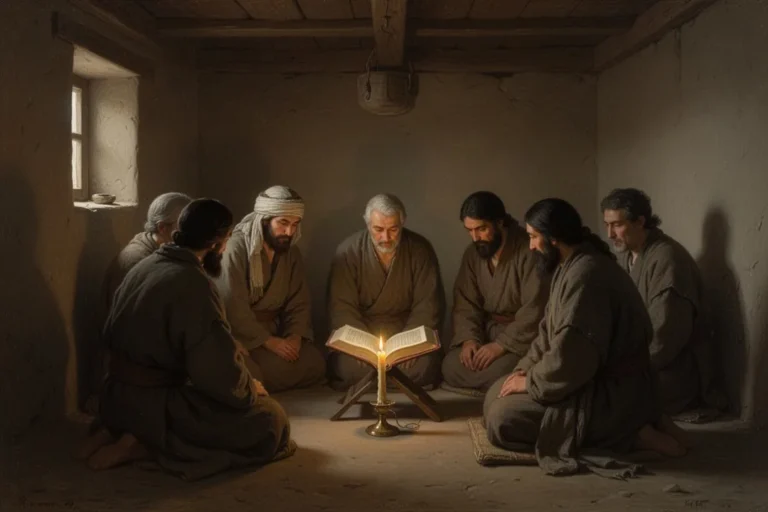
Secret worship is usually small and cautious. People may pray silently, memorize passages rather than keep written materials, or meet with one or two trusted relatives. A Bible or Christian book can be dangerous evidence, so some believers avoid keeping printed copies. Digital materials can also create risks if devices are searched.
Families may communicate faith indirectly. A parent might teach a child a prayer without using openly religious language, or a believer might explain moral ideas without revealing the source. These methods are not evidence of a standardized underground church structure; they show how fear shapes ordinary religious behavior.
Some underground Christians are connected to networks that operate across the Chinese border. Those networks may help North Koreans find food, shelter, transportation, medical treatment, or a route toward safety. In some cases, Christian individuals or organizations provide this assistance because of their religious convictions.
Cross-border networks can also expose people to serious danger. North Koreans who are found in China may face detention and forced return. After repatriation, authorities may question them about contacts with South Koreans, missionaries, churches, or foreign organizations. Contact with Christianity is not always treated the same way as other border violations, but it can make the consequences much more severe.
Believers who remain in North Korea may have no access to ordained clergy, formal sacraments, or public church buildings. Their practice may center on prayer, memory, mutual trust, and discreet acts of care. This differs from the experience of Christians in countries where worship, pastoral counseling, and Bible study are public activities.
It is also possible for people to be Christian without belonging to an organized underground group. A person may accept Christian beliefs but lack regular contact with other believers. Another person may participate in a family tradition without fully understanding how outside researchers would classify that religious identity.
Family faith: Religious belief passed quietly between parents, children, or extended relatives.
Private devotion: Silent prayer, remembered Bible teaching, and personal reflection without a gathering.
Small trusted groups: Informal meetings involving people who know one another well.
Cross-border contact: Exposure to Christian teaching or assistance through networks outside North Korea.
These forms of faith should not be romanticized. Secrecy is not simply a dramatic expression of devotion; it is often a survival strategy. Believers may be forced to make painful decisions about whom to trust, what to destroy, and whether helping another Christian could endanger an entire family.
What official churches and religious freedom mean
Visitors to Pyongyang may see officially recognized religious buildings, including Protestant, Catholic, and other sites. These institutions demonstrate that the government allows a limited form of public religious activity. They do not show that ordinary North Koreans can freely establish churches, choose ministers, distribute literature, or worship without state supervision.
Foreign visitors and researchers have debated the role of these churches. Some observers regard them as carefully controlled institutions created partly to present an image of religious tolerance. Others point out that they may include genuine worshippers and religious activity, even though they operate within strict political boundaries. Both points can matter at the same time.
The central distinction is between state-approved religion and independent religious life. An official church may function under government permission, while an unregistered home gathering may be treated as a political offense. The existence of a church building does not establish broad freedom of religion.
Foreign Christians who visit North Korea generally cannot act as they would in an open society. They may be accompanied by government guides and restricted in whom they meet. Attempting to distribute Bibles, evangelize outside approved settings, or make unsupervised contacts can create serious consequences for both the visitor and North Korean citizens.
Public ceremonies may also be difficult for outsiders to interpret. A gathering that appears to be a normal worship service may have been arranged for visitors, while a service that is genuinely meaningful to participants may still be closely monitored. Since independent observation is limited, claims about attendance and authenticity should be made carefully.
The same caution applies to estimates of the Christian population. North Korea does not provide transparent, independent religious census data. Numbers published by outside groups may use different definitions, including baptized Christians, people with Christian backgrounds, secret believers, or those connected to underground networks.
How to read reports: Treat broad population estimates as uncertain and pay close attention to how each organization defines “Christian” and what evidence supports its claims.
How persecution affects families and humanitarian work
Religious persecution in North Korea affects more than worship. When authorities suspect someone of Christian activity, the consequences can reach spouses, children, parents, or siblings. Even people who do not share the accused person’s beliefs may be questioned or punished because the state emphasizes family background and collective responsibility.
This pressure encourages silence inside the home. A Christian parent may avoid teaching openly because a child could unintentionally repeat something at school or during a government-organized activity. A young person may know that asking questions about religion could place an older relative at risk.
Detention can also damage a family’s ability to obtain food, maintain housing, or keep children in school. The harm may continue after release through surveillance, stigma, or reduced opportunities. Because independent legal representation and public accountability are limited, families often have little ability to challenge official decisions.
Humanitarian organizations face their own ethical challenges. Food, medicine, agricultural supplies, and other assistance can save lives, but aid workers must follow rules designed to protect recipients. Covert evangelism can put North Korean partners and beneficiaries in danger, even when it is motivated by sincere religious conviction.
Responsible Christian aid groups generally separate humanitarian assistance from religious pressure. They should not make food, medicine, shelter, or evacuation conditional on conversion, prayer, or participation in worship. They also need to protect personal information and avoid public claims that could reveal an individual’s identity.
People considering support for North Korean Christians can ask practical questions before donating or sharing information:
Does the organization explain how it protects North Korean contacts and defectors?
Does it distinguish verified testimony from anonymous or unconfirmed reports?
Are humanitarian services available without religious conditions?
Does it avoid publishing names, photographs, locations, or details that could identify vulnerable people?
Does it describe how funds are monitored when work takes place through border networks?
Prayer and advocacy can also carry risks when they include specific details. Publishing a person’s name, location, family connection, or escape route may expose that person or relatives inside North Korea. Public campaigns are most responsible when they focus on broad human rights concerns unless the individuals involved have clearly consented and can safely be identified.
What reliable information can and cannot tell you
Learning about Christianity in North Korea requires patience because no source has complete access to the country. Researchers commonly compare defector testimony, satellite evidence, official documents, diplomatic accounts, humanitarian reports, and historical records. Each source provides useful information but also has limits.
Defectors can offer direct memories of state control, religious encounters, detention, or border crossings. Their experiences are valuable, but they are not interchangeable with a national survey. People leave from different regions and backgrounds, and memories may be affected by trauma, time, translation, or the circumstances of an interview.
International organizations may document laws and patterns of abuse, but they often cannot independently inspect detention sites or interview residents inside the country. Religious organizations may have access to border communities or refugees, yet their reports can emphasize the parts of the story most relevant to their mission.
Official North Korean statements provide evidence of government policy and public messaging, but they do not independently verify how ordinary citizens practice religion. Images of approved churches reveal that certain buildings and ceremonies exist; they do not establish the extent of freedom behind them.
A careful reader should look for several signs of a trustworthy report:
Clear sourcing: The report explains whether information comes from interviews, documents, observation, or estimates.
Defined terms: It says what counts as a Christian, an underground church, a detention case, or a religious violation.
Uncertainty: It separates confirmed cases from allegations and avoids presenting estimates as exact counts.
Protection of people: It removes details that could expose North Korean believers, defectors, or aid workers.
Independent comparison: Its claims are considered alongside information from other credible organizations.
The clearest overall picture is consistent even when details differ: independent Christianity is severely restricted, public religious activity is closely controlled, and secret believers face serious risks. North Korea’s Christian history explains why the faith remains part of the country’s past and present, but it does not make the current situation easy to measure.
For Christians outside North Korea, the most helpful response combines compassion with restraint. Learn the history, support credible human rights and humanitarian work, avoid spreading unverified stories, and remember that the safety of people inside the country must come before dramatic publicity.
Frequently asked questions
Is Christianity illegal in North Korea?
North Korea formally recognizes religious freedom in its laws, but independent Christian activity is not freely allowed in practice. The government permits tightly controlled religious institutions while treating unsanctioned worship, Bible possession, or contact with foreign religious networks as potential threats. Punishments reported by witnesses and human rights organizations can include detention, forced labor, and pressure on family members.
How many Christians live in North Korea?
No reliable independent census can determine the number. Estimates vary because some count only officially registered Christians, while others include people connected to underground networks or those with Christian family backgrounds. North Korea’s secrecy, surveillance, and lack of independent access make any precise figure uncertain.
Can tourists attend a church in North Korea?
Foreign visitors may sometimes be taken to officially recognized churches in Pyongyang, but visits are controlled and do not represent normal religious freedom for North Korean citizens. Tourists generally cannot travel independently, select worshippers to interview, distribute religious materials, or organize unsupervised Christian activity.
How can people help North Korean Christians safely?
Support organizations with strong safeguarding practices, transparent financial reporting, and experience protecting refugees and border contacts. Avoid sharing names, photos, locations, or escape details without clear permission. Effective assistance should not make food, medicine, shelter, or legal help conditional on religious participation.






Leave a Reply