Christians in Nigeria are being killed mainly in attacks linked to Islamist insurgencies, armed banditry, farmer-herder conflict, criminal kidnapping, and local disputes over land and power. The violence is concentrated in particular regions, especially the northeast and parts of the Middle Belt, rather than affecting every Christian community across the country in the same way.
Religion is often part of the conflict, but it does not explain every death. Some attacks clearly target Christian worshipers, churches, clergy, or predominantly Christian villages; others involve economic competition, ethnic tensions, criminal motives, or political insecurity. A careful answer must recognize both realities.
Where attacks on Christians in Nigeria are most common
Nigeria is Africa’s most populous country and has a large Christian population, particularly in the south and central regions. Christians also live throughout the north, including areas where armed groups have operated for years. The risk is shaped less by a simple north-versus-south divide than by the presence of specific armed organizations, the strength of local government, and long-running disputes.
The northeast has faced a prolonged insurgency involving Boko Haram and Islamic State West Africa Province, commonly abbreviated as ISWAP. These groups have attacked villages, markets, schools, military positions, churches, and religious communities. Their victims include Christians, Muslims who reject their ideology, traditional leaders, aid workers, and security personnel.
The Middle Belt—including areas of Benue, Plateau, Kaduna, Niger, Nasarawa, and neighboring states—has experienced repeated raids, killings, displacement, and village destruction. Some affected communities are predominantly Christian, and many victims are Christian farmers. However, the conflict also involves Muslim communities, pastoralist groups, local political interests, and disputes over land and access to water.
The northwest has been heavily affected by armed bandit networks and mass kidnapping. These groups may attack communities without a clear religious agenda, although Christian villages and churches can still be targeted. In the southeast, separatist tensions, criminal violence, and security operations create a different pattern of danger from that seen in the northeast or Middle Belt.
The location matters: “Christians in Nigeria” describes a very large and diverse population. The causes, perpetrators, and risks differ substantially between Borno, Benue, Plateau, Kaduna, the southeast, and southern coastal states.
Which armed groups and perpetrators are linked to the violence
Several types of perpetrators have been linked to killings of Christians. Identifying the responsible group can be difficult because attackers may not wear uniforms, claim responsibility, or fit neatly into one category. Reports sometimes use broad terms such as “militants,” “terrorists,” “bandits,” or “unknown gunmen,” even when the evidence remains incomplete.
Boko Haram and ISWAP
Boko Haram has used extreme violence against civilians in northeastern Nigeria for many years. Its attacks have included killings, abductions, forced displacement, and destruction of religious and public buildings. ISWAP, which emerged from a split within the broader insurgency, has also attacked civilian and military targets.
These organizations promote violent extremist ideologies and have attacked Muslims as well as Christians. Their actions can still amount to religious persecution when Christian communities, churches, clergy, or people who refuse to follow the groups’ interpretation of religion are specifically threatened.
Armed bandits and kidnapping networks
In parts of northwestern and north-central Nigeria, criminal groups commonly described as bandits have carried out raids, kidnappings for ransom, cattle theft, extortion, and killings. Their motives are often financial and territorial rather than explicitly religious.
That distinction does not make the attacks less devastating for Christian communities. A village may lose residents, farmland, livestock, and access to a church or school even when the attackers’ primary goal is ransom or control. In some locations, criminal networks also exploit existing religious and ethnic divisions.
Militias and armed groups involved in communal conflict
Farmer-herder violence has involved armed members of different communities, including militias and vigilante groups. The conflict is driven by several pressures: competition over land, expanding farms, cattle routes, environmental stress, population growth, weak dispute resolution, and the availability of firearms.
Because many farming communities in the Middle Belt are Christian and many pastoralist communities are Muslim, attacks can appear religious even when the immediate dispute concerns land or retaliation. At the same time, attackers may use religious identity to justify violence, and communities may be selected because of their faith. Both possibilities need to be investigated rather than assumed away.
Unknown gunmen and local criminal actors
Some attacks are attributed to unknown gunmen, especially when perpetrators leave quickly or when local authorities cannot establish who organized the assault. Criminal gangs, separatist factions, political actors, and community militias may all operate under vague labels.
Uncertainty about identity should not be turned into certainty about motive. A credible account separates confirmed facts—such as the location, date, number of victims reported, and type of attack—from claims about who ordered it and why.
Why religious identity is part of the explanation
Christians in Nigeria face genuine religious threats in areas where extremist groups reject religious pluralism. Churches may be burned, Christian villages attacked, clergy abducted, and civilians pressured to abandon their communities. Some victims are reportedly killed after refusing conversion, paying demanded taxes, or complying with an armed group’s religious rules.
Religious identity also affects how communities experience displacement. A family that flees an attack may lose farmland, a home, a place of worship, and its connection to a Christian village. Repeated attacks can change the demographic balance of an area even when no formal order to remove Christians is issued.
Several Christian organizations and advocacy groups describe the violence as persecution or, in some cases, genocide. Other researchers and policy organizations emphasize that the conflict is multi-causal and that Muslims are also killed in large numbers. These descriptions are not interchangeable.
Under international law, genocide has a specific meaning involving an intent to destroy, in whole or in part, a national, ethnic, racial, or religious group. Establishing that legal claim requires evidence of intent and other elements, not simply a high number of deaths. A report may accurately document anti-Christian atrocities without proving genocide in the legal sense.
How farmer-herder conflict became so deadly
Many attacks in central Nigeria reflect a long-running struggle between farming communities and pastoralists. Farmers need land for crops, while herders need grazing routes and water for livestock. As farms expand and traditional grazing corridors become harder to use, cattle may damage crops, and disputes can escalate quickly.
Climate pressures and insecurity have made movement more difficult for pastoralists and settlement more contested for farmers. Desertification and changing rainfall patterns are often discussed as contributing pressures, but they do not automatically cause violence. Weapons, weak policing, political mobilization, and cycles of revenge turn disputes into massacres.
Ethnicity and religion overlap with these economic conflicts. In broad terms, many Middle Belt farmers are from Christian or traditional-religion communities, while many pastoralists are Muslim and Fulani. These broad labels hide substantial diversity, but they can be used by political and religious leaders to mobilize fear.
Retaliatory attacks often make attribution harder. One community may describe an assault as unprovoked, while the other points to an earlier raid or cattle theft. Independent investigations are essential because rumor and social media posts can intensify tensions before facts are established.
Why killings continue despite security operations
Nigeria has deployed military units, police, civil defense personnel, and special security operations in areas affected by insurgency and banditry. These efforts have sometimes recovered territory, rescued hostages, or disrupted armed groups. They have not eliminated the threat.
Several structural problems make protection difficult:
Large rural areas: Many villages are remote, separated by poor roads, and far from permanent security posts.
Limited early warning: Residents may know an attack is coming but lack a reliable way to alert authorities or receive a rapid response.
Insufficient resources: Security agencies may face shortages of personnel, equipment, transport, intelligence, and logistical support.
Weak accountability: Arrests, prosecutions, and convictions often do not keep pace with the scale of reported violence.
Community distrust: Civilians may fear both armed groups and abuses by security personnel, reducing cooperation with investigators.
Porous borders and weapons flows: Fighters, criminals, and arms can move across difficult-to-police areas.
Security operations can also produce unintended harm if they rely on collective punishment, arbitrary arrests, or excessive force. Protecting Christians and other civilians requires lawful operations, reliable intelligence, and accountability for abuses by every side.
What the available death counts can and cannot show
There is no single universally accepted count of Christians killed in Nigeria. Different organizations use different definitions, time periods, geographic boundaries, and standards for verifying incidents. Some count only confirmed deaths; others include missing people, presumed victims, or deaths reported by local contacts.
Counting victims by religion is especially difficult. Many reports do not record a victim’s faith, and an attack may kill people from several communities. Some databases identify the religious character of an incident from the location or the institution attacked, which can be informative but is not the same as individually verifying every victim.
Press coverage also varies. A large attack in a reachable area may receive extensive reporting, while deaths in remote villages may be delayed, undercounted, or not reported outside the community. Figures should therefore be read as documented estimates, not a perfect census.
When comparing reports, check these details:
Time frame: Determine whether the figure covers a calendar year, several months, or a longer period.
Geography: See whether it includes all of Nigeria or only selected states.
Definition: Find out whether it counts only Christians, all civilians, or victims of attacks classified as religiously motivated.
Verification: Check whether incidents were independently confirmed or based on a single account.
Attribution: Separate confirmed perpetrators from suspected or unknown attackers.
Use careful language: A reported death toll can show the scale of suffering while still leaving uncertainty about the victim’s religion, the attacker’s identity, or the motive behind a particular incident.
How the violence affects Christian communities beyond fatalities
The harm extends well beyond those who are killed. Families may be separated by abduction, and survivors may carry physical injuries or severe psychological trauma. Children can lose access to school when villages are attacked or when parents cannot afford transport and housing after displacement.
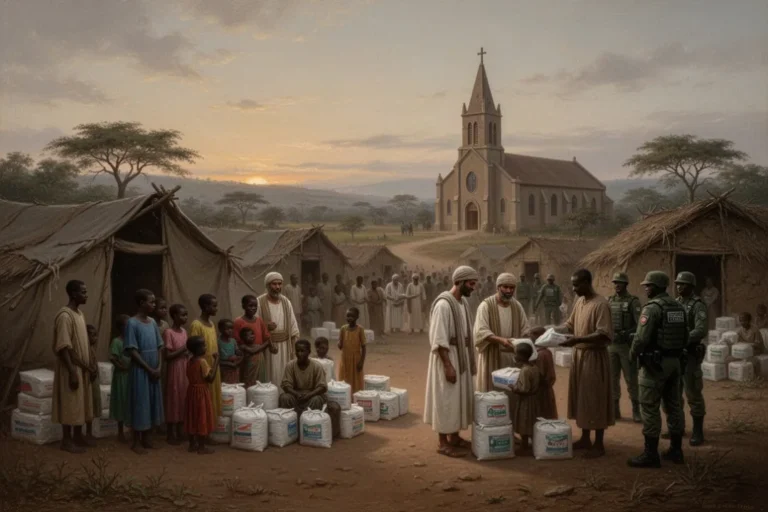
Displaced Christians often live in informal camps, with relatives, or in crowded urban areas. They may lack food, clean water, medical care, documentation, and secure housing. Women and girls face additional risks of sexual violence, forced marriage, trafficking, and exploitation during displacement.
Churches frequently serve as more than places of worship. They may provide schooling, food distribution, medical referrals, counseling, and community leadership. When a church is destroyed or a pastor is abducted, an entire support network can be weakened.
Repeated attacks can also change economic life. Farmers may stop planting crops because they fear returning to their fields. Traders may close markets, and young people may leave permanently. The result is a cycle in which insecurity reduces livelihoods, and poverty makes communities more vulnerable to recruitment, extortion, and exploitation.
Common mistakes when explaining killings of Christians in Nigeria
Reducing every attack to one cause: Insurgency, criminality, land conflict, ethnic tension, and religious persecution can overlap, but they are not identical.
Assuming every perpetrator is the same group: Boko Haram, ISWAP, bandit networks, militias, and unknown gunmen operate differently.
Ignoring Muslim victims: Muslims are also killed, displaced, and abducted, including by extremist groups claiming to act in the name of Islam.
Assuming religious identity is irrelevant: The presence of other causes does not erase deliberate attacks on Christians or Christian institutions.
Repeating unverified numbers: Death tolls can change as survivors are located and reports are checked.
Sharing graphic or identifying material: Images and names can endanger survivors, expose families to harassment, or spread misinformation.
Blaming an entire faith or ethnicity: Armed groups and criminal actors are responsible for their crimes, not every person who shares their religion or background.
A stronger explanation states what is known, identifies what remains uncertain, and distinguishes victim identity, attacker identity, and motive. Those three questions are related but should not be treated as interchangeable.
Protecting civilians requires more than sending troops after an attack. Authorities need dependable local intelligence, rapid-response capacity, functioning courts, and a visible commitment to investigating mass killings. Security forces should protect villages regardless of religion and should face consequences when they abuse civilians.
Practical measures include:
Maintaining permanent, properly supplied security posts near vulnerable communities.
Improving emergency communication between villages, police, military units, and local officials.
Investigating attacks promptly and preserving evidence for prosecution.
Providing safe routes and transport for displaced people returning home.
Supporting trauma care, education, food security, and livelihood recovery.
Creating trusted local mechanisms for resolving grazing, land, and water disputes.
Regulating vigilante groups and preventing them from becoming another source of abuse.
Publishing reliable information about arrests, investigations, and civilian protection measures.
Community and religious leaders can help reduce retaliation by rejecting collective blame and discouraging rumors. Christian and Muslim leaders who cooperate on early warning, humanitarian support, and reconciliation can make it harder for armed groups to turn local disputes into wider religious conflict.
How to follow reports responsibly and help survivors
Readers who want accurate updates should compare several credible sources rather than relying on a single viral post. Reports from Nigerian journalists, humanitarian agencies, human rights investigators, and conflict-monitoring organizations may differ, but their methods and limitations can be examined.
Before sharing a claim, check the date, location, original reporting, and whether the image or video has been used in an unrelated event. A report that says “Christians were killed” should ideally identify how that conclusion was established and whether the number is confirmed or provisional.
Support should go through organizations that explain how they verify beneficiaries and protect displaced people. Useful assistance may include emergency shelter, medical care, trauma counseling, legal support, schooling, food, and livelihood programs. Aid should be delivered according to need while respecting the religious identity and safety concerns of affected communities.
The clearest answer to why Christians in Nigeria are being killed is therefore multi-layered: extremist ideology is a real driver, but it operates alongside organized crime, land disputes, ethnic mobilization, political failure, and weak civilian protection. Understanding those connections does not minimize anti-Christian violence; it helps identify the different measures needed to stop it.
Frequently asked questions
Are Christians the only people being killed in Nigeria’s conflicts?
No. Christians are among the victims of attacks, but Muslims are also killed, kidnapped, displaced, and abused, including by Boko Haram and ISWAP. The fact that Muslims suffer does not disprove anti-Christian persecution in particular incidents. A reliable account identifies the victims and the motive of each attack instead of assigning every death to one religious category.
Is there a religious war in Nigeria?
Religion is a major factor in some parts of the conflict, especially where extremist groups deliberately attack Christian communities or impose violent religious rules. However, Nigeria’s insecurity also includes banditry, ransom kidnapping, land disputes, ethnic competition, separatist violence, and political failures. Calling the entire crisis a single religious war oversimplifies different conflicts.
How can I tell whether a reported death toll is reliable?
Check the reporting period, states covered, definition of “Christian victim,” and method used to verify incidents. Compare the figure with Nigerian journalism, humanitarian reporting, and independent conflict monitors. Be cautious when a number has no date, location, source, or explanation of whether it includes missing people and unconfirmed reports.
What can individuals do to support Christians affected by the violence?
Donate through established organizations that provide transparent information about their work with displaced families and survivors. Support programs offering shelter, food, medical care, trauma counseling, education, and livelihood assistance. Share verified reporting without graphic images or unconfirmed claims, and avoid language that blames all Muslims, Fulani people, or Nigerians for crimes committed by armed groups.






Leave a Reply