Have you heard the name Brother Andrew but wondered what he actually did? He was a Dutch Christian missionary who became known for carrying Bibles into countries where Christians faced government restrictions, surveillance, imprisonment, or violence. His work helped draw international attention to the needs of the persecuted church and led to the growth of Open Doors, a ministry that still serves Christians around the world.
Brother Andrew was not famous because he held a high public office or led a large church. His reputation grew from a practical assignment: visiting believers who had little access to Scripture, encouragement, or outside help. He traveled into communist Eastern Europe during the Cold War, often using ordinary-looking vehicles and relying on local contacts. His life combined missionary service, prayer, personal courage, and logistical support for Christians living under pressure.
Brother Andrew was the missionary name of Anne van der Bijl, a Christian from the Netherlands. He was born in 1928 and died in 2022. After becoming a committed Christian as a young adult, he developed a strong concern for people who wanted to follow Jesus but were separated from the wider Christian world by political borders and hostile governments.
During the Cold War, much of Eastern Europe was governed by communist regimes. Religious practice varied from country to country, but many Christians experienced state control, censorship, restrictions on church activity, and shortages of Bibles. Some churches were permitted to meet, yet their leaders were monitored and their activities limited. Others operated quietly and faced serious risks.
Brother Andrew began visiting Christians in those places in the 1950s. His work was not simply about delivering printed material. He listened to local believers, learned what they needed, encouraged them, and helped people outside the region understand their situation. That combination of spiritual fellowship and practical support became central to his ministry.
The central idea: Brother Andrew believed Christians in restricted countries should not be treated as distant strangers. They were part of the same worldwide church and deserved prayer, practical help, and personal solidarity.
How Brother Andrew began serving Christians behind the Iron Curtain
Brother Andrew’s early ministry developed in the years after World War II, when Europe was divided by political ideology and military alliances. He became interested in reaching people who had limited freedom to worship and limited access to Christian resources. In 1955, he traveled to Poland and met Christians whose faith was being practiced under difficult conditions.
That trip helped shape the work later associated with Open Doors. Rather than building a ministry around his own public profile, Brother Andrew focused on relationships with believers in countries where outside attention could sometimes create additional danger. He learned that support had to be offered carefully, with respect for local judgment.
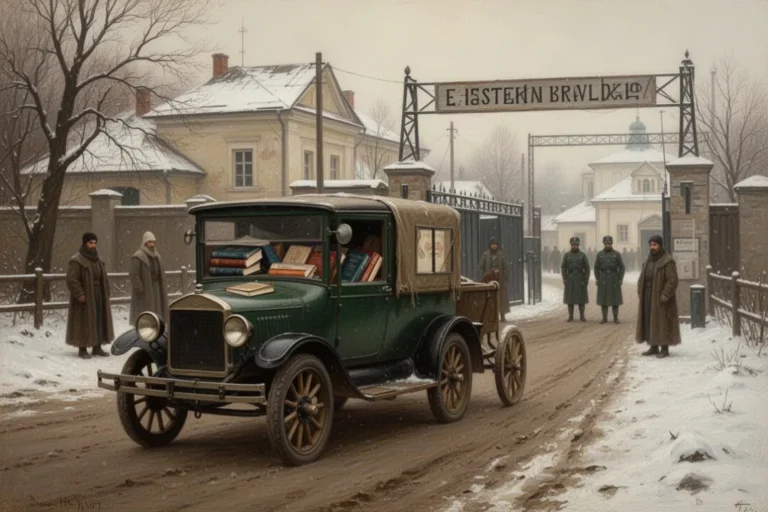
His assignments often involved bringing Bibles and Christian literature across borders. At the time, printing and distributing such materials could be difficult or prohibited. A shipment that seemed ordinary to an outsider could have serious consequences for the people receiving it, so discretion was essential.
Brother Andrew became known for asking God to help him complete each journey. Stories from his life describe moments when border inspections appeared likely to expose the materials in his vehicle, yet the search did not take place or the officials allowed him to continue. These accounts became part of his testimony, while the broader lesson was his dependence on prayer combined with careful preparation.
What Brother Andrew did on his missionary journeys
It is easy to reduce Brother Andrew’s work to the image of a man transporting Bibles. That was an important part of it, but his service involved several connected responsibilities. He had to understand local conditions, build trust, make decisions about risk, and remain accountable to the believers he was trying to serve.
He delivered Christian materials: Bibles, books, and other resources were taken to believers who could not easily obtain them.
He met local Christians: Personal visits provided encouragement and helped him hear directly about church life under pressure.
He assessed practical needs: Local contacts could explain whether they needed literature, training, financial assistance, legal support, or help for families.
He connected churches across borders: Christians in more open societies learned how to pray for and support believers in restricted areas.
He accepted local wisdom: The people living under surveillance usually understood the risks better than an outside visitor did.
The work demanded more than boldness. A missionary entering a sensitive country had to avoid exposing names, locations, or plans. Confidentiality and trust were matters of safety, not merely professional courtesy. The goal was to strengthen local Christians without making them dependent on a foreign organization or placing them in unnecessary danger.
Why Bibles were so important to Brother Andrew’s ministry
For many Christians, access to a Bible may seem ordinary. In countries where religious books were restricted or difficult to obtain, however, receiving a Bible could have deep personal and communal importance. A congregation might share a small number of books, copy sections by hand, or rely on remembered passages during worship and teaching.
Brother Andrew’s ministry treated Scripture as both a source of spiritual formation and encouragement. Christian literature could help pastors prepare sermons, help families teach their children, and allow isolated believers to study their faith. The materials were not valuable simply because they had crossed a border; they were valuable because people used them in real communities.
At the same time, the need for Bibles did not mean every situation could be solved by a delivery. Local churches also needed trained leaders, pastoral care, support for prisoners’ families, and wise responses to pressure from authorities. Open Doors gradually developed a broader approach that addressed these needs rather than treating Bible distribution as the whole mission.
That distinction remains useful today. Material support works best when it serves local leadership. An outside group may supply resources, but local Christians understand their language, culture, risks, and opportunities. Brother Andrew’s example is often remembered for courageous action, yet his work also depended on listening to people who lived with the consequences.
How “God’s Smuggler” shaped Brother Andrew’s public reputation
Brother Andrew became widely known through God’s Smuggler, the autobiography written with John Sherrill and published in the 1960s. The book described his conversion, missionary calling, journeys across communist borders, and efforts to bring Christian literature to restricted churches. It introduced his story to a large international audience.
The title reflected the unusual nature of his assignments. Christian materials were sometimes transported secretly because openly carrying them could lead to confiscation or arrest. The book emphasized faith under pressure, prayer, and the conviction that Christians should not ignore believers who were suffering behind political barriers.
For many readers, the book was a first encounter with the idea that a church could be legally present yet heavily controlled, or that Christians might have to meet quietly to avoid punishment. It encouraged some people to pray for believers in communist countries, support missionary work, or consider service themselves.
Readers should also approach missionary biographies with care. A personal memoir presents events through the author’s memory, theology, and interpretation. Stories of danger can be inspiring, but they should not encourage reckless imitation. Brother Andrew’s purpose was service to local Christians, not dramatic risk for its own sake.
How Open Doors grew from Brother Andrew’s work
Open Doors began through Brother Andrew’s efforts in the 1950s and developed into an international ministry serving Christians affected by persecution. Its work expanded beyond the original setting of Cold War Europe as religious freedom concerns appeared in many regions of the world.
The organization’s activities have included distributing Bibles and other Christian resources, training church leaders, supporting families affected by violence or imprisonment, strengthening local churches, and advocating for Christians whose rights are threatened. The exact needs vary widely. A church facing legal restrictions may need different help from a church coping with attacks, displacement, or extremist violence.
Open Doors also reports on the condition of Christians in different countries. Its annual World Watch List ranks countries according to the severity of pressure and persecution faced by Christians. Such rankings are intended to inform prayer, advocacy, and humanitarian concern, although the experiences of Christians within any one country can differ by region, denomination, ethnicity, and political circumstance.
Brother Andrew’s role should be understood as the beginning and inspiration of a continuing organization, not as the complete identity of Open Doors today. The ministry now includes staff, researchers, local partners, and church leaders with knowledge that no single missionary could possess. Its ongoing work depends heavily on relationships with Christians who live in the places being served.
What “persecuted Christians” means in practical terms
The phrase persecuted Christians can refer to a wide range of experiences. Persecution is not limited to imprisonment or physical attack. It can include pressure from governments, extremist groups, families, communities, employers, or criminal networks because a person identifies as Christian or participates in Christian activity.
Government pressure: Authorities may deny registration, restrict worship, monitor leaders, censor religious materials, or punish conversion.
Community pressure: Christians may face harassment, discrimination, forced marriage, social exclusion, or threats from neighbors and relatives.
Violence: Churches, homes, schools, and businesses may be attacked, while individual Christians may be kidnapped, injured, or killed.
Economic consequences: A person may lose employment, housing, education, or access to community resources because of Christian identity.
Displacement: Families may leave their homes after repeated attacks or because local authorities cannot protect them.
These pressures can overlap. A minority Christian community might face legal discrimination from the state and violence from an armed group at the same time. A convert may experience hostility within the family even when the national constitution formally protects religious freedom.
Brother Andrew’s work brought attention to the fact that religious freedom is lived locally. A country’s laws do not always describe what happens in a village, workplace, prison, or family home. Listening to local Christians is therefore essential when evaluating both danger and effective assistance.
What readers can learn from Brother Andrew’s approach
Brother Andrew’s example offers several practical lessons for anyone who wants to understand or support Christians facing persecution. These lessons apply beyond one historical period because they concern how people respond to suffering across cultural and political boundaries.
Begin with relationships. Do not treat affected Christians as anonymous victims. Learn from church leaders and families who understand their own circumstances.
Pray with specific knowledge. General concern can become more meaningful when you know the region, the pressure involved, and the needs of particular communities.
Protect sensitive information. Publicizing names, photographs, addresses, or ministry plans can put vulnerable people at risk.
Support local leadership. Outside assistance should strengthen Christians who live in the community rather than replace their judgment.
Use reliable information. Check reports carefully and avoid forwarding dramatic claims that cannot be verified.
Combine compassion with patience. Relief, training, advocacy, and spiritual support may take time to produce lasting benefits.
These principles also guard against a common mistake: turning the suffering of others into a story about personal bravery. Brother Andrew’s public image often centers on border crossings and danger, but the lasting value of the work was the strengthening of other people. The needs of local Christians came before the reputation of the messenger.
Practical caution: Never attempt to copy clandestine missionary methods without expert guidance, legal advice, and direction from trusted local partners. Activities that appear helpful from a distance can expose Christians to surveillance, arrest, or retaliation.
How Brother Andrew viewed prayer, courage, and risk
Prayer was not a decorative part of Brother Andrew’s ministry. He treated it as a way of seeking direction, courage, and protection before making difficult decisions. His stories frequently connect practical action with dependence on God, which is one reason his life has influenced Christians who see missionary work as a calling.
His approach to courage was not the absence of fear. Entering a controlled border, meeting an underground church, or carrying prohibited materials could involve genuine danger. Courage meant acting for the sake of others while recognizing the consequences and refusing to assume that faith removed the need for wisdom.
That balance matters when reading accounts of Christian mission. Faith does not make recklessness virtuous. A responsible ministry considers the safety of local people, the likely consequences of each action, and whether a proposed plan serves the church or merely creates an impressive story.
Brother Andrew also challenged Christians in open societies to think about their responsibility toward believers elsewhere. His message was not only that persecuted Christians needed help. It was also that Christians with freedom should not become indifferent to those who lacked it.
Why Brother Andrew remains relevant after his death
Brother Andrew died in September 2022, but the circumstances he addressed have not disappeared. Christians in different parts of the world still face restrictions, discrimination, displacement, and violence. The political settings have changed since the Cold War, yet the need for trustworthy information, prayer, practical support, and international solidarity remains.
His legacy also remains relevant because it shows how a small personal initiative can develop into sustained service. He did not begin with a global institution. He began by visiting Christians, recognizing a neglected need, and acting on the relationships he formed. Over time, that work became Open Doors and expanded through the contribution of many others.
Remembering Brother Andrew does not require treating him as flawless or copying every method associated with his early journeys. A more useful response is to understand the principles behind the work: see people clearly, listen carefully, serve responsibly, and refuse to forget Christians who are isolated.
For someone searching for “Brother Andrew,” the essential answer is simple: he was a Dutch missionary who helped Christians behind the Iron Curtain and inspired the international ministry Open Doors. His story continues to point toward a broader responsibility—recognizing that the worldwide church includes believers whose faith carries far greater public and personal costs than many people experience in the United States.
Ways to explore Brother Andrew’s legacy responsibly
If you want to learn more, begin with Brother Andrew’s own published account, God’s Smuggler, while remembering that it is a missionary memoir rather than a complete history of every Christian community he visited. Then consult current information from Open Doors and other reputable organizations that document religious persecution and religious freedom.
You can also ask practical questions before supporting a project or sharing a story:
Does the organization work with trusted local partners?
Does it protect the identities and locations of vulnerable Christians?
Does it explain how donations are used?
Does it address long-term needs such as leadership training, education, trauma care, and livelihoods?
Does it present affected Christians with dignity rather than reducing them to frightening images?
Learning about Brother Andrew is most valuable when it leads to informed concern rather than passive admiration. His work reminds readers that the church is larger than the part they see, and that support for persecuted Christians should be prayerful, accurate, locally informed, and genuinely useful.
Frequently asked questions
Was Brother Andrew his real name?
No. Brother Andrew was the ministry name of Anne van der Bijl, a Dutch Christian missionary. He became widely known by that name through his work with Christians in communist Eastern Europe and through the book God’s Smuggler. “Brother” reflected his Christian identity and his desire to be seen as a fellow believer rather than a distant religious celebrity.
Did Brother Andrew found Open Doors?
Brother Andrew’s missionary work in the 1950s became the foundation of Open Doors, and he is recognized as the organization’s founder. Open Doors later grew into an international ministry with staff and local partners serving Christians facing persecution in many countries. Its present-day work is broader than Brother Andrew’s original Bible-delivery missions.
What is God’s Smuggler about?
God’s Smuggler is Brother Andrew’s autobiographical account, written with John Sherrill. It describes his Christian conversion, missionary calling, journeys into communist countries, and efforts to bring Bibles and encouragement to restricted churches. The book helped make his story widely known and influenced many readers to pray for or support persecuted Christians.
How can someone help persecuted Christians today?
Start by learning from reliable organizations that work with local churches and protect sensitive information. You can pray specifically, give to responsible ministries, support advocacy for religious freedom, and avoid sharing unverified reports or identifying details. Practical help should strengthen local leadership and respond to the needs Christians themselves describe.





Leave a Reply