Christian persecution: what it means and how to respond
Christian persecution: what it means and how to respond
Christian persecution is the mistreatment of people because they are Christians or are perceived to be Christian. It can include violence, imprisonment, forced displacement, discrimination, surveillance, harassment, and pressure to abandon Christian beliefs.
Persecution does not look the same everywhere. In one country, Christians may face attacks by armed groups; in another, they may encounter restrictive laws, job discrimination, family threats, or government pressure. A clear understanding requires attention to who is responsible, what happens, how severe it is, and why it occurs.
Persecution is more serious than an ordinary disagreement about religion. It involves sustained or severe hostility that targets Christians because of their faith, religious identity, worship, conversion, church activity, or perceived association with Christianity.
The target may be an individual, a family, a congregation, a Christian school, a church building, or an entire community. Some victims are targeted for openly practicing Christianity, while others are harmed because they converted from another religion or belong to a Christian ethnic minority.
Common forms include:
Physical attacks: assault, torture, sexual violence, kidnapping, or killing.
Religious restrictions: bans or barriers affecting worship, church construction, religious gatherings, evangelism, or access to Christian materials.
Legal and administrative pressure: arbitrary detention, unfair trials, loss of legal status, confiscation of property, or denial of permits.
Economic discrimination: dismissal from work, blocked education, business boycotts, land seizure, or exclusion from public benefits.
Social and family pressure: threats, forced marriage, expulsion from the home, public shaming, or pressure to renounce Christianity.
Digital and informational abuse: online threats, doxxing, propaganda, surveillance, and coordinated harassment.
These categories can overlap. A Christian community may first face restrictions on meeting, then lose access to education or employment, and later experience physical attacks. The pattern matters because less visible pressure can create conditions for more severe abuse.
A useful distinction: criticism of Christian beliefs, peaceful disagreement, or a neutral law that applies equally to everyone is not automatically persecution. The key questions are whether Christians are targeted because of their faith and whether their fundamental rights are being denied or threatened.
How persecution differs from discrimination and religious intolerance
These terms are related but not identical. Religious intolerance means hostility or unwillingness to accept another person’s beliefs. Discrimination means treating someone unfairly because of religion. Persecution generally describes a more severe or organized pattern of harm, especially when authorities or powerful groups are involved.
The boundaries are not always simple. A single incident of harassment may not meet every definition of persecution, but repeated harassment combined with threats, official inaction, and restrictions on worship can become a serious persecution pattern.
Context also matters. A law that regulates all religious gatherings through the same neutral process may be inconvenient without being persecution. A law that permits one faith to worship freely while preventing Christians from gathering is different. Similarly, a criminal investigation is not persecution merely because the accused is Christian; it becomes concerning when the process is selective, abusive, or based on religious identity.
When assessing a reported case, ask:
Was the person or group targeted because of Christian belief, practice, conversion, or identity?
Was the harm isolated, or does it form part of a repeated pattern?
Did state officials participate in the abuse, permit it, or fail to protect victims?
Were other religious groups treated differently in comparable circumstances?
Did the conduct interfere with safety, liberty, worship, education, employment, property, or family life?
Who carries out Christian persecution
Persecution may come from governments, militant organizations, criminal networks, community leaders, relatives, or employers. In some places, authorities directly arrest or imprison Christians. In others, officials tolerate attacks by non-state actors or fail to investigate them.
State persecution can involve restrictive registration systems, religious courts, censorship, forced closure of churches, discriminatory citizenship rules, or prosecution under vaguely worded security laws. It may be visible, such as a raid on a church, or bureaucratic, such as repeatedly denying permission to repair a damaged building.
Non-state persecution often occurs where central government control is weak. Armed groups may attack villages, kidnap clergy, demand money from congregations, or force Christian families to leave. Criminal groups can also exploit Christian communities for financial gain, making it necessary to distinguish religious motive from general criminal violence while recognizing that both can affect victims at once.
Family and community pressure is especially significant for converts. A person who leaves a dominant local religion may face threats, divorce, expulsion, forced marriage, loss of child custody, or violence at home. These cases may never appear in official statistics because victims fear retaliation or do not trust authorities.
Where Christian persecution occurs and why local context matters
Christians experience persecution in countries across several regions, but the nature and scale differ greatly. Some face authoritarian governments that restrict independent religious activity. Others live amid civil war, terrorism, ethnic conflict, or communal violence. Still others encounter strong social pressure despite having formal legal protections.
In parts of the Middle East and North Africa, Christians may face pressure from extremist groups, discriminatory laws, restrictions on conversion, or hostility toward historic Christian minorities. Some communities have lived in the same region for centuries but remain vulnerable because of conflict, political instability, or accusations that they are aligned with foreign powers.
In parts of sub-Saharan Africa, Christian communities may be affected by insurgencies, attacks by armed groups, land disputes, and competition over local resources. Religious identity can interact with ethnicity, geography, poverty, and weak state institutions. Not every conflict involving Christians is purely religious, so careful reporting should describe the full set of causes.
In parts of Asia, Christians may encounter pressure from governments that seek to control religious institutions, from nationalist movements that favor a majority religion, or from local authorities that restrict conversion and public worship. Converts can be particularly exposed to family and community retaliation.
In Western countries, Christians generally have broad legal protections, but some may report hostility, vandalism, workplace disputes, or social exclusion. These experiences should not be equated automatically with imprisonment, forced displacement, or deadly violence. Comparing different forms of harm requires precision rather than a single global ranking.
Country conditions can also vary sharply within national borders. A Christian living in a major city may have more freedom than a Christian in a remote village controlled by an armed faction. A legal guarantee may exist on paper while local officials ignore it. Reliable analysis therefore considers national law, local enforcement, regional conflict, and the victim’s social position.
Why Christians become targets
Religious hostility is one cause, but it is rarely the only factor. Persecution can grow from a combination of authoritarian control, religious nationalism, extremism, ethnic division, political propaganda, and weak rule of law.
Authoritarian governments may see independent churches as threats because congregations provide spaces for free association and mutual support. Officials may restrict clergy, monitor sermons, or require churches to support state ideology. The stated reason may involve public order or national security, but enforcement can be selective and aimed at religious independence.
Extremist organizations may attack Christians because they reject religious pluralism or want to intimidate communities associated with a different faith. Nationalist movements may portray Christians as outsiders even when Christian families have deep local roots. Political leaders may also exploit religious identity to gain support or redirect public anger.
Economic and social factors can intensify danger. Land disputes, competition over water, ethnic tension, and criminal activity may acquire a religious dimension. Christian minorities may be blamed collectively for foreign policy decisions, missionary activity, or the actions of other Christians in another country.
Conversion is another common trigger. In some communities, changing religion is viewed not as a personal decision but as betrayal of family, ethnicity, or national identity. Converts may be targeted privately rather than publicly, which makes the abuse difficult to document.
How Christian persecution affects individuals and communities
The immediate harm may be physical, but the consequences often continue long after an attack or arrest. Victims can lose homes, income, education, health, documentation, or access to legal services. Children may stop attending school because parents fear abduction or harassment.
Displacement breaks apart families and church networks. A congregation that has lost its building may still worship in private homes, but members can face surveillance or increased risk. Clergy may leave, leaving communities without pastoral care, counseling, or help navigating legal systems.
Psychological effects may include grief, anxiety, depression, sleep problems, fear of public worship, and survivor’s guilt. Women and children can face distinct risks, including sexual violence, forced marriage, trafficking, and restrictions imposed within both hostile communities and displaced populations.
Persecution also damages cultural heritage. Churches, cemeteries, schools, manuscripts, and historic neighborhoods may be destroyed or abandoned. When a Christian community disappears from a region, the loss affects local history and religious diversity, not only the people who leave.
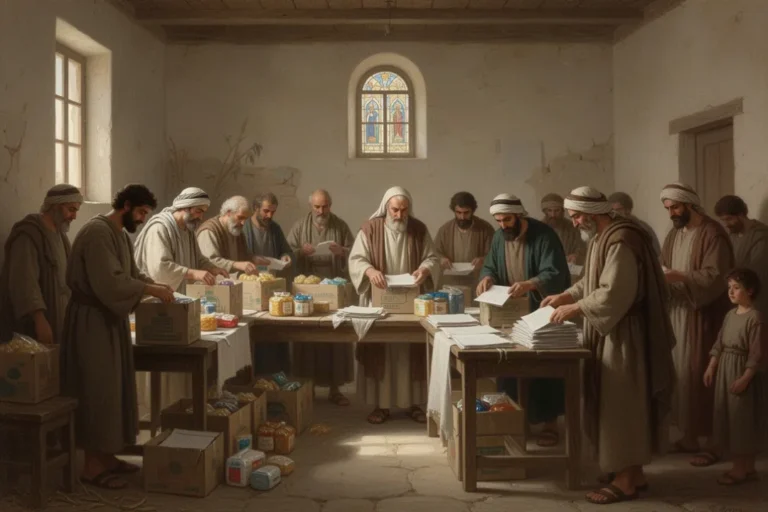
Communities often respond through practical solidarity. Members share food, provide temporary housing, accompany victims to police stations, arrange schooling, and preserve records of incidents. These efforts do not remove the need for government protection, but they can reduce isolation and help families recover.
How to evaluate claims about Christian persecution responsibly
Reports about persecution can be accurate, incomplete, exaggerated, or politically framed. Responsible evaluation does not dismiss victims, and it does not repeat an alarming claim without checking the evidence. Start with the specific event, location, date, victims, perpetrators, and documented response.
Look for agreement among independent sources. Useful material may come from court records, reputable journalism, local human rights organizations, church networks, humanitarian agencies, academic research, and official investigations. Each source has limits, especially in conflict zones, so compare accounts rather than relying on a single report.
Pay attention to wording. “Christians are under pressure” can describe a real but broad condition, while “all Christians are being systematically exterminated” requires strong evidence. A careful report distinguishes confirmed facts from witness accounts, allegations, estimates, and interpretation.
It also helps to avoid treating a country’s Christian population as uniform. A foreign-born church, an ancient Christian minority, a recent convert, and a politically connected denomination may face very different risks. Gender, ethnicity, class, citizenship, disability, and location can change a person’s exposure to harm.
Good questions for reviewing a claim include:
What happened specifically? Identify the act rather than relying on a broad label.
What evidence supports it? Separate firsthand testimony, documentation, and unverified online claims.
Was religion a motive? Consider whether the victim was targeted for being Christian, for another reason, or for several overlapping reasons.
What is the pattern? Determine whether similar incidents have occurred repeatedly in the same area.
What do local Christians say? Give weight to people directly affected, while protecting them from exposure or retaliation.
Protect vulnerable people first: Do not publish a survivor’s name, photograph, location, church address, or testimony details without informed consent. Publicity can increase the risk of arrest, retaliation, or renewed violence.
Practical ways to support Christians facing persecution
Effective support should be guided by the needs and decisions of affected communities. Outside advocates may want immediate action, but a response that exposes victims or ignores local leadership can make conditions worse.
Practical support can include:
Giving through accountable organizations that provide legal aid, emergency shelter, trauma care, education, or livelihood assistance.
Supporting local churches and community groups when they have the knowledge and access needed to respond safely.
Advocating for religious freedom and equal protection through elected officials, diplomatic channels, and public comment processes.
Learning from local sources instead of assuming that outside observers understand every ethnic, political, or religious division.
Helping displaced families rebuild through housing, schooling, documentation, job training, and medical care.
Praying or offering pastoral support according to the preferences of the affected people rather than using their suffering as publicity.
Financial transparency matters. Before donating, review an organization’s stated mission, local partnerships, safeguarding policies, reporting practices, and explanation of how funds are used. Emergency appeals can be legitimate, but urgency should not prevent basic verification.
Advocacy is strongest when it defends freedom of religion or belief for everyone. Christians are more credible advocates when they also speak against attacks on Muslims, Jews, Hindus, atheists, and other religious or nonreligious communities. Religious freedom is a universal principle, not a privilege reserved for one group.
Common mistakes when discussing Christian persecution
Public conversations can unintentionally distort the issue or put people at greater risk. Avoiding common mistakes leads to more accurate reporting and more useful action.
Using one incident to describe an entire country: A serious attack deserves attention, but national conclusions require broader evidence.
Assuming every conflict involving Christians is religious: Examine political, ethnic, economic, and criminal factors as well.
Ignoring internal diversity: Catholics, Orthodox Christians, Protestants, independent churches, converts, and traditional Christian minorities may face different conditions.
Repeating unverified numbers: Ask how deaths, arrests, attacks, or displaced people were counted and over what period.
Sharing graphic images or identifying details: This can violate dignity and expose survivors or relatives to further danger.
Framing victims as helpless: Christian communities often organize, negotiate, document abuses, and protect neighbors under severe pressure.
Turning suffering into political propaganda: Advocacy should seek protection and accountability rather than inflame hostility toward another religion or nationality.
Equating inconvenience with persecution: A difficult public debate or criticism of faith is not the same as imprisonment, violence, or denial of basic rights.
Language affects how audiences understand a crisis. Use specific descriptions such as “a church was attacked,” “converts reported family threats,” or “authorities denied permits to several congregations.” Precise language is usually more persuasive than sweeping claims because it shows what happened and what remedy is needed.
What governments and institutions can do
Governments have a responsibility to protect people from violence and discrimination regardless of religion. That responsibility includes investigating attacks, prosecuting perpetrators fairly, preventing incitement, and ensuring that police and courts do not treat Christian victims as less deserving of protection.
Legal protection should cover both public and private religious life. Christians should be able to worship, organize, educate their children, change or retain their religion, own property, and participate in civic life without coercion. Any restrictions should be lawful, necessary, proportionate, and applied without religious favoritism.
Institutions outside government also have duties. Schools can protect students from religious bullying. Employers can apply workplace rules consistently. Humanitarian agencies can account for religious identity when planning aid without making vulnerable people more visible to hostile groups.
International actors can raise individual cases, support independent investigations, offer emergency relocation when necessary, and condition certain forms of cooperation on measurable human rights improvements. Diplomatic pressure works best when it is informed by local evidence and paired with practical assistance.
What Christians can learn from the Bible about persecution
The New Testament describes persecution as a possible consequence of following Jesus, but it does not present suffering as a reason to seek conflict or endanger others recklessly. Jesus’ teaching in Matthew 5:10-12 connects faithfulness under hostility with hope, while also recognizing that persecution can arise for different reasons.
Several passages emphasize care for suffering believers. Hebrews 13:3 urges readers to remember prisoners and people being mistreated as though sharing their situation. First Corinthians 12:26 presents the church as a body whose members suffer and rejoice together, a foundation for practical solidarity rather than distant concern.
The Bible also contains examples of lawful self-protection and appeal. In Acts 22:25, Paul questions the legality of being beaten as a Roman citizen; Acts 25 records his appeal to Caesar. These accounts do not create a single rule for every crisis, but they show that seeking legal protection is compatible with Christian faith.
Christian responses have traditionally included prayer, mutual aid, hospitality, truthful witness, pastoral care, and nonretaliation. Those principles should not be used to pressure victims into silence or prevent them from seeking safety. Forgiveness and accountability are not identical, and communities can pursue both mercy and justice.
How to respond when someone reports persecution
Listen without immediately demanding proof, public testimony, or a dramatic explanation. A person may be frightened, traumatized, undocumented, or uncertain about whom to trust. Ask what kind of help is wanted and whether sharing the report with anyone else could create danger.
Do not promise outcomes you cannot deliver. Instead, help connect the person with qualified local advocates, legal services, medical professionals, trauma counselors, or emergency protection. If there is an immediate threat, prioritize local emergency services or a trusted protection organization that understands the area.
Record information carefully only with consent. Preserve dates, documents, medical records, photographs, and witness details when doing so is safe, but do not collect sensitive information merely for curiosity. A survivor’s security is more important than a complete public account.
For readers outside the affected community, the most constructive posture combines compassion, verification, humility, and sustained support. Christian persecution is not solved by attention alone; it requires protection for victims, accountability for perpetrators, and equal religious freedom for all.
Frequently asked questions
Is Christian persecution happening only in countries where Christians are a minority?
No. Christians can face persecution in minority and majority-Christian countries. Minority status may increase vulnerability, but Christians can also be targeted by governments, militant groups, criminal organizations, or political factions within countries where Christianity is widespread. The relevant factors are the specific legal protections, local power structures, social tensions, and whether people are targeted because of Christian belief or identity.
Are Christians allowed to defend themselves against persecution?
Christian traditions differ on questions of self-defense, but seeking safety, legal protection, medical care, or relocation is not the same as seeking revenge. Individuals and communities should follow applicable law and obtain trusted local guidance. A response can reject retaliation while still documenting abuse, reporting crimes, protecting vulnerable people, and pursuing accountability through legitimate institutions.
How can I tell whether a Christian persecution report is reliable?
Check whether the report identifies a specific place, event, time, victims, and alleged perpetrators. Compare it with independent reporting, local human rights documentation, court records, or established humanitarian organizations. Be cautious with anonymous social media claims, dramatic statistics without methods, and language that treats an entire religion or country as uniform. Protect victims’ identities when sharing information.
What is the most helpful way to donate to Christians facing persecution?
Choose an organization with credible local partners, clear safeguarding standards, transparent financial reporting, and experience in the affected area. Look for programs addressing concrete needs such as emergency shelter, legal aid, trauma care, education, medical treatment, or livelihoods. Flexible funding can help groups respond as conditions change, but donations should never require publicizing a survivor’s identity or story.





Leave a Reply