Christian missionaries: roles, history, and how they serve
Christian missionaries: roles, history, and how they serve
Christian missionaries serve people while sharing the Christian faith, often across cultural, geographic, and linguistic boundaries.
Missionary work can include church leadership, education, health care, translation, disaster response, community development, and evangelism. Some missionaries move to another country for many years, while others serve for a short period or work among an underserved population close to home. The common thread is a commitment to Christian witness expressed through both words and practical care.
What Christian missionaries do and why their work varies
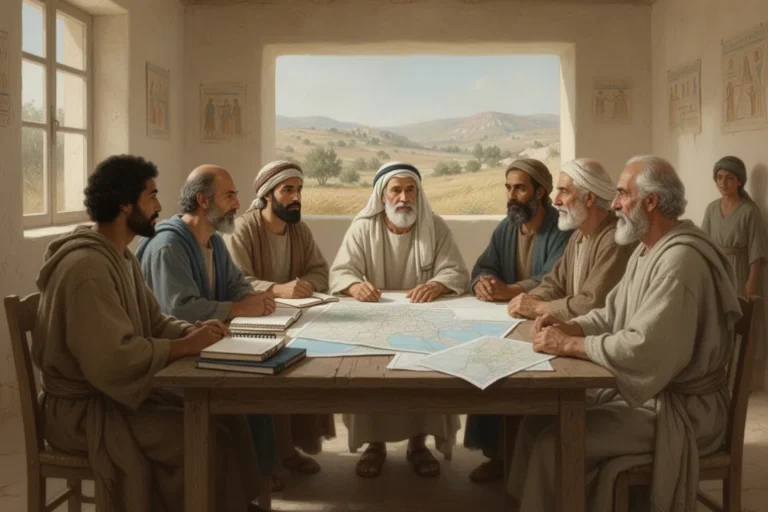
The word missionary generally refers to a Christian who is sent to represent the faith and serve a particular community. The sending body may be a local church, denomination, mission agency, school, medical organization, or network of congregations. A missionary may work publicly as a pastor or teacher, or quietly in a profession that creates trusted relationships.
Missionary work looks different because communities have different needs. In one setting, a missionary might help train local church leaders. In another, the person may teach English, provide maternal health support, translate Christian resources, help farmers improve food security, or assist with refugee services. Local partners should shape the work rather than receiving a fixed program designed elsewhere.
Many Christian traditions connect missions with Jesus’ command to make disciples among all peoples, often called the Great Commission and associated with Matthew 28:18-20. Christians also point to passages such as Acts 1:8, which describes witness extending outward from a local community, and 2 Corinthians 5:20, which presents believers as representatives of Christ. These references are interpreted differently across denominations, but they help explain why missions remain central to Christian life.
A useful distinction: Christian mission is the broad calling to participate in God’s work, while a missionary is one person who carries out that calling in a particular role, place, or community.
How missionary work developed through history
Christian missions have existed since the earliest Christian communities, but their methods and institutions have changed over time. The New Testament describes traveling apostles, teachers, evangelists, and household leaders who spread the faith through personal relationships, public teaching, hospitality, and correspondence. Early Christian communities also became known for caring for widows, the poor, the sick, and people affected by persecution.
From late antiquity through the medieval period, monks, bishops, and religious communities helped establish churches, schools, hospitals, and centers of learning. Missionary activity sometimes followed trade routes or political expansion. In some cases, Christian communities adapted local languages and customs; in others, missions became entangled with imperial power and cultural pressure.
From the 15th century onward, European colonial expansion created a complicated relationship between Christian missions and empire. Some missionaries defended Indigenous people, criticized exploitation, learned local languages, or documented abuses. Others supported colonial systems, treated European culture as inseparable from Christianity, or participated in the suppression of Indigenous religions and traditions. A credible account of missionary history must hold these realities together rather than portraying the past as entirely heroic or entirely uniform.
The modern missionary movement grew through Protestant, Catholic, and Orthodox initiatives, especially from the 18th century forward. Mission societies sent clergy, teachers, doctors, translators, and lay workers to many regions. Their contributions included Bible translation, literacy programs, clinics, schools, and the formation of local churches. Their record also includes paternalism, competition between denominations, dependence on foreign leadership, and damage caused by cultural assimilation.
During the 20th and 21st centuries, Christianity became increasingly centered in communities outside Europe and North America. Churches in Africa, Asia, Latin America, and the Pacific now send missionaries of their own. This shift has encouraged mission agencies to reconsider older assumptions about who leads, who gives, and who receives. Many organizations now emphasize partnership, local authority, mutual learning, and accountability.
There is no single job description for a missionary. A person’s responsibilities depend on training, language ability, church affiliation, location, immigration rules, and the priorities identified by local partners. The following roles are common, although they often overlap:
Church planting and pastoral support: helping establish congregations, mentor leaders, teach Scripture, organize worship, or strengthen existing churches.
Discipleship and theological education: leading small groups, developing training materials, teaching in seminaries, and preparing local pastors or lay leaders.
Translation and literacy: learning a local language, translating Christian materials, supporting reading programs, or preserving oral and written traditions.
Education: teaching in schools, training teachers, offering vocational instruction, or supporting scholarships and educational access.
Health and social services: working as doctors, nurses, counselors, public health educators, community workers, or administrators in faith-based programs.
Relief and development: responding to displacement, hunger, natural disasters, poverty, and conflict while building long-term local capacity.
Business and professional work: using engineering, agriculture, technology, construction, finance, or other skills to serve alongside a local church or organization.
Advocacy and reconciliation: supporting human dignity, peacebuilding, anti-trafficking efforts, prison ministry, disability inclusion, or racial and ethnic reconciliation.
Missionaries may be vocationally employed by a church or agency, self-supported through professional work, or sent as volunteers. Some live in one community for decades; others make repeated visits or coordinate projects from their home country. Digital communication can support relationships, but it does not remove the need for cultural understanding, local leadership, or careful presence.
How someone becomes a Christian missionary
People enter missionary service through different routes, but responsible preparation usually takes years rather than weeks. A strong process tests motivation, develops competence, and gives the sending organization a chance to assess a person’s character and suitability.
Clarify your calling. Talk with trusted pastors, mentors, family members, and Christians who know your strengths. Examine whether your interest is rooted in service, humility, and a willingness to learn rather than a desire to rescue people or escape personal difficulties.
Choose a field of service. Consider whether you are drawn to church ministry, education, medicine, community development, translation, student work, refugee support, or another area. The community’s needs and the organization’s existing partnerships should guide this decision.
Build relevant skills. Complete professional education when required, gain work experience, improve communication abilities, and learn basic cultural research methods. Language study is especially valuable because it demonstrates respect and helps you form relationships without relying entirely on interpreters.
Find a responsible sending body. Investigate the church or mission agency carefully. Ask how it handles finances, safeguarding, complaints, medical care, security, supervision, local leadership, and the transition of projects to local ownership.
Complete screening and training. A healthy process may include background checks, psychological assessment, theological formation, cross-cultural training, first aid, language preparation, and instruction about power, trauma, child protection, and responsible fundraising.
Develop a support plan. Many missionaries depend on donations, while others receive a salary or combine employment with ministry. Prepare a realistic budget for housing, insurance, travel, taxes, education, emergencies, and time away from service.
Serve under local guidance. Listen before proposing solutions. Learn how decisions are made, ask permission, observe community priorities, and work with people who will remain after an outside worker leaves.
Review the work regularly. Seek feedback from local partners, supervisors, and the people affected by the program. Be willing to change or end an activity that creates dependence, causes harm, or no longer meets a genuine need.
A short-term trip can introduce someone to cross-cultural service, but it is not the same as long-term missionary work. Visitors may have limited knowledge of local history, language, and power dynamics. A responsible short-term team contributes best when it supports an established local plan rather than arriving with an independent project.
What effective missionary service requires
Cultural humility is one of the most important qualities in missionary work. It means accepting that your own habits are not universal, recognizing the knowledge held by local communities, and remaining open to correction. Humility does not require abandoning Christian convictions; it requires separating the central claims of faith from personal preferences about food, clothing, worship style, family life, leadership, or social customs.
Language learning is another major form of respect. Even basic conversation can reduce distance and reveal how people describe their own experiences. Missionaries should avoid assuming that a few memorized greetings equal fluency. Serious communication often requires patient study, qualified interpretation, and sensitivity to humor, grief, honor, gender expectations, and indirect forms of disagreement.
Effective workers also need relational patience. Trust usually develops through repeated contact, reliability, and shared work. A missionary who measures success only by visible attendance, financial growth, or public decisions may miss slower forms of change, such as improved local leadership, restored relationships, greater safety, or a community’s ability to manage its own resources.
Professional competence matters as much as good intentions. A health program needs trained health workers. A construction project requires technical oversight. Counseling requires appropriate education and referral systems. Spiritual concern cannot replace expertise, and enthusiasm cannot safely substitute for safeguarding procedures.
Ethical questions surrounding Christian missions
Christian missions involve unequal power whenever visitors control money, visas, education, technology, or access to international networks. That imbalance can affect whether people feel free to disagree or decline an invitation. Ethical service therefore requires informed consent, transparency, and the protection of vulnerable people.
Religious freedom includes the freedom to change one’s beliefs, but it also includes the freedom not to participate. Missionaries should never tie food, medical treatment, schooling, employment, housing, or disaster relief to religious participation. People receiving aid must understand what is offered and must not be pressured during moments of crisis or dependence.
Child protection deserves particular attention. Organizations should use background checks, clear supervision rules, reporting procedures, appropriate adult-child boundaries, and strict controls on photography and personal information. Visitors should not post images or stories about children simply because they make fundraising more effective. A child’s dignity and safety take priority over publicity.
Missionary organizations should also examine how they describe the people they serve. Fundraising materials that portray communities only as helpless, dirty, or spiritually deficient can reinforce stereotypes and hide the abilities already present. Better communication shows agency, competence, and partnership while explaining real needs honestly.
Practical test: Ask who makes decisions, who controls the money, who receives credit, who can complain safely, and what remains when the missionary leaves. The answers reveal whether a project is genuinely collaborative.
How Christian missionaries can avoid harmful patterns
Good intentions do not automatically produce good outcomes. Missionaries can reduce harm by examining common patterns that have weakened communities or damaged trust in the past.
Do not treat poverty as proof of personal failure. Economic hardship may result from history, conflict, discrimination, environmental conditions, corruption, or unequal systems.
Do not assume foreign solutions are superior. Local people often understand the problem, the risks, and the workable options better than an outside team.
Do not build unnecessary dependence. Pay fair local wages, strengthen local institutions, share skills, and plan for leadership transfer from the start.
Do not confuse visibility with impact. A dramatic event may attract attention while a quiet training program produces more lasting benefit.
Do not use spiritual language to avoid accountability. Prayer and faith should accompany sound planning, transparent finances, and professional standards.
Do not erase local Christian voices. Churches and believers in the host community should have authority to define priorities, interpret their context, and evaluate outside assistance.
Do not romanticize hardship. Missionaries and local partners need rest, medical care, trauma support, and safe ways to leave dangerous situations.
Organizations can strengthen accountability by publishing financial information, conducting independent evaluations, inviting community feedback, and creating complaint systems that do not depend on the person being accused. They should also acknowledge failure publicly when a program causes harm or falls short of its goals.
How missionaries relate to local churches
The healthiest model is usually one of partnership rather than replacement. A missionary brings skills, relationships, resources, or outside perspective, while the local church brings language, cultural knowledge, spiritual authority, and long-term presence. Both sides should be able to question plans and renegotiate responsibilities.
Local leadership may involve more than appointing a local person to a position created by outsiders. It includes giving local believers real control over budgets, teaching priorities, staff decisions, property, public communication, and the definition of success. A project is not truly locally led if the outside agency can cancel it without consultation or retains all financial authority.
Partnership can also include cooperation with Christians from different denominations and with nonreligious organizations. Shared work in food distribution, health care, education, peacebuilding, or disaster response does not require every group to agree on theology. Clear boundaries and honest communication help protect both the mission and the people receiving assistance.
How success in missions should be evaluated
Counting conversions, baptisms, church attendance, or buildings can provide limited information, but numbers alone cannot show whether work is healthy. Mission leaders should ask whether people participated freely, whether local churches are stronger, and whether vulnerable people were protected. They should examine both intended results and unintended consequences.
Useful questions include:
Did local partners identify the need and help design the response?
Did the program increase local skills, ownership, and decision-making power?
Were people able to refuse participation without losing access to essential services?
Did the work respect local culture while addressing genuine harm?
Are finances, salaries, and outcomes clear to donors and community members?
Can the activity continue safely without permanent foreign involvement?
What criticism has the organization received, and how did it respond?
Spiritual outcomes are meaningful to Christian communities, but they should not be manufactured through pressure or misrepresented in reports. Honest evaluation makes room for slow growth, disagreement, setbacks, and the possibility that a project should be redesigned or discontinued.
Ways to support Christian missionaries responsibly
You do not have to relocate internationally to participate in Christian mission. Local churches, immigrant communities, prisons, hospitals, schools, shelters, and disaster-response networks all need people who can serve consistently. Support may involve hospitality, transportation, language practice, professional expertise, prayer, mentoring, or financial giving.
If you donate, examine the organization before sending money. Look for a clear mission, understandable financial practices, safeguarding policies, realistic descriptions of local conditions, and evidence that local partners have meaningful authority. Ask how much funding reaches the stated program and how the organization handles emergencies, staff misconduct, and project failure.
Short-term volunteers should prepare to be learners rather than customers. Read about the community’s history, follow local instructions, avoid taking intrusive photographs, and accept tasks that may seem ordinary. A contribution such as organizing supplies, repairing equipment, or supporting local staff can be more useful than a high-profile activity designed for visitors.
Prayer can be part of responsible support when it is offered with respect for the missionary’s beliefs and circumstances. Practical care matters too: regular communication, emergency funds, professional counseling, opportunities for rest, and a welcoming community for people returning from service.
Questions to ask before joining a mission trip
Before committing time or money, ask detailed questions rather than relying on inspirational stories. A trustworthy organization should answer directly and should not treat reasonable questions as a lack of faith.
Who requested this project, and what local organization is responsible for it?
What preparation is required before arrival?
How are children and vulnerable adults protected?
What are the rules for photography, social media, and personal data?
How are donations allocated, and what expenses are paid by participants?
What happens if a volunteer becomes sick, unsafe, or unable to continue?
How will the project affect local employment and existing services?
What will the team do if local leaders disagree with its plan?
How will the organization evaluate the project after the trip?
These questions do not diminish the spiritual purpose of mission. They help ensure that service reflects the Christian values of truthfulness, justice, compassion, and respect for human dignity. The strongest missionary work combines clear faith, competent service, local leadership, and accountable relationships.
Frequently asked questions
Are all Christian missionaries pastors?
No. Some are ordained pastors, but many serve as teachers, doctors, nurses, engineers, translators, counselors, administrators, farmers, or community workers. Their professional role may provide the main setting for relationships and service. What makes the work missionary is the person’s sending relationship, Christian purpose, and participation in a particular mission rather than an official pastoral title.
Do missionaries have to work in another country?
No. Missionaries may serve across international borders, within their own country, or among communities where they have little cultural or linguistic familiarity. Urban ministry, work with immigrants, prison outreach, disaster response, and service among marginalized populations can all be forms of Christian mission. Geographic distance is not the measure of a missionary’s importance.
How are Christian missionaries usually funded?
Funding varies by denomination and organization. Some receive salaries, some raise donations from churches and individuals, and some support themselves through professional employment or business activity. Responsible organizations explain budgets, compensation, travel costs, emergency arrangements, and financial accountability clearly. A missionary’s funding model should not determine whether essential services are offered fairly.
Can missionary work be respectful of other religions?
It can, when missionaries honor freedom of conscience, avoid coercion, learn local history, and treat people of other faiths as neighbors rather than targets. Respect does not require hiding Christian beliefs, but it does require honest conversation, permission, patience, and a refusal to connect religious participation with access to food, medical care, education, or safety.










Leave a Reply