The practice of eating unleavened bread holds a significant place in biblical history, deeply woven into the fabric of Jewish traditions and ultimately impacting Christian beliefs. This simple, yet profoundly symbolic food, represents more than just a dietary choice; it embodies themes of purification, freedom, and remembrance. Understanding its role in the Bible allows us to gain a deeper appreciation for the religious and cultural context in which these stories unfold.
The importance of unleavened bread is highlighted across various biblical narratives, from the Exodus story to the celebration of Passover. It’s a reminder that God’s intervention in human history is not just about miracles, but also about freeing individuals from oppression and guiding them towards a new life. The act of preparing and consuming unleavened bread becomes a ritual act, connecting the present to the past and reinforcing the values of the faith.
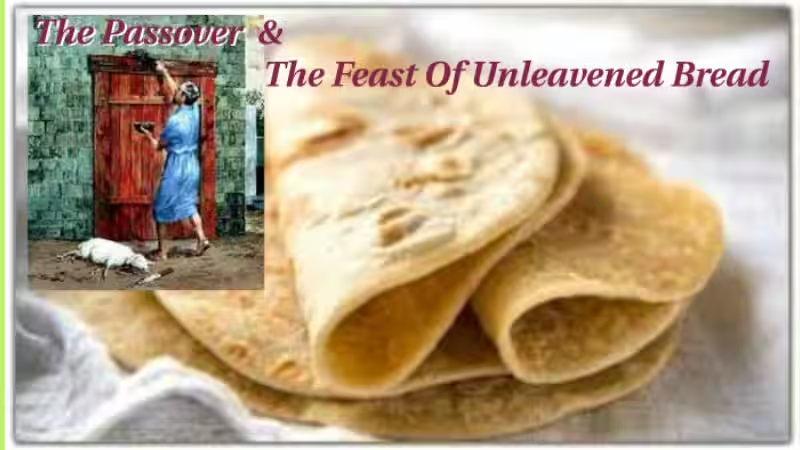
The Exodus narrative, a cornerstone of Jewish tradition, prominently features unleavened bread. During the Israelites’ miraculous escape from slavery in Egypt, they were instructed to leave Egypt in a hurry, with no time to allow bread dough to rise. This necessity led to the consumption of unleavened bread—a symbol of their hasty departure and their reliance on God’s swift intervention. This rapid departure also speaks to the inherent urgency and importance of obedience to God’s commands.
The Israelites’ experience in Egypt underscores the importance of faith and trust in God’s plan. Unleavened bread becomes a tangible reminder of their liberation, a visual representation of the haste and immediacy of their escape. Imagine the Israelites, fleeing with little more than the clothes on their backs, their food a simple, yet profoundly significant, symbol of freedom. This fast-paced preparation of unleavened bread became a powerful emblem of their struggle for freedom and their reliance on God’s guidance.
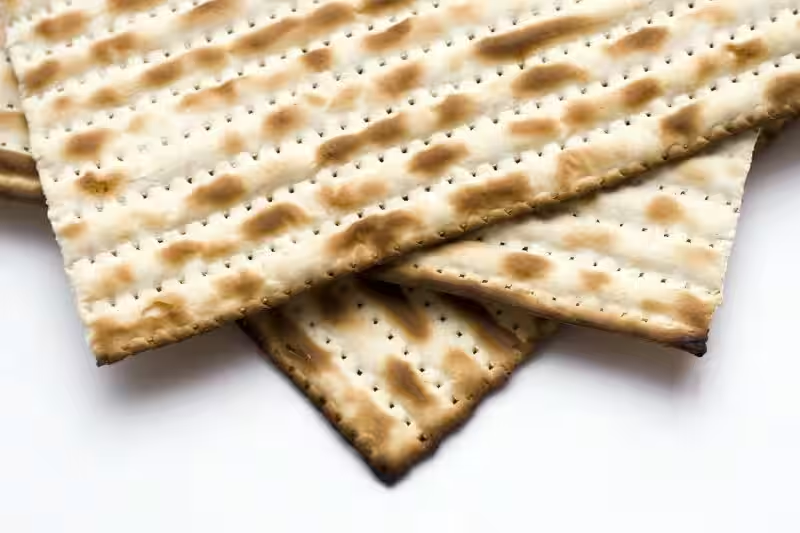
Passover, a significant Jewish festival, is inextricably linked to the consumption of unleavened bread. The Passover Seder, a ritual meal, traditionally involves eating unleavened bread, known as matzah, to commemorate the Israelites’ liberation from slavery. Observing this tradition reminds the Jewish people of their ancestors’ struggles and their eventual freedom. The act of eating unleavened bread during Passover reinforces the themes of freedom, remembrance, and their enduring faith.
The Seder meal itself, with its specific order and rituals, is a powerful expression of faith. The unleavened bread, a key part of the Seder plate or table, is more than just food. It’s a tangible representation of the struggles of their forefathers. The presence of unleavened bread emphasizes the importance of remembering the past, recalling the lessons learned, and embracing the hope for a better future. Think of the profound connection—the unleavened bread ties generations together, ensuring that the story of liberation is never forgotten.
Unleavened Bread in the New Testament
While unleavened bread loses its centrality in the New Testament compared to the Old Testament, its symbolic significance still resonates. The Last Supper, a pivotal moment in Christian history, involves the sharing of bread and wine. While not explicitly stated as unleavened bread, the context suggests that a similar type of bread was likely used, connecting this key meal to the Jewish traditions of Passover and highlighting Jesus’ fulfillment of prophecy. The symbolism of shared sustenance continues to play a central role in many Christian communities.
The act of sharing bread and wine at the Last Supper represents a new covenant, a new relationship between God and humanity. It establishes a profound connection between the past, present, and future, linking the liberation of the Israelites with the salvation offered by Jesus. This symbolic food reinforces the concept of community and shared destiny, connecting the historical liberation experienced by the Israelites with the spiritual liberation offered through Jesus Christ. The enduring traditions of eating unleavened bread in certain Christian communities echo this profound connection to the past.
The symbolic meaning of unleavened bread extends far beyond the confines of religious texts. It speaks to the importance of simplicity, purity, and freedom from the constraints of the past. It is a reminder to live a life free from the burdens of unnecessary complexities, focusing instead on core values and essential truths. The practice of consuming unleavened bread can be a powerful metaphor for making significant choices that align with our values, much like the Israelites’ hasty departure from Egypt.
Consider how we can apply this concept to our daily lives. Unleavened bread can symbolize a commitment to simplicity, a rejection of artificiality, and a focus on essential spiritual needs. It can represent a desire to be free from the shackles of the material world, embracing a life rooted in faith and hope. We are encouraged to identify the “leaven” in our lives – the things that weigh us down – and to seek liberation from it.
Frequently Asked Questions about Unleavened Bread in the Bible
What is unleavened bread, and why is it important in the Bible?
Unleavened bread is bread made without yeast or leaven. In the Bible, it’s often associated with the Israelites’ exodus from Egypt and the Passover feast. The absence of leaven signifies the haste and immediacy of their departure, as there was no time for the bread to rise.
What is the connection between unleavened bread and Passover?
Passover commemorates the Israelites’ liberation from slavery in Egypt. Eating unleavened bread during Passover is a significant part of this commemoration, symbolizing the haste of their departure and the removal of anything “leavened” (symbolizing sin or corruption) from their lives.
Is unleavened bread only important for Jewish tradition?
While it’s central to Jewish tradition, the symbolism of unleavened bread has resonance within broader religious interpretations. The concept of removing leaven can be seen as a metaphor for removing negative influences or impurities.
How is unleavened bread used in Christianity?
While not a central practice in modern Christianity, the concept of unleavened bread, as a symbol of purity and haste, has been considered in various Christian contexts. Some Christian denominations still use unleavened bread in communion, drawing on the Passover symbolism.
Why is leaven sometimes considered a negative symbol in the Bible?
Leaven, in biblical context, can symbolize sin, corruption, and the gradual process of deterioration. The absence of leaven represents purity and the swiftness of God’s actions.