Passover, a deeply significant Jewish holiday, commemorates the liberation of the Israelites from slavery in ancient Egypt. This powerful narrative of freedom and redemption resonates across centuries and cultures, and its themes of hope and deliverance connect directly to the figure of Christ. Understanding this connection can provide a deeper appreciation for both Jewish and Christian traditions.
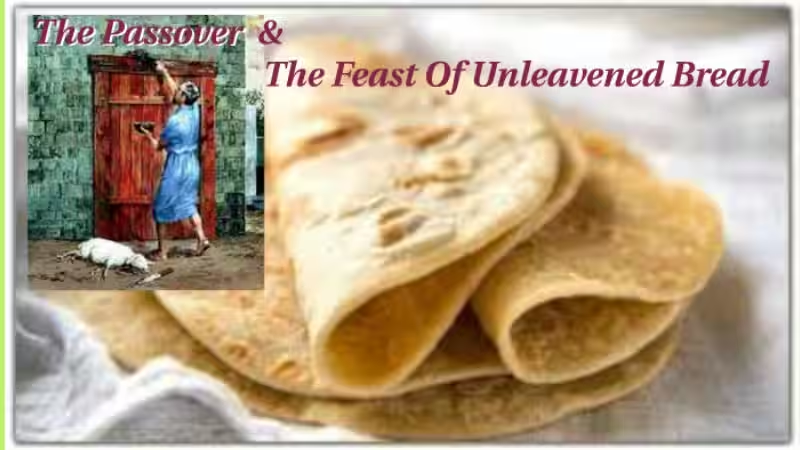
The Passover story, rich in symbolism and ritual, tells of God’s intervention on behalf of His people. This intervention, rooted in divine action, is a recurring theme in scripture and is mirrored in the Christian understanding of Christ’s role. The Passover lamb, sacrificed and eaten, foreshadows the ultimate sacrifice of Jesus Christ. This connection, often overlooked, lies at the heart of the shared theological ground between Judaism and Christianity.
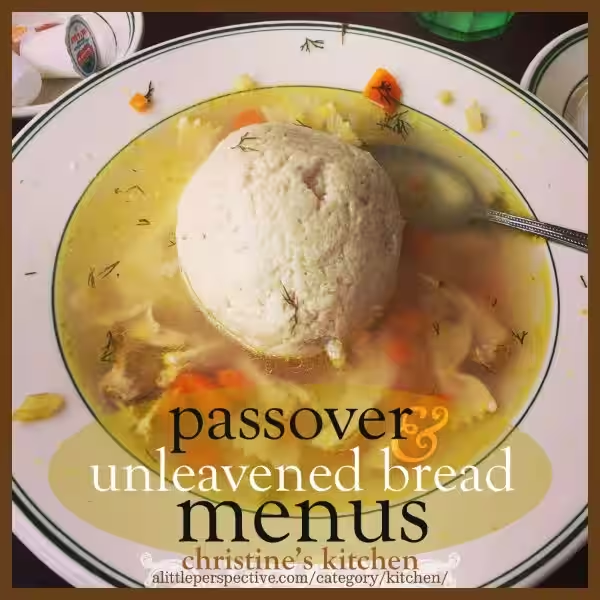
The Seder, the central ritual of Passover, is a carefully orchestrated meal. It involves the narration of the Exodus story, the sharing of symbolic foods, and the retelling of the narrative of liberation. This ritualistic journey acts as a powerful reminder of the past and a guide toward the future. The elements are more than just food; they’re representations of significant events and concepts. For example, the matzah, an unleavened bread, symbolizes the haste with which the Israelites left Egypt. The charoset, a sweet paste, represents the mortar used by the Israelites to build. These seemingly simple elements hold deeply spiritual meanings.
The Seder is a vibrant and engaging experience. Families gather around the table, sharing stories and connecting across generations. The Seder’s significance lies in its ability to transmit the historical, cultural, and spiritual heritage of the Jewish people. This tradition, with its emphasis on community and storytelling, is deeply connected to the Christian belief in the importance of communal worship. This communal aspect is essential to both faiths, providing a framework for shared experiences and a sense of belonging.
For Christians, the Passover narrative isn’t merely a historical account. It’s a powerful prelude to the sacrificial act of Jesus Christ. The Passover lamb, a symbol of sacrifice, finds its fulfillment in Jesus, who is often referred to as the “Lamb of God.” This parallels the sacrificial elements of the Seder, revealing a deep connection between the two traditions. The Seder, with its symbolism of oppression, liberation, and redemption, provides a framework for understanding the significance of Christ’s sacrifice and resurrection. Jesus himself, it is believed, observed the Passover Seder.
The symbolism of Christ as the fulfillment of the Passover prophecy is a key theological point. Think of it like this: The Passover lamb points to a greater sacrifice to come. The lamb was a temporary solution, a foreshadowing of the ultimate sacrifice that would atone for the sins of humanity. This idea is central in Christian theology. Understanding this connection requires a thoughtful approach and an open mind to different interpretations. By studying the symbolism of the Passover Seder, Christians can gain a deeper appreciation for the connection between the Jewish tradition and their own faith.
The Legacy of Liberation: A Shared Journey
Both Jewish and Christian traditions emphasize the themes of freedom, redemption, and hope. The Passover story’s emphasis on liberation resonates with the Christian belief in Christ’s liberating work, which offers salvation and redemption. This shared theme of liberation is a powerful testament to the enduring values of both traditions. Both traditions teach the importance of living a life grounded in justice and compassion. This emphasis on ethical living, rooted in the values of the Exodus narrative, is a crucial component of both faiths. For instance, the commandments given to the Israelites during the Exodus influence moral codes within both Judaism and Christianity.
The Passover story, with its powerful message of liberation, provides a rich foundation for understanding the relationship between Judaism and Christianity. The themes of sacrifice, hope, and redemption are central to both faiths. Acknowledging this shared heritage fosters mutual understanding and respect. By studying both traditions, we can gain a deeper appreciation for the richness and complexity of religious thought and practice. This study, therefore, leads to a greater understanding and appreciation of the shared values and spiritual journeys of both faiths and can benefit everyone.
Frequently Asked Questions about Christ in Passover
What is the connection between Christ and Passover?
Christians believe that Jesus’s Last Supper, held during the Passover season, fulfilled the Jewish Passover. They see the elements of the Last Supper – bread and wine – as symbolic representations of Jesus’s body and blood, offered as a sacrifice for the sins of humanity. This parallels the Passover lamb, sacrificed to protect the Israelites from the tenth plague.
Why is the Last Supper important to Christians?
The Last Supper is a central event in Christian theology, as it’s believed to be the institution of the Eucharist (Holy Communion). This ritual commemorates Jesus’ sacrifice and his promise of eternal life, drawing parallels to the Passover meal.
How do Christians view the Passover lamb in relation to Jesus?
Christians see Jesus as the ultimate sacrifice, fulfilling the role of the Passover lamb. The lamb’s blood saved the Israelites, and the blood of Jesus is believed to offer salvation to all who believe in him.
Is the Christian interpretation of Passover universally accepted by Jews?
No. Jews do not interpret the Last Supper as fulfilling Passover in the same way. Passover commemorates the liberation of the Israelites from slavery in ancient Egypt and is a profoundly significant observance in Judaism.
How is the Christian understanding of Christ in Passover different from the Jewish understanding of Passover?
The core difference lies in the central figure. Jews focus on the historical event of the Exodus and the ongoing traditions tied to it. Christians see Jesus as the culmination and fulfillment of the Passover narrative, a sacrifice for the sins of humanity.