How can I become a vicar in the Church of England?
How can I become a vicar in the Church of England?
If you find yourself wondering whether your faith could become a lifelong way of serving others, you may be asking, “How can I become a vicar?” In the Church of England, a vicar is an ordained priest who leads worship, teaches the Christian faith, offers pastoral care, and serves a local parish community.
The usual route involves testing your vocation, speaking with your parish priest and diocese, completing a formal selection process, undertaking theological and practical training, and being ordained. After ordination, you normally serve as a curate before taking responsibility for a parish as a vicar or another kind of parish priest.
There is no single personality type, age, or career background that automatically makes someone suitable. What matters is a credible sense of calling, a growing Christian faith, the ability to serve people well, and a willingness to be formed by the Church. The process is designed to help you and the Church discern whether ordained ministry is right for you.
A vicar’s work is broader than leading a Sunday service. You may preach, preside at Holy Communion, lead baptisms, conduct weddings and funerals, visit people in hospital or at home, support those in crisis, and help a congregation grow in faith. Much of the work involves listening carefully and responding wisely rather than standing at the front of a church.
Vicars also help a parish make decisions about its future. This can include working with churchwardens, running meetings, managing volunteers, handling budgets, supporting children’s and youth work, and cooperating with other churches and community organizations. In some parishes, the vicar oversees staff or several congregations; in others, the role is carried out by a small team of clergy and volunteers.
The title vicar is commonly used for a parish priest, but the precise title can depend on the parish and its legal history. You may also hear terms such as rector, priest-in-charge, assistant curate, associate priest, or chaplain. All ordained priests share the central responsibilities of Christian ministry, although their daily duties and authority differ.
Some vicars receive a stipend and work full time. Others serve as self-supporting ministers, combining ordained ministry with paid employment, family responsibilities, or another vocation. Self-supporting ministry is not a lesser form of priesthood, but it has different expectations and practical arrangements.
How to recognize and test a possible vocation
A vocation usually develops over time rather than arriving as a single unmistakable moment. You might feel drawn to prayer, teaching, pastoral care, worship, or helping a church serve its community. Other people may independently tell you that they see gifts for ministry in you. Neither personal desire nor other people’s encouragement proves a vocation, but both can be worth exploring.
Pay attention to the difference between wanting a role and feeling called to serve God and the Church. Ordained ministry includes public leadership, but it also involves hidden work, criticism, administration, emotional demands, and seasons when results are difficult to see. A healthy vocation can include uncertainty while still producing a steady willingness to serve.
You do not need to wait until you feel completely certain. Discernment is a process in which your prayer, experience, relationships, and the Church’s assessment gradually come together. A mature response may be, “I believe God may be calling me, and I am willing to let the Church test that belief.”
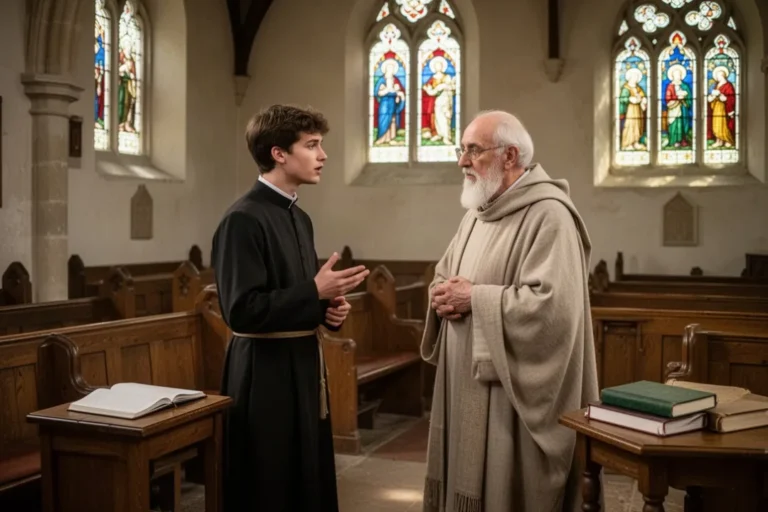
Begin by speaking with your parish priest or chaplain. Ask for an honest conversation about your faith, gifts, limitations, and reasons for considering ordained ministry. Your priest may suggest practical ways to test your calling, such as serving in worship, helping with pastoral visiting, leading a small group, assisting with children’s ministry, or taking part in local outreach.
Prayer should be part of the process, but discernment should not become private guesswork. Ask trusted Christians for feedback. Consider how you respond when plans change, when someone disagrees with you, or when a vulnerable person needs patient attention. The Church is looking for evidence of character and spiritual maturity, not only enthusiasm or public confidence.
A useful test: Ask whether you are drawn primarily to serving people and helping the Church follow Christ, or mainly to status, certainty, influence, or escape from your current circumstances. Mixed motives are normal, but they should be examined honestly.
What the Church of England looks for in candidates
The Church of England assesses the whole person rather than looking for a narrow professional profile. You will be expected to show a living Christian faith, a commitment to the Church, and an ability to reflect on your experience. You should also be willing to work with people whose backgrounds, views, and levels of faith differ from your own.
Emotional maturity matters because parish ministry brings grief, conflict, disappointment, and responsibility. You do not need to have solved every personal difficulty, but you should be able to recognize your limits, seek help, receive feedback, and act responsibly. The discernment process may explore your relationships, resilience, handling of authority, and approach to safeguarding.
Communication skills are useful, but you do not have to be a polished speaker. Good ministry requires clear preaching and teaching, yet it also requires listening, empathy, and appropriate boundaries. Someone who is quiet and reflective may have valuable pastoral gifts; someone who is confident in public may still need to develop patience and self-awareness.
The Church will also consider your theological understanding. You should be able to explain the central claims of the Christian faith, describe how prayer and worship shape your life, and engage thoughtfully with questions. You are not expected to know everything before training begins. A willingness to learn is more important than performing expertise.
Your practical suitability will be considered as well. This may include your health, personal circumstances, financial responsibilities, safeguarding history, and ability to meet the demands of training and ministry. The purpose is not to demand a flawless past. It is to establish whether the Church can support you responsibly and whether you can minister safely.
How the application and discernment process works
Exact arrangements vary between dioceses, so your first formal contact will normally be with the diocesan vocations adviser or another person appointed to support people exploring ministry. You can usually find contact details on your diocese’s website. Your parish priest may introduce you, but you can also make an initial inquiry yourself.
Early conversations are exploratory. You may discuss your Christian journey, work history, family life, church involvement, reasons for considering priesthood, and questions about the process. The adviser may encourage you to attend a vocations day, join a group for potential candidates, or undertake specific ministry experiences.
If your vocation continues to develop, you will normally make a formal application through your diocese. The application may ask about your faith, education, employment, relationships, church experience, and understanding of ministry. You will need to provide references and complete the required declarations and checks.
Your diocese will usually arrange interviews or a local discernment process before recommending you for wider selection. You may meet several people who are assessing different aspects of your readiness. Their role is not simply to decide whether they like you. They are seeking evidence that you have a vocation, the capacity to train, and the potential to serve faithfully in the Church of England.
Selection commonly involves written work, interviews, group exercises, theological discussion, and reflection on practical situations. You may be asked how you would respond to conflict, support someone in distress, plan worship, handle disagreement, or engage with a community that does not attend church. The questions are intended to reveal your judgment and self-awareness, not to catch you out with obscure answers.
A recommendation for training is not the same as a guaranteed appointment as a vicar. It means that the Church believes you should proceed toward ordained ministry. You will still need to complete training, meet formation requirements, and serve in a parish before being considered for a substantial post.
What qualifications and experience you may need
There is no universal requirement that every candidate already hold a theology degree. The Church of England offers different training pathways, and the right route depends on your academic background, work, family circumstances, and the kind of ministry you may undertake. Some candidates study at a theological college, while others train through a course connected with a university or regional program.
Many candidates complete theological education that leads to a recognized qualification. Depending on the pathway, this may involve undergraduate or postgraduate study, and some programs are designed for people who already have a degree. Candidates without a conventional academic background may still be considered, particularly when they can demonstrate the ability to study and reflect at the required level.
Your diocese will advise you about academic preparation. Do not enroll in an expensive course simply because you think it will guarantee selection. Ask the vocations adviser which qualifications are accepted, whether financial support is available, and whether a particular course fits the training route being considered for you.
Church involvement is normally more significant than holding an impressive job title. Useful experience might include leading prayer, teaching, pastoral visiting, community service, mentoring, youth work, or helping with church administration. What matters is not collecting activities for an application but learning how people, congregations, and communities actually function.
Life experience can be a genuine asset. People enter ordained ministry after careers in education, health care, business, the public sector, the armed forces, trades, the arts, and many other fields. Experience of responsibility, teamwork, loss, change, and service can shape a priest’s understanding of the people they will accompany.
Choosing between full-time and self-supporting ministry
The Church of England has more than one way to serve as an ordained priest. A stipendiary priest normally receives financial support from the Church and gives most of their working time to parish or other authorized ministry. This may be the route people imagine when they picture a conventional full-time vicar.
A self-supporting priest does not normally receive a stipend for ministry and may continue in another job. Some serve in a parish on a regular basis, while others work as chaplains, in ministry teams, or in specialist settings. The details differ by diocese, so you should discuss workload, training, travel, and family commitments early.
There may also be locally focused or part-time ministry arrangements. These can allow a priest to serve a particular community or congregation while sharing responsibilities with other clergy. The most suitable pattern depends on the needs of the Church as well as your own circumstances.
Do not treat self-supporting ministry as an easier alternative. Balancing employment, ordained duties, study, family life, and rest can be demanding. Conversely, full-time ministry does not mean that every hour is flexible or that the work is free from financial and administrative pressures. Honest conversations about time, money, housing, and family responsibilities are essential.
What theological training and formation involve
Once you are accepted for training, you will study subjects such as the Bible, Christian doctrine, church history, ethics, worship, preaching, pastoral care, mission, and the practical life of the Church. Training is not only about passing academic assessments. It is intended to form you as a person who can pray, think, lead, serve, and make wise decisions.
Many programs combine classroom or online learning with placements in churches and community settings. You may preach under supervision, lead a service, conduct pastoral visits, work with children or young people, and reflect on what you have experienced. This combination helps connect theological knowledge with real people and real situations.
Formation also includes personal and spiritual development. You may work with a tutor, spiritual director, supervisor, or placement adviser. You will be encouraged to examine your prayer life, use of authority, emotional responses, relationships, and understanding of vocation. Feedback can be uncomfortable, but the ability to receive it is a central part of becoming a safe and effective priest.
The length of training varies. Full-time residential programs, part-time regional courses, and pathways for those preparing for self-supporting ministry may have different timetables. Your diocese and training provider will explain the structure, costs, grants, accommodation, and expectations before you commit.
Ordination, curacy, and becoming a parish priest
After successful training and the necessary approvals, you may be ordained deacon. In the Church of England, a period of diaconal ministry normally comes before ordination as a priest. The exact timetable and arrangements are set by the Church and your diocese, and ordination is carried out by the bishop.
As a deacon, your ministry may include assisting at worship, preaching, pastoral care, and practical service. Following priestly ordination, you can normally preside at Holy Communion and undertake the sacramental responsibilities of a priest. Your training continues after ordination because professional growth and spiritual formation do not end when you receive a title.
Your first parish appointment is usually a curacy. A curate serves alongside an experienced priest or ministry team while developing confidence and judgment. You may have responsibility for particular congregations, schools, services, or pastoral areas, but you should have supervision and opportunities to discuss difficult situations.
After curacy, you may apply for a post such as vicar, rector, priest-in-charge, associate priest, or chaplain. Appointments are made through a process involving the diocese and the parish or organization. You may need to prepare an application, attend interviews, preach or lead worship, and meet representatives of the community.
Not every ordained priest becomes a vicar, and that does not mean the vocation has failed. Some priests discover that chaplaincy, theological education, pioneer ministry, cathedral work, or non-stipendiary parish ministry is a better fit. The aim is not to obtain a particular title but to serve where your gifts and the Church’s needs meet.
Practical tips and common mistakes to avoid
A thoughtful approach can make the discernment process clearer and less stressful. You are not expected to present a perfect version of yourself. You are expected to be truthful, reflective, and willing to grow.
Speak to your parish priest early. Do not wait until you have solved every question before asking for guidance.
Contact the diocesan vocations team. The process, financial support, and training options vary, so get local information rather than relying on assumptions.
Build a pattern of service. Try pastoral visiting, worship leadership, teaching, community work, or another ministry that lets you learn through experience.
Keep a record of your reflections. Note what brings life, what drains you, where others see gifts, and what feedback you need to take seriously.
Protect time for prayer and rest. Discernment becomes harder when you are treating every church activity as an audition.
Discuss finances and family commitments. Ask about training costs, housing, employment, childcare, travel, and the effect of a possible move.
Be honest about weaknesses. Acknowledging a limitation is usually more constructive than trying to hide it.
Do not confuse popularity with vocation. Being well liked in a congregation is valuable, but ordained ministry also involves accountability and difficult decisions.
One common mistake is assuming that a strong desire to preach is enough. Preaching is part of priestly ministry, but so are routine visits, safeguarding responsibilities, administration, conflict resolution, and patient pastoral care. A candidate who welcomes the whole pattern of service gives the Church more useful evidence than someone focused only on public ministry.
Another mistake is beginning with a preferred parish or job title. You may eventually have a clear idea of where you want to serve, but early discernment should remain open. The diocese needs to consider your gifts, training, family situation, and the needs of particular communities.
Do not resign your job or move house at the beginning. Explore the vocation first, confirm the likely training route, and discuss practical decisions with your diocese. Major changes should follow discernment rather than replace it.
Questions to ask before you apply
Before submitting a formal application, take time to ask questions that reveal what the vocation would mean in ordinary life. These conversations can prevent unrealistic expectations and help your household prepare for the process.
How would ordained ministry affect my partner, children, or other dependents?
What kind of parish or chaplaincy setting brings out my best gifts?
How do I respond when people reject my advice or criticize my leadership?
Can I accept supervision from people who see my weaknesses more clearly than I do?
What experience do I have of serving people outside my usual social or church circle?
What financial and practical support would I need during training?
Am I willing to serve where the Church needs priests, rather than only where I prefer to live?
You should also ask the diocese what happens if you are not recommended for training at the first attempt. A decision not to proceed may identify areas for growth, indicate that a different form of ministry would suit you, or reflect timing and circumstances rather than a permanent judgment on your faith. Seek clear feedback and take time to pray and reflect before deciding what to do next.
How long becoming a vicar may take
There is no fixed timetable for everyone. The early discernment stage may take months or longer, particularly if you need more ministry experience, theological preparation, or time to resolve personal circumstances. Selection and references add further time, followed by the training program and a curacy.
For many people, the path from first serious conversations to a first parish appointment takes several years. The length depends on whether training is full time or part time, your academic preparation, the needs of your diocese, and the type of ministry you pursue. A slower process is not necessarily a bad sign; careful discernment protects both candidates and the communities they may serve.
Rather than measuring progress only by dates, look for evidence of growth. Are you becoming more prayerful, teachable, pastorally aware, and able to work with others? Are your reasons for ministry becoming clearer? Is the Church confirming your gifts through honest feedback? Those questions are more useful than trying to hurry toward the word vicar.
Where to begin this week
Start with a simple, practical conversation. Tell your parish priest that you are considering ordained ministry and ask for an honest response. You can then contact your diocesan vocations adviser, attend an information event if one is available, and arrange opportunities to serve beyond your usual Sunday routine.
Write down why you are considering priesthood, what questions you have, and what experience might help you test the call. Pray with openness rather than demanding immediate certainty. If the vocation is genuine, it can withstand careful questions, patient preparation, and the Church’s discernment.
Becoming a vicar is not primarily a career change. It is a form of Christian service recognized by the Church, developed through training, and lived among particular people in a particular place. The next step is not to prove that you are already ready; it is to begin the conversation that will help you discover whether God and the Church are calling you to ordained ministry.
Frequently asked questions
Can I become a vicar without a university degree?
Yes, a university degree is not automatically required for every Church of England training pathway. Your diocese will assess your academic ability, experience, and readiness for theological study. Some candidates complete degree-level training, while others take a route suited to their background. Speak with a diocesan vocations adviser before choosing a course, because entry requirements and available programs vary.
How old do you have to be to become a vicar?
There is no single age at which everyone must begin the process, and people enter ordained ministry at many stages of life. The Church considers maturity, health, relationships, experience, and readiness for training rather than age alone. Older candidates may bring valuable work and life experience, while younger candidates may need more time to develop practical and pastoral experience.
Do vicars get paid?
Many full-time parish priests are stipendiary, meaning they receive financial support from the Church and may also receive housing connected with the appointment. Some priests serve in self-supporting roles while keeping other employment. Pay, housing, pension arrangements, and expenses depend on the appointment and diocese. Ask for current local information before making financial decisions.
Can women become vicars in the Church of England?
Yes. Women may be ordained as deacons and priests in the Church of England and serve as parish priests, including vicars. The Church also ordains women as bishops. Individual parishes and clergy may hold different theological views about ordained ministry, but women’s priestly ministry is an established part of the Church of England.


Leave a Reply