What a church chorister does and how to become one
What a church chorister does and how to become one
A church chorister helps lead worship through prepared, prayerful singing rather than simply performing music.
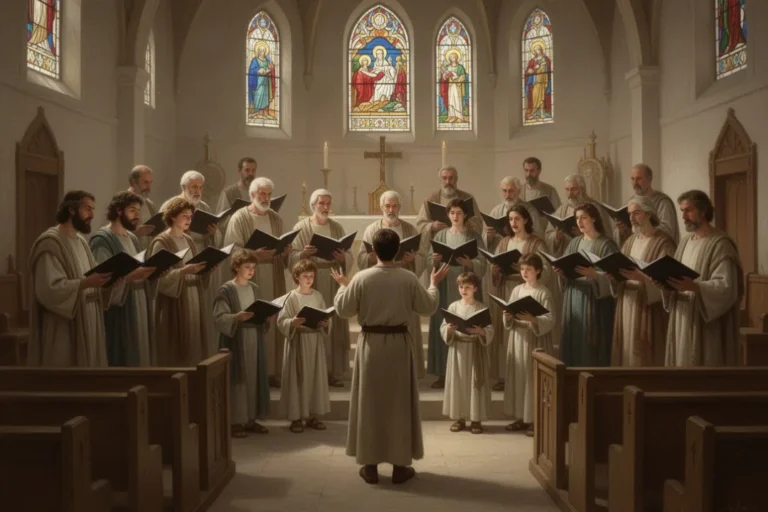
Choristers may sing in a cathedral, parish church, chapel, school chapel, or another Christian congregation. Their work can include chanting liturgical responses, singing anthems, supporting congregational hymns, and learning music that follows the church’s calendar. Some choristers are children, some are adults, and many choirs include both.
The exact role depends on the denomination and the local church. A chorister in an Anglican cathedral may sing daily offices and wear a distinctive choir robe, while a member of a Baptist, Methodist, Lutheran, Catholic, or nondenominational worship team may serve in a less formal setting. The common purpose is to use a trained voice to support the congregation’s prayer and worship.
A chorister’s visible role begins when the service starts, but much of the work happens beforehand. The singer studies the order of service, marks the music, attends rehearsals, and learns how musical cues fit with readings, prayers, processions, and communion.
During worship, choristers often sing music that the congregation is not expected to carry alone. This may include a psalm or chant, a choral setting of a prayer, a hymn descant, a motet, or an anthem. They may also sing responses with the minister, priest, cantor, or worship leader.
In many churches, the choir has a practical leadership function. Strong, steady singing helps the congregation find the melody, maintain the tempo, and enter at the correct point. Choristers are not meant to overpower everyone else; their sound should usually encourage participation rather than turn worship into a concert.
Some services require choristers to move through the building in a procession. They may carry candles, crosses, or music folders, or stand in a particular order. These actions are governed by local custom, so a new chorister learns not only the notes but also where to stand, when to sit, and how to move quietly.
Before the service: arrive, collect music, warm up, rehearse difficult passages, and check the service order.
During the service: sing assigned music, observe the director, follow the liturgy, and maintain a respectful posture.
Between musical sections: turn pages carefully, watch for cues, and remain attentive even when not singing.
After the service: return music, discuss corrections, and prepare for the next rehearsal or service.
How a chorister differs from other church musicians
The words chorister, choir member, cantor, and worship singer overlap, but they are not always interchangeable. A choir member is anyone who belongs to a church choir. “Chorister” often suggests a singer who regularly serves in formal worship, especially in a choir with established duties and musical training.
A cantor usually has a more individual leadership role. The cantor may sing the psalm, begin a hymn, lead a response, or guide the congregation through unfamiliar music. Choristers generally sing as part of an ensemble, although an experienced chorister may also cantor when the church assigns that responsibility.
A worship leader may coordinate the entire musical portion of a service, select songs, direct instrumentalists, and communicate with the clergy or service leader. A chorister normally has a narrower assignment: prepare the music, sing accurately, and respond to the director’s instructions.
These distinctions are not universal. One church may call every choir member a chorister, while another reserves the term for children in a traditional choir school. Ask the local music director how the title is used rather than assuming that every church follows the same terminology.
The central difference: a church chorister serves the worshiping community first. Musical excellence matters, but it is joined to attentiveness, humility, reliability, and respect for the service.
Where church choristers serve
Church choristers serve in many musical and theological traditions. A large cathedral may have professional adult singers, volunteer lay clerks, and choristers who sing several services each week. A small parish may have six people who rehearse once a week and sing one anthem on Sunday.
In a liturgical church, the choir’s music is often closely connected to the church year. Repertoire may change for Advent, Christmas, Lent, Holy Week, Easter, Pentecost, weddings, funerals, and feast days. Choristers need to recognize that music can communicate the character of a season through text, pace, harmony, and silence.
In a church with a more contemporary worship style, choristers may sing harmony parts with a praise band, lead repeated refrains, or provide vocal support behind a worship leader. The setting may be less formal, but the same basic skills remain useful: listening, blend, pitch accuracy, preparation, and sensitivity to the congregation.
Choirs also sing outside regular Sunday services. They may participate in weddings, memorial services, concerts, community events, caroling, outreach programs, and recordings. Each setting brings different expectations. A wedding may require careful timing and polished presentation, while a memorial service may call for restrained, compassionate singing.
Skills a successful church chorister needs
Good choristers develop musical ability alongside dependable habits. You do not need to begin as an advanced singer, but you do need a willingness to learn and to accept direction. The most valuable skill is often not a dramatic solo voice but the ability to make a steady contribution within the group.
Pitch, rhythm, and musical reading
A chorister should be able to match pitch, keep a consistent rhythm, and follow a written line of music. Reading notation makes rehearsals more efficient because you can identify notes, rests, dynamics, articulation, and repeated sections without relying entirely on imitation.
You may also need to read liturgical notation, chant signs, chord charts, or pronunciation guides. These systems vary, so local instruction matters. Even if you learn music by ear, basic notation helps you understand the director’s corrections and practice accurately at home.
Vocal control and healthy singing
Healthy singing begins with comfortable breathing and an unforced tone. Choristers should avoid pushing for volume, especially in resonant buildings where sound carries farther than expected. A warm-up can gently prepare the voice through breathing exercises, humming, lip trills, scales, and simple patterns.
Young singers need particular care. Children’s voices are still developing, and they should not be pressured to sing notes that feel strained or uncomfortable. Adults should also respect vocal fatigue, illness, and recovery. A reliable chorister knows when to reduce volume or tell the director that a part is causing discomfort.
Listening and ensemble awareness
Choir singing depends on listening as much as producing sound. You must hear the people around you, adjust your volume, match vowels, and stay aware of the group’s pitch. Blend does not mean disappearing; it means contributing a clear voice that fits the musical texture.
Good ensemble singers watch the conductor, listen for entrances, and notice changes in tempo or expression. They also recover calmly after a missed note. A small mistake becomes less disruptive when you keep going and rejoin the music at the next secure point.
Reliability and spiritual sensitivity
Church music often depends on a fixed schedule. If one section is missing, the balance of the choir can change, and the director may need to revise the arrangement. Arriving early, responding to communications, and giving advance notice of absences are signs of respect for fellow choristers.
Spiritual sensitivity does not require every chorister to have the same personal experience or theological views. It does require awareness that the music may carry deep meaning for worshipers. Sing with care during joyful celebrations, solemn observances, funerals, and services involving people who are grieving.
How church choristers learn their music
Rehearsals usually begin with practical preparation. The director may review pronunciation, divide the choir into sections, teach individual voice parts, and then combine them. Difficult entrances, changes in meter, unusual harmonies, and final cadences often receive special attention.
Bring a pencil, the assigned music, a water bottle if permitted, and any rehearsal recordings provided by the choir. Mark breaths, translations, reminders, and places where the conductor gives a special cue. Use pencil rather than permanent ink when the music belongs to the church or a music library.
Practice in small sections instead of always singing the piece from beginning to end. First work slowly on notes and rhythms. Then add words, dynamics, articulation, and expression. Finally, practice the transitions between movements or service elements because those moments are where uncertainty often appears.
Preview the score: identify your voice part, key signature, time signature, repeats, and challenging passages.
Speak the text: learn pronunciation and phrasing before trying to sing every line quickly.
Practice slowly: isolate entrances, leaps, rests, and changes in tempo.
Listen to a reference: use an approved recording or rehearsal track to understand the overall structure.
Sing without the recording: check whether you can hold your part independently.
Review with the service order: make sure you know when to stand, sing, turn pages, and stop.
Many church choirs use section leaders or experienced singers to support newer members. Ask questions early rather than waiting until the service. A simple clarification about an entrance or pronunciation can prevent confusion for the entire section.
Practical tips and common mistakes for new choristers
The first few services can feel demanding because you are learning music, movement, customs, and social expectations at the same time. Focus on being prepared and attentive rather than trying to appear experienced. Most directors would rather answer a sincere question than watch a new singer guess silently.
Arrive before the requested time: allow enough time to find your seat, collect music, and settle your voice.
Mark your music: write in page turns, breaths, cuts, repeats, and cues from other sections.
Watch the conductor: keep your eyes available for entrances, releases, tempo changes, and dynamic direction.
Do not chase a wrong note: rejoin at a known place instead of stopping the ensemble to correct yourself.
Protect your voice: drink water, avoid shouting before services, and never force uncomfortable high or low notes.
Match the church’s dress expectations: ask about robes, shoes, jewelry, hair, and clothing before the first service.
Keep movement quiet: turn pages, sit, stand, and walk with the same care you bring to singing.
Listen to feedback: apply one or two corrections at a time and ask for help with anything unclear.
Common mistakes include singing too loudly, watching the music instead of the conductor, turning pages at the wrong moment, and continuing after the director has cut off the choir. New singers may also copy a neighboring part when they lose their place, which can create more confusion. Take a breath, find the next reliable cue, and reenter with confidence.
Another frequent problem is practicing only the notes. The words, consonants, breathing, and service context matter too. A technically correct passage can still sound unclear if the choir releases final consonants late or pronounces a repeated phrase inconsistently.
What church choir robes and conduct communicate
Some choristers wear robes, surplices, cassocks, albs, stoles, or other garments connected with the church’s tradition. These clothes can create visual unity and remind singers that they are serving as a group rather than presenting themselves as individual performers. The meaning and design vary widely between churches.
Robes also require practical care. Learn how to put them on correctly, where to store them, and what to do if one is damaged or does not fit. Avoid eating or drinking anything likely to stain a garment before vesting, and report problems rather than trying an unapproved repair.
Conduct matters even when you are not singing. Stand or sit as directed, avoid unnecessary conversation, and keep your attention on the service. A chorister’s posture can influence how the congregation experiences the choir’s reverence, readiness, and unity.
Safeguarding and care for young church choristers
Children’s choirs need more than musical instruction. Churches should provide clear safeguarding procedures, appropriate supervision, safe rehearsal spaces, and responsible communication with parents or guardians. The details depend on the church and local requirements, but child protection must be treated as part of choir management, not as an optional extra.
Adults working with young choristers should follow the church’s rules for transportation, photography, changing areas, one-to-one contact, and online communication. Parents should know rehearsal times, service expectations, pickup arrangements, and whom to contact when a child is absent.
Musical discipline should never involve humiliation, intimidation, or pressure to sing through pain. A good director sets high standards while giving age-appropriate feedback. Children are more likely to develop lasting confidence when correction is specific, respectful, and focused on the music rather than their character.
For families: ask about rehearsal supervision, attendance expectations, required clothing, transportation, and the process for reporting concerns before a child joins a church choir.
How to become a church chorister
Start by contacting the church’s music director, choir director, organist, worship leader, or church office. Ask whether the choir accepts new members, whether an audition is required, and how often the group rehearses and sings. Many volunteer choirs welcome beginners, while cathedral or professional programs may have formal auditions and age requirements.
An audition is usually designed to place you appropriately, not to expose every weakness. You may be asked to sing a familiar hymn, repeat notes, perform a scale, read a short passage, or demonstrate your vocal range. Some directors also listen for your ability to match pitch and follow instructions.
Choose a part that suits your current voice. Sopranos generally sing higher lines, altos sing lower or inner harmony, tenors sing higher adult male parts, and basses sing the lowest lines. These labels are useful but not rigid; a director may assign you based on range, tone, experience, and the needs of the music.
Expect a trial period in some churches. This gives you time to learn the routine and allows the director to assess attendance, preparation, and ensemble fit. Treat the trial seriously by attending rehearsals, asking questions, and letting the director know about schedule conflicts.
Private voice lessons, community choirs, school ensembles, and music theory classes can all help. You can also build skills through regular hymn singing, ear-training exercises, sight-singing practice, and careful listening to choral recordings. Formal training is helpful but not the only path into church music.
How much time a church chorister usually gives
The commitment varies from one occasional service to several rehearsals and services every week. A small volunteer choir may rehearse for an hour before Sunday worship, while a cathedral choir may sing morning or evening services on multiple days. Seasonal services often require extra rehearsals.
Ask for a calendar before joining. Find out about regular rehearsals, Sunday call times, major feast days, weddings, funerals, concerts, and holiday services. Understanding the schedule helps you decide whether you can make a responsible commitment rather than agreeing first and withdrawing later.
Practice time at home may range from reviewing a difficult anthem to learning several pages of music. The amount depends on the repertoire and your reading ability. Even ten focused minutes on entrances, text, and rhythm can be more productive than an unfocused run-through.
Absences are sometimes unavoidable. Notify the director as soon as possible, especially when the choir is preparing a large service. If you are sick, protect the group by staying home when appropriate and asking how to catch up on missed music.
How choristers support the congregation beyond singing
A church chorister contributes to the atmosphere of worship through preparation and presence. Clear diction helps listeners understand sacred texts. Balanced harmony gives a congregation confidence. Sensitive phrasing can allow a musical setting to support reflection without drawing attention away from prayer.
Choristers may also help new singers feel welcome. A section leader can share marked music, explain a local custom, or quietly indicate an entrance. Experienced members should avoid creating an inner circle that makes newcomers feel unwelcome. Patience strengthens the whole choir.
The most effective choristers understand that service quality is collective. They care about accurate music, but they also care about the people who sing beside them and the congregation that hears them. Reliability, preparation, and a generous listening habit allow the choir to fulfill its purpose in worship.
Frequently asked questions
Do you need formal vocal training to become a church chorister?
No. Many volunteer church choirs accept singers who can match pitch, attend rehearsals, and learn their parts. Formal lessons can improve breath control, range, and confidence, but regular practice and willingness to follow direction often matter more at the beginning. A director can usually place you in a suitable section and recommend exercises for your current level.
Are church choristers paid?
Some choristers serve as volunteers, while others receive compensation, particularly in cathedrals, collegiate chapels, or professional church music programs. Payment may depend on experience, service frequency, and the institution’s budget. Ask the music director about the arrangement before auditioning. Do not assume that a robe, title, or regular schedule means the position is salaried.
Can adults join a choir traditionally associated with children?
It depends on the choir’s structure. Some programs are specifically designed for children or teenagers, while others include adult singers, lay clerks, or section leaders. A church may also use “chorister” broadly for any choir member. Contact the director directly and ask about age requirements, voice parts, auditions, and the expected commitment.
What should you bring to your first church choir rehearsal?
Bring a pencil, water if the church permits it, and any music or preparation materials the director sent you. Wear comfortable, appropriate clothing and arrive early enough to find the rehearsal space. You may also want a folder for loose pages. Ask whether the church supplies music and whether you should bring a recording device or use an approved digital practice track.



Leave a Reply