Christian pilgrimage: meaning, destinations, and planning
Christian pilgrimage: meaning, destinations, and planning
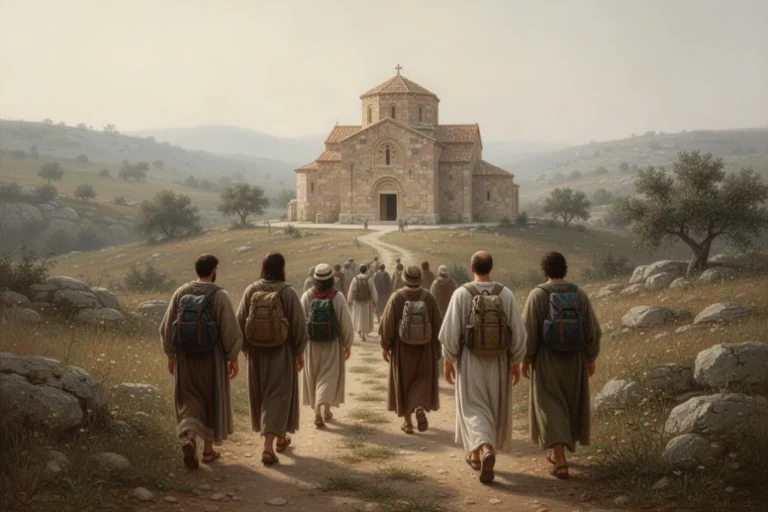
A Christian pilgrimage is a purposeful journey to a place connected with Jesus, the Bible, a saint, or a historic Christian community. People make pilgrimages to pray, seek healing, express repentance, give thanks, mark a life transition, or grow closer to God. The journey may involve walking for days, visiting a church or shrine, joining a guided group, or spending quiet time at a sacred site.
You do not have to travel far or spend a large amount of money for a pilgrimage to have spiritual value. A day at a local cathedral, a visit to a cemetery connected with your church, or a prayer walk through your community can become a meaningful Christian pilgrimage when you travel with intention. The destination matters, but so do your preparation, conduct, prayer, and willingness to pay attention along the way.
Ordinary travel and pilgrimage can look similar from the outside. Both may include transportation, lodging, sightseeing, and an itinerary. A pilgrimage becomes distinct through its spiritual purpose: you are not simply visiting a place, but approaching it as an opportunity for worship, reflection, repentance, gratitude, or service.
Christian pilgrimage is not a way to earn God’s forgiveness or purchase a spiritual reward. Christian traditions differ in how they understand pilgrimage, but many emphasize that God’s grace cannot be bought through distance, discomfort, or physical achievement. A pilgrimage can support prayer and discipleship, yet it does not replace faith, ethical living, participation in a church, or care for other people.
The Bible presents God’s people as travelers and worshipers. Abraham leaves his homeland in response to God’s call, Israel journeys toward the promised land, and Jesus’ ministry includes travel to Jerusalem. The Psalms of Ascent, traditionally associated with worshipers traveling toward Jerusalem, express the inner movement of people going toward God. These examples help explain why Christians often see travel as a setting for spiritual growth.
A useful definition: Christian pilgrimage is travel undertaken with a deliberate intention to seek God through prayer, worship, reflection, fellowship, and attention to a sacred place or spiritual purpose.
How Christian pilgrimage developed through history
Early Christians visited places associated with Jesus’ life, death, and resurrection, as well as locations connected with apostles, martyrs, and other holy figures. Jerusalem, Bethlehem, and Nazareth became especially significant because they preserve the memory of events described in the New Testament. Christians also traveled to Rome, where traditions connect important sites with the apostles Peter and Paul.
As Christianity spread, local pilgrimage traditions developed. Churches, monasteries, shrines, wells, caves, chapels, and burial places became destinations for prayer. Some sites were associated with a saint’s life, a community’s history, a reported healing, or a long-standing pattern of worship. The significance of such places often comes from the continuing prayers and service of generations of Christians rather than from architecture alone.
Medieval pilgrimage routes created networks of hospitality across Europe and beyond. The Camino de Santiago, leading to the shrine of Saint James in Santiago de Compostela, became one of the best-known routes. Canterbury, Assisi, Walsingham, Knock, and other destinations also attracted travelers. Pilgrims walked, prayed, received hospitality, and encountered people from different regions and social backgrounds.
The Protestant Reformation led some Christians to question the spiritual value of shrines, relics, and certain pilgrimage practices. Many Protestant communities still value travel to historic churches, mission sites, places of persecution, and locations associated with revival or Christian service. Today, pilgrimage is practiced across denominational lines, although the prayers, rituals, and theological explanations may differ.
How to plan a Christian pilgrimage step by step
A thoughtful pilgrimage usually benefits from practical preparation and spiritual preparation. You can use the following process for a single day, a weekend, or a longer route.
Choose a clear purpose. Decide why you want to go. Your purpose might be thanksgiving, grieving, discernment, repentance, prayer for another person, learning about Christian history, or marking a new stage of life. Write one or two sentences that describe this intention.
Select a destination that fits the purpose. A historic church, monastery, biblical site, saint’s shrine, missionary location, or local place of worship may be appropriate. Research the site’s history and make sure its practices are compatible with your convictions.
Set a realistic length and budget. Include transportation, lodging, meals, entrance fees, donations, travel insurance when appropriate, and emergency costs. A pilgrimage should not create avoidable financial strain or require unsafe physical demands.
Learn the customs before you arrive. Check opening hours, worship schedules, clothing expectations, photography rules, accessibility information, and restrictions on groups. Read the site’s guidance rather than assuming that every sacred place follows the same customs.
Prepare spiritually. Choose Scripture passages to read in paraphrase or through a translation you trust, plan regular prayer, and consider meeting with a pastor, priest, spiritual director, or mature Christian. You may also decide to fast in a safe and appropriate way.
Plan the route and safety details. Share your itinerary, carry identification, keep important contact information available, and plan for weather, terrain, medication, hydration, and rest. If you are walking, increase your distance gradually before departure.
Travel with attention. Limit unnecessary distractions and leave room for silence. Notice the people, landscape, history, and needs around you. Hospitality and patience are part of the spiritual practice.
Reflect after returning home. Record what you learned, discuss the experience with trusted Christians, and identify one concrete change in prayer, relationships, worship, or service.
Popular Christian pilgrimage destinations and their significance
Some destinations are globally recognized, while others are meaningful mainly to a particular denomination, region, or local congregation. The right destination depends on your tradition, purpose, mobility, budget, and interest in history.
Jerusalem, Bethlehem, and Nazareth
The Holy Land is central to Christian pilgrimage because it connects travelers with places associated with Jesus’ life and ministry. Jerusalem includes sites connected with the crucifixion and resurrection, while Bethlehem is associated with Jesus’ birth and Nazareth with his upbringing. Pilgrims may visit churches, archaeological locations, ancient streets, monasteries, and places of prayer.
These locations also carry deep significance for Judaism and Islam, and they are home to people with varied religious and cultural identities. A responsible visitor approaches with humility, respects local communities, follows security guidance, and avoids treating living neighborhoods as scenery. Conditions can change, so current travel advisories and local guidance deserve careful attention.
The Camino de Santiago
The Camino de Santiago is a collection of routes across Europe leading toward Santiago de Compostela in Spain, traditionally associated with the apostle Saint James. Some walkers complete a long route over several weeks; others choose a shorter section or travel by bicycle. The route combines physical effort, prayer, conversation, solitude, and hospitality.
You do not have to walk the entire distance to participate meaningfully. A shorter route may be better for a first pilgrimage, a tight schedule, a medical limitation, or a family group. Accommodation and credential requirements vary by route, so research the specific path rather than relying on general descriptions of the Camino.
Rome and early Christian sites
Rome contains basilicas, catacombs, churches, museums, and locations linked with the early Christian community. Many pilgrims visit sites associated with Peter and Paul, the martyrs, and the development of Christian worship. Rome can provide a strong connection between present-day faith and the long history of Christians who worshiped under very different circumstances.
The city is also a busy modern capital. A meaningful pilgrimage may require balancing major attractions with slower visits to a chapel, a quiet service, or a less crowded historic site. Scheduling too many locations can turn a spiritual journey into a rushed tour.
Canterbury and other historic routes in Britain
Canterbury Cathedral and related routes reflect centuries of English Christian history. Pilgrims have traveled toward Canterbury for many reasons, including devotion, penance, thanksgiving, and connection with the story of Thomas Becket. Other British destinations, including Iona, Lindisfarne, and Walsingham, offer different combinations of monastic history, landscape, worship, and retreat.
Assisi and places connected with Christian service
Assisi is strongly associated with Saint Francis and Saint Clare, whose lives emphasized poverty, prayer, care for creation, and service to vulnerable people. Visitors often find that the landscape and churches invite reflection on simplicity rather than achievement. Other pilgrimage destinations similarly center on Christian service, hospitality, education, healing, or missionary work.
Local and denominational destinations in the United States
You can find pilgrimage opportunities throughout the United States. Examples include historic missions, cathedrals, monasteries, retreat centers, African American church heritage sites, Native and immigrant Christian communities, cemeteries, and places connected with Christian humanitarian work. Some churches organize walking pilgrimages, prayer stations, or visits to several congregations in one region.
A local pilgrimage has practical advantages. You can return home the same day, use familiar healthcare resources, include people with limited mobility, and spend more of your time in prayer rather than transit. Local travel can also help you notice the spiritual history and present needs of your own community.
What to do during a Christian pilgrimage
A pilgrimage does not need a packed schedule. Repeated simple practices often create more space for prayer than a long list of attractions. Choose activities that help you remain present rather than turning every moment into a task to complete.
Begin and end each day with prayer. Offer the day to God before traveling, then reflect on what you received or struggled with before sleeping.
Read a short biblical passage. Select passages related to travel, worship, suffering, hope, service, or the life of Jesus. Consider how the setting changes your understanding of the passage.
Attend worship when possible. Ask about services in advance and participate respectfully, especially when visiting a tradition different from your own.
Practice silence. Set aside a period without conversation, music, or phone use. Silence may reveal concerns and hopes that are difficult to hear during ordinary routines.
Keep a journal. Record names, questions, prayers, emotions, and moments of unexpected kindness. Avoid trying to make every entry sound profound.
Serve or give responsibly. Support a local ministry, charity, or community project when your help is genuinely welcomed. Ask what is useful instead of assuming that visitors know best.
Walk mindfully. Pay attention to your breathing, surroundings, companions, and physical limitations. Walking can become prayer without turning discomfort into a spiritual contest.
Make room for conversation. Listen to local people and fellow pilgrims. A respectful conversation may teach you more than a hurried visit to another landmark.
Many Christians use a simple prayer rhythm such as morning prayer, a brief prayer at midday, and evening reflection. You might repeat a short phrase such as “Guide me in your peace” or pray for specific people as you walk. The words do not need to be elaborate. Regular attention is usually more helpful than trying to create an intense emotional experience.
How Christian pilgrimage relates to prayer and repentance
Travel can expose patterns that remain hidden at home. Fatigue may reveal impatience, unfamiliar customs may challenge assumptions, and unexpected delays may show how much control you want to maintain. These moments can become invitations to practice confession, forgiveness, patience, and gratitude.
Repentance in a Christian pilgrimage is not self-punishment. It means turning away from harmful attitudes or actions and turning toward God’s mercy and a changed way of life. If your tradition includes confession with a priest or pastor, you may choose to arrange it before or during the journey. Others may use private prayer, conversation with a trusted Christian, or a written commitment to make amends.
Prayer for healing also appears in many pilgrimage traditions. People may pray for physical recovery, emotional strength, reconciliation, or courage while facing death. A responsible pilgrimage does not promise a particular outcome. It brings honest need before God while respecting medical care and the freedom of others.
“Those who sow with tears will reap with songs of joy” describes, in Psalm 126, the hope that grief and faithful endurance can be transformed into joy.
Biblical passages such as Psalm 121, Luke 24, John 14, Romans 12, and Hebrews 12 can support different stages of a pilgrimage. Read the references in a Bible translation you use, and allow time to consider the meaning rather than treating Scripture as a checklist.
How to respect sacred places and local communities
A pilgrimage destination is not merely a backdrop for personal spiritual experiences. People live, worship, work, and grieve in these places. Some sites carry painful histories, political tensions, or memories of violence. Your conduct should show respect for residents, worshipers, clergy, guides, staff, and other visitors.
Dress according to the site’s expectations, especially when entering a sanctuary, monastery, or shrine.
Keep your voice low during prayer and worship, and silence your phone.
Ask before photographing people, private spaces, religious objects, or ceremonies.
Follow barriers, signs, and instructions, even when a different view would make a better photograph.
Do not touch relics, memorials, or sacred objects unless invited to do so.
Buy from local businesses and use licensed guides when possible.
Do not treat poverty, religious devotion, or local customs as entertainment.
Leave natural and historic sites as you found them, or better protected.
Respect comes before documentation: If taking a photograph would disturb prayer, expose someone’s private grief, or violate a site’s rules, put the camera away. A memory does not need to be publicly displayed to be meaningful.
How to prepare physically and financially
Physical preparation should match the demands of the route. Walking pilgrims may face hills, uneven surfaces, heat, cold, rain, or long periods without a place to rest. Begin with manageable walks, wear shoes that are already comfortable, and consult a healthcare professional if you have medical concerns or plan strenuous activity.
Pack lightly, but do not omit necessities. Useful items may include a refillable water container, weather-appropriate clothing, medications, basic first-aid supplies, identification, chargers, a small notebook, and a printed emergency contact list. Travelers going abroad may also need documentation, appropriate electrical adapters, prescribed medication information, and health or travel insurance.
Make a complete budget before booking. Include transportation to and from the destination, local transit, accommodation, food, donations, guide fees, laundry, communication, and a reserve for delays. If you are traveling with a group, clarify what is included and how the group handles emergencies, cancellations, accessibility, and changes in the itinerary.
Financial simplicity can be part of the spiritual intention, but avoid confusing unnecessary hardship with holiness. Choosing modest lodging may support your goals; ignoring safety, medication, sleep, or nutrition usually does not. The purpose is to become more attentive to God and neighbor, not to prove endurance.
How to include children, older adults, and people with disabilities
A pilgrimage can be adapted for different ages and abilities. Children may benefit from a short route, a simple prayer practice, a sketchbook, or a task such as noticing symbols in a church. Older adults may prefer accessible transportation, frequent rest, shorter visits, and a carefully chosen schedule.
Ask destinations specific questions about ramps, elevators, accessible restrooms, seating, transportation, guide availability, service animals, and quiet areas. Accessibility information online may be incomplete, so direct communication can prevent avoidable difficulties. Do not assume that someone who walks slowly, uses a mobility aid, or takes breaks is less engaged spiritually.
When traveling with a group, name one person to coordinate practical needs and one person to support prayer or reflection. Build in unplanned time. A flexible schedule makes it easier to respond to fatigue, weather, illness, or a meaningful opportunity that was not part of the original plan.
How to choose between a guided group and independent travel
A guided pilgrimage can provide transportation, historical context, worship opportunities, and companionship. It may be especially helpful when visiting a foreign country, traveling through an area with complicated logistics, or joining a group from your congregation. Ask about the leader’s experience, the pace, the balance between sightseeing and prayer, and the theological perspective of the organizers.
Independent travel offers more control over timing, budget, solitude, and destination choices. It also requires you to manage navigation, reservations, local customs, emergencies, and changes in plans. Some travelers choose a middle path: they arrange transportation independently but join local tours, worship services, or one-day walks.
Before committing, consider these questions:
Do you want regular companionship or substantial silence?
How much responsibility do you want for transportation and reservations?
Will the group’s worship style and theological approach fit your beliefs?
Does the pace allow rest and accessibility needs?
Are donations and fees clearly explained?
How does the organizer respond to illness, conflict, or an emergency?
How to continue the pilgrimage after you return
The return home can be as significant as the departure. Travel often creates a temporary environment in which prayer seems easier, but the deeper test is how the experience shapes ordinary life. Give yourself time to process before deciding what the pilgrimage “meant.” Strong emotions may fade, while quieter changes continue to develop.
Review your journal and identify a few specific observations. Perhaps you noticed a need to simplify your schedule, repair a relationship, support a ministry, pray more regularly, or learn about a Christian tradition different from your own. Choose one or two practices that can survive normal work, family, and church responsibilities.
Share the experience carefully. A short conversation with your congregation, a small group, or a trusted friend can help connect the pilgrimage with worship and service. Avoid presenting the journey as proof that your faith is stronger than someone else’s. A pilgrimage is most fruitful when it produces humility, compassion, deeper attention, and a greater willingness to love your neighbors.
You can also establish a regular local practice. Visit a nearby church during a quiet hour, walk to a cemetery and pray for those who came before you, spend time with a community ministry, or follow a seasonal route through places of worship. The destination may be close, but intentional travel can still create space for renewal.
Questions to ask before booking a Christian pilgrimage
Before making reservations, write down what you hope to receive and what you are able to give. This simple exercise can prevent a destination’s reputation, a group’s advertising, or someone else’s expectations from determining the entire experience.
What spiritual purpose will guide the journey?
Does the destination have a meaningful connection to my Christian tradition or prayer?
Can I afford the trip without creating harmful debt or neglecting responsibilities?
What physical demands, security concerns, and health preparations should I consider?
How will I respect the people and communities connected with the site?
What will I do if the weather, political situation, transportation, or my health changes?
How will I carry one part of the experience into life at home?
A well-planned Christian pilgrimage joins practical wisdom with spiritual openness. You may arrive hoping for a dramatic experience and instead receive a quiet lesson in patience. You may discover that the most important part of the journey was not the famous destination, but the prayer, conversation, service, or act of attention that changed how you live afterward.
Frequently asked questions
Does a Christian pilgrimage have to involve walking?
No. Walking is common because it creates a steady rhythm and makes physical effort part of the experience, but pilgrimage can also involve driving, public transportation, air travel, or a short visit nearby. The defining feature is the spiritual intention of the journey, not the distance or method of travel.
Are Christian pilgrimages only for Catholics?
No. Catholic traditions have many established pilgrimage sites, but Orthodox, Anglican, Lutheran, Methodist, Baptist, evangelical, and other Christians may also visit sacred places, historic churches, mission sites, monasteries, and locations connected with Christian service. Practices differ, so learn the customs of the community you visit.
Can I make a Christian pilgrimage alone?
Yes, provided the destination and route are appropriate for solo travel. Independent pilgrims should share plans, research local conditions, arrange reliable lodging, carry emergency information, and tell someone when they expect to check in. Some travelers prefer a group for safety and fellowship, while others need solitude for prayer.
What is the difference between a pilgrimage and a Christian retreat?
A pilgrimage emphasizes travel toward a meaningful place, while a retreat usually emphasizes withdrawing from ordinary routines for prayer, teaching, silence, or spiritual direction. They can overlap. A retreat center may be your pilgrimage destination, and a pilgrimage may include several days of retreat-like silence and reflection.








Leave a Reply