Christian cremation: beliefs, Bible views, and planning
Christian cremation: beliefs, Bible views, and planning
Most Christian churches permit cremation, although some traditions prefer burial and may have specific rules about funeral services, ashes, and final placement.
Why Christians have different views about cremation
Christian opinions about cremation usually come from a combination of Biblical interpretation, church tradition, cultural custom, and pastoral judgment. The Bible does not give a universal command that every Christian must be buried, nor does it directly prohibit cremation. As a result, many Christians regard the choice as a matter of conscience rather than a test of faith.
Burial has been the more familiar Christian practice for much of church history. It reflects the ancient Jewish setting of the Bible, the burial of Jesus, and the traditional image of waiting for the resurrection. Even so, Christian hope does not depend on preserving a person’s physical body. Christians who accept cremation generally believe that God can resurrect the dead regardless of what happens to the body after death.
Families also choose cremation for practical reasons. It may cost less than a traditional funeral and cemetery burial, require less land, or make it easier for relatives in different locations to gather for a memorial service. Some people prefer cremation because they want a simpler arrangement, while others choose it because of environmental, medical, or personal considerations.
Central Christian belief: The resurrection is understood as God’s work, not as a process that depends on a body remaining physically intact. Ask your church about its practices, but do not assume cremation automatically conflicts with Christian faith.
What the Bible says about cremation and burial
The Bible contains accounts of burial, but it does not present a detailed rulebook for handling every body after death. Abraham arranged a burial place for Sarah in Genesis 23, and Jesus was placed in a tomb after his crucifixion, as described in the Gospels. These examples help explain why burial became deeply meaningful to Christians, but they do not by themselves establish a command that applies to every situation.
Several Biblical passages describe bodies being burned, but the circumstances vary. In some passages, burning is associated with judgment, warfare, dishonor, or unusual events. Those accounts should not be treated as a simple statement that every form of cremation is sinful. The meaning and intention of an act matter when Christians evaluate a funeral practice.
The New Testament teaches that believers will be raised from the dead, but it does not describe a required method for caring for the body beforehand. Paul uses the image of a seed and a transformed body in 1 Corinthians 15 to explain resurrection. The passage emphasizes God’s power to bring new life, rather than prescribing burial or forbidding cremation.
Christians also point to the many natural ways human bodies return to the earth. Bodies buried in the ground decompose, and people who die at sea, in fires, or in disasters may not have recoverable remains. These realities support the view that resurrection cannot depend on the survival of recognizable physical remains.
For many Christians, the more useful Biblical questions are these:
Does the choice treat the deceased with dignity and respect?
Does it express Christian hope rather than denial of death or resurrection?
Does it support the family’s need to mourn and remember?
Does it respect the teaching of the person’s church or denomination?
How major Christian traditions approach cremation
Catholic views on cremation
The Catholic Church permits cremation, provided it is not chosen to deny Christian teachings about the resurrection or the dignity of the human body. The Church continues to express a preference for burial, but permission for cremation means that Catholics do not have to choose a traditional casket burial.
Catholic funeral rites can generally be celebrated when cremation is chosen. The preferred order is often a funeral liturgy with the body present, followed by cremation, although the Church also provides rites for situations in which cremated remains are present. A Catholic family should contact its parish or diocesan office early because local scheduling and procedural details can differ.
Catholic guidance places special emphasis on the respectful treatment of ashes. Cremated remains are generally expected to be placed in a sacred or approved final location, such as a cemetery, mausoleum, or columbarium. Scattering ashes, dividing them among family members, keeping them permanently at home, or incorporating them into jewelry may not meet Catholic requirements.
The Church’s position is not that ashes are spiritually dangerous. Rather, it connects the final placement of remains with the dignity of the deceased, the communal nature of Christian mourning, and the hope of resurrection. Families considering Catholic cremation should discuss the details with a priest before making arrangements.
Eastern Orthodox views on cremation
Eastern Orthodox churches traditionally favor burial and often regard it as the normal Christian practice. Orthodox theology gives strong attention to the body, the incarnation of Christ, and the traditional rites surrounding death. Because of this, cremation may be discouraged or restricted.
Policies can differ among Orthodox jurisdictions and pastoral circumstances. In some cases, cremation may be considered when required by law, public health conditions, war, disaster, or another serious situation. A family should speak with its priest before contacting a crematory, since a decision made without church guidance could affect the availability of funeral rites.
An Orthodox funeral is not simply a memorial gathering. It includes prayers and liturgical practices that may assume burial. The priest can explain what services are possible, what form the committal should take, and how the remains should be handled in the family’s particular situation.
Protestant and evangelical views on cremation
Most Protestant and evangelical denominations allow cremation, although individual churches and pastors may have different customs. Some congregations hold a traditional funeral before cremation, while others conduct a memorial service after the cremation has taken place. Many emphasize that faith in Christ and the resurrection does not depend on burial.
Some Protestant families still choose burial because it feels more consistent with their church tradition or family history. Others choose cremation and create a meaningful service around Scripture readings, prayer, music, testimony, and a final committal. A church may also recommend that ashes be placed in a cemetery or another permanent location even when it does not require this.
Independent churches may not have a formal written policy. In that situation, speak with the pastor before signing a cremation contract, particularly if you want the church to host the funeral or if several relatives have different expectations. A clear conversation can prevent conflict when the family is grieving.
Anglican and other Christian traditions
Anglican, Episcopal, Methodist, Presbyterian, Lutheran, Baptist, and other Christian communities commonly permit cremation, but their liturgical customs are not identical. Some provide a burial service adapted for cremated remains. Others encourage a memorial service followed by interment in a churchyard or cemetery.
The most reliable answer comes from the congregation that will conduct the service. Ask whether the church allows the urn at the front of the sanctuary, whether a committal service is available, and whether the church has rules about scattering or storing ashes. Permission to cremate does not always mean every handling option is accepted.
How to plan a Christian cremation step by step
Planning ahead gives you time to separate religious decisions from urgent financial and logistical choices. The following process can help you create a plan that reflects both the person’s wishes and the practices of the church.
Identify the person’s church tradition. Determine whether the deceased was Catholic, Orthodox, Protestant, Anglican, evangelical, or part of another Christian community. If the person attended more than one church or had no current congregation, ask a trusted pastor or chaplain for guidance.
Speak with the clergy before finalizing arrangements. Ask whether cremation is permitted, which funeral rites are available, and when the service should occur. Catholic and Orthodox families should take this step especially early.
Record the desired form of service. Decide between a funeral with the body present, a service with the urn present, a memorial service after cremation, or separate church and committal services. Include Scripture, prayers, hymns, a sermon, and personal remembrances if desired.
Choose a licensed funeral provider or crematory. Request a written explanation of identification procedures, authorization forms, transportation, the cremation container, urn options, and the return of remains. Compare the full price rather than focusing only on the advertised cremation fee.
Make a plan for the ashes. Choose a cemetery, columbarium, church memorial garden, or another lawful and church-approved location. If scattering is being considered, check both local rules and denominational guidance.
Put the decisions in writing. Tell close relatives, the church, and the person responsible for your estate what you want. Keep the written plan with other important documents and update it if your wishes change.
When a death has already occurred, the family can use the same basic sequence, but the timing may be shorter. Contact the church, funeral provider, and cemetery as soon as possible. Do not assume that a funeral home has already confirmed the church’s requirements.
Choosing between a funeral, memorial service, and committal
A funeral service usually takes place soon after death and may include the body or cremation container. It gives the congregation an opportunity to gather during the first stage of grief. The service may include a sermon, prayers, music, Scripture readings, and a formal farewell.
A memorial service takes place after cremation and can be scheduled when relatives are able to travel. The urn may be present, or the family may display photographs and other reminders instead. Memorial services can follow a church’s ordinary funeral structure while allowing more time for planning.
A committal service marks the final placement of the body or ashes. It may be held at a cemetery, columbarium, churchyard, or another approved site. A short committal can include prayer, Scripture, silence, and words entrusting the deceased to God’s care.
These services can be combined or held separately. For example, a family might hold a church funeral, arrange cremation afterward, and gather again for a private committal. Another family might have a small committal immediately followed by a larger memorial weeks later.
The wishes of the deceased: Follow documented preferences when they are clear and lawful.
The church’s practice: Confirm what the pastor or priest can conduct and where.
The family’s needs: A visible service may help relatives begin grieving together.
Travel and timing: Cremation may make it easier to schedule a service around distant family members.
The final resting place: A planned committal can give the family a permanent place to visit.
How Christian beliefs shape the handling of ashes
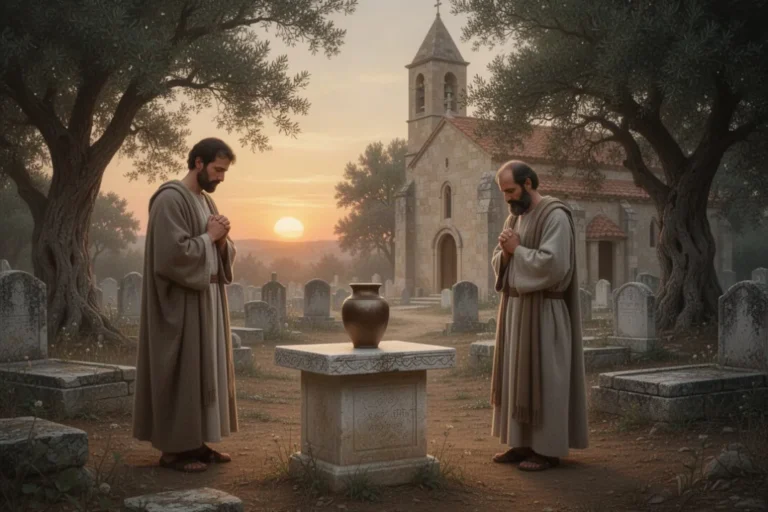
For many Christians, ashes are not viewed as the person. They are the remaining physical matter of the body and should be treated with reverence and care. The urn can be present during prayer and remembrance without becoming an object of worship.
A permanent resting place can give family members a location for anniversaries, prayer, and remembrance. A cemetery or columbarium also places the person’s memory within a community rather than leaving the responsibility entirely with one household. Some churches maintain memorial gardens specifically for cremated remains.
Scattering ashes is accepted by some Christian families and discouraged by others. Concerns may include the lack of a permanent memorial, the possibility of dividing remains, local regulations, or a church’s teaching about the body. If scattering is part of the deceased’s wishes, ask the clergy and confirm that the location permits it.
Families should also think carefully before turning ashes into keepsake jewelry, glass objects, fireworks, or other commemorative products. These options may be meaningful to some people, but they can conflict with a denomination’s expectations or cause disagreement among relatives. Ask for pastoral advice before dividing or transforming the remains.
Practical safeguard: Decide on the final resting place before cremation whenever possible. Written instructions reduce confusion about who receives the ashes, where they will go, and what the church expects.
Christian cremation costs and practical decisions
Cremation can reduce certain expenses, but the total price depends on the services selected. Direct cremation, a simple container, transportation, an urn, obituary costs, clergy honoraria, a church service, cemetery fees, and a reception may all be separate charges.
Ask the funeral provider for an itemized price list. Find out whether the quote includes permits, an alternative container, a private identification period, an urn, delivery of the remains, and a death certificate. A low initial price may not include the church service or the final placement of ashes.
Religious choices can also affect the schedule and cost. A family may choose a viewing or funeral before cremation, which can involve embalming, a casket rental, preparation, and additional facility time. Another family may choose a simple service with the urn present. Neither format is automatically more faithful or more respectful.
When comparing providers, ask these questions:
How will the deceased be identified before cremation?
What documentation authorizes the cremation?
How are remains tracked and labeled throughout the process?
When and how will the cremated remains be returned?
Does the provider explain local requirements for transporting or scattering ashes?
Can the family choose a church funeral, a private committal, or both?
Preplanning can protect your family from making hurried decisions, but avoid paying for services you do not understand. Keep copies of contracts, instructions, and contact information with your estate documents. Review arrangements after a move, divorce, remarriage, or change in church membership.
How to talk with family members who disagree
Disagreement often comes from different meanings attached to burial and cremation. One relative may see burial as a sign of Christian faith, while another may see cremation as a responsible and dignified choice. Listening to the concern behind the position can make the conversation more productive.
Start with the deceased’s written wishes, if available. Then ask the family’s pastor, priest, or chaplain to explain the church’s actual teaching rather than relying on assumptions or online claims. A clergy member may also help the family distinguish between a doctrine, a longstanding custom, and a personal preference.
Try to settle the details while everyone is calm. Agree on the service, the wording of public announcements, the people responsible for the ashes, and the final resting place. If no instructions exist, follow applicable law and seek professional advice from the funeral provider and church rather than allowing a private argument to determine everything.
Christian prayers and service elements for cremation
A cremation service can include the same central Christian elements as a burial service. The exact order depends on the denomination, but the service often includes an opening prayer, Scripture readings, a message of hope, hymns or other music, personal remembrances, and a blessing or committal.
Scripture references may address creation, human mortality, comfort, God’s presence, and resurrection. A pastor can paraphrase the meaning of passages such as Psalm 23, John 11, Romans 8, or 1 Corinthians 15 without treating any single passage as a required funeral text. Readings should comfort mourners while remaining honest about grief.
A brief committal may use words about returning the body to the earth and entrusting the deceased to God. Because wording differs among churches, use the denomination’s approved rite when one exists. The family can also add a short personal statement, a favorite hymn, or a moment of silence.
Many families find it helpful to include a concrete act of remembrance after the service. They might plant a tree where permitted, establish a memorial fund, place a plaque, or gather annually at the cemetery. These acts do not replace Christian worship, but they can give grief a continuing and shared expression.
When cremation may not fit a church’s practice
Cremation may not be appropriate for a particular congregation even when another Christian church permits it. The clearest examples are churches with a strong burial tradition, churches that require advance approval, or congregations that do not have facilities for storing or interring ashes.
It may also be unwise to proceed without guidance when the choice is being made specifically to reject the resurrection, mock the faith, or treat the remains carelessly. Christians who are uncertain about their motives should speak privately with a pastor or priest. The conversation can address both theology and the emotional reasons behind the decision.
A church’s restriction does not necessarily mean the family has no Christian options. Another congregation within the same broad tradition may have different facilities or pastoral policies. Ask for a clear explanation and, if needed, request a referral rather than assuming that no service is possible.
Questions to settle in a Christian end-of-life plan
A useful plan should be specific enough that relatives and church leaders can follow it without guessing. It can be included in advance directives, a funeral instruction document, or a separate letter kept with estate records.
Do you prefer burial, cremation, or leaving the decision to your family?
Which church, pastor, priest, or chaplain should be contacted?
Do you want a funeral before cremation, a memorial afterward, or both?
Which readings, hymns, prayers, or family traditions matter to you?
Where should the cremated remains be placed?
Who has permission to make decisions if circumstances change?
How should the family handle transportation, scattering, division, or long-term storage of ashes?
What budget limits or prepaid arrangements should the family know about?
Share the plan with the people who may need to act on it. A document no one can find may not help when decisions must be made quickly. Revisit the plan periodically and tell relatives when you make a significant change.
Finding a respectful Christian path forward
Christian cremation is not one single practice. It can mean a traditional funeral followed by cremation, a memorial service with an urn, a private committal in a cemetery, or another arrangement shaped by the family’s church and circumstances.
The most responsible approach combines respect for the deceased, honest attention to Christian teaching, clear communication with clergy, and careful planning for the ashes. When those pieces are addressed, cremation can be part of a service that acknowledges death while expressing Christian hope in God’s care and the resurrection.
Frequently asked questions
Does cremation prevent a Christian from being resurrected?
No. Christian teaching about resurrection generally rests on God’s power to give new life, not on the physical preservation of a person’s remains. Bodies naturally decay after burial, and some people die in circumstances where remains cannot be recovered. For that reason, many churches teach that cremation does not limit God’s ability to resurrect the dead.
Can a Christian funeral take place if the body has been cremated?
Usually, yes, although the exact form depends on the denomination and congregation. A church may hold a funeral with the body present before cremation, a memorial service with the urn present afterward, or a separate committal service. Contact the pastor or priest before making arrangements so the service follows local religious practice.
Should Christians scatter cremated ashes?
Churches differ. Some Christians consider scattering a meaningful way to honor a person, while others prefer interment in a cemetery, columbarium, churchyard, or memorial garden. Local laws may also restrict scattering. Before choosing this option, ask the clergy about denominational guidance and confirm that the proposed location permits it.
Is keeping ashes at home acceptable for Christians?
That depends on the church tradition. Some Protestant congregations leave the decision to the family, while Catholic guidance generally favors a permanent, approved resting place rather than long-term home storage. Orthodox and other churches may have their own expectations. Discuss the plan with clergy, particularly if the ashes may later be divided or moved.

Leave a Reply