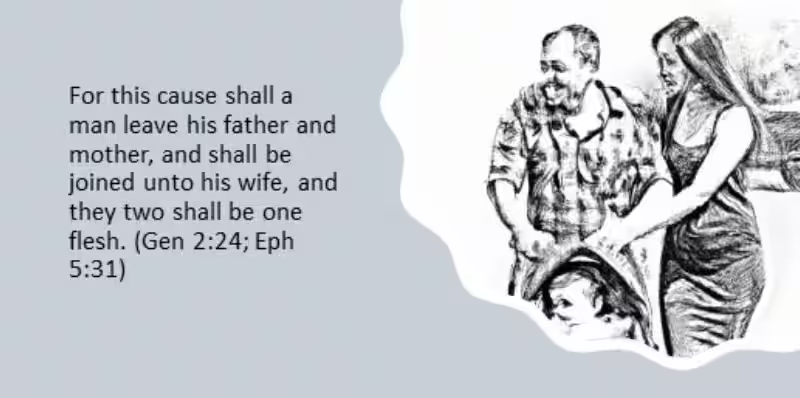
The story of Adam and Eve, found in Genesis 2, speaks volumes about human relationships and commitment. More than a simple creation myth, it lays the groundwork for understanding the sacred bond between spouses and the importance of lifelong commitment. This foundational narrative, often referred to as the “leave and cleave” passage, continues to resonate with us today, offering timeless insights into marriage and companionship.
This fundamental biblical passage, often seen as a blueprint for marriage, emphasizes the unique and sacred connection that forms between a man and a woman. It highlights mutual support, shared life, and unwavering devotion. It's a call to a deeper level of intimacy and partnership. The imagery of leaving and cleaving beautifully encapsulates this idea, mirroring the journey of leaving one's family of origin to become one with a partner and building a new family unit.
The phrase "leave your father and your mother and cling to your wife" (Genesis 2:24, various translations) isn't just about a physical departure. It signifies a fundamental shift in identity. It's about transitioning from a familial structure to a new unit, a new home—a home built around a shared life. This transition is not without challenges, but it's meant to be a positive move, fostering a new, unique bond.
Imagine a young couple, eager to build a life together. They've spent years under the influence of their parents, learning values and traditions. Leaving their family home is often difficult, requiring courage and strength. This verse emphasizes that this transition, this "leaving," is a crucial step in the formation of a new family dynamic. This isn't about abandonment but about embracing a new role, a new identity, alongside a partner. The "clinging," or "cleaving," to one's wife, represents the unwavering commitment that binds them together. This is a life-long journey.
The concept of "cleaving" is more than just physical affection or emotional connection. It's an act of unwavering loyalty, mutual support, and shared purpose. Imagine a couple facing challenges together – a health crisis, job loss, or financial hardship. Their "cleaving," their deep-rooted commitment, provides the strength to weather the storm. They provide encouragement and hope to each other, supporting each other's dreams, offering faith and comfort during tough times, and growing together through shared experiences.
Consider these aspects of cleaving: mutual respect, forgiveness, forgiveness, understanding, and patience. These virtues nurture the bond. They are essential ingredients in any successful relationship, and importantly, they are deeply rooted in the commitment of cleaving. A failure to cleave creates a sense of disconnection, loneliness, and instability. The verse teaches that to truly "leave and cleave," requires a willingness to embrace change, sacrifice, and shared growth. This is a two-way street, requiring commitment and sacrifice from both partners.
Living Out the Command Today
The "leave and cleave" principle applies not only to marriage but also to various aspects of life. Leaving old patterns of behavior to embrace new ones, leaving behind harmful influences, and cleaving to a positive vision for the future are all reflections of this concept. The passage is a call to move towards something new and meaningful. Think about leaving behind a negative habit, an abusive relationship, or an unhealthy lifestyle. This is cleaving to a healthier, stronger, and more fulfilling path. This is a principle that extends beyond romantic relationships.
Imagine a student leaving behind procrastination and cleaving to a goal-oriented study approach, or a professional leaving a toxic work environment and cleaving to a career that fosters personal growth. These are all examples of taking inspiration from the "leave and cleave" principle. It's about embracing change, leaving behind what no longer serves us, and committing to a life of meaning and purpose. Ultimately, "leave and cleave" is a call to growth, a call to commitment, and a call to a deeper, more meaningful life.
Frequently Asked Questions about the “Leave to Cleave” Bible Verse
What is the "Leave to Cleave" verse?
The verse often referred to as "leave and cleave" is Matthew 19:5 and Mark 10:7-8, which discuss marriage. Different interpretations exist.
What does "leave" mean in this context?
The interpretation of "leave" in this context is often debated. Some believe it refers to leaving one's family and culture to follow Christ. Others interpret it as referring to the prior attachment to one's family for the sake of the new commitment to their spouse.
What does "cleave" mean in this context?
"Cleave" signifies a close, lifelong bond. Different interpretations exist, ranging from a deep commitment to a spiritual union, to a physical commitment.
Is the "leave to cleave" verse relevant today?
Whether or not the "leave to cleave" verse is relevant today is a matter of interpretation and theological perspective. Some believe the verse is outdated, while others argue that the principles of commitment and mutual support are timeless.
What are the different interpretations of this verse in different religions?
In many religions, the concept of marriage and commitment varies greatly. This verse, taken out of its context in different religions, may have differing implications.