Why Christianity has shared beliefs and different traditions
Christianity is a worldwide religion whose teachings come from the Bible, especially the Old Testament and New Testament, and from the life, death, and resurrection of Jesus Christ. Christians generally believe that God created the world, loves human beings, and calls people into a restored relationship with him.
Christians do not agree on every question. Roman Catholics, Eastern Orthodox Christians, Protestants, and other Christian communities differ in worship, church structure, sacraments or ordinances, and the way they interpret some teachings. Even so, they share a recognizable center: belief in one God, the significance of Jesus, the importance of Scripture, and the hope of eternal life.
The early Christian community summarized its faith in statements such as the Apostles’ Creed and the Nicene Creed. These historic summaries affirm belief in the Father, Son, and Holy Spirit; Jesus’ incarnation, crucifixion, resurrection, and future return; the church; forgiveness; resurrection; and everlasting life.
Central idea: Christianity is not only a list of ideas. It is also a way of life shaped by trust in God, allegiance to Jesus, love for others, worship, repentance, and service.
The main beliefs of Christianity at a glance
The central beliefs can be understood as a connected set of claims about God, humanity, salvation, and the future. The following list provides a practical starting point:
There is one God, creator and sustainer of everything that exists.
God is triune: Father, Son, and Holy Spirit are understood as distinct persons who share one divine nature.
Jesus Christ is the Son of God, truly divine and truly human.
Jesus died by crucifixion and was raised from the dead, defeating the power of sin and death.
People need reconciliation with God because sin damages their relationship with God and with one another.
Salvation is God’s gift, received through faith in Christ; Christians also emphasize repentance and a transformed life.
The Holy Spirit is active in believers and in the church, giving guidance, spiritual growth, and gifts for service.
The Bible is sacred Scripture and provides the main written witness to God’s actions and purposes.
The church is the community of believers, gathered for worship, teaching, fellowship, mission, and care.
Jesus will return, and God will bring final judgment, resurrection, and renewed creation.
These points are related rather than separate. For example, Christian teaching about salvation depends on who Jesus is, while Christian teaching about ethics follows from the belief that people are created by God and called to love their neighbors.
What Christians believe about the one God
Christianity is monotheistic, meaning Christians worship one God rather than many gods. God is understood as the creator of heaven and earth, the source of life, and the one who continues to sustain creation. Christians commonly describe God as eternal, holy, wise, just, merciful, and loving.
The Bible presents God as personal rather than an impersonal force. Christians believe that God knows, addresses, and cares for human beings. Prayer is therefore understood as communication with God, not merely as meditation or the repetition of words. Worship expresses gratitude, trust, obedience, and wonder before the Creator.
Christian beliefs about God hold together qualities that can seem difficult to combine. God is just, so evil and wrongdoing matter; God is also merciful, offering forgiveness and restoration. Christian faith does not usually define love as approval of every action. Instead, divine love is understood as seeking people’s good while confronting sin and injustice.
How the Trinity describes God as Father, Son, and Holy Spirit
The Trinity is one of Christianity’s most distinctive and challenging teachings. It says that there is one God in three persons: the Father, the Son, and the Holy Spirit. Christians do not mean three separate gods, nor do they mean that one person simply appears in three temporary forms.
The Father is associated with creation and divine source, the Son with Jesus Christ and God’s self-revelation in human life, and the Holy Spirit with God’s continuing presence and work. These descriptions are not meant to divide God into three parts. Each person is understood as fully divine, while God remains one.
Christians acknowledge that the Trinity is a mystery rather than a formula that can be completely explained through an everyday analogy. The doctrine developed as Christians reflected on biblical testimony about the Father, Jesus, and the Spirit and sought to describe their relationship accurately.
A useful distinction: The Trinity does not teach that Christians worship three gods. It teaches one God who exists eternally as Father, Son, and Holy Spirit.
Why Jesus Christ is central to Christian faith
Jesus Christ is the center of Christian belief and worship. Christians believe that Jesus was a first-century Jewish teacher who proclaimed God’s kingdom, healed people, welcomed outsiders, challenged hypocrisy, and taught his followers to love God and their neighbors.
Christianity makes a stronger claim than saying Jesus was merely a wise teacher. Christians believe Jesus is the Son of God and the Word or self-expression of God who entered human history. The doctrine of the incarnation says that Jesus is fully divine and fully human, a belief expressed in the Gospel of John and developed in early Christian teaching.
Jesus’ humanity means that Christians see him as sharing ordinary human experiences such as fatigue, grief, suffering, and physical death. His divinity means that his life reveals God’s character in a unique way. Christians therefore study Jesus’ actions and teachings to understand both how people should live and what God is like.
What Christians believe about Jesus’ death and resurrection
Jesus’ crucifixion is central to the Christian message. Christians believe he was executed by crucifixion and that his death has saving significance. Different Christian traditions explain that significance with several related ideas: Jesus bears the consequences of sin, defeats the powers of evil, reveals God’s love, and opens the way to reconciliation with God.
Christians do not all use the same explanation of the cross, but they agree that Jesus’ death was not an accidental ending to his ministry. It is understood as part of God’s work to address sin and restore humanity. The New Testament presents Jesus’ death as an event with meaning for the whole world, not only for his immediate followers.
Christians also believe that Jesus rose from the dead. The resurrection is more than a symbol of hope or a memory of Jesus’ influence. It is understood as a real act of God in which Jesus was raised bodily, showing that death does not have the final word.
The resurrection supports several Christian convictions:
Jesus truly is the Christ, or Messiah, whom God sent.
Death and sin have been decisively challenged.
God can bring new life where human beings see only loss.
Believers can hope for their own resurrection and eternal life.
Jesus remains alive and active rather than simply remembered as a historical figure.
How Christianity understands sin and human nature
Sin means more than breaking a religious rule. In Christian thought, sin includes attitudes, actions, habits, and systems that oppose God’s will and harm other people. It can involve deliberate wrongdoing, neglect of responsibility, pride, injustice, dishonesty, violence, and the refusal to love God and neighbor.
Christianity teaches that every person has dignity because human beings are created in the image of God. At the same time, every person is affected by sin. This creates a tension at the heart of Christian anthropology: people are capable of compassion, creativity, courage, and moral insight, yet they are also capable of selfishness and serious harm.
Many Christian traditions teach original sin, meaning that humanity exists in a fallen condition marked by alienation from God and a tendency toward sin. Traditions explain this doctrine differently. Some emphasize inherited guilt, while others stress inherited corruption, mortality, or a universal human tendency to turn away from God.
The doctrine of sin is not intended to say that people are worthless. Rather, it explains why moral improvement alone cannot fully repair the relationship between humanity and God. Christians believe people need grace, forgiveness, and inner transformation that come from God.
What salvation means in Christianity
Salvation means rescue and restoration. In Christianity, it includes forgiveness of sins, reconciliation with God, freedom from the dominion of sin, a new identity, and the hope of eternal life. Salvation is not limited to escaping punishment after death; it begins with a changed relationship with God in the present.
Christians commonly say that salvation is by grace, meaning it is God’s undeserved gift rather than something people can earn through achievement. Faith is the response of trust and commitment to God’s promise in Christ. Repentance, which means turning away from sin and turning toward God, is closely connected with that response.
Christian traditions describe the relationship between faith and good works in different ways. Most agree that good works cannot force God to save someone. They also agree that genuine faith should produce a life increasingly shaped by love, humility, justice, generosity, and obedience.
God takes the initiative by reaching toward humanity with grace.
A person responds through faith, repentance, and trust in Jesus Christ.
God forgives and reconciles, restoring the person’s relationship with him.
The Holy Spirit changes the believer over time.
The believer lives out faith through worship, love, service, and perseverance.
Some Christians describe salvation as justification, sanctification, adoption, new birth, or union with Christ. These terms highlight different aspects of the same broad conviction: God does not merely overlook human brokenness but works to make people whole and bring them into fellowship with him.
Why the Bible matters to Christian belief
The Bible is the collection of writings Christians recognize as sacred Scripture. It includes many kinds of literature, such as historical narratives, poetry, wisdom writings, prophecy, letters, and accounts of Jesus’ life. The Old Testament records Israel’s Scriptures, while the New Testament focuses on Jesus, the early church, and the Christian message.
Christians believe the Bible bears authoritative witness to God and guides faith and practice. They do not all describe its inspiration in exactly the same way. Some emphasize that God directly guided the words, while others focus on the Spirit working through human authors, communities, languages, historical settings, and literary forms.
Reading the Bible responsibly involves paying attention to context. A poem should not automatically be read like a legal instruction, and a letter written to a particular ancient community may require careful interpretation before applying its principles today. Christians commonly read Scripture alongside prayer, historical understanding, church teaching, and the central example of Jesus.
The Bible’s major storyline includes creation, human rebellion, God’s covenant relationship with Israel, the ministry of Jesus, the formation of the church, and the promise of final restoration. Christians differ over some interpretations, but they generally see Scripture as directing attention toward God’s character and saving work.
What Christians believe about the Holy Spirit
The Holy Spirit is understood as the third person of the Trinity and as God’s active presence among believers. In the New Testament, the Spirit gives life, empowers witness, reveals truth, produces spiritual character, and equips the church for its mission.
Christians often speak of the Spirit’s work in several ways. The Spirit convicts people of sin, helps them trust God, gives them new spiritual life, and continues to shape their character. This ongoing process is sometimes called sanctification, the growth of a person in holiness and love.
Many churches also teach that the Spirit gives spiritual gifts. These may include teaching, encouragement, generosity, leadership, service, wisdom, mercy, and other abilities used for the good of the community. Christian traditions differ over which gifts continue today and how they should be practiced, but they generally stress that gifts are meant to serve others rather than elevate an individual.
How Christians understand the church
The church is both the worldwide community of Christians and the local congregation that gathers in a particular place. It is not only a building or an institution. Christians believe the church is the body of Christ, a people called to worship God, teach the faith, care for one another, and share the message of Jesus.
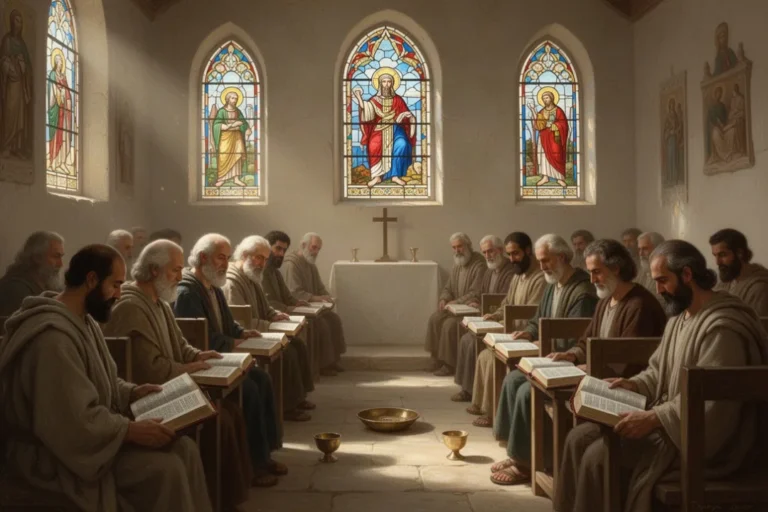
Churches usually gather for prayer, Scripture reading, preaching or teaching, singing, confession, fellowship, and acts of service. The exact order and style vary widely. Some communities worship through formal liturgy and ancient prayers, while others use contemporary music and less formal services.
Most Christian traditions practice baptism and the Lord’s Supper, also called Communion or the Eucharist. Baptism represents entry into the Christian community and identification with Christ. Communion remembers Jesus’ death and celebrates fellowship with him and with other believers. Churches differ over who should be baptized, how baptism should be performed, and how Christ is present in Communion.
The church also has a mission beyond its meetings. Christians are called to proclaim the gospel, care for vulnerable people, pursue peace, resist injustice, and demonstrate love in practical ways. Churches have often fallen short of these ideals, but service and witness remain central Christian responsibilities.
What Christian ethics teach about daily life
Christian ethics begin with love of God and love of neighbor. Jesus taught that these commands are inseparable: devotion to God should shape the way a person treats other people. Christian morality therefore concerns not only private behavior but also relationships, economic choices, treatment of strangers, care for creation, and public responsibility.
The teachings of Jesus place strong emphasis on forgiveness, humility, truthfulness, generosity, compassion, and care for people who are poor or excluded. Christians are also called to practice sexual integrity, faithfulness, self-control, and respect for the dignity of every person. Specific applications can differ among churches and cultures.
The Sermon on the Mount, recorded in Matthew chapters 5 through 7, is especially influential. Its themes include reconciliation, purity of intention, love for enemies, generosity without seeking praise, prayer, trust in God, and concern for lasting rather than merely material treasures. These teachings challenge Christians to consider motives as well as outward actions.
Love: seek the good of others, including people who disagree with you.
Justice: oppose exploitation, dishonesty, oppression, and unfair treatment.
Mercy: respond to weakness and failure with compassion rather than cruelty.
Integrity: let private conduct and public claims agree.
Stewardship: use time, abilities, money, and the natural world responsibly.
Reconciliation: pursue peace while still taking wrongdoing seriously.
Christian ethics are not meant to purchase salvation. Instead, they are a response to God’s grace and a visible expression of a changed life. Christians may disagree about difficult moral questions, but they generally seek guidance from Scripture, Jesus’ example, prayer, conscience, and the wisdom of the church.
How prayer and worship function in Christianity
Prayer is the practice of speaking and listening before God. Christians pray to praise God, confess sin, give thanks, ask for help, intercede for others, seek guidance, and express grief. Prayer may be spontaneous or follow established forms, and it may happen privately, in families, or during public worship.
Christian prayer is offered through Jesus Christ and with the help of the Holy Spirit. Many Christians pray to the Father, in the name of the Son, while relying on the Spirit. This pattern reflects the Trinitarian understanding of God rather than a requirement that every prayer use one exact wording.
Worship includes prayer but extends to the whole orientation of life toward God. Singing, Communion, preaching, generosity, service, and obedience can all be acts of worship. Sunday is the principal day of communal worship for many Christians because it commemorates Jesus’ resurrection, although churches differ in calendars and practices.
What Christians believe about death, judgment, and eternal life
Christianity teaches that death is not the final reality. Christians believe in the resurrection of the dead and in God’s final judgment. The hope is not merely that the soul continues in an abstract spiritual state, but that God will ultimately renew human life and creation.
Christian beliefs about heaven, hell, judgment, and the timing of future events vary. Many Christians believe those who are reconciled to God will enjoy eternal life in God’s presence, while those who persistently reject God face final separation and judgment. Traditions differ in how they describe these realities and in how they interpret symbolic passages about the end times.
Christians also believe that Jesus will return. The timing and details of this event are debated, and many churches warn against confident predictions based on current events. The shared emphasis is that history is moving toward God’s judgment and restoration, and that believers should remain faithful, hopeful, and watchful.
The final Christian hope is often described as new creation: God makes all things right, removes death and suffering, and dwells with his people. This hope encourages Christians to value the present world while recognizing that complete healing and justice depend on God’s final work.
How to compare Christian beliefs across denominations
If you are comparing churches, begin with the beliefs they hold in common rather than assuming every difference is equally significant. Ask how a church understands Jesus, salvation, Scripture, baptism, Communion, the Holy Spirit, and the church’s mission.
Roman Catholic and Eastern Orthodox churches place strong emphasis on historic tradition, bishops, liturgical worship, and sacramental life.
Protestant churches generally emphasize the authority of Scripture and salvation through faith, while differing widely in worship, governance, and theology.
Evangelical churches commonly stress personal conversion, the authority of the Bible, the saving work of Jesus, and evangelism.
Anglican churches often combine elements of Catholic tradition and Protestant theology, with worship shaped by a formal prayer tradition.
Nontrinitarian groups identify as Christian but reject or reinterpret the historic doctrine of the Trinity; other churches may not regard their theology as orthodox Christianity.
Labels can be useful, but they do not tell the whole story. Two congregations with the same denominational name may differ in worship style, political culture, biblical interpretation, and community life. The clearest way to understand a church is to read its statement of faith and observe how its beliefs shape worship and treatment of people.
How Christians put their beliefs into practice
Christian faith is expressed through repeated practices that form a person and a community. These practices do not look identical in every tradition, but they commonly include worship, prayer, Scripture reading, baptism, Communion, confession, generosity, service, and fellowship with other believers.
A person exploring Christianity might begin with the Gospel of Mark or the Gospel of John, attend a local church, ask questions about its beliefs, and speak with a pastor or priest. It is reasonable to compare several congregations and to ask how they handle disagreement, leadership, money, vulnerable people, and accountability.
Christianity presents faith as both trust in God and participation in a community. Believers are not expected to understand every doctrine immediately. They are invited to learn, pray, examine the life and teachings of Jesus, and consider how the Christian message addresses guilt, hope, suffering, justice, love, and the possibility of reconciliation with God.
Frequently asked questions
What is the most important belief in Christianity?
The central Christian belief is that there is one God who offers salvation through Jesus Christ. Christians believe Jesus is the Son of God, that he died by crucifixion, rose from the dead, and calls people to trust him, turn from sin, love God, and love their neighbors. Other doctrines are understood in relation to this message.
Do all Christians believe the same things?
No. Christians share core beliefs about God, Jesus, salvation, Scripture, and resurrection, but denominations differ over baptism, Communion, church authority, worship, predestination, spiritual gifts, and the interpretation of future events. Roman Catholic, Orthodox, Anglican, Protestant, evangelical, and other communities each have distinctive teachings and practices.
Is Christianity based only on following moral rules?
No. Christian morality is an important response to faith, but Christianity teaches that people are reconciled to God by grace rather than by earning salvation through good behavior. Believers are expected to grow in love, honesty, mercy, justice, and self-control because they have received God’s grace, not as a way to purchase it.
What does Christianity say happens after death?
Christianity teaches that death is not final and that God will raise the dead and judge humanity. Christians commonly hope for eternal life with God and a renewed creation, while warning of final separation from God. Churches differ in how they explain heaven, hell, intermediate states, and the timing of future events.



Leave a Reply