To be Christian means to trust in Jesus Christ, receive God’s forgiveness and grace, and seek to live as his follower. Christians believe that Jesus reveals God, died and rose again, and calls people into a restored relationship with God and with one another.
Christianity is more than identifying with a religion, attending church, or trying to be a good person. It involves faith, repentance, love, worship, and a changed direction in life. Christians do not all agree on every doctrine or practice, but these central commitments connect the worldwide Christian community.
The person of Jesus stands at the center of Christianity. Christians believe he was a real human being who lived in the first century, taught about God’s kingdom, healed people, welcomed outsiders, confronted hypocrisy, and showed compassion to the suffering. They also believe Jesus is more than a teacher or moral example: he is the Son of God and the promised Messiah, or Christ.
The word “Christ” is not Jesus’ last name. It is a title meaning the anointed one, the person chosen and sent by God. Christians understand Jesus as the fulfillment of hopes expressed throughout the Hebrew Scriptures, including the hope for reconciliation between God and humanity.
Christian belief about Jesus includes several connected claims:
Jesus reveals God’s character, making divine love, holiness, mercy, and justice known in a human life.
Jesus died by crucifixion, an event Christians understand as central to God’s work of forgiveness and redemption.
Jesus rose from the dead, according to the New Testament accounts, defeating death and confirming his identity and mission.
Jesus is Lord, meaning Christians give him their allegiance rather than treating him as only an inspiring historical figure.
Jesus will ultimately restore creation, bringing God’s purposes for justice, peace, and life to completion.
Different Christian traditions explain the meaning of the cross with somewhat different emphases. Some stress that Jesus bears the consequences of human sin; others emphasize his victory over death and evil, his representative obedience, or the way his sacrifice demonstrates divine love. These explanations differ in language, but they share the conviction that Jesus’ death and resurrection make reconciliation with God possible.
Christians also believe Jesus is fully human and fully divine. This teaching, expressed in historic Christian creeds, means that Jesus genuinely shared human life while also possessing the divine nature. It helps explain why Christians pray through him, worship him, and regard his life as uniquely authoritative.
Christian faith is not simply admiration for Jesus; it is a response of trust and allegiance to him.
How faith, grace, and repentance shape Christian identity
Christians believe people are made for relationship with God but are separated from God by sin. In Christian thought, sin includes more than isolated mistakes. It involves attitudes, actions, and patterns that reject God’s purposes, harm other people, and turn the self into the center of life.
That diagnosis applies to every person, including religious people. Christianity does not teach that someone earns acceptance with God by achieving moral perfection. Instead, Christians believe reconciliation is a gift called grace. Grace means God acts with undeserved favor and mercy toward people who cannot repair the relationship by their own effort.
Faith is the response to that grace. In ordinary use, faith can mean believing that certain claims are true. Christian faith includes belief, but it also involves reliance and commitment. To have faith in Jesus is to entrust yourself to him, accept his authority, and place your hope in what God has done through him.
Repentance means turning away from sin and turning toward God. It does not require someone to become flawless before approaching God. Rather, it is an honest change of direction that acknowledges wrong, seeks forgiveness, and begins learning a new way to live.
A person who becomes Christian may still struggle with anger, selfishness, fear, addiction, pride, or other forms of brokenness. Christian growth is not measured by never failing. It is seen in a continuing willingness to confess wrong, accept correction, receive forgiveness, and practice a different response.
Grace does not mean sin is unimportant. It means Christians believe God meets people in their sin with forgiveness and transformation rather than requiring them to achieve spiritual perfection first.
Christians often describe salvation as having several dimensions. It includes forgiveness for sin, a restored relationship with God, freedom from condemnation, a new identity, and the hope of resurrection and eternal life. Some churches emphasize what happens when a person first believes; others also stress the gradual process of becoming more like Christ throughout life.
Those dimensions belong together. A Christian is not merely someone who has secured a future after death, nor merely someone who follows an ethical code. Christian salvation concerns the whole person: who you worship, how you live, how you relate to others, and what hope guides you.
How Christians practice their faith in everyday life
Christian belief is meant to affect ordinary decisions, relationships, work, money, sexuality, speech, use of power, and treatment of vulnerable people. Jesus taught his followers to love God and love their neighbors, and Christians generally regard these commands as the center of faithful conduct.
Love in Christianity is not limited to warm feelings. It includes seeking another person’s good, telling the truth, showing mercy, forgiving where possible, protecting those who are vulnerable, and refusing to treat people as objects. Jesus’ teaching in Matthew 5–7 gives a demanding picture of this life, including reconciliation, integrity, prayer, generosity, and love for enemies.
Christian ethics often involve both positive responsibilities and boundaries. Christians are called to act with compassion and justice, while also resisting actions they believe damage human dignity or contradict God’s purposes. Specific conclusions vary among denominations and individuals, but moral decisions are commonly shaped by the Bible, prayer, church teaching, conscience, and the example of Jesus.
Common Christian practices include:
Prayer: speaking with God through praise, confession, thanksgiving, requests, silence, and intercession for others.
Bible reading: learning the story, teachings, poetry, wisdom, and letters that form Christian Scripture.
Worship: gathering to honor God through music, Scripture, preaching, confession, communion, and other forms of devotion.
Service: using time, abilities, money, and attention to help neighbors and address practical needs.
Fellowship: building relationships with other believers for encouragement, accountability, and shared growth.
Confession and forgiveness: acknowledging wrong honestly and pursuing restored relationships when harm has occurred.
Prayer is not meant to be a technique for getting every desired outcome. Christians pray because they believe God listens, cares, and acts, even when the answer is not what they expect. The prayer Jesus teaches in Matthew 6 places God’s name, kingdom, daily needs, forgiveness, and moral protection together rather than treating prayer as a way to control circumstances.
Reading the Bible also requires care. It contains different kinds of writing, including history, poetry, prophecy, wisdom literature, biography, and letters. Christians seek to understand a passage in its literary and historical setting rather than using isolated lines to justify any opinion.
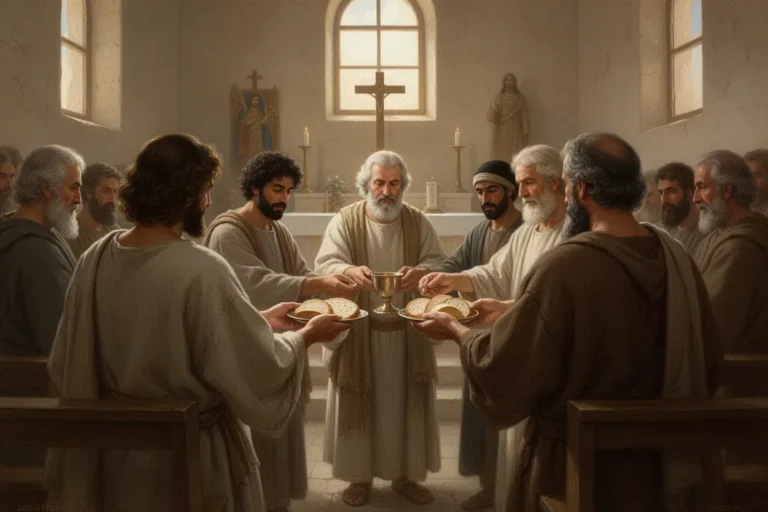
Communion, also called the Lord’s Supper or the Eucharist, is a central practice in many churches. Participants share bread and wine or grape juice in remembrance of Jesus’ death and in celebration of Christian unity. Churches disagree about the precise meaning of Christ’s presence in communion and who may receive it, but the practice generally points to Jesus’ sacrifice and the shared life of believers.
Why Christian community and baptism matter
Christianity is personal, but it is not intended to be practiced alone. The New Testament presents believers as members of one body, with different gifts and responsibilities. A church gives Christians a place to worship, learn, serve, receive pastoral care, and be challenged by people whose experiences and perspectives differ from their own.
Healthy Christian community should provide both belonging and accountability. It should welcome people honestly, care for those in need, teach the faith responsibly, and make room for confession and growth. No church is free from conflict or failure, and Christian communities can cause real harm when they misuse authority or protect leaders instead of protecting people.
Many churches identify several marks of a healthy community:
Teaching that is rooted in Scripture and centered on Jesus
Respect for the dignity and safety of every person
Practical care for the poor, grieving, sick, lonely, and excluded
Leaders who are accountable rather than treated as unquestionable
Opportunities for members to serve rather than simply attend
A willingness to admit mistakes and pursue reconciliation
Baptism is the public sign by which a person identifies with Jesus and joins the Christian community. It usually involves water applied by pouring, sprinkling, or immersion. Many churches baptize people who personally profess faith, while others baptize infants as a sign of belonging to the covenant community and later invite them to affirm the faith for themselves.
Christian traditions also differ over the timing and method of baptism. Some understand it primarily as an outward testimony of personal faith; others view it as a sacrament through which God gives grace and incorporates a person into the church. In either case, baptism represents a decisive connection with Jesus’ death, burial, resurrection, and people.
A church does not have to be perfect for you to seek community. Ask how it handles Scripture, leadership, money, safeguarding, disagreement, and care for vulnerable people before committing yourself.
Church membership may involve more than attending services. It can include joining a small group, meeting with a mentor, participating in communion, serving neighbors, giving financially, and taking part in decisions or ministries. The purpose is not to earn God’s love but to practice the shared life Christians believe they have already received through grace.
How Christian denominations differ while sharing core beliefs
There is no single worldwide Christian organization that governs every church. Christianity includes many traditions, denominations, and independent congregations. The largest broad families are commonly described as Catholic, Orthodox, and Protestant, though each family contains substantial internal diversity.
Catholic Christianity places strong emphasis on Scripture, tradition, the sacraments, and the teaching authority of the church. Eastern Orthodox Christianity also emphasizes Scripture, ancient tradition, sacramental worship, and the life of the historic church, with distinctive liturgy and theological language. Protestant churches generally emphasize the authority of Scripture and salvation by grace through faith, while including many different approaches to worship and church government.
Protestant traditions include Baptist, Lutheran, Methodist, Presbyterian, Anglican, Reformed, Pentecostal, evangelical, and many other churches. Some churches are highly liturgical, with a structured calendar and formal prayers. Others emphasize spontaneous worship, extended preaching, personal conversion, or the gifts of the Holy Spirit.
Christians may disagree about:
Who should be baptized and how baptism should be performed
The meaning and practice of communion
How church leaders should be chosen and what authority they hold
How the Bible relates to tradition, reason, and personal experience
How to understand spiritual gifts, healing, and the work of the Holy Spirit
Questions about marriage, family, gender, sexuality, politics, and public life
The timing and details of Christ’s return and the final judgment
These disagreements can be significant, and they should not be dismissed as though every church teaches exactly the same thing. At the same time, many traditions share core convictions about one God, Jesus’ identity, his death and resurrection, the authority of Scripture, human sin, salvation by grace, the Holy Spirit, the church, and the hope of resurrection.
A person exploring Christianity does not need to resolve every denominational debate before asking whether Jesus is trustworthy. It is reasonable to begin with the central questions: Who is Jesus? What did he teach and do? What does it mean to follow him? Which Christian community teaches faithfully, treats people responsibly, and helps you grow in love of God and neighbor?
People come to Christian faith through many different paths. Some grow up in a Christian family and gradually make the faith their own. Others experience a clear conversion after a crisis, a conversation, Bible reading, or an encounter with a church community. Some move toward belief through years of questions rather than one dramatic moment.
There is no required emotional experience. A person does not need to feel certain about every question, understand all Christian doctrine, or have a perfect past. Becoming Christian generally involves turning toward Jesus in trust and being willing to learn a new way of life.
For someone who wants to respond to Christianity, practical steps may include:
Read one of the Gospel accounts, such as Mark, Luke, or John, to encounter the story and teachings of Jesus directly.
Speak honestly with God about what you believe, doubt, regret, hope, and want to understand.
Ask questions of mature Christians who can explain their beliefs without pressuring or manipulating you.
Visit a church carefully, paying attention to its teaching, treatment of people, leadership, and relationship with the surrounding community.
Consider a personal response to Jesus, including confession, trust, and a willingness to follow him.
Learn about baptism and Christian community with guidance from the church tradition you are considering.
A simple prayer can express a beginning of faith, but no special wording functions as a formula. What matters is the honest direction of the person: acknowledging the need for God, trusting Jesus, receiving grace, and asking for help to follow him. Christians understand the Holy Spirit to be God’s presence at work in believers, giving guidance, conviction, comfort, and strength.
Doubt does not automatically disqualify someone from being Christian. Christians may question the existence of God, struggle with suffering, disagree with church decisions, or feel spiritually distant. Faith can include uncertainty while still involving a sincere search and a continuing willingness to follow the truth as it becomes clearer.
Being Christian also does not mean approving everything done by people who use the Christian name. Churches and individual believers have committed serious wrongs, including abuse, discrimination, coercion, and political or financial exploitation. Evaluating those failures honestly is compatible with taking Jesus seriously; his teachings themselves strongly challenge hypocrisy, cruelty, and the misuse of religious authority.
At its heart, being Christian means belonging to Jesus and learning to live in response to his grace. It means worshiping God, receiving forgiveness, practicing love, participating in a community, and placing your hope in the life, death, and resurrection of Christ. The result is not a claim of moral superiority, but a lifelong process of becoming more truthful, merciful, faithful, and willing to serve.
Frequently asked questions
Do you have to attend church to be a Christian?
Christians are saved by God’s grace, not by church attendance. However, Christian faith is normally lived with other believers through worship, teaching, prayer, communion, and service. Someone may be unable to attend because of illness, location, or safety concerns and still be Christian. Deliberately rejecting all Christian community, however, conflicts with the New Testament’s picture of shared discipleship.
Can someone be Christian and still have doubts?
Yes. Doubt can describe uncertainty, unanswered questions, disappointment, or difficulty trusting God. Many Christians experience it at different points. What matters is how you respond: bring questions into honest prayer, seek trustworthy guidance, examine the evidence and teachings carefully, and avoid pretending certainty you do not have. Doubt and unbelief are related but are not always identical.
Is being a good person enough to become Christian?
Christianity teaches that moral effort cannot earn reconciliation with God. Christians believe everyone needs grace, including people who appear especially kind or religious. Good actions matter because they express love and justice, but they are understood as a response to God’s grace rather than a payment for salvation. Trust in Jesus, not personal moral achievement, is central to Christian identity.
What is the difference between being Christian and being religious?
Religion can refer broadly to beliefs, practices, community, and devotion connected with God or the sacred. Christianity includes those elements, but its center is a relationship of trust and allegiance to Jesus Christ. A person may identify culturally as Christian while rarely practicing the faith, whereas Christian discipleship involves learning from Jesus and allowing his teachings to shape worship, character, relationships, and choices.










Leave a Reply