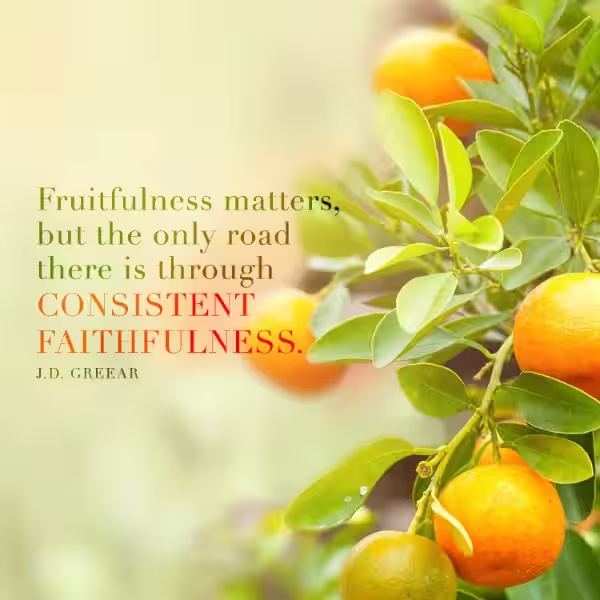
The concept of fruitfulness in the Bible isn’t just about physical reproduction. It’s a multifaceted idea encompassing growth, abundance, and positive impact. It’s deeply intertwined with the divine mandate to multiply, to bear good fruit, and to fulfill God’s purposes in the world. Understanding this concept requires delving into the various contexts in which it appears, recognizing its multifaceted nature, and examining how it resonates with modern life.
Think of fruitfulness as a rich tapestry woven from different threads. It’s about the cumulative effect of good deeds, the abundance that comes from righteous living, and the spiritual harvest that results from cultivating a close relationship with God. It touches upon personal growth, communal flourishing, and the overall flourishing of creation. This isn’t just about producing offspring, but about the fruit we bear in faith, love, and service.
In the very first chapters of Genesis, fruitfulness is intimately tied to God’s blessing and creation. God commands humanity to be fruitful and multiply. This command isn’t just about procreation but also about expanding God’s kingdom. This includes the propagation of knowledge, the development of cultures, and the flourishing of communities. Think of families as miniature expressions of the kingdom of God, growing and expanding in faith and love. Examples include Abraham’s lineage expanding, Noah’s family rebuilding society after the flood, and the various tribes of Israel blossoming.
This early understanding of fruitfulness often emphasizes tangible results. Good harvests, healthy families, and prosperous communities were all seen as evidence of God’s blessing and fruitfulness. However, it also hints at a deeper, spiritual dimension. The fruit that comes from following God’s commands is not limited to physical things; it speaks to moral and spiritual growth. It’s about living a life that reflects the character of God.
Fruitfulness in the Teachings of Jesus
Jesus’ teachings continue the theme of fruitfulness, but with a profound shift in emphasis. He speaks about bearing fruit that remains, emphasizing the spiritual and eternal aspects of fruitfulness. This involves love, compassion, and service to others. This isn’t merely about external actions, but also about the transformation of heart and mind. Jesus’ example demonstrates that fruitfulness is not about self-aggrandizement but about selfless service and devotion to God and neighbor. For instance, the parable of the vine and the branches illustrates this concept: the branches (believers) bear fruit only when connected to the vine (Jesus). The fruit is then a testament to that connection.
Jesus directly connects fruitfulness with discipleship. His followers are called to produce fruit that demonstrates their connection to him. This fruit isn’t solely about personal piety; rather, it’s about making a difference in the world. It involves actions that reflect the principles of love, forgiveness, and compassion. This fruitfulness reflects the character of God and shows the world God’s love through our actions.
Fruitfulness in the New Testament and Beyond
The concept of fruitfulness in the New Testament and beyond often encompasses a variety of spiritual gifts and activities. This includes evangelism, discipleship, growth in faith, and the spread of the Gospel. The Apostle Paul emphasized the importance of fruitful labor that builds up believers and expands God’s kingdom. It encompasses spiritual gifts that serve the community, such as wisdom, knowledge, healing, and prophecy. A fruitful life is one that is characterized by the presence of these fruits of the Spirit, such as love, joy, peace, patience, kindness, goodness, faithfulness, gentleness, and self-control. Imagine a community flourishing with these virtues, and you see the fruitfulness in action.
Different denominations and individuals may emphasize different aspects of fruitfulness. Some may focus on social action. Others may focus on personal piety. However, the core idea remains consistent: fruitfulness in the Bible is a holistic concept that encompasses growth, abundance, and impact. Ultimately, fruitfulness is a testament to our relationship with God and our commitment to living a life that glorifies Him.
Frequently Asked Questions
What does fruitfulness mean in the Bible?
Fruitfulness in the Bible has multiple meanings, depending on the context. It often refers to having children, but also encompasses producing spiritual or physical results, such as good works, blessings, or growth. It can also describe the flourishing of a nation or a community, representing abundance and prosperity. The specific meaning is determined by the passage and its context.
How does fruitfulness relate to different religions?
While the concept of fruitfulness is present in many religions, its specific interpretations and applications differ widely. Some religions may focus on the physical aspect of procreation, while others emphasize spiritual growth and contributions to society. The concept of abundance, growth, and positive impact on the world, however, is a common thread.