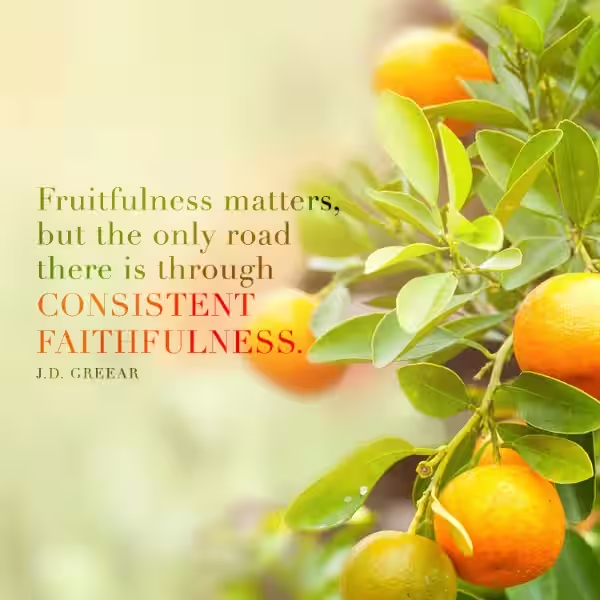
The word “fruitful” in the Bible, while seemingly straightforward, carries a rich tapestry of meaning. It’s not just about producing physical offspring, but encompasses a broader concept of abundance, prosperity, and spiritual yield. Understanding this multifaceted meaning is crucial for interpreting biblical narratives and applying their lessons to our lives. This exploration will delve into the various contexts of “fruitful” in scripture, highlighting its significance and relevance for today’s readers.
One key takeaway is that fruitfulness isn’t solely about external actions. It’s a reflection of an inner state of abundance, growth, and purpose. This is evident in various biblical passages, emphasizing that a truly fruitful life comes from a relationship with God. Think of seeds planted in fertile ground; they require suitable conditions to flourish. Similarly, we must cultivate a life conducive to spiritual growth and yield.
In the creation account, God declares His creation “very good” (Genesis 1:31). This suggests a state of fullness and potential, a richness of creation that is fruitful. The command to be fruitful and multiply (Genesis 1:28) is a reflection of this inherent potential in all of God’s creation. This is not just a biological mandate but an invitation to participate in the divine design of creation. This encompasses the beauty of nature, the abundance of crops, and the very relationships we cultivate.
The concept of fruitfulness in creation extends to the human realm. Before the fall of humanity, humans were intrinsically connected to God and lived in harmony with creation. This initial state depicts a profound fruitfulness in both their relationship with God and their impact on the world. Consider the potential a young tree holds to produce fruit. In this image, a fruitful life is one that blossoms with purpose and is deeply rooted in God’s wisdom.
The stories of Abraham, Isaac, and Jacob demonstrate a deep connection between faith and fruitfulness. Their lives were marked by God’s faithfulness and their response to His call. For example, Abraham, despite his advanced age and infertility, was promised numerous descendants (Genesis 15:5). This demonstrates that true fruitfulness often comes through trust and perseverance in God’s plan, even when facing seemingly impossible circumstances.
The lives of these patriarchs highlight the spiritual and material fruitfulness that arises from a life lived in obedience to God. This wasn’t just about having a large family; it was about fulfilling a divine purpose. It’s a powerful reminder that faithfulness leads to blessings—sometimes in unexpected ways. Their journeys serve as a powerful example of how a life rooted in faith can yield abundant blessings.
Fruitfulness in the Spiritual Realm
Beyond physical fruitfulness, the Bible emphasizes spiritual fruitfulness. Jesus’ teachings focus heavily on the importance of bearing fruit that reflects the nature of God. This spiritual fruitfulness encompasses love, joy, peace, patience, kindness, goodness, faithfulness, gentleness, and self-control (Galatians 5:22-23). These are qualities that arise from a relationship with God, demonstrating growth in faith and character.
Consider a tree producing beautiful flowers and sweet fruit; this is a symbol of the spiritual life. For believers, spiritual fruitfulness isn’t just about personal transformation; it’s about sharing the love and compassion of Christ with others. Helping others, ministering to their needs, and spreading the word of God are all expressions of this spiritual fruitfulness. This is ultimately the most impactful type of fruitfulness, reflecting the divine nature within us.
The concept of fruitfulness applies to the church as a whole. A vibrant and growing church is characterized by its ability to reach out to others, share the Gospel, and nurture believers. This is evident in the early church’s rapid expansion and its influence on the world. This speaks to the collective impact of believers working together, fostering spiritual growth and community.
The church’s fruitfulness is a testament to God’s power at work. It embodies the transformative effect of faith on individuals and communities. Think of a community garden; each member contributes, and the garden thrives. Similarly, a fruitful church nurtures its members, empowers them to reach out to others, and fosters a supportive environment for spiritual growth.
The concept of fruitfulness in the Bible is far-reaching. It extends beyond the literal and encompasses spiritual, relational, and societal growth. It’s about living a life that reflects the abundance and goodness of God. By understanding this multifaceted meaning, we can apply these lessons to cultivate a life of purpose, impact, and spiritual richness.
Ultimately, being fruitful, in the biblical context, is about producing positive change in the world, in the lives of others, and ultimately, glorifying God. This is a continuous process, inviting us to engage with the world around us in a way that reflects our relationship with God. We can all strive to be more fruitful in our daily lives, reflecting the fruits of the Spirit and fulfilling our unique purpose in God’s plan.
Frequently Asked Questions
What does fruitful mean in the Bible?
In the Bible, “fruitful” often signifies more than just producing physical offspring. It can also represent spiritual abundance, growth, and the bearing of good works. Different contexts will determine the specific meaning. For example, in the creation account, it relates to God’s command for the earth to be filled with life. In other passages, it can refer to a person’s character and actions, implying they are producing good things.
The concept of “fruitful” varies across religions. While some religions focus on procreation as a primary aspect of fruitfulness, others may emphasize spiritual growth, acts of charity, or the creation of positive change in the world. Ultimately, the interpretation of “fruitful” is often tied to the specific beliefs and practices of a particular faith tradition.