Church service: What to expect and how to participate
Church service: What to expect and how to participate
A church service is a scheduled gathering in which Christians worship God together through prayer, music, Scripture, teaching, and shared community. The exact order depends on the church, but most services last about an hour and welcome visitors who simply want to observe.
You may hear singing, listen to a sermon, join in prayers, and see special practices such as Communion or baptism. You are generally free to participate at your own comfort level; no one should pressure you to speak, give money, or join a religious rite.
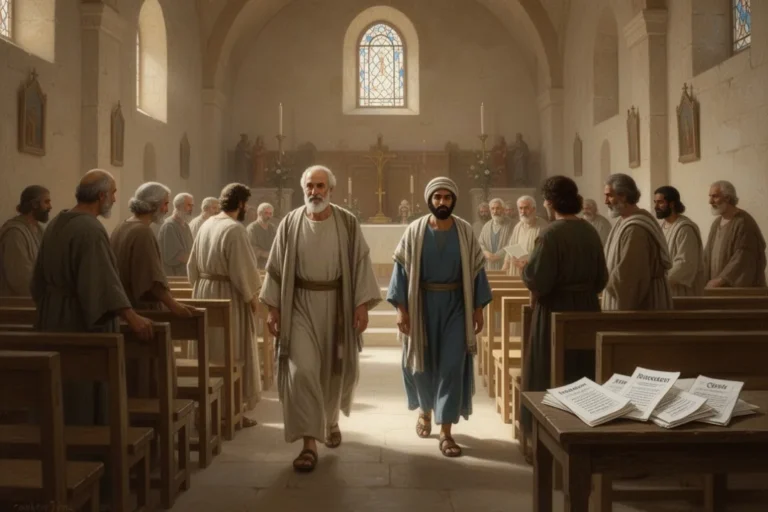
Many services begin with people entering quietly, greeting one another, and finding a seat. Some churches provide a printed bulletin or a screen showing the order of worship, song lyrics, Bible references, and announcements. A greeter or usher can answer practical questions before the service starts.
The opening may include instrumental music, a welcome, a call to worship, or an opening prayer. These elements help the congregation shift attention away from ordinary activities and toward shared worship. The tone may be formal and quiet or relaxed and conversational, depending on the church’s tradition.
Music is often a central part of the gathering. A congregation might sing traditional hymns accompanied by an organ, contemporary worship songs led by a band, or a mixture of styles. You can stand or sit as others do, listen without singing, or sing along if you feel comfortable. Lyrics are commonly displayed or printed.
A reading from the Bible usually follows, although the length and number of readings vary. The passage may come from the Old Testament, the Gospels, the letters of the New Testament, or another part of Scripture. The minister, pastor, priest, or lay reader may briefly introduce it before the reading begins.
The sermon, homily, or message explains a biblical passage and connects it with Christian belief and daily life. It may focus on topics such as forgiveness, justice, suffering, family relationships, service, hope, or the life of Jesus. A thoughtful sermon should give you something to consider rather than require you to understand every custom immediately.
Prayer may include personal needs, people who are sick, local concerns, national events, people experiencing poverty, and the wider world. Some churches pray together using printed words, while others invite people to pray silently or listen as a leader speaks. Standing, kneeling, or sitting during prayer reflects local practice rather than a universal requirement.
Many services include announcements about community activities, classes, volunteer opportunities, or pastoral care. An offering may also be collected to support the church’s building, staff, charitable work, and ministries. Visitors are not expected to contribute; you can pass the plate or basket without explanation.
The service often ends with a blessing, benediction, final song, or brief prayer. People may remain to talk, while others leave promptly. If you want to speak with a leader, ask a question, or learn about future services, the time after worship is often a natural opportunity.
For a first visit: Sit where you can easily observe others, keep the bulletin nearby, and remember that watching quietly is a complete and respectful way to take part.
How church services differ across Christian traditions
Christian churches share core beliefs about Jesus Christ, but their worship can look quite different. Differences may involve the structure of the service, the role of clergy, the use of music, the frequency of Communion, and the way the congregation responds. One style is not a universal model for every church.
Liturgical churches usually follow a carefully planned order of worship. Roman Catholic, Eastern Orthodox, Episcopal, Lutheran, and some Methodist congregations may use repeated prayers, prescribed readings, formal responses, vestments, candles, processions, and a church calendar. Worshippers may stand, sit, or kneel at particular points.
In a liturgical service, the congregation may respond to a leader with set words. A printed service book or bulletin usually gives clear instructions. The Eucharist, also called Holy Communion or the Lord’s Supper, may be a central part of the gathering. Rules about who may receive Communion vary, so visitors should follow the local guidance.
Evangelical and nonliturgical churches often place strong emphasis on congregational singing, a sermon, spontaneous prayer, and personal application of Scripture. The service may have a flexible order, contemporary music, a welcome from several leaders, and opportunities to respond through prayer or conversation. Some congregations invite people forward for prayer, but participation is normally voluntary.
Baptist, Pentecostal, charismatic, and independent churches can vary widely even within the same broad category. Some services are quiet and highly structured; others may include extended singing, raised hands, spoken responses, testimonies, healing prayer, or speaking in tongues. If you are unfamiliar with a practice, observing respectfully is acceptable.
Quaker meetings may have no sermon, formal order, or planned music. Worshippers can gather in silence, with anyone moved to speak offering a brief message. Other Christian communities may meet in homes, schools, rented halls, or small groups rather than a traditional church building.
Even churches in the same denomination may feel different because of their size, neighborhood, leadership, age mix, and culture. A small congregation may invite personal conversation, while a large church may use a welcome desk, several worship times, and separate programs for children. Looking at a church’s website or calling ahead can clarify what to expect.
Ask about Communion: Find out whether visitors may receive it or should remain seated.
Check the service length: A typical gathering may last around an hour, while Communion services, special holidays, or baptisms may take longer.
Ask about children: Learn whether children stay in the service, join a children’s program, or use a nursery.
Check accessibility: Ask about parking, ramps, seating, hearing assistance, and accessible restrooms if needed.
What to wear and bring to a church service
There is no single dress code for every church service. Some congregations favor suits, dresses, and polished shoes, while others are comfortable with jeans, sweaters, and casual shirts. A good general choice is clean, modest clothing that allows you to sit, stand, and move comfortably.
If you are attending a formal cathedral, traditional parish, wedding, funeral, or holiday service, slightly dressier clothing is usually appropriate. For an informal community church, casual clothing may fit naturally. When uncertain, choose neat business-casual clothes rather than something highly revealing or likely to distract others.
Certain churches may have specific expectations about head coverings, bare shoulders, shorts, or footwear. These guidelines are more likely in conservative or historic congregations, but they are not identical everywhere. You can check the church’s visitor information or call the office before attending instead of guessing.
You usually need very little. Bring a phone only if you plan to use it for a Bible or service information, and keep it silenced. A printed Bible may be available, but you do not need to own one to attend. Families may want to bring quiet activities for young children if the church does not provide them.
Arriving 10 to 15 minutes early gives you time to park, find the entrance, use the restroom, and ask questions. If you arrive late, enter quietly and take the nearest available seat unless an usher directs you elsewhere. During a particularly formal service, the usher may wait for a natural pause before seating you.
Many churches have a welcome table where you can pick up a bulletin or provide contact information. Sharing an email address or phone number should be optional. You may decline a visitor card politely if you do not want follow-up communication.
Privacy tip: Read any welcome card before completing it. A church should explain how your information will be used and respect your choice not to provide personal details.
Participation can mean many things: listening carefully, singing, praying silently, meeting someone afterward, or simply learning how the service works. You do not have to imitate every gesture on your first visit. Watching the people around you can help, but your comfort and conscience matter.
When the congregation stands, you may stand if you are able, or remain seated for physical or personal reasons. The same applies to kneeling, raising hands, clapping, or responding aloud. Churches often provide alternatives for people with mobility limitations, health concerns, sensory needs, or different levels of religious familiarity.
You can sing even if you do not know the words, listen to the music, or remain quiet. During spoken prayers, some congregations say a common response such as “Amen,” while others remain silent. You may use the printed words, offer your own silent prayer, or simply listen to the leader.
Communion deserves special care because churches have different beliefs and policies. In some congregations, all baptized Christians are invited; in others, only members or people who meet particular conditions may receive. If instructions are not clear, remain seated or ask an usher. Many churches invite non-communing visitors to come forward for a blessing, but this is not universal.
Baptisms, confirmations, healing prayers, altar calls, and anointing services may also occur. You can observe these practices without participating. If a leader invites people forward and you do not want to go, stay seated. A respectful church will not treat a visitor’s decision as a public failure.
Giving money is another area where visitors may feel uncertain. Offerings usually support the congregation’s operations and charitable work, but attendance is not conditional on giving. If an offering basket reaches you, pass it along, or place nothing in it. Some churches use online giving or collection boxes instead.
Conversation is welcome at many points, but silence is expected during readings, prayers, and the sermon. Before or after the service, you can introduce yourself, thank a volunteer, or ask about a Bible passage. You do not need to share personal beliefs, explain your religious background, or accept an invitation to return.
Follow the bulletin when instructions are printed, but do not worry if you miss a response.
Stay seated during a practice you do not understand or do not wish to join.
Ask a quiet question of an usher or greeter when you need practical help.
Leave respectfully if you become uncomfortable, caring for a child, or unable to continue.
How to choose a church service that fits your needs
Choosing a service is about more than selecting a convenient time. Consider what you hope to find: a quiet setting for prayer, clear Bible teaching, a supportive community, traditional worship, music, programs for children, or opportunities to serve. Different churches emphasize different parts of Christian life.
Start with the service schedule and basic visitor information. Look for the meeting time, address, parking details, accessibility information, childcare arrangements, and whether the service is in person or streamed online. Photos can show the building, but they do not always capture the atmosphere or expectations accurately.
Pay attention to how the church describes its beliefs. A statement of faith can help you understand its view of the Bible, baptism, Communion, salvation, marriage, leadership, and the Christian community. You do not need to agree with every statement before visiting, but clear information helps you make an informed choice.
Consider whether the service is accessible to you. A church may have a ramp but no accessible seating near the main area, or it may offer captions online but not hearing assistance in the building. Families may need a nursery, sensory-friendly space, or children’s classroom. Contacting the church in advance can prevent avoidable difficulties.
Notice how the church treats visitors and people who appear different from the main congregation. Healthy welcome is shown through practical help, clear boundaries, and respect for choice—not through pressure to disclose private information or make an immediate commitment. You should be able to attend more than once before deciding whether the community suits you.
A first visit may feel unfamiliar simply because the language and routine are new. Give yourself permission to compare several services. You might prefer the teaching at one church, the music at another, and the accessibility or community life at a third.
Worship style: Decide whether you prefer formal liturgy, contemporary music, silence, or a blend.
Teaching: Listen for whether sermons explain Scripture clearly and connect it responsibly with life.
Community: Notice whether people make room for newcomers without overwhelming them.
Practical fit: Consider travel time, schedule, parking, childcare, and accessibility.
Beliefs and practices: Read the church’s published information and ask respectful questions.
Church services for holidays, life events, and online worship
Regular Sunday worship is only one kind of church service. Churches also hold special gatherings for Christmas, Easter, Good Friday, Advent, Lent, weddings, funerals, baptisms, confirmations, and community needs. These services may include readings, music, symbols, or rituals that are less common in ordinary weekly worship.
Holiday services often draw larger crowds and may require extra planning. Christmas Eve may include candlelight, carols, or multiple services. Easter may involve special music and a larger congregation. Arriving early is sensible, and checking the schedule matters because holiday times can differ from the normal weekly pattern.
A wedding service centers on the couple’s vows and the church’s understanding of marriage. A funeral or memorial service usually includes prayer, Scripture, music, and remembrance of the person who died. Guests are commonly welcome even when they do not belong to the church, although the family or officiant may provide specific instructions.
In a baptism service, the church publicly marks a person’s entry into or growth within the Christian community. Traditions differ over infant baptism, believer’s baptism, immersion, and sprinkling. Guests may attend to support the person or family without sharing the church’s beliefs.
Online worship can be useful when distance, illness, caregiving, work, weather, or accessibility makes in-person attendance difficult. A livestream may include the same sermon and music as the building service, but some parts—especially Communion and personal conversation—may be handled differently. Follow the church’s guidance rather than assuming that online participation carries the same meaning in every tradition.
For any special service, read the instructions carefully. Some gatherings require registration, have limited seating, or include practices that visitors may not recognize. If you are attending because someone invited you, asking that person what to expect is entirely appropriate.
Frequently asked questions
How long does a church service usually last?
Many regular services last approximately 45 minutes to an hour, but the length varies by congregation and tradition. A service with Communion, baptism, guest speakers, extended music, or holiday elements may take longer. Check the church’s website or ask an usher if you need to plan transportation, childcare, or another appointment.
Can I attend a church service if I am not Christian?
Yes. Most churches welcome visitors from other faiths, people exploring Christianity, and people with no religious affiliation. You can observe without reciting prayers, singing, donating, or receiving Communion. A considerate congregation should explain its practices and allow you to decide what level of participation feels appropriate.
Should I tell anyone that I am visiting for the first time?
You do not have to announce yourself, but telling a greeter can help you get practical information about seating, restrooms, children’s programs, or Communion. If you prefer privacy, attend quietly and leave without completing a visitor card. You can also contact the church anonymously beforehand with specific questions.
What should I do if my child becomes restless during the service?
Quietly take your child to a lobby, nursery, or children’s area if one is available. Many churches expect young children to need attention and will not consider a brief interruption unusual. Ask about the congregation’s normal practice before the service, especially if you want to know whether children remain in the room or leave for age-specific activities.






Leave a Reply