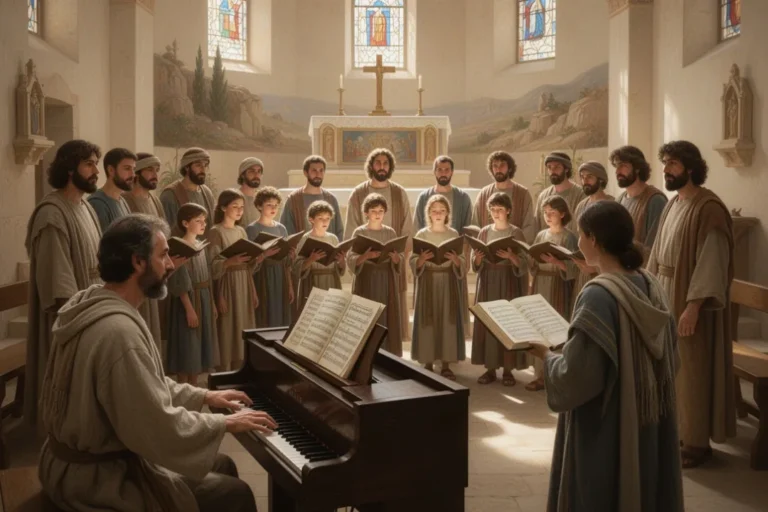
A church musician may be an organist, pianist, guitarist, vocalist, choir director, worship leader, instrumentalist, or music director. In smaller congregations, one person may handle several of these responsibilities. In larger churches, the work may be divided among staff members, volunteers, section leaders, and guest musicians.
The central responsibility is to support the church’s worship gatherings with music that fits the congregation, the service, and the church’s tradition. That can include hymns, choral anthems, contemporary worship songs, instrumental music, sung prayers, music for communion, and selections for weddings or funerals.
Musical ability is only one part of the role. A dependable church musician also prepares carefully, communicates clearly, works respectfully with clergy and volunteers, and understands that the congregation—not the musician—is the primary participant in worship.
Core idea: The most effective church music is technically prepared but pastorally aware. It gives people a clear way to participate, reflect, pray, and respond.
How the role changes across church traditions
There is no single job description for a church musician. The role depends on the denomination, worship style, size of the congregation, available budget, and expectations of the pastor or worship leader.
In a traditional Protestant, Anglican, Episcopal, Lutheran, or Methodist setting, the musician may play organ or piano, lead hymns, direct a choir, select service music, and prepare seasonal repertoire. Music may follow a lectionary, a liturgical calendar, or a defined order of worship.
In a Catholic parish, the musician may coordinate music for Mass, work with cantors and choirs, accompany congregational singing, and select music in consultation with the pastor or liturgy team. The details vary by parish and by the kind of service being planned.
In an evangelical or non-denominational church, a worship leader may lead a band, arrange songs, create charts, coordinate rehearsals, and guide a team of singers and instrumentalists. The position may be called worship pastor, worship director, or music director rather than church musician.
Some congregations use a blended format, combining hymns, contemporary songs, a choir, a keyboard, guitars, drums, or orchestral instruments. Others rely primarily on recorded accompaniment or a single volunteer pianist. A musician must learn the church’s culture before assuming that one method will work everywhere.
How to become a church musician step by step
People enter this work through many paths. Some study music formally, while others develop through years of playing in church, singing in choirs, leading small groups, or assisting an experienced director. The following steps offer a practical route.
Build a dependable musical foundation. Develop rhythm, pitch, reading skills, technique, and the ability to learn music efficiently. Keyboard skills are especially useful because piano and organ can support rehearsals, congregational singing, and individual vocal practice.
Participate in a local church. Observe how services are organized, volunteer for a choir or ensemble, and learn how musicians communicate with clergy and worship leaders. Regular participation teaches you more about congregational needs than private practice alone.
Learn to accompany singers. Practice keeping a steady tempo, introducing songs clearly, adjusting volume, following a leader, and recovering calmly from mistakes. Accompanying is different from playing a solo because you must listen continuously to other people.
Study worship planning. Learn how music relates to readings, prayers, sermons, seasons, sacraments, and the overall purpose of a service. A strong selection is not merely attractive; it supports the theme and fits the congregation’s ability to sing.
Gain rehearsal experience. Start with a small vocal group, children’s choir, youth ensemble, or volunteer band. Practice giving instructions, correcting passages kindly, and keeping rehearsals focused.
Create a simple portfolio. Include a résumé, repertoire list, references, recordings when appropriate, and a description of your experience. A short recording should show steady accompaniment and musical sensitivity rather than only difficult solo pieces.
Seek feedback and broader training. Lessons, workshops, conducting instruction, music theory, vocal coaching, and denominational resources can all help. Ask experienced church musicians what they wish they had learned earlier.
Clarify the position before accepting it. Discuss services, rehearsals, holidays, weddings, funerals, planning meetings, substitute coverage, pay, equipment, and time off. Clear expectations protect both the musician and the congregation.
Skills that matter most in church music
Musical preparation and flexibility
A church musician should be able to prepare music accurately and adapt when circumstances change. A soloist may become ill, a service may run late, a pastor may shorten a section, or the congregation may sing more slowly than expected.
Useful abilities include sight-reading, transposition, arranging, improvisation, conducting, vocal support, and basic knowledge of microphones and sound equipment. You do not need to master every skill before serving, but you should know which tasks you can handle independently and where you need assistance.
Listening and accompaniment
Accompaniment requires careful listening. The musician must hear the congregation, choir, soloist, band, and room while maintaining a musical structure that keeps everyone together.
Good accompaniment often feels supportive rather than dominant. That may mean reducing volume during a congregational verse, leaving space for a prayer, simplifying a difficult passage, or changing the tempo slightly so people can sing comfortably.
Communication and teamwork
Church music involves people with different levels of training, confidence, availability, and motivation. Some volunteers read music fluently; others learn by ear. Some singers attend every rehearsal; others balance music with work, family, and other responsibilities.
Clear communication prevents many problems. Send music early, explain rehearsal goals, identify required instruments, and tell people what to practice. During rehearsal, give specific directions such as “please soften the final phrase” rather than vague criticism.
Pastoral sensitivity
Music can carry strong emotional and spiritual meaning. A church musician may serve during baptisms, weddings, funerals, memorial services, holiday celebrations, and ordinary weeks when people arrive carrying grief or uncertainty.
Pastoral sensitivity means treating those moments with care. It also means respecting different musical preferences, avoiding unnecessary showmanship, and recognizing that a technically impressive selection may not serve the congregation well.
Organization and reliability
Many church music problems are logistical rather than artistic. Music may be missing, a substitute may not know the arrangement, or a rehearsal may begin without the needed equipment.
Keep a current calendar of services, rehearsals, special events, and deadlines.
Save charts, recordings, lyrics, arrangements, and service plans in an organized system.
Confirm keys, tempos, entrances, microphones, and instrument needs before rehearsal.
Prepare a backup plan for illness, equipment failure, or an absent musician.
Arrive early enough to warm up, check the room, and address basic technical problems.
What a typical week may involve
The schedule varies, but a regular church musician often begins by reviewing the upcoming services. This may involve reading the order of worship, consulting the sermon theme, checking the church calendar, and discussing music choices with the pastor or worship leader.
Next comes personal practice. The musician learns notes, words, transitions, introductions, endings, and any changes from the original arrangement. If the music includes a choir or band, the director may prepare rehearsal recordings, mark scores, create chord charts, or assign parts.
A rehearsal may take place later in the week. During it, the musician helps the group learn the structure, works through difficult sections, balances parts, and practices transitions between music and spoken elements. A final service plan may need to be sent to clergy, media volunteers, ushers, or other participants.
On the day of worship, the musician arrives early to test instruments and sound equipment, review last-minute changes, and settle the ensemble. After the service, there may be follow-up tasks such as putting away equipment, sending materials, scheduling substitutes, or evaluating what should change next time.
Special services can require additional work. Christmas and Easter programs may involve extra rehearsals and larger ensembles. Weddings and funerals often require careful conversations with families, coordination with clergy, and music that respects both the service and the people attending.
How to choose music for a worship service
Music selection works best when several questions are considered together. A song may be beautiful and familiar but still be unsuitable if it does not match the service, falls outside the congregation’s ability, or creates an awkward transition.
What is the purpose of this moment? Is the music gathering people, accompanying a ritual, encouraging congregational singing, creating reflection, or sending people out?
How does it relate to the service? Consider the readings, sermon, prayers, season, sacrament, and central theological themes.
Can the congregation participate? Look at melody range, rhythm, repetition, language, tempo, and how familiar the music is.
What resources are available? Choose music that fits the singers, instruments, rehearsal time, room, and sound system.
Does the sequence make sense? Transitions between songs, readings, prayers, and silence should feel intentional rather than rushed.
Are permissions handled properly? Churches may need licenses or other permissions to reproduce, project, record, or distribute copyrighted music.
Good planning includes variety without treating variety as the main goal. A service might balance familiar congregational music with a new song, a choir anthem with a simple response, or a full ensemble with a quiet instrumental selection.
When introducing unfamiliar music, teach it before the service or use a brief rehearsal with the congregation. Clear leadership is more helpful than assuming people will understand the structure immediately.
A productive rehearsal has a defined purpose. Tell the group what must be accomplished, provide the music in advance, and begin with the sections most likely to cause difficulty. This respects volunteers’ time and reduces unnecessary repetition.
Start with a practical check of attendance, parts, instruments, and schedule. Then establish the tempo and basic structure before polishing details. If the group cannot yet sing or play the notes securely, interpretive discussions will not solve the underlying problem.
Give corrections that people can use. Identify the measure, entrance, vowel, rhythm, dynamic, or transition that needs attention. Demonstrate when helpful, but avoid taking over every part of the rehearsal.
Rehearsal leadership also involves morale. Thank people for preparation, acknowledge progress, and correct privately when a sensitive conversation is needed. Volunteers are more likely to return when they feel that their contribution matters and their time is respected.
Practical tip: End rehearsals by reviewing the next step: what to practice, when to arrive, what to bring, and who is responsible for each part of the service.
Training and education for church musicians
Formal education can be valuable, but it is not the only route into church music. A degree in music, sacred music, choral conducting, music education, or organ performance may prepare you for larger staff positions and more demanding repertoire.
Private lessons are useful for improving technique, musicianship, vocal health, keyboard skills, or conducting. Organists may need specialized instruction because organ technique, registration, pedal work, and hymn playing differ from piano performance.
Church musicians can also learn through certificate programs, denominational workshops, choir conferences, community ensembles, online courses, and mentoring. The best training combines musical study with practical service experience.
Alongside music, study basic theology, worship practice, church history, and the tradition in which you serve. You do not need to become a theologian, but you should understand the meaning and use of the music you help place in worship.
Technology skills are increasingly useful. Depending on the position, you may need to work with digital charts, presentation software, recording tools, scheduling platforms, notation programs, or a basic audio system. Technology should support the service rather than distract from it.
Paid positions, volunteer service, and compensation
Some church musicians are full-time employees, but many work part time or serve as contractors. Others volunteer regularly while holding another job. A church may have a paid music director but rely on volunteer singers and instrumentalists, or it may have a volunteer coordinator overseeing a small ensemble.
Compensation depends on location, training, responsibilities, denomination, congregation size, number of services, and whether the position includes weddings, funerals, rehearsals, administration, or seasonal programs. The title alone does not reveal the workload.
Before agreeing to a paid position, ask for a written description of duties. Clarify whether preparation time, meetings, special services, substitute arrangements, mileage, instrument maintenance, and additional rehearsals are included.
Volunteers also benefit from clear agreements. “Volunteer” should not mean that expectations are unlimited or constantly changing. A sustainable ministry gives people reasonable schedules, access to resources, advance notice, and permission to take breaks.
When volunteers have busy schedules, prioritize the music that must be secure for the service. Send practice materials early, simplify arrangements when necessary, and avoid programming more music than the group can prepare well.
Uneven musical experience
Assign parts thoughtfully and provide more than one way to learn. Written music, rehearsal recordings, sectional practice, and individual coaching can work together. Build difficulty gradually instead of making every service a test of technical ability.
Disagreements about musical style
Style disputes are often connected to identity, memory, theology, or generational preference. Listen before responding, return to the purpose of the service, and use agreed-upon criteria such as congregational participation, theological fit, quality, and available resources.
Unclear authority
A musician may receive conflicting instructions from a pastor, worship committee, choir members, and church board. Ask who has final responsibility for music decisions and establish a planning process that allows appropriate consultation without creating multiple competing directors.
Burnout
Constant preparation for weekly services and special events can become exhausting. Schedule time off, train substitutes, share leadership, reuse appropriate arrangements, and distinguish essential work from optional improvements. A church music ministry needs continuity, but it should not depend entirely on one person’s unlimited availability.
How to evaluate whether church music is serving the congregation
Evaluation should look beyond applause or the musician’s personal satisfaction. Ask whether people can participate, whether the music supports the service’s purpose, and whether the ensemble is prepared enough to lead with confidence.
Useful feedback can come from clergy, musicians, volunteers, and congregants. Keep questions specific: Was the song in a comfortable key? Did the transition feel rushed? Could people hear the leader? Was rehearsal time used effectively?
Give changes enough time to develop. A new song may need several appearances before people recognize it. At the same time, do not continue a selection simply because it was planned if it consistently prevents participation or creates confusion.
The strongest church musician combines musical excellence with humility. The goal is not to make every service impressive. It is to help the congregation sing, listen, pray, and take part in a way that is appropriate to its faith tradition and community.
Frequently asked questions
Do you need a music degree to become a church musician?
No. A music degree can help with advanced positions, but many church musicians develop through private lessons, worship experience, choir participation, mentoring, and regular practice. Churches often value reliability, accompaniment skills, teamwork, and familiarity with their tradition as much as formal credentials. The requirements depend on the congregation and the complexity of the position.
What instrument is most useful for a church musician?
Piano is often the most versatile starting instrument because it supports singing, rehearsals, choir practice, and many worship styles. Organ is especially valuable in congregations with a traditional liturgical or hymn-based service. Guitar, drums, strings, brass, and woodwinds may be essential in other settings. The best choice depends on the church’s existing music program.
Can a church musician lead music and play at the same time?
Sometimes. A pianist or guitarist may lead by giving clear introductions, maintaining tempo, and using vocal cues while playing. More complex services may require a separate worship leader, conductor, accompanist, or band director. Dividing these responsibilities can improve communication, especially when the music includes multiple singers, instruments, or changing service elements.
What should you ask before accepting a church music position?
Ask how many services and rehearsals are expected, which special events are included, who selects music, what resources are available, and who makes final decisions. Also clarify compensation, time off, substitute coverage, equipment responsibilities, copyright procedures, and communication expectations. A written agreement helps prevent misunderstandings about preparation and availability.




Leave a Reply