Moses and Aaron: brothers, leaders, and biblical lessons
Moses and Aaron: brothers, leaders, and biblical lessons
Moses and Aaron were brothers whom God appointed to lead Israel out of slavery in Egypt. Moses carried the central prophetic and governing role, while Aaron served as his spokesman and became Israel’s first high priest.
Moses and Aaron belonged to the tribe of Levi, one of the twelve tribes descended from Jacob. Their older sister was Miriam, who also played an important role during the Exodus. The three siblings were born during a period when Pharaoh had ordered Hebrew baby boys to be killed, making their family’s survival part of the larger story of Israel’s deliverance.
Moses was raised for part of his childhood in Pharaoh’s household after being rescued from the Nile. Later, he fled Egypt and lived in Midian. According to Exodus, God called him through the burning bush and commissioned him to return to Egypt, confront Pharaoh, and bring the Israelites out of bondage.
Aaron was already an adult and living among the Israelites in Egypt when Moses received that call. God appointed Aaron to meet Moses and help him speak before Pharaoh and the people. This arrangement addressed Moses’ concern that he was not an effective speaker, but it also established a distinction between their roles: Moses received and communicated God’s commands, while Aaron helped present those commands publicly.
The central distinction: Moses was Israel’s prophet, mediator, and covenant leader; Aaron was his spokesman and the first high priest. Their responsibilities overlapped, but they were not identical.
How Moses and Aaron worked together during the Exodus
Their partnership developed through a series of major events rather than one single assignment. The following sequence shows how their responsibilities unfolded.
God called Moses from Midian. At the burning bush, God told Moses to return to Egypt and lead the Israelites toward freedom.
Aaron met Moses in the wilderness. God directed Aaron to travel out to meet his brother. Aaron then helped communicate Moses’ message to Israel’s elders.
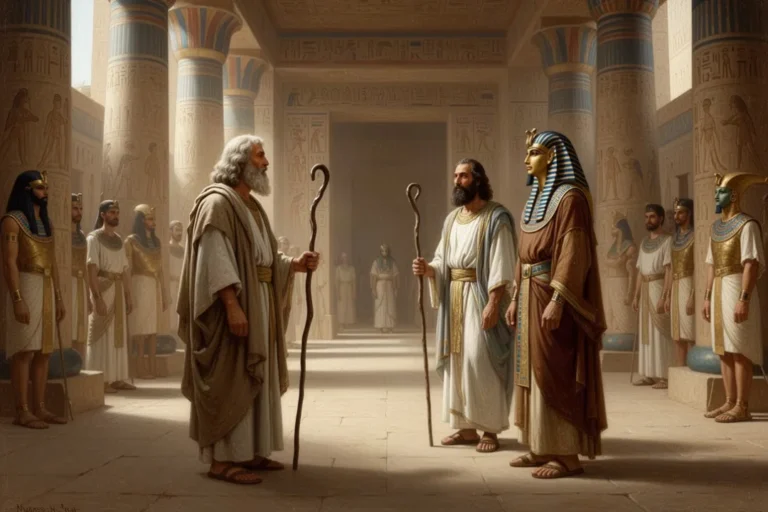
They confronted Pharaoh together. Moses delivered God’s demands, and Aaron performed signs associated with Moses’ commission. The two repeatedly appeared before Pharaoh as the plagues unfolded.
They gathered the Israelites. Moses and Aaron explained God’s instructions, including the preparations for the first Passover and the departure from Egypt.
They led the people after the escape. Moses took primary responsibility for guidance, judgment, and covenant instruction, while Aaron supported the community’s worship and public leadership.
Aaron became high priest. At Mount Sinai, Aaron and his sons were set apart for priestly service, giving Aaron a distinct role in Israel’s worship.
The brothers faced failure and correction. Aaron participated in the golden calf incident, and both brothers later disobeyed God at Meribah. These events show that their authority did not make them immune to judgment.
Why God gave Moses Aaron as a spokesman
When God called Moses, Moses expressed several objections. He questioned his own authority, worried that the Israelites would not believe him, and said that he was not skilled enough in speech. Exodus presents these concerns as part of the conversation at the burning bush, not as evidence that Moses lacked every leadership ability.
God answered by providing signs and by appointing Aaron. Aaron could speak to the people and to Pharaoh on Moses’ behalf, while Moses remained the person who received God’s instructions. Exodus uses a comparison in which Moses would function in relation to God as a source of authority, and Aaron would function as Moses’ mouthpiece.
This arrangement carries a practical lesson about leadership. A leader does not have to perform every responsibility personally. Moses needed Aaron’s communication skills, presence, and support. Aaron, in turn, served most faithfully when he represented the message entrusted to him rather than replacing Moses’ prophetic role.
The relationship also shows that a limitation does not automatically cancel a calling. Moses’ reluctance became part of the way God structured the mission. He still had to stand before Pharaoh, make difficult decisions, and teach the nation, but he did not have to do so alone.
What Moses and Aaron did before Pharaoh
Moses and Aaron approached Pharaoh with a demand that he release the Israelites so they could worship God in the wilderness. Pharaoh rejected the request and increased the people’s labor, making their situation appear worse before it improved. This reaction intensified the pressure on both leaders and caused the Israelites themselves to question Moses.
During the plague narratives, Moses typically announced what God would do, while Aaron’s staff and actions were involved in several of the signs. The story repeatedly emphasizes that Egypt’s ruler was being confronted not merely by two individuals but by the God of Israel, whose authority Pharaoh refused to recognize.
The first encounters also tested the brothers’ credibility. Pharaoh’s magicians imitated some signs, and the Egyptian ruler hardened his resistance. Moses and Aaron therefore had to continue speaking and acting despite setbacks, public opposition, and the suffering of the people they were trying to help.
The Passover instructions marked a turning point. Moses and Aaron explained the observance to the Israelite community, and the people prepared for the final plague and their departure. Their leadership was not limited to dramatic confrontations; it also involved giving precise instructions that families had to understand and follow.
How their leadership changed after Israel left Egypt
After the Israelites left Egypt, Moses became the central figure for making judgments, receiving divine instruction, and mediating the covenant. He ascended Mount Sinai, received the covenant commands, and taught the people how they were to live as a community. His authority was connected to revelation and national governance.
Aaron’s role increasingly centered on worship. God instructed Moses to consecrate Aaron and Aaron’s sons for priestly service. Aaron wore the garments of the high priest and represented the people in the sanctuary. His work included offerings, ritual responsibilities, and duties connected with the holiness of Israel’s worship.
The distinction between the brothers helps explain why the Bible does not treat them as interchangeable. Moses was not the high priest, and Aaron was not the prophet who led Israel in the same way Moses did. Their roles were complementary:
Moses received God’s commands, judged disputes, led the nation, and mediated the covenant.
Aaron represented the priesthood, supervised worship, and served as the principal spokesman during the early confrontation with Pharaoh.
Both taught the people, faced resistance, carried public responsibility, and were accountable to God.
Neither was portrayed as flawless or beyond correction.
This division of responsibility also gave Israel a model for separating civil leadership, prophetic authority, and priestly service. The categories were not completely isolated, but they were meaningful. Moses and Aaron worked together without having the same office.
What the golden calf reveals about Aaron
The golden calf episode is the most serious failure associated with Aaron. While Moses was on Mount Sinai, the people demanded a visible object to lead them. Aaron collected their gold and oversaw the making of a calf, after which the people held a celebration connected with the image.
Moses came down from the mountain carrying the covenant tablets and saw the people’s idolatry. He broke the tablets, destroyed the calf, and confronted Aaron. Exodus portrays Aaron as failing to resist the crowd and then offering an inadequate explanation for what had happened.
Aaron’s participation is significant because he had already witnessed God’s power in Egypt. His failure was not caused by ignorance of the Exodus story. He faced pressure from the community and chose a path that produced immediate approval rather than faithful obedience.
At the same time, Aaron’s failure does not erase the rest of his calling. The biblical account continues with his consecration as high priest. That combination—serious sin followed by continued responsibility under God’s discipline—makes Aaron a complex figure. He is neither presented as a perfect religious official nor dismissed as someone with no genuine role in Israel’s worship.
A warning from Aaron’s failure: Public leadership can become dangerous when a person responds to pressure by giving people the symbol or decision they demand instead of upholding a difficult command.
Why Moses broke the first covenant tablets
The broken tablets represented the rupture caused by Israel’s idolatry. Moses’ action was not a casual outburst; it dramatized the fact that the people had violated the covenant almost immediately after receiving it. The tablets represented God’s commands, while their breaking reflected Israel’s breach of trust and obedience.
Moses then interceded for the people. He pleaded with God not to destroy the nation and appealed to God’s reputation among the nations and to the promises made to Israel’s ancestors. This combination of judgment and mercy is characteristic of Moses’ leadership: he confronted sin firmly while also standing before God on behalf of the people.
Aaron’s involvement in the golden calf also shows why a spokesperson needs moral courage, not merely verbal ability. Communication is not neutral when a leader must choose whether to repeat a crowd’s demand or speak a difficult truth. Aaron could speak for Moses, but he also had to make his own decisions.
What happened at Meribah and why Moses and Aaron were judged
Later in the wilderness, the Israelites complained because they lacked water. At Meribah, God instructed Moses to speak to a rock so that water would come out. Instead, Moses struck the rock with his staff after rebuking the people. Aaron was involved in the episode and shared the judgment announced by God.
The exact emphasis of the rebuke is tied to the leaders’ failure to treat God as holy before the community. Their conduct suggested that the leaders themselves were producing the water or that they were handling the divine command on their own terms. The event was therefore more than a small procedural mistake; it was a public failure by leaders whose actions shaped how the people understood God.
As a result, neither Moses nor Aaron would lead Israel into the promised land. Aaron died at Mount Hor after his priestly garments were transferred to his son Eleazar. Moses later died after viewing the land from a mountain, but Aaron’s death comes earlier in the wilderness narrative.
This judgment underscores a demanding principle: greater responsibility brings greater accountability. Moses and Aaron had been entrusted with unusual authority, and their public disobedience had consequences. Their closeness to God’s work did not place them outside correction.
How Aaron’s priesthood shaped Israel’s worship
Aaron’s priesthood established a hereditary line through his sons. The priests served at the tabernacle, the portable sanctuary where Israel’s worship was organized during the wilderness period. Aaron’s service included presenting offerings and entering the Most Holy Place on the appointed Day of Atonement.
Leviticus describes the high priest’s responsibilities in detail. On the Day of Atonement, the high priest performed rites for the sanctuary, the priests, and the people. These rituals communicated that sin affected the relationship between the community and God and that worship required cleansing, reverence, and ordered approach.
Aaron’s priesthood also carried a blessing for Israel. In Numbers, God instructed Aaron and his sons to pronounce a blessing over the people, asking God to protect them, show them favor, and grant them peace. The wording belongs to Scripture, so translations differ, but its central purpose is clear: the priests publicly placed the community under God’s name and care.
Aaron’s role therefore extended beyond sacrifice. He represented the people before God, helped maintain the holiness of worship, and embodied the responsibilities of the priestly office. His story also demonstrates that the office could be sacred even when the officeholder was personally imperfect.
How Moses and Aaron differed from Miriam
Miriam, Moses and Aaron’s sister, also contributed to Israel’s deliverance. She watched over Moses when he was placed in the Nile and helped arrange for their mother to care for him. After the crossing of the sea, she led the women in music and dance, and Scripture identifies her as a prophet.
Miriam’s presence reminds readers that the leadership of the Exodus was not simply a two-man partnership. Moses held the primary prophetic and governing role, Aaron held the priestly role, and Miriam exercised prophetic and musical leadership among the women of Israel.
Numbers records a conflict in which Miriam and Aaron spoke against Moses, partly concerning his marriage and partly concerning his unique authority. They questioned whether God had spoken only through Moses. The account distinguishes Moses’ special prophetic relationship from the legitimate prophetic roles of Miriam and others.
The episode also shows that family closeness could create tension. Moses, Aaron, and Miriam shared a history of danger and service, yet their shared mission did not eliminate disagreements about authority. Their family relationship was real, but it did not make every decision harmonious.
Important themes in the relationship between Moses and Aaron
Shared calling does not mean identical gifts
Moses and Aaron were both called to serve Israel, but they were equipped differently. Moses was the principal messenger and national leader. Aaron’s ability to speak publicly and his priestly lineage made him suited to represent Moses and later to represent the people in worship.
This distinction offers a useful way to understand cooperation. A shared purpose does not require every person to have the same function. Effective service often depends on recognizing different responsibilities without turning those differences into a competition.
Family relationships can strengthen and complicate leadership
Because Moses and Aaron were brothers, they shared trust, memory, and cultural background. Aaron’s presence likely gave Moses support during the demanding return to Egypt, and the two could stand together before Pharaoh in a way that communicated unity.
Yet family can also introduce pressure, rivalry, and divided loyalties. The golden calf, the conflict involving Miriam and Aaron, and the episode at Meribah all show that family members can fail in public roles. Their relationship was meaningful, but it did not remove the need for boundaries and accountability.
Spiritual authority must remain accountable
Moses and Aaron had extraordinary authority, but the biblical narrative repeatedly places them under God’s command. Moses had to follow instructions even when they seemed difficult. Aaron had to accept the consequences of leading the people into idolatry. Both were judged when their actions misrepresented God.
Their story resists the idea that a gifted or appointed leader is automatically trustworthy in every decision. Calling creates responsibility; it does not grant permission to ignore correction.
Leadership includes both public action and patient instruction
The brothers’ work was not limited to miracles or confrontations. They explained instructions, organized the people, answered complaints, maintained worship, and carried out responsibilities over many years. Much of their leadership involved repetition and endurance.
This matters because dramatic moments can make leadership appear simpler than it is. The Exodus required public courage, but it also required consistent teaching and administration. Moses and Aaron served a community that was frightened, divided, impatient, and often uncertain about what would happen next.
How Moses and Aaron are remembered in later Scripture
Later biblical writers continue to associate Moses and Aaron with the Exodus and Israel’s worship. The Psalms remember them as servants chosen by God, while prophetic and historical passages refer to their leadership and priestly roles. Their names became shorthand for the foundational generation that led Israel out of Egypt and established its worship.
Some later passages emphasize Moses’ role in receiving the law, while others highlight Aaron’s priesthood. The distinction remains consistent: Moses represents covenant instruction and prophetic leadership, and Aaron represents the priestly office. Together, their names recall the broader structure of Israel’s relationship with God.
In the New Testament, Moses and Aaron also appear in discussions of the law, priesthood, faith, and God’s dealings with Israel. Those references build on the earlier biblical portrait rather than treating the brothers as identical. Moses is associated especially with the law, while Aaron’s priesthood becomes part of later reflection on priestly service and its limitations.
What readers can learn from Moses and Aaron today
The story of Moses and Aaron speaks to anyone trying to serve a community, lead a family, or carry out a demanding responsibility. Its lessons are not based on pretending that leaders are flawless. Instead, the narrative shows how calling, cooperation, failure, correction, and perseverance can exist in the same life.
Ask for help without abandoning responsibility. Moses accepted Aaron’s assistance, but he still carried his own central assignment.
Use communication to serve truth. Aaron’s speaking role was valuable when it conveyed God’s message, not when it simply satisfied the crowd.
Respect different forms of leadership. Prophetic, administrative, and priestly work are distinct, even when they support one another.
Take public influence seriously. The golden calf and Meribah show how leaders’ choices can shape an entire community.
Expect accountability. Moses and Aaron were honored servants, yet they still faced judgment for disobedience.
Remember that failure does not explain everything about a person. Aaron’s golden calf was a grave sin, but his later priestly service remains part of the biblical account.
Moses and Aaron are best understood as complementary brothers within a larger story of redemption and covenant. Moses gave Israel prophetic direction and national leadership. Aaron gave Israel priestly representation and public support. Their successes show the value of cooperation, while their failures warn that authority must remain humble, truthful, and answerable to God.
Common questions about Moses and Aaron
The biblical account leaves readers with practical questions about who these brothers were and how their roles fit together. The answers become clearer when their family history, leadership assignments, priesthood, and failures are considered together.
Frequently asked questions
Were Moses and Aaron biological brothers?
Yes. Moses and Aaron were brothers, and Miriam was their sister. They were children of Amram and Jochebed according to Exodus. Aaron was older than Moses, while Miriam appears as the sister who watched over Moses when he was placed among the reeds of the Nile. Their shared family history became part of Israel’s larger story of deliverance.
Was Aaron older than Moses?
Yes. Aaron was older than Moses, and the biblical narrative presents him as an adult already living among the Israelites when Moses returned from Midian. God sent Aaron to meet Moses and help him speak to Pharaoh and the people. Aaron’s age and established presence likely helped him serve as a public representative during the Exodus.
Why was Aaron punished if Moses struck the rock?
The account at Meribah holds both leaders responsible for failing to honor God publicly. Although Moses struck the rock, Aaron was involved in the leadership and shared responsibility for the community’s response. Their punishment meant that neither would lead Israel into the promised land. The passage emphasizes that leaders can be accountable for a collective public failure.
Did Aaron replace Moses as Israel’s leader?
No. Aaron did not replace Moses as Israel’s primary national and prophetic leader. Aaron served as Moses’ spokesman during the early Exodus and later became high priest. After Aaron died, his son Eleazar inherited the priestly office. Moses continued leading Israel until his death, while Joshua eventually succeeded him as the national leader.






Leave a Reply