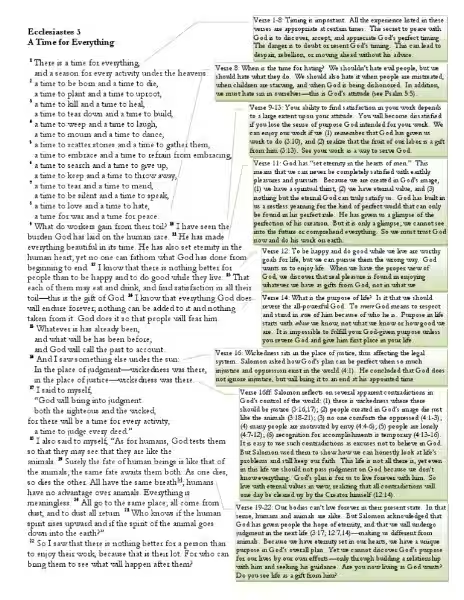
Ecclesiastes 3 is a profound reflection on the cyclical nature of existence, a reminder that life, in all its complexity, is a tapestry woven with both joy and sorrow, success and failure. This chapter, often viewed as a philosophical exploration of human experience, offers a comforting truth: everything has its time. It’s not just about accepting the inevitable, but also about understanding the interconnectedness of those moments and recognizing the divine hand guiding the universe through each one.
This chapter isn’t about negativity; rather, it’s about finding balance within the inevitable ebb and flow of life’s experiences. It reassures us that there’s a predetermined order to existence, a rhythm that unfolds in a way we might not always understand but which is ultimately beautiful and purposeful. Consider seasons – spring, summer, autumn, and winter. Each has its unique beauty and purpose, and each depends on the others for a complete cycle. Similarly, life’s experiences can teach us valuable lessons, even the difficult ones.
Understanding the Flow: Finding Meaning in the “Times”
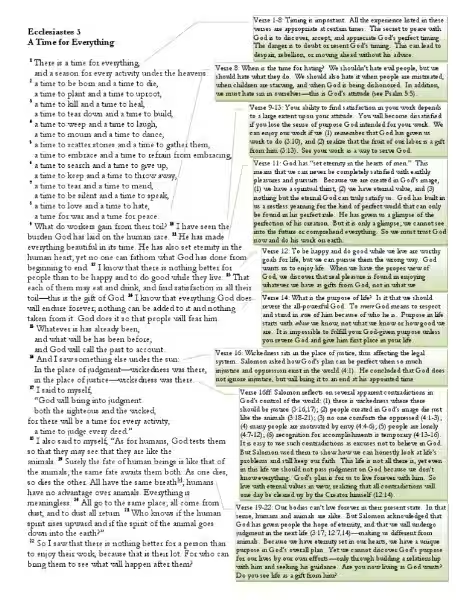
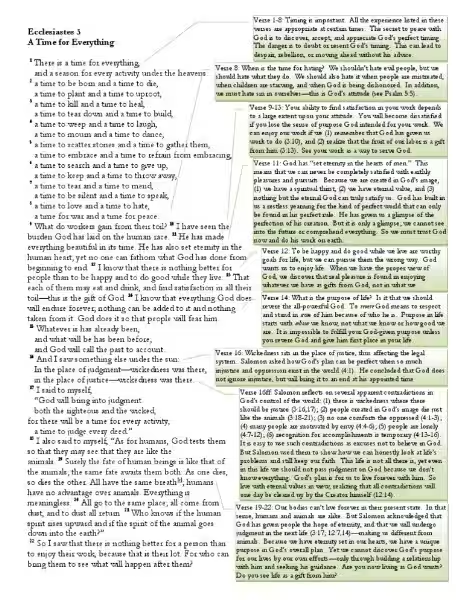
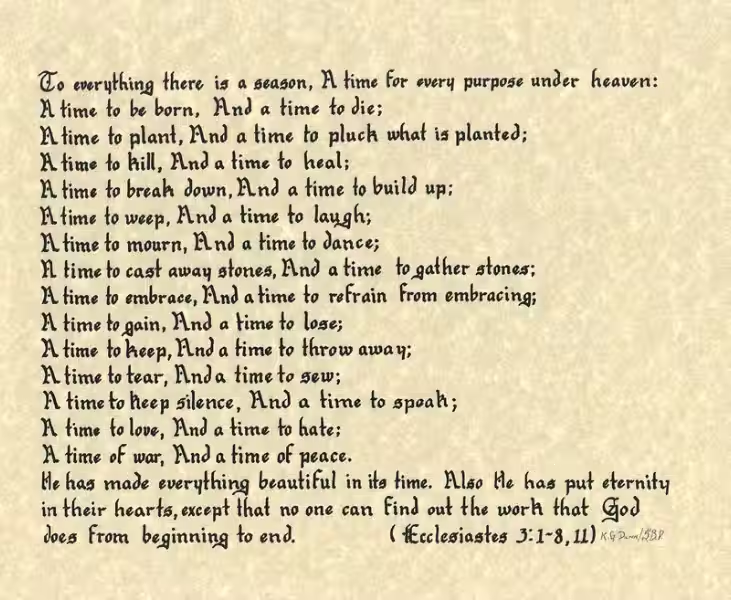
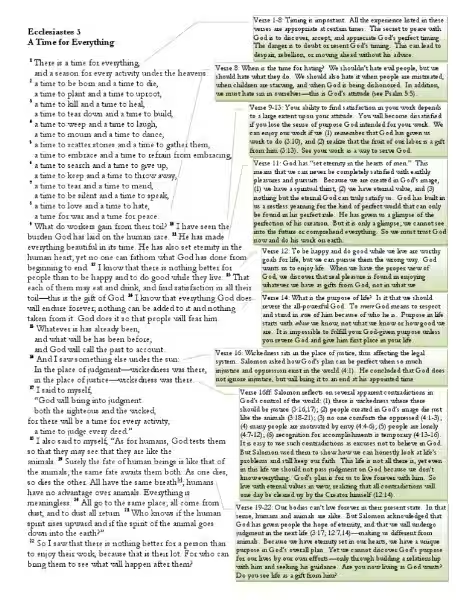
Ecclesiastes 3 speaks of a multitude of “times” – times to weep, times to laugh, times to love, times to hate, times to build, times to break down. These aren’t just arbitrary events but a structured pattern. This understanding is empowering. It helps us acknowledge the different emotions and experiences that inevitably arise, and not to be defined by any one of them. We are not meant to be constantly in a state of happiness or sorrow, but rather to experience the full spectrum of human emotions.
For example, imagine a project at work: times to plan, times to execute, times to evaluate. All of these stages are interconnected and essential. We can’t jump ahead or skip steps; rather, we need to allow each time to fulfill its purpose.
The verses in Ecclesiastes 3 remind us that there is a season for everything. This truth allows for a profound acceptance. We can release the need for constant control and allow ourselves to embrace the different phases of life. We might be experiencing heartbreak, but there is also a time for healing. We might be experiencing sickness, but there is also a time for restoration. Recognizing these inherent shifts in our emotional states and physical circumstances provides a framework for understanding and coping.
The Importance of Order and Purpose: Embracing the Divine Plan
Ecclesiastes 3 highlights that within this chaotic yet ordered universe, there’s a divine plan. The author acknowledges the human tendency to resist the flow of life. We often crave control, wanting to dictate what and when things happen. But the text suggests that true fulfillment comes from accepting the order already in place, from recognizing that God is in control.
Consider a farmer planting seeds in the spring. They don’t control the weather or the growth; they simply trust that the natural order of things will eventually bring forth a harvest. This is a beautiful parallel to the idea of trusting in a higher power and embracing the seasons of life as they come.
Ultimately, understanding Ecclesiastes 3 is about finding perspective and acceptance. It’s about recognizing that pain and joy, loss and gain are all part of the same journey. It’s not about ignoring the difficulties, but about navigating them with a sense of purpose and hope. By embracing the cyclical nature of life, we can find meaning in the moments we face, recognizing that every experience, every emotion, has a place within the overall design and serves a crucial purpose.
The wisdom in Ecclesiastes 3 is profoundly relevant in modern society. We live in a culture that often prioritizes productivity and control, which can lead to stress and anxiety. The book encourages us to focus on the present moment, acknowledging that the time for everything will eventually arrive. This translates to practical application. Instead of constantly striving for more, we can learn to appreciate the present moment.
Examples abound: we can appreciate the small pleasures in life, from a cup of coffee to a conversation with a friend. We can embrace the challenges as opportunities to grow. We can find peace in knowing that even the hardest times will eventually pass.
Embrace the lessons of Ecclesiastes 3. By understanding that every experience has its time, we can navigate the ups and downs of life with a more balanced and fulfilling perspective. We can navigate the trials with greater resilience and find joy in the present moment. We can gain a sense of peace by accepting the flow of life, trusting in a higher power, and embracing the entire experience.
Frequently Asked Questions about Ecclesiastes 3
What is Ecclesiastes 3 about?
Ecclesiastes 3 explores the cyclical nature of life, highlighting that everything has its season. It emphasizes the importance of accepting both joy and sorrow, recognizing a time for everything, and understanding that God’s plan encompasses all aspects of life.
What does Ecclesiastes 3 say about religion?
Ecclesiastes 3 doesn’t explicitly prescribe a specific religious practice. Instead, it focuses on the human experience and God’s role within it, urging acceptance of the ordained cycles of life. It suggests a connection to the divine through recognizing the purpose and order inherent in the universe.
Ecclesiastes 3 encourages faith by reminding readers that even amidst suffering and hardship, there is a divine order. It suggests finding peace in accepting the transient nature of life and trusting in a higher power controlling those cycles.
What are some key themes in Ecclesiastes 3?
Key themes include the cyclical nature of life, the inevitability of change, the importance of accepting different seasons, and ultimately, trusting in God’s plan despite the complexities of life.