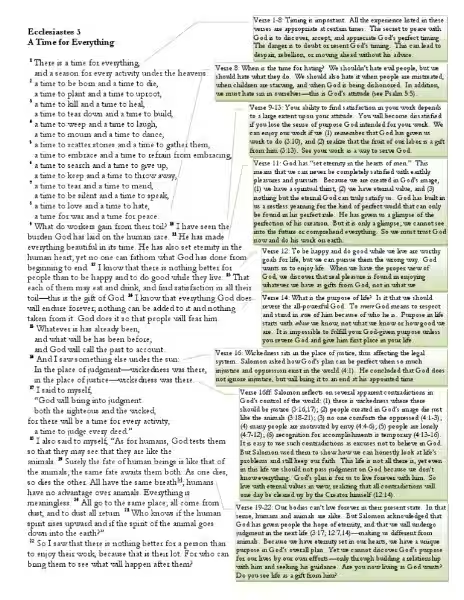
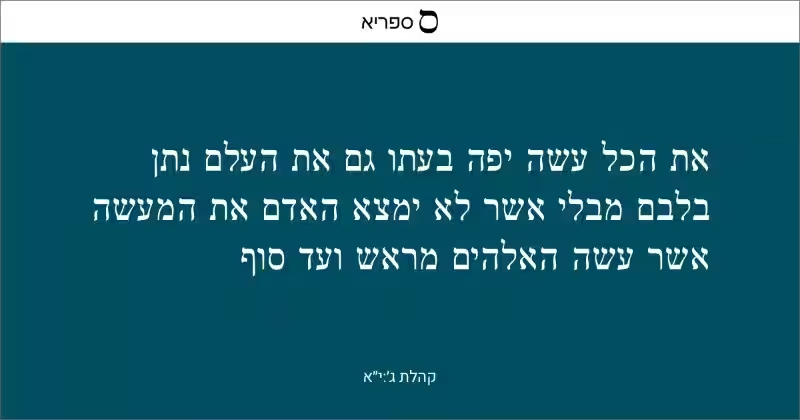
Ecclesiastes 3, a profound chapter in the book of Ecclesiastes, delves into the cyclical nature of life and the often-confusing search for meaning. This passage, rich in wisdom, encourages us to embrace the temporary nature of joy and sorrow, and ultimately, to find fulfillment within the divine order of the universe. It’s a journey through the human experience, exploring the ebb and flow of life’s seasons, and finding solace in the divine plan. It speaks to our human need for understanding and our struggles to find meaning in a seemingly chaotic world. This is a constant struggle, and the beauty of the passage is how it helps us face it.
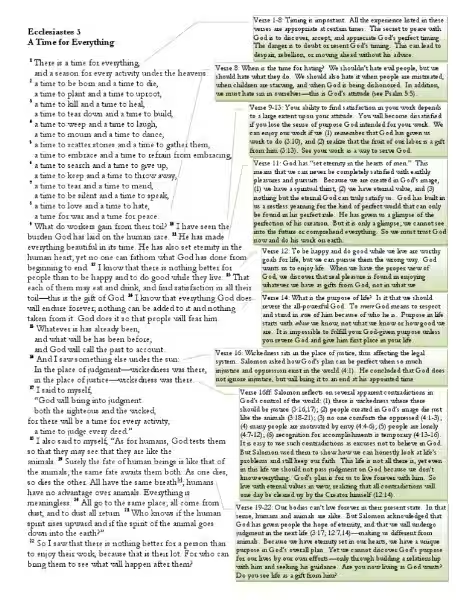
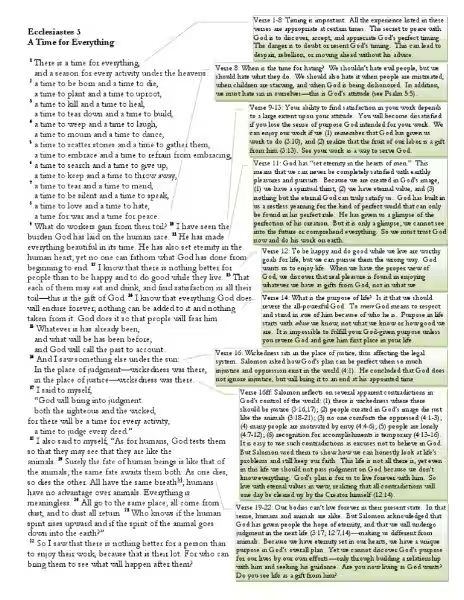
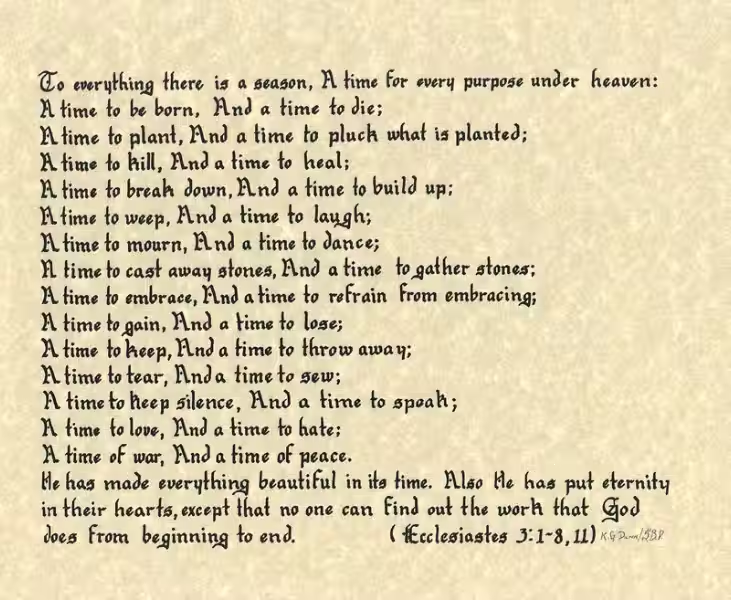
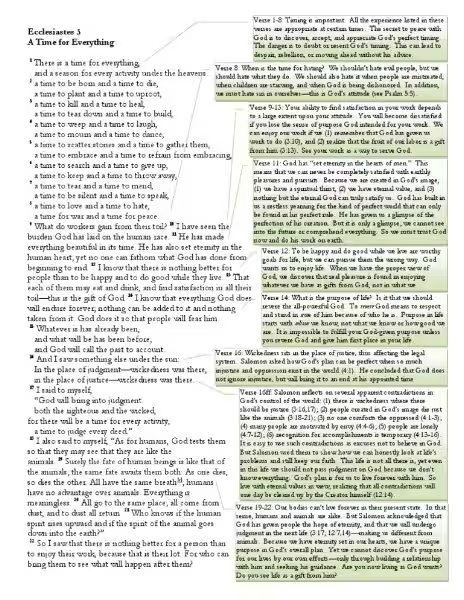
The chapter’s core message revolves around the idea that there is a time for everything and a season for every purpose under heaven. This concept isn’t about rigid schedules, but rather about recognizing the natural rhythms of life. Consider the change of seasons. Spring brings new life, summer warmth, autumn harvest, and winter stillness. Similarly, life presents us with different experiences, each with its own unique purpose and significance. Like the seasons, these experiences are essential parts of the complete picture. The passage teaches that understanding this rhythm is key to living a meaningful life, finding balance in its various stages.
The Dance of Joy and Sorrow: A Balanced Perspective
Ecclesiastes 3 emphasizes the importance of accepting both joy and sorrow as integral components of the human experience. The passage doesn’t advocate for a detached emotional response, but rather a balanced understanding of both. Joy and sorrow are intertwined, like the rising and falling of tides. They are not separate entities, but rather expressions of the same ongoing process. We might reflect on how pleasure and pain are both part of our journey, and how we can better navigate these experiences by embracing their interconnectedness.
The chapter doesn’t negate the deep emotional impact of sorrow. Instead, it encourages us to see it as a necessary part of life’s tapestry. This is not a call for indifference to suffering, but rather for a deeper understanding of its role in shaping our growth and resilience. A simple example is the human experience of loss. Grief is a natural consequence, but it also often leads to reflection and appreciation for the memories we hold, teaching us resilience in the face of hardship. By accepting the cyclical nature of joy and sorrow as part of the divine plan, we can cultivate a sense of peace and acceptance.
Navigating Life’s Cycles: Understanding Purpose and Place
Ecclesiastes 3 also underscores the importance of recognizing our own role in the grand scheme of things. The passage encourages us to acknowledge the various stages of life – birth, growth, maturity, and decline. It helps us realize that each stage has its own unique challenges and opportunities. Think of the different roles we play – child, student, worker, parent, friend. Each of these roles presents its own set of responsibilities and rewards, all within this vast, intricate life cycle. We are not static; we are constantly evolving and changing.
A key takeaway from this is accepting that we are just one part of a much larger system. Everything has a purpose. Thinking about the relationships we build and the experiences we gather – all are part of a greater design. This perspective offers a powerful antidote to the feeling of insignificance or meaninglessness that can arise in the face of life’s complexities. It provides a framework for understanding the interconnectedness of all things and our role within it. It provides that sense of belonging that we often search for in life.
The interpretation of Ecclesiastes 3 emphasizes not just the cyclical nature of life but also the importance of embracing the present moment. The passage reminds us that each moment is unique and holds its own significance. We should not dwell excessively on the past, nor should we be consumed by anxieties about the future. This means understanding that every season has value. Instead, we should find meaning in the present and engage in the tasks and relationships before us with diligence and purpose. It encourages us to find our place in the now.
This concept is often overlooked in modern life. We are so often caught up in worrying about the future or reminiscing about the past that we fail to appreciate the present moment. Taking time to truly appreciate the beauty of a sunset, the laughter of a child, or the company of a loved one allows us to find meaning in the present. Focusing on the present moment helps us to appreciate the gift of the now, a valuable reminder that life is a precious gift.
Frequently Asked Questions about Ecclesiastes 3 Interpretation
What is the main message of Ecclesiastes 3?
Ecclesiastes 3 emphasizes the cyclical nature of life, highlighting that everything has its season and a time for every purpose under the sun. It encourages acceptance of both joy and sorrow, recognizing that both are part of the human experience.
What does “a time to…” mean in Ecclesiastes 3?
The “a time to…” verses aren’t necessarily about rigid schedules or specific moments. Instead, they signify a recognition of the various aspects of human experience, including joy, sorrow, building and destroying, and everything in between. These are not necessarily mutually exclusive.
By acknowledging the temporary nature of joy and sorrow, the passage encourages a balanced perspective on life’s ups and downs. It suggests that understanding these cycles can lead to greater peace and acceptance.
Why does Ecclesiastes 3 seem to contradict other parts of scripture that emphasize joy and happiness?
Ecclesiastes 3 is often viewed as a book of philosophical reflection on human existence, and isn’t necessarily meant to contradict other scriptures promoting joy and happiness. It could be seen as a crucial step in understanding how these emotions fit within a larger context of life’s inevitabilities.
What is the significance of the “vanity” theme in Ecclesiastes 3?
The “vanity” theme, recurring throughout Ecclesiastes, highlights the fleeting nature of earthly pursuits. While not necessarily implying despair, it emphasizes the limitations of worldly achievement and encourages a focus on a relationship with something greater than oneself.
How does Ecclesiastes 3 relate to the concept of God’s sovereignty?
The passage supports the concept of God’s sovereignty by highlighting that even in the midst of life’s complexities, God is in control. The cyclical nature of life and the timing of events point to a divine order and purpose.
Is Ecclesiastes 3 saying that there is no purpose to life?
No, Ecclesiastes 3 is not claiming there is no purpose. It’s more accurately suggesting that the purpose is to accept the full spectrum of human experience, understanding that even in suffering, there is a divine order.