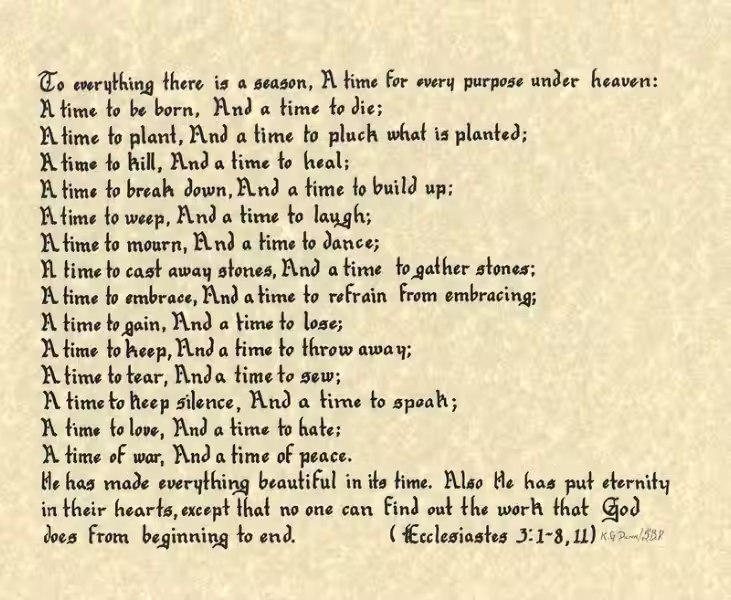
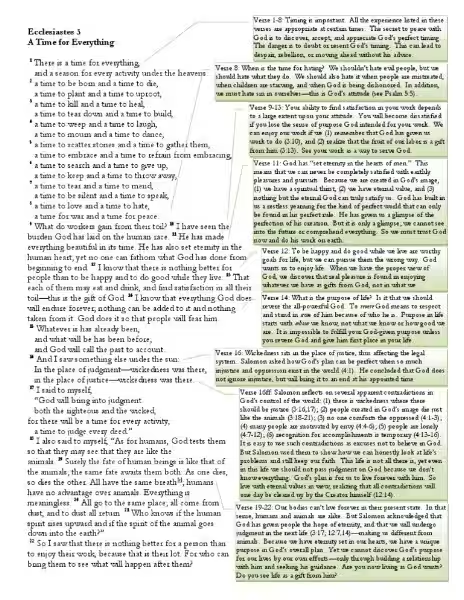
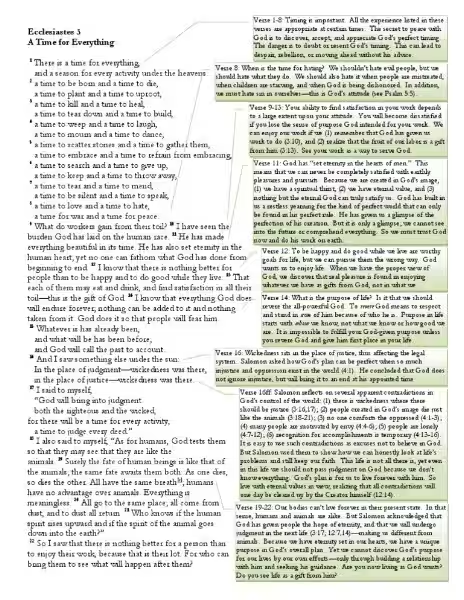
Ecclesiastes 3, a profound passage from the Book of Ecclesiastes, offers a perspective on life’s tapestry that resonates deeply with our human experience. It acknowledges the cyclical nature of existence, the ebb and flow of emotions, and the importance of embracing each season. This chapter isn’t about a rigid dogma or set of rules, instead it’s a philosophical exploration of the human condition, prompting reflection and understanding. It’s a reminder that our lives are a tapestry woven with moments of joy and sorrow, accomplishment and disappointment, and that’s perfectly okay.
The core message of Ecclesiastes 3 is the acceptance of change and finding meaning within it. It encourages us to acknowledge the universal truths of life. We experience times of work and rest, joy and sorrow. This isn’t about denying these feelings, but about understanding their presence in the human experience. This acknowledgement is often a crucial step toward emotional well-being. This is also a very humanistic approach to understanding our place in the world and the complexities of life.
Ecclesiastes 3 speaks of a divine order within the apparent chaos of life. It points to a predictable rhythm in the natural world, from the planting and harvesting of crops to the changing of seasons. We see this same pattern reflected in our own lives: times of abundance and scarcity, moments of celebration and reflection. Recognising and accepting these fluctuations are key to navigating life’s journey.
We experience these cycles in a multitude of ways. Think about the seasons of your own life. There are periods of intense focus on work, punctuated by periods of leisure and relaxation. There are times of strong relationships, and others when you may feel isolated. Recognizing these cycles, as Ecclesiastes 3 suggests, helps to avoid feelings of despair or discouragement when confronted with the inevitable changes. This is about recognizing the beauty in the journey itself, not just the destination. An example would be that a person might be facing a significant challenge at work, which is a difficult time. But if they can recognize this as a temporary season, they can be better equipped to navigate it.
Ecclesiastes 3 highlights the notion that every aspect of life has a specific time and purpose. It’s not simply about finding the right moment, but about accepting that every situation, even the difficult ones, has a role to play. This is an important lesson in emotional regulation, teaching us to not resist the hardships of life, but to accept them as part of the journey.
Consider this list of examples: a time for birth, a time for death, a time for love, a time for hate. These are not mutually exclusive, but they are indicative of the complexity of human existence. The important takeaway is that each of these moments is part of the whole, and they are all essential to the human condition. Understanding this can contribute to a greater appreciation for the journey, rather than viewing life as a series of obstacles to overcome. For instance, a moment of grief, while painful, can also lead to profound understanding and growth.
Embracing the Uncertainties
Ecclesiastes 3 emphasizes the uncertainties in life. We’re not always going to understand why things happen, but accepting this uncertainty can offer a sense of peace. It’s about understanding that life is full of variables and that there is not always a clear path. Often, the difficult situations are those that reveal the most about ourselves and our values.
This doesn’t mean we should passively accept everything. Instead, it’s about acknowledging the limitations of human comprehension. Focusing on what we can control and accepting what we cannot, can lead to a more calm and grounded approach to life. Thinking of it in terms of a marathon, rather than a sprint, might be a more helpful analogy. You focus on each step, but you don’t need to know the outcome of the entire race to enjoy the journey. Just focus on each step.
Ultimately, Ecclesiastes 3 encourages us to find meaning in the daily rhythm of life, focusing on the process rather than just the outcome. It’s about embracing each moment, recognizing the beauty in the mundane, and understanding that life is a gift, even in its challenges. This means appreciating the small things, finding joy in simple moments, and not overthinking everything.
Consider this: a simple act of kindness, a conversation with a friend, or even the beauty of a sunrise. These moments, when thoughtfully embraced, can offer profound meaning and fulfillment. This approach helps people to cultivate mindfulness and appreciation for the present moment, reducing stress and improving overall well-being. A key component in this is acknowledging the importance of balance: not just in our daily routine, but also in our overall approach to life.
Frequently Asked Questions about Ecclesiastes 3 and Religion
What does Ecclesiastes 3 say about the meaning of life?
Ecclesiastes 3 explores the idea that there is a time for everything, a season for everything. It suggests that life is a series of interconnected events, each with its own purpose and significance. While the passage doesn’t offer a definitive answer to the meaning of life, it emphasizes acceptance and finding joy in the various stages.
How does Ecclesiastes 3 relate to different religions?
Interpretations of Ecclesiastes 3 vary across religions. Some see it as emphasizing the cyclical nature of life and the importance of accepting the present moment, regardless of faith. Others may connect it to specific doctrines about divine purpose or the afterlife.
Is Ecclesiastes 3 saying that everything is meaningless?
No, Ecclesiastes 3 is not saying that everything is meaningless. Instead, it highlights the transient, yet meaningful nature of all things. It suggests that a proper understanding of the different times or seasons in life can contribute to appreciating the present, even though there may be periods of grief or struggle.
What is the connection between Ecclesiastes 3 and faith?
The connection between Ecclesiastes 3 and faith is complex. Different faiths may interpret the passage to emphasize the importance of trust in a higher power, regardless of the difficulties in life, or the acceptance of both joy and sorrow as part of a divine plan.
Why is Ecclesiastes 3 important for religious understanding?
Ecclesiastes 3 invites reflection on the transient nature of life and the importance of finding meaning and purpose in different stages and events. It encourages a nuanced perspective on life’s experiences and fosters acceptance in the face of both joy and sorrow.