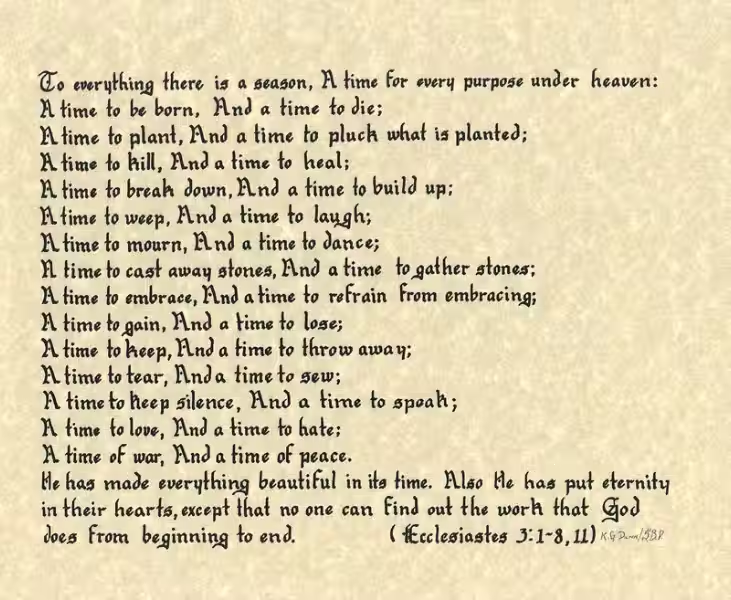
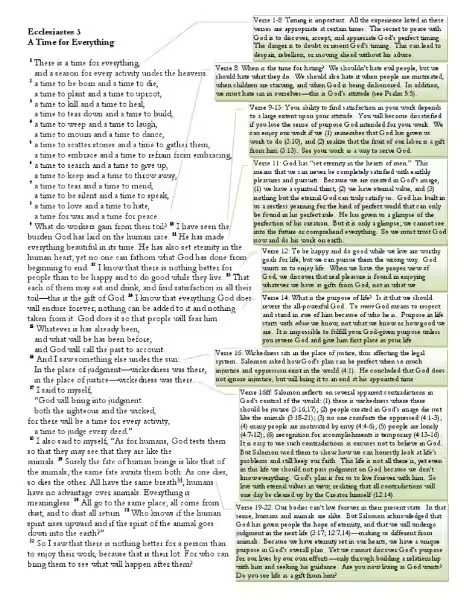
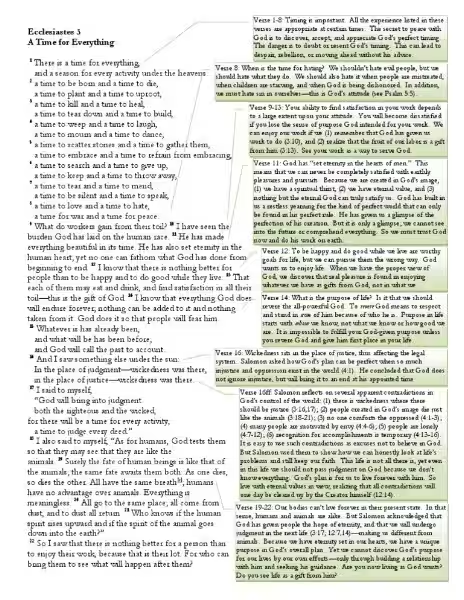
Ecclesiastes 3, a profound chapter in the Book of Ecclesiastes, offers a powerful message on the cyclical nature of life. It reminds us that every season has its purpose and that understanding this natural flow is crucial for navigating the human experience. This chapter isn’t about despair or cynicism, but rather a profound recognition of the inevitable transitions and the importance of embracing all aspects of life, including the difficult seasons, with grace and acceptance. Finding meaning in the mundane is the central theme, and understanding the rhythm of life’s seasons, as described in Ecclesiastes 3, is key to greater well-being.
The chapter is rich with imagery, highlighting the interconnectedness of life’s events. A key concept is the idea of appropriateness – that every action has its time. This understanding can be applied to various life situations, from personal relationships to professional pursuits. The chapter also emphasizes embracing the present moment, rather than constantly striving for the future or dwelling in the past. Consider this: you might feel great pressure to succeed in your career, but Ecclesiastes 3 is urging us that there’s a time for every purpose––there’s a time for planting, a time for harvesting, a time for work, and a time for rest. This acceptance of time’s inevitable passage can ease anxieties and promote a more peaceful existence.
The Natural Order of Things: A Time for Everything
Ecclesiastes 3 emphasizes the natural order of events, that there is a time for everything. The text doesn’t just list a series of actions, it emphasizes the importance of acceptance and surrender. This isn’t about fatalism, but rather about acknowledging that our lives are not entirely under our control. We are part of a larger, natural rhythm, and this acceptance can actually bring a sense of peace and serenity. Consider the example of a farmer – they know there’s a time to plant seeds, a time to water them, a time to harvest, and a time of rest. This acceptance of the cycle is essential for a successful harvest.
The chapter isn’t just theoretical; it serves as a guide for navigating the complexities of life. It encourages us to find meaning in all aspects, big and small, of our lives. Time is a crucial element here. Understanding that everything has its time can help us appreciate the current moment and not get caught up in the anxieties of the future or regrets of the past. This helps us to appreciate the seasons of joy and sorrow, of growth and decline. It’s a reminder that even the most challenging times are temporary and part of the bigger picture. Learning to accept this is key to inner peace.
Finding Meaning in the Present Moment: A Practical Approach
Recognizing that there’s a time for everything in Ecclesiastes 3 also means embracing the present moment. Living in the present helps us to avoid dwelling on past mistakes or worrying excessively about the future. This isn’t about ignoring future plans, but rather about not letting anxieties about the future overwhelm the present. A simple example: appreciate the beauty of a sunset without worrying about tomorrow’s challenges. Instead of being consumed by these, focus on the moment.
This concept is particularly relevant in a world that often pressures us towards constant productivity and achievement. Ecclesiastes 3 reminds us that rest and reflection are just as important as action. This also encourages us to give thanks for small moments and the simple joys of life. Taking time to acknowledge and appreciate those small things can bring a sense of gratitude and contentment. For instance, savoring a delicious meal, connecting with a loved one, or taking a moment to appreciate a beautiful landscape all fall under this category.
Ultimately, Ecclesiastes 3 suggests a profound message about life’s inevitable cyclical nature. Embrace the ups and downs, the joy and sorrow, the light and shadow, the planting and harvesting, the times of creation and destruction. Understanding the cycle helps us to approach life with resilience and a sense of acceptance. This approach allows us to navigate life’s transitions with equanimity and wisdom.
Consider this analogy: a tree that thrives knows that it must shed leaves in the autumn to prepare for the renewal of spring. Similarly, our lives often require periods of rest, reflection, and even loss to prepare for growth and renewal. Embracing this cycle isn’t simply about accepting the difficult times; it’s about understanding that every part of the cycle has its purpose and contributes to the larger whole.
Frequently Asked Questions about Ecclesiastes 3
What is the meaning of Ecclesiastes 3?
Ecclesiastes 3 explores the cyclical nature of life, emphasizing that there is a time for everything. It highlights the inevitability of change and the presence of both joy and sorrow in the human experience. The passage suggests accepting and finding meaning within the given order of events.
What does Ecclesiastes 3 say about religion?
Ecclesiastes 3 doesn’t explicitly define a religious practice or belief system. Instead, it encourages reflection on the human condition and the experiences of life. The book often emphasizes the importance of finding meaning and purpose within the present moment, without necessarily relying on religious dogma or rituals for fulfillment.