Yes, Latter-day Saints believe Jesus Christ is God, but they understand His relationship with God the Father differently from traditional Trinitarian Christianity.
The Church of Jesus Christ of Latter-day Saints teaches that Jesus is the divine Son of God, the Creator under the direction of the Father, the Savior of humanity, and the resurrected Lord. Latter-day Saints pray in the name of Jesus, worship Him, rely on His grace, and look to Him as the central figure of salvation.
At the same time, they do not teach that the Father and the Son are the same person or that God is one immaterial substance shared by three persons. Instead, they describe the Godhead as three distinct, perfectly united beings: God the Father, Jesus Christ, and the Holy Ghost.
The short answer: Latter-day Saints affirm Jesus’s full divinity, but they distinguish Him personally from God the Father. Their view is often described as belief in one Godhead united in purpose, glory, knowledge, and love rather than one being in the traditional Trinitarian sense.
What Latter-day Saints mean when they call Jesus God
For Latter-day Saints, calling Jesus “God” is not merely a way of saying that He was a great teacher or a particularly holy person. They believe Jesus possesses divine nature, existed before His mortal birth, exercised divine authority, performed the Atonement, overcame death, and will judge and reign over humanity.
Jesus is also called the Son of God because of His unique relationship with the Father. Latter-day Saint teaching uses this title in more than one sense. Jesus is the Father’s spirit Son in the premortal existence, and He is the literal Son of God in mortality through the miraculous circumstances of His birth.
The Church also teaches that Jesus is the Only Begotten Son in the flesh. This expression refers to His unique divine parentage and does not mean that Jesus was created as an ordinary creature. He is understood as eternally significant in God’s plan and as the one chosen to carry out the work of redemption.
Latter-day Saints commonly use titles for Jesus that express His divine identity and authority, including:
Jehovah, the premortal Lord associated with the covenant God of Israel
The Word, through whom God’s creative work was carried out
The Messiah and Christ, meaning the Anointed One
The Savior and Redeemer, who makes forgiveness and resurrection possible
The Lord, who will return to reign and judge in righteousness
These titles help explain why Latter-day Saints do not view Jesus as simply a prophet who points people toward God. They believe He is the person through whom God created the earth, revealed the gospel, entered mortality, suffered for sin, and defeated death.
The Bible is central to this belief. Latter-day Saints read passages such as John 1, which presents Christ as existing with God and participating in creation, and John 20, where the risen Jesus is recognized in divine terms. They also read Hebrews 1 as teaching that the Son bears the likeness and glory of the Father.
Additional Latter-day Saint scripture reinforces these teachings. The Book of Mormon presents Jesus as the divine Messiah who would come to earth, suffer for sin, die, and rise again. The Doctrine and Covenants and the Pearl of Great Price also describe Christ’s premortal role, His relationship with the Father, and His work as Creator and Redeemer.
How the Latter-day Saint Godhead differs from the Trinity
The main source of confusion is the word Trinity. Many Christians use it to express the belief that the Father, Son, and Holy Spirit are one God in three persons, sharing one divine essence or substance. Latter-day Saints use the word Godhead instead and describe the three members as distinct beings who are completely united.
According to Latter-day Saint teaching, the Father has a glorified, tangible body of flesh and bone. The resurrected Jesus also has a glorified body of flesh and bone. The Holy Ghost is a personage of spirit and does not have a physical body. These distinctions are central to how the Church explains the relationship among them.
The three are nevertheless one in purpose. They share the same divine work, perfect character, knowledge, power, and love. The Father directs the plan of salvation, Jesus carries out the Atonement and serves as the mediator, and the Holy Ghost bears witness of truth and sanctifies believers.
This view is sometimes called social trinitarianism by outside observers, although Latter-day Saints themselves generally prefer their own terms. The analogy should be used carefully because Latter-day Saint theology is not identical to every academic model that uses that label.
Jesus’s prayer in John 17 is important to this understanding. In that prayer, Jesus asks that His followers may be one as He and the Father are one. Latter-day Saints read this as supporting a unity of love, will, and purpose rather than requiring the Father and the Son to be the same individual.
Several New Testament scenes also appear to show the Father and Son as distinct. At Jesus’s baptism, the Son is in the water, the Holy Ghost is represented as descending, and the Father speaks from heaven. In the accounts of the Transfiguration, the Father identifies Jesus as His beloved Son. In Gethsemane, Jesus prays to the Father.
For Latter-day Saints, these passages are not illustrations of one person appearing in three modes. They show three distinct divine persons cooperating in the work of salvation.
A useful distinction: “Jesus is God” and “Jesus is God the Father” do not mean the same thing in Latter-day Saint belief. The first statement is affirmed; the second is rejected because the Father and Son are distinct members of the Godhead.
What Latter-day Saints teach about Jesus before His birth
Latter-day Saints believe that Jesus existed before His mortal birth in Bethlehem. He was not created for the first time when Mary gave birth to Him. Instead, He lived with the Father and the rest of humanity as a premortal spirit.
In that premortal existence, Jesus was known as Jehovah and acted as the Father’s representative. Latter-day Saint scripture describes Him as the one who spoke for the Father, established covenants, and led Israel. This teaching gives a distinctive meaning to many Old Testament passages that refer to the Lord.
Jesus’s premortal identity is connected to the Church’s understanding of the plan of salvation. The Father presented a plan through which His children could receive bodies, experience mortality, learn to choose good, and return to His presence. Because mortality would include sin and death, a Redeemer was necessary.
Jesus accepted that role. Latter-day Saints teach that He volunteered to come to earth, take upon Himself the consequences of sin, and make resurrection possible. His willingness is contrasted with Satan’s rejected proposal, which would have removed human moral agency and forced everyone to return to God.
This premortal choice explains why Jesus is viewed as the author and central agent of salvation. He did not begin His divine work in the manger. His birth marked His entry into mortality, but His role in the Father’s plan began before the creation of the earth.
The Church’s account of the Creation also places Jesus in a divine role. Latter-day Saints believe the Father directed the Creation and that Jesus carried it out under the Father’s authority. The Holy Ghost participated as a member of the Godhead, while the Father, Son, and Holy Ghost worked together.
This teaching is consistent with the Church’s reading of passages such as John 1 and Colossians 1, which connect Christ with creation and existence before His earthly ministry. Latter-day Saints do not interpret these passages as saying that Jesus was merely the first creature made by God. They understand Him as the divine Creator acting under the Father’s direction.
Jesus’s premortal role also influences Latter-day Saint worship. When members study the Old Testament, they often look for the covenant relationship between Jehovah and Israel. They understand Jehovah to be the premortal Jesus, whose later mortal ministry fulfills promises made to God’s people.
Why Jesus’s life, Atonement, and Resurrection matter
The strongest evidence of Jesus’s divine status in Latter-day Saint belief is found in what He did, not only in the titles applied to Him. His mortal ministry reveals the character of God, and His Atonement makes the entire plan of salvation possible.
Latter-day Saints believe Jesus lived a sinless life, taught the gospel, healed the sick, forgave sins, established His Church, and called apostles. His miracles are understood as signs of divine power and compassion rather than displays intended to draw attention to Himself.
His suffering in Gethsemane, His death on the cross, and His Resurrection are treated as one connected saving work. The Church often calls this work the Atonement of Jesus Christ. Through it, Christ overcame the effects of sin and death in ways human beings could not accomplish on their own.
The Atonement is understood to include several blessings:
Resurrection for all people: Because Jesus rose from the dead, every person will ultimately be resurrected.
Forgiveness of sin: Those who exercise faith, repent, make covenants, and seek to follow Christ can be cleansed through His grace.
Strength in suffering: Christ’s experience allows Him to understand human pain and provide sustaining help.
Reconciliation with God: Jesus serves as the mediator who makes return to the Father possible.
Victory over spiritual death: His work opens the way for eternal life in God’s presence.
Latter-day Saints do not believe that people earn salvation by good behavior alone. They teach that grace through Jesus Christ is essential from beginning to end. Obedience, repentance, baptism, service, and other covenants are responses to Christ’s grace and ways of receiving its transforming power, not substitutes for His sacrifice.
Faith in Jesus is therefore more than agreeing that He existed. It involves trusting Him, accepting His teachings, turning away from sin, making sacred covenants, and continuing to rely on Him. Latter-day Saints may speak of becoming “converted” to Christ as a lifelong process of developing faith and receiving His influence.
The Resurrection is equally central. Latter-day Saints believe Jesus rose physically from the dead with a perfected body. His Resurrection was not merely a spiritual survival or a symbolic continuation of His teachings. It was a real victory over physical death and the pattern for the resurrection promised to all humanity.
Because Jesus is resurrected and divine, Latter-day Saints believe He will return to earth. His Second Coming will bring judgment, peace, and the fulfillment of God’s purposes. He is not viewed only as a figure from the past; He is a living Lord who directs His Church and will reign as King.
How Latter-day Saints worship and follow Jesus
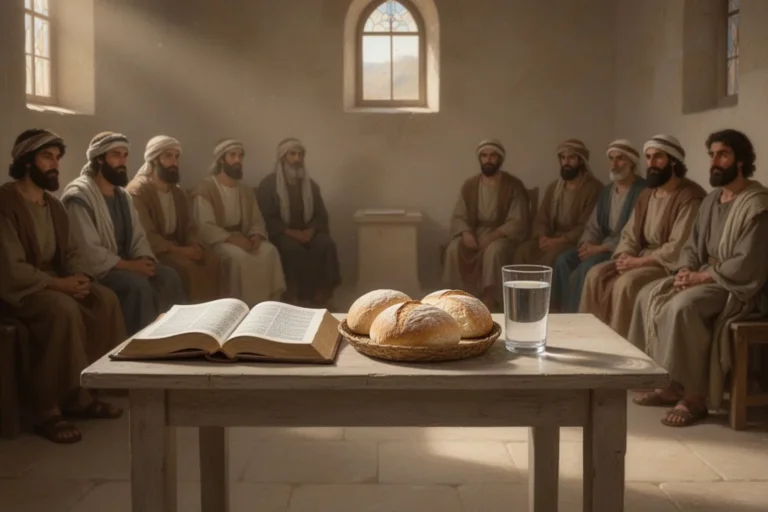
Jesus occupies the center of Latter-day Saint worship. Weekly sacrament meetings include prayers and bread and water in remembrance of His body and blood. Participants renew their commitment to follow Him and remember the covenants associated with baptism.
Latter-day Saints pray to God the Father in the name of Jesus Christ. This practice reflects their understanding of Jesus as the mediator between humanity and the Father. They do not generally pray to the Father and Jesus as though they were the same person, but they direct worship toward both as divine members of the Godhead.
Church members also sing hymns about Christ, study the Gospels, speak of His grace in testimonies, and use His name in blessings and ordinances. The sacrament, baptism, confirmation, temple ordinances, and other religious practices are all connected to His authority and saving work.
Following Jesus includes more than participating in formal worship. Latter-day Saint discipleship commonly involves:
Learning His teachings through scripture study, prayer, and instruction.
Developing faith in His Atonement rather than depending entirely on personal merit.
Repenting regularly and seeking spiritual change through His grace.
Making and keeping covenants, beginning with baptism and confirmation.
Serving other people as an expression of Christlike love.
Enduring faithfully through hardship while seeking the guidance of the Holy Ghost.
The Church’s name itself identifies Jesus Christ as its central authority. Latter-day Saints usually refer to themselves as members of The Church of Jesus Christ of Latter-day Saints because they want the name of Christ to remain prominent. “Mormon” is a familiar nickname derived from the Book of Mormon, but the Church encourages the full name when referring to the organization.
The Book of Mormon also contributes to the Church’s emphasis on Christ. Its stated purpose is to testify that Jesus is the Christ and to invite people to come to Him. Latter-day Saints read it alongside the Bible rather than as a replacement for the Bible.
Where Latter-day Saint beliefs resemble and differ from other Christians
Latter-day Saints share many core convictions about Jesus with Catholic, Orthodox, Protestant, and other Christian traditions. They believe in His virgin birth, sinless life, miracles, teachings, crucifixion, physical Resurrection, divine Sonship, Second Coming, and role as Savior.
They also affirm that Jesus is worthy of faith and worship. A person who asks whether Latter-day Saints regard Jesus as merely human should understand that the answer is clearly no. His divinity is foundational to Latter-day Saint doctrine, scripture, worship, and missionary teaching.
The significant difference concerns how the divine unity is defined. Most historic Christian churches describe God as one being or essence in three persons. Latter-day Saints describe the Father, Son, and Holy Ghost as distinct beings united as one Godhead.
There are other related differences. Latter-day Saint teaching includes a premortal existence for all human beings, a bodily understanding of God the Father, and the belief that Jesus and the Father have glorified bodies. These views differ from many traditional Christian formulations about God’s nature.
At the same time, labels can hide meaningful similarities. Latter-day Saints do not believe in three rival gods who disagree or compete. They teach that the Father, Son, and Holy Ghost are perfectly united and that Jesus acts in complete harmony with the Father’s will.
A helpful way to compare the beliefs is to separate the questions:
Is Jesus divine? Yes, according to Latter-day Saint teaching.
Is Jesus the Savior and Redeemer? Yes; His Atonement is essential to salvation.
Is Jesus the same person as God the Father? No.
Is Jesus part of the one Godhead? Yes.
Do Latter-day Saints worship Jesus? Yes, while praying to the Father in Jesus’s name.
Do they believe Jesus existed before His mortal birth? Yes, as the premortal Son and Jehovah.
So the most accurate answer depends on what a person means by “God.” If the question assumes the traditional Trinitarian definition of one divine substance shared by three persons, Latter-day Saints would describe their belief differently. If the question asks whether Jesus is truly divine, the Creator, the risen Lord, and the object of Christian faith and worship, the answer is unequivocally yes.
Frequently asked questions
Do Mormons believe Jesus and God the Father are the same person?
No. Latter-day Saints teach that Jesus Christ and God the Father are separate, embodied members of the Godhead. They are perfectly united in purpose, knowledge, power, and love, but they are not one person. This distinction is one of the clearest differences between Latter-day Saint teaching and traditional Trinitarian explanations of the Father and Son.
Do Latter-day Saints worship Jesus?
Yes. Jesus Christ is worshiped as the divine Son of God, Savior, Redeemer, and resurrected Lord. Latter-day Saints generally pray to God the Father in Jesus’s name, reflecting their belief that Christ is the mediator between humanity and the Father. Their hymns, sacrament observance, scripture study, and ordinances all place strong emphasis on Jesus.
Do Mormons believe Jesus is Jehovah?
Yes. Latter-day Saint teaching identifies the premortal Jesus with Jehovah, the covenant Lord associated with the Old Testament. They believe He represented the Father before His mortal birth and guided Israel. This interpretation is part of the Church’s broader teaching that Christ existed before Bethlehem and participated in the Creation.
Do Latter-day Saints believe Jesus was created?
They do not teach that Jesus was created as an ordinary being. He is regarded as the premortal Son of God, divine Creator under the Father’s direction, and the chosen Redeemer. Latter-day Saint theology does describe Him as distinct from the Father, but that distinction does not reduce Jesus to a mere creature or human teacher.








Leave a Reply