Christ the Mediator: Bridging the Gap Between God and Humanity
Christ the Mediator: Bridging the Gap Between God and Humanity
In the tapestry of religious beliefs, the concept of a mediator holds a central position. This figure, often a divine being, acts as a go-between, facilitating communication and connection between the divine and the mortal. Christianity, in particular, emphasizes Christ as the ultimate mediator. This role is profoundly significant, offering a pathway for humans to engage with the divine and, conversely, for the divine to interact with humanity in a meaningful way.
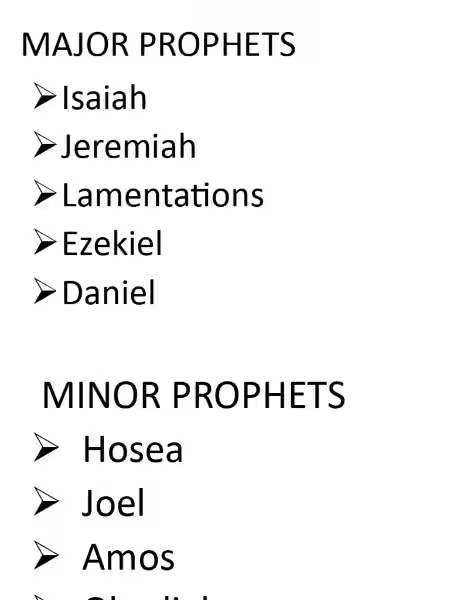
The idea of a mediator is not unique to Christianity. Many religions throughout history have employed intermediaries. Consider the prophets in Judaism, the bodhisattvas in Buddhism, or the saints in Catholicism. Each of these figures plays a vital role, acting as a conduit for divine guidance and grace. Crucially, these mediators often embody certain qualities, such as wisdom, compassion, and sacrifice, allowing them to bridge the gap between the complexities of human experience and the perceived abstract nature of the divine.
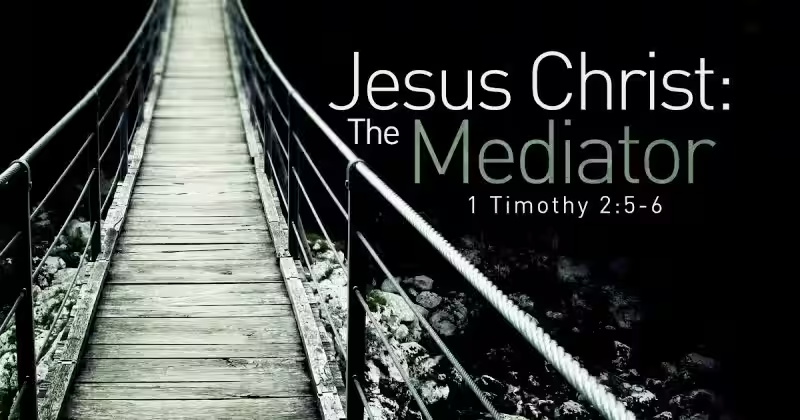
Christ's role as mediator is a cornerstone of Christian theology. It's not simply about a person acting as a messenger; it's about a profound act of reconciliation. Jesus, through his life, death, and resurrection, became the bridge. This act of mediation is understood as a restoring relationship with God, a reconciliation between humanity and the divine. Imagine a fractured family. A mediator can help each member understand the others' perspectives, fostering healing and understanding. Similarly, Christ acts as the mediator, bridging the chasm created by sin and restoring a harmonious relationship between God and humankind.
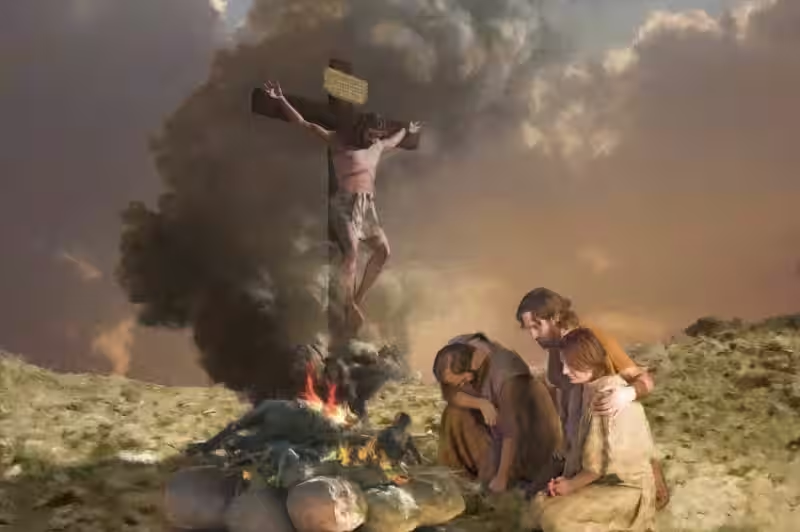
A key aspect of Christ's mediation is his incarnation. Taking on human form, Jesus experienced the full spectrum of human emotions and struggles. This shared humanity allows him to empathize with our weaknesses and understand our needs. This deeply personal connection underscores the importance of Christ's sacrifice. His death on the cross, according to Christian belief, atoned for the sins of humanity and opened the way for forgiveness. This ability to bridge the gap between God's holiness and human imperfection is central to the role of Christ as mediator.
The Mediator and Prayer: A Vital Connection
Prayer is a vital aspect of engaging with the divine, and the concept of mediation becomes crucial in this context. Prayer, in many traditions, is a form of communication with the divine. Through prayer, individuals can express their needs, seek guidance, and develop a deeper relationship with God. Christ, as the mediator, acts as the intermediary, facilitating this connection. In simpler terms, if you want to talk to a friend, you use a messenger. That messenger, in a religious context, is the mediator.
Consider this analogy: imagine a child wanting to speak to their parent, but feeling hesitant due to past disagreements. A loving sibling can act as a mediator, helping facilitate the conversation and ensuring a smoother exchange. In a similar vein, Christ, through prayer, facilitates communication and guidance between God and the faithful. Through Christ, prayers are understood and responded to, fostering a deeper sense of intimacy with the divine. Prayer and faith are thus deeply intertwined with the concept of Christ as mediator.
The Mediator in Daily Life
The concept of Christ as mediator extends beyond the realm of religious practice. Mediation in its broadest sense is about bridging gaps, resolving conflicts, and fostering understanding. This principle can be applied to daily interactions. Imagine a difficult conversation with a colleague. By striving to understand their perspective, you act as a mediator, creating an atmosphere of mutual respect and resolution. This is an outward manifestation of the inward mediation that Christ offers.
By embracing the principle of mediation, we can foster more compassion, understanding, and forgiveness in our personal and professional lives. Christ's role as mediator is a powerful example of how a relationship with the divine can transform our interactions with others. This transformation allows us to become more empathetic, more tolerant, and more focused on building bridges of connection, not walls of separation. Ultimately, embracing Christ as a mediator encourages us to become better mediators in our own lives.
Frequently Asked Questions about Christ the Mediator and Religion
What is the role of Christ as a mediator in religion?
In many religions, a mediator acts as an intermediary between humanity and a higher power. Christ, in Christianity, is seen as the mediator between God and humanity, bridging the gap created by sin. Different faiths understand this role differently.
What religions believe in a mediator figure?
Many religions feature a mediator figure, though the specific nature of the role and the figure themselves varies. Examples include prophets in Islam, figures in Judaism, and various deities in other traditions. Not all religions have a mediator figure.
How does the concept of a mediator differ across religions?
The concept of a mediator varies widely. Some religions see a mediator as a divine being, while others see them as human figures chosen by God. The reasons for the mediation and the nature of the relationship between the mediator and humanity are also diverse.
What is the significance of mediation in religious practice?
Mediation in religious practice often involves prayer, rituals, or other acts of devotion that are intended to bring people closer to a higher power through the mediator. The specific significance depends on the particular faith.
How does the concept of Christ as a mediator compare to other religious mediators?
Comparisons between Christ and other religious mediators are complex. The specifics of each mediator's role and the nature of the relationship they represent to humanity are unique to each religious tradition.