What a Pentecostal church is and where it comes from
A Pentecostal church is a Christian congregation that emphasizes the personal experience of the Holy Spirit, the authority of the Bible, prayer, evangelism, and the continuing work of spiritual gifts. Pentecostals generally believe that God still heals, guides, equips, and transforms people through the Holy Spirit, just as the New Testament describes.
The movement developed within Protestant Christianity during the early 20th century. Its name comes from Pentecost, the event described in Acts 2, when Jesus’ followers experienced the coming of the Holy Spirit. Pentecostal churches are often associated with a renewed emphasis on prayer, spiritual experience, and the belief that the events described in Acts can still occur in the church.
Pentecostalism is not one single denomination with identical practices everywhere. Some congregations belong to large denominations, while others are independent. Their beliefs may differ on church leadership, baptism, communion, dress, spiritual gifts, and the role of women in ministry, so the church’s own statement of faith matters.
Key idea: “Pentecostal” describes a broad Christian tradition, not one uniform worship style or one worldwide organization. A local church may be lively and expressive, quiet and structured, or somewhere between those descriptions.
What Pentecostal churches generally believe
Most Pentecostal churches affirm the core beliefs shared by historic Christianity: one God, the authority of Scripture, the importance of Jesus Christ, the reality of sin, the need for salvation, Jesus’ death and resurrection, and the future return of Christ. They usually teach that people are reconciled to God through faith in Jesus, not through church attendance or religious performance.
Alongside these shared Christian convictions, Pentecostals place particular emphasis on the Holy Spirit’s present activity. They commonly teach that the Spirit gives believers power for faithful living, witness, prayer, service, and ministry. This emphasis may shape both the congregation’s formal theology and the way people pray during ordinary services.
Common Pentecostal beliefs include:
The Bible is authoritative for Christian belief and practice, although churches differ in how they interpret difficult passages.
Jesus Christ is Lord and Savior, and his death and resurrection are central to the Christian faith.
The Holy Spirit works today, including through spiritual gifts and personal guidance.
Prayer matters and may include prayers for healing, wisdom, protection, repentance, and spiritual renewal.
Christians are called to share their faith and serve people in practical ways.
Jesus will return, although Pentecostal groups vary in how they explain the timing and details of end-times events.
Some Pentecostal churches also describe salvation and spiritual growth through several distinct experiences. For example, a church may speak about conversion, water baptism, baptism in the Holy Spirit, healing, sanctification, and service as related but separate aspects of Christian life. Other churches use different language and place less emphasis on separating these experiences.
What “baptism in the Holy Spirit” means in Pentecostal teaching
Baptism in the Holy Spirit is one of the most recognizable Pentecostal teachings. Pentecostals generally understand it as an empowering work of the Holy Spirit that equips believers for witness and ministry. Many teach that it may occur after a person first turns to Christ, while other Pentecostal Christians describe it as closely connected with conversion.
In many classical Pentecostal churches, speaking in tongues is considered the initial physical evidence of Spirit baptism. In this setting, “tongues” refers to Spirit-inspired speech or prayer that is not understood by the speaker. Other Pentecostal and charismatic churches affirm tongues as a spiritual gift but do not teach that every Christian must speak in tongues.
The practice can look different from one congregation to another. Some churches include quiet personal prayer in tongues, while others may include a public message in tongues followed by an interpretation. Churches that follow this practice usually refer to Paul’s teaching in 1 Corinthians 12–14, which discusses spiritual gifts and the need for order and interpretation when gifts are expressed publicly.
Pentecostals do not all agree on whether tongues are required evidence of Spirit baptism. That distinction is useful when comparing churches. A congregation’s website, statement of faith, or pastor can usually clarify whether it teaches tongues as necessary evidence, as one possible gift, or as a private prayer practice.
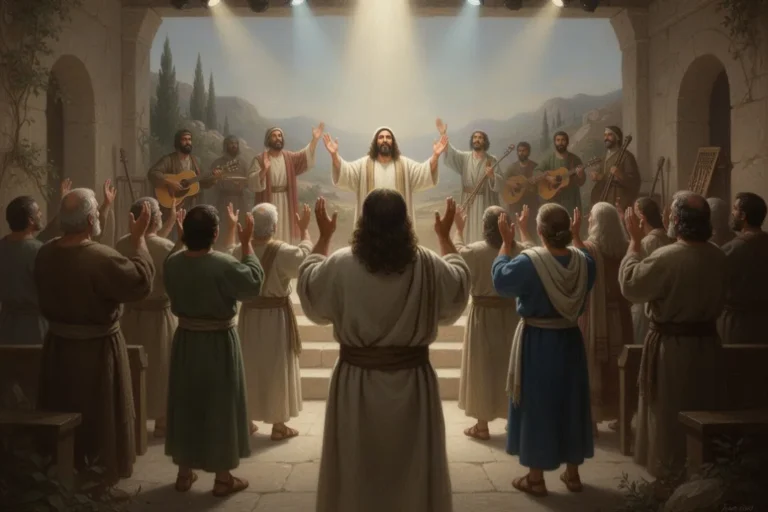
A Pentecostal service often includes singing, prayer, a sermon, an offering, and opportunities for personal response. The order is not always tightly scripted, and leaders may leave time for prayer, testimony, healing ministry, or other forms of participation. Some congregations follow a printed schedule, while others allow more room for spontaneous prayer and worship.
Music may be energetic, but expressive worship is not the defining feature of every Pentecostal church. You may see people raising their hands, kneeling, clapping, praying aloud, or responding quietly. These actions are generally understood as expressions of devotion and openness to God, not as requirements for proving one’s faith.
A typical service may include the following:
Worship and singing: The congregation sings songs focused on God, Jesus, grace, the cross, faith, and the work of the Holy Spirit.
Corporate prayer: Leaders may guide the church in prayer, and members may pray aloud at the same time.
Testimonies: Some churches invite members to describe answered prayer, personal change, or a way they believe God has helped them.
Bible preaching: A pastor or guest speaker explains a biblical passage and applies it to Christian life.
Ministry and response: People may be invited forward for prayer, repentance, healing, encouragement, or a renewed commitment to follow Christ.
Visitors are usually free to observe without participating publicly. You do not have to speak in tongues, go to the front, raise your hands, donate money, or introduce yourself from a platform. If the congregation practices an altar call or prayer ministry, you can remain seated or ask a trusted usher what to expect.
For a first visit: Wear clean, comfortable clothing, arrive a few minutes early, and tell a greeter that you are visiting. A healthy church should explain its practices without pressuring you to imitate them immediately.
How Pentecostal churches understand spiritual gifts
Pentecostal churches commonly believe that the spiritual gifts described in the New Testament continue today. These may include healing, prophecy, tongues, interpretation of tongues, discernment, wisdom, knowledge, faith, leadership, teaching, and service. The exact list varies because different passages describe gifts in different ways.
In Pentecostal use, prophecy usually means a message believed to bring encouragement, warning, direction, or correction under the influence of the Holy Spirit. It is not normally treated as equal to the Bible. Many Pentecostal leaders teach that prophetic messages should be tested against Scripture, evaluated wisely, and handled with humility.
Healing prayer is also common. A church may pray for physical, emotional, or spiritual needs while recognizing that Christians differ on how healing occurs and when it should be expected. Responsible congregations should not tell people to abandon medical treatment, accuse sick people of lacking faith, or promise a specific outcome that they cannot guarantee.
The New Testament presents spiritual gifts as ways to serve and strengthen the church rather than as badges of spiritual superiority. For that reason, many Pentecostal pastors emphasize love, character, accountability, and good judgment alongside extraordinary experiences. A person’s spiritual maturity is not measured only by dramatic gifts.
Why prayer is central in a Pentecostal church
Prayer often has a prominent place in Pentecostal life because believers expect God to hear and respond to prayer. Services may include extended prayer for individuals, families, healing, national concerns, missionaries, spiritual renewal, and people who have not yet accepted the Christian message.
Private prayer may include quiet reflection, spoken requests, confession, worship, and praying in tongues. Some churches organize prayer meetings during the week, early-morning prayer, small prayer groups, or special services focused on seeking God. These gatherings may be more informal than Sunday worship.
Pentecostal prayer is often described as expectant rather than passive. This does not mean that every request receives the outcome a person wants. Many Pentecostal Christians believe prayer includes trust, submission, persistence, and a willingness to accept God’s wisdom even when circumstances do not change.
How Pentecostals view water baptism and communion
Most Pentecostal churches practice water baptism as an act of obedience and public identification with Jesus. Many baptize believers by immersion, although practices vary. Because Pentecostal churches often emphasize personal faith, they commonly baptize people after they are old enough to make their own profession of faith, though local policies differ.
Water baptism is not usually understood as a way to earn salvation. Instead, it represents a person’s commitment to Christ and participation in the Christian community. A church may offer baptism during a regular service or at a separate gathering, and it should explain its preparation process clearly.
Pentecostal churches also commonly observe communion, sometimes called the Lord’s Supper. The practice remembers Jesus’ death and points believers toward unity, gratitude, repentance, and hope. Congregations differ over how often communion is taken and who may participate, so visitors should follow the local church’s instructions rather than assume every congregation handles it the same way.
How Pentecostal churches differ from other Christian churches
The clearest difference is usually the emphasis on the present-day work of the Holy Spirit. Many Christian traditions believe the Holy Spirit is active, but Pentecostal churches tend to give more visible space to tongues, prophecy, healing prayer, extended worship, and spontaneous response.
Compared with many evangelical churches, a Pentecostal service may include more congregational participation and less predictable timing. Compared with many liturgical churches, it may use fewer fixed prayers, formal readings, or traditional rituals. These are broad comparisons, not rules. Some Pentecostal churches use a carefully planned service, and some evangelical or liturgical congregations include healing prayer and other charismatic practices.
Pentecostals also differ among themselves. Important questions include:
Does the church teach that all believers should speak in tongues?
How does it distinguish a public spiritual message from personal prayer?
How are pastors, elders, and other leaders chosen and held accountable?
Does it ordain women for pastoral or teaching ministry?
What does it teach about healing, prosperity, suffering, and medical care?
How does it practice baptism and communion?
What financial standards and safeguards protect the congregation?
These questions matter because the label alone does not tell you everything about a congregation. Two churches may both call themselves Pentecostal while having very different preaching styles, leadership structures, and expectations for worship.
What Pentecostal churches teach about daily Christian life
Pentecostal Christianity is not limited to what happens during a worship service. Churches commonly encourage believers to develop a daily relationship with God through Scripture, prayer, moral discipline, fellowship, and service. Many emphasize that spiritual experiences should lead to changed conduct, compassion, honesty, self-control, and love for other people.
Some Pentecostal groups teach a strong separation from behaviors they consider sinful or harmful. Standards may involve alcohol, gambling, sexual conduct, entertainment, clothing, or other lifestyle choices. These standards can be formal or informal, and they vary considerably. Ask how a particular congregation explains Christian freedom, personal responsibility, and accountability.
Many Pentecostal churches also encourage evangelism and missions. Members may serve in food distribution, disaster relief, youth programs, counseling ministries, local outreach, or international missions. The practical expression differs by church, but the underlying goal is often to connect faith with service and the communication of the gospel.
How to evaluate a Pentecostal church before joining
A strong church should welcome honest questions and make its beliefs, finances, leadership, and expectations reasonably clear. You do not need to make a quick commitment after one visit. Attend more than one service if possible, listen to the teaching, and observe how people treat visitors, children, older adults, and those who disagree.
Use these steps when evaluating a congregation:
Read the statement of faith. Look for clear teaching about Jesus, salvation, Scripture, the Holy Spirit, baptism, communion, and Christian conduct.
Listen to the preaching. Ask whether sermons explain the Bible carefully or rely mainly on dramatic stories, fear, or promises of personal success.
Observe spiritual authority. Healthy leaders welcome testing, correction, and accountability rather than demanding unquestioned loyalty.
Ask about money. Find out how offerings are handled and be cautious if you are pressured to give beyond your means or promised guaranteed financial results.
Check how the church handles vulnerability. Prayer for healing should not replace appropriate medical or mental-health care, and private information should be treated with care.
Notice the community. Look for humility, kindness, practical service, and respect rather than status based only on spiritual experiences.
Warning signs include pressure to make immediate financial commitments, claims that one leader cannot be questioned, public humiliation, control over members’ private decisions, or promises that faith guarantees wealth and perfect health. No church is free from human weakness, but a congregation should have ways to address harm and protect people who are vulnerable.
What to expect if you attend a Pentecostal church for the first time
You may hear people pray at the same time, sing with strong emotion, or respond to a sermon by standing or coming forward. You may also encounter a quiet service with familiar Protestant elements. The range is wide, so a single visit may not represent the entire Pentecostal tradition.
Some terms may be unfamiliar. “Anointing” usually refers to God’s empowering presence or favor for ministry. “Altar call” often means an invitation to come forward for prayer or a public response. “Deliverance” may refer to prayer for freedom from spiritual oppression or destructive patterns. Ask for an explanation if a phrase is unclear.
You can participate at your own pace. Sing if you know the words, listen if you do not, and accept prayer only if you are comfortable. If someone prays in a way you do not understand, you are not required to copy the practice. A trustworthy congregation will allow room for questions and personal boundaries.
Questions to ask a Pentecostal pastor or church leader
Direct questions can help you understand the church more accurately than assumptions based on its name. A pastor should be able to explain the congregation’s beliefs in ordinary language and point you toward written information when needed.
What does this church believe about baptism in the Holy Spirit?
Does the church teach that speaking in tongues is required for every believer?
How are prophecies, healing claims, and other spiritual messages evaluated?
What training and accountability do pastors and ministry leaders receive?
How does the church protect children and vulnerable adults?
What happens when a leader makes a serious mistake?
How are offerings used, and are financial records available to members?
What opportunities exist for service, small groups, counseling, and discipleship?
The answers should be clear rather than evasive. You are not being disloyal by seeking understanding. Wise discernment is consistent with the Pentecostal emphasis on testing what is taught and judging whether it reflects Scripture, truth, and love.
How Pentecostal and charismatic churches relate
The words “Pentecostal” and “charismatic” are related but are not always interchangeable. Pentecostal churches usually belong to a movement or tradition that emerged with a distinct emphasis on Spirit baptism and spiritual gifts. Charismatic Christians may hold similar beliefs while remaining within another denomination, such as a Baptist, Catholic, Anglican, or non-denominational church.
Both groups may believe that gifts such as healing, prophecy, and tongues continue today. The main difference may be the church’s institutional setting, history, or approach to doctrine. Labels can help you begin your search, but the local congregation’s teaching and practices provide the more useful information.
Finding a Pentecostal church that fits your needs
Start by identifying what you are looking for: a congregation for Sunday worship, a church community, children’s ministry, prayer support, Bible teaching, or a specific denominational connection. Search the church’s official website and social pages, but treat promotional language as a starting point rather than proof of its practices.
Before visiting, check the service time, parking, accessibility, child-safety procedures, dress expectations, and whether interpretation or disability accommodations are available. If you have experienced religious pressure or spiritual abuse, you may want to attend with a trusted friend and take additional time before joining a ministry or small group.
The right church will not be defined only by music, crowd size, or emotional intensity. Look for faithful teaching, transparent leadership, meaningful community, and genuine care. Pentecostal worship can be deeply expressive, but its stated purpose is to help people know God, follow Jesus, grow in holiness, serve others, and live by the power of the Holy Spirit.
Frequently asked questions
Do all Pentecostal churches speak in tongues?
No. Many Pentecostal churches believe speaking in tongues is an important spiritual gift, and some teach it as the initial evidence of baptism in the Holy Spirit. Others believe it is one gift among several and do not expect every Christian to practice it. A church’s statement of faith will usually explain its position.
Can someone attend a Pentecostal church without being Pentecostal?
Yes. Visitors are generally welcome to attend, observe, and ask questions without adopting the church’s beliefs immediately. You are not normally required to speak in tongues, participate in public prayer, or join the congregation after one visit. Tell a greeter or pastor that you are visiting if you want help understanding the service.
Are Pentecostal churches Protestant?
Most Pentecostal churches are part of the broader Protestant Christian tradition. They typically emphasize the Bible, salvation through faith in Jesus, believer’s baptism, and the ongoing work of the Holy Spirit. Some Pentecostal groups have distinctive doctrines or structures, so their exact beliefs should be checked individually rather than assumed from the label alone.
Do Pentecostal churches believe God still heals people?
Most Pentecostal churches believe God can heal today and commonly pray for people who are sick or hurting. They differ in how they explain healing and how strongly they connect it with a person’s faith. Responsible churches should not shame people who remain ill or tell them to stop appropriate medical or mental-health treatment.




Leave a Reply