The Great Commission is Jesus’ command to make disciples of all nations through the gospel, baptism, teaching, and faithful Christian witness.
Christians most often use the term for Jesus’ final instructions to his disciples in Matthew 28:18–20. After his resurrection, Jesus declared that he had received complete authority and sent his followers to people everywhere. He told them to make disciples, baptize them in the name of the Father, Son, and Holy Spirit, and teach them to obey everything he had commanded.
The Great Commission is not simply a request to persuade people to adopt a religion. It describes a continuing mission of proclaiming Jesus, welcoming new believers into the church, forming them as devoted followers, and helping them live out his teaching. Jesus also promised to remain with his people as they carried out this work.
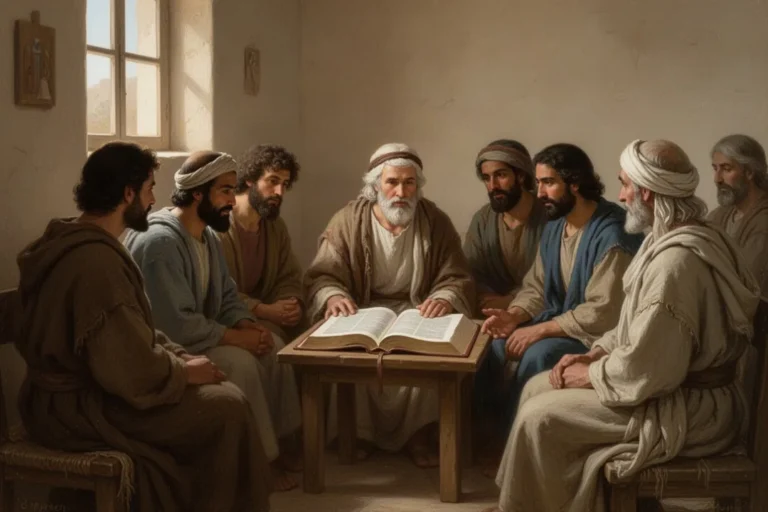
The clearest and most complete statement appears at the end of Matthew’s Gospel. Matthew 28:16–20 describes the disciples meeting Jesus in Galilee after the resurrection. Some worshiped him, while others struggled with doubt, yet Jesus entrusted the mission to the whole group rather than only to people who felt completely confident.
Jesus began by announcing his authority in heaven and on earth. This statement provides the foundation for everything that follows. The disciples were not acting on personal ambition or under their own power; they were being sent by the risen Lord, whose authority extends over all creation.
Matthew then records Jesus’ command to make disciples of all nations. The original expression can refer to all peoples or ethnic groups, not merely the political countries shown on a modern map. The mission therefore crosses geographical, cultural, linguistic, and social boundaries.
Matthew connects disciple-making with three actions: going, baptizing, and teaching. The wording is sometimes discussed in relation to the sentence’s grammar, because “make disciples” is the central command while the other terms describe how that mission is carried out. The main idea remains clear: Jesus’ followers are to bring people into a relationship of obedient faith and help them mature.
Other New Testament passages describe the same sending commission from different angles. Mark 16:15–16 presents the risen Jesus sending his followers to proclaim the gospel broadly. Many modern Bibles identify Mark 16:9–20 as a later textual ending or place it in a note because the earliest surviving copies do not contain those verses. The central missionary theme is also present elsewhere in the New Testament, so the Great Commission does not depend on that disputed passage alone.
Luke 24:44–49 connects the disciples’ mission with repentance and forgiveness being proclaimed to all nations, beginning from Jerusalem. John 20:19–23 emphasizes that Jesus sends his followers in a way that reflects his own sending by the Father. Acts 1:8 describes the mission spreading outward from Jerusalem to Judea, Samaria, and the farthest reaches of the earth.
Matthew 28:18–20: make disciples, baptize, teach, and trust Christ’s continuing presence.
Mark 16:15–16: proclaim the gospel to the world, with the textual qualification noted above.
Luke 24:44–49: announce repentance and forgiveness to all nations.
John 20:21–23: understand Christian mission as an extension of Jesus’ own sending.
Acts 1:8: witness to Jesus across expanding geographical and cultural boundaries.
Central idea: The Great Commission is not limited to one sentence in Matthew. Several resurrection accounts and the opening of Acts show a unified calling: Jesus’ followers are sent to bear witness and form a worldwide community of disciples.
What Jesus commanded his disciples to do
The command to make disciples goes beyond gaining decisions, collecting converts, or increasing church attendance. A disciple is a learner and follower of Jesus. Christian disciple-making includes hearing the gospel, trusting Christ, joining the community of believers, learning his way of life, and gradually putting his teaching into practice.
This does not mean that every Christian must become a professional preacher or travel to another country. It does mean that every Christian community has a responsibility to help people move from initial interest toward lifelong faithfulness. Evangelism and spiritual formation belong together.
Going to people with the gospel
Jesus’ followers are sent outward rather than instructed to wait for everyone to come to them. “Going” may involve international mission work, but it can also occur through ordinary relationships, local service, hospitality, conversation, and public witness. The setting may change, but the purpose remains to make Jesus known with honesty and respect.
Going also requires attention to people who are easily overlooked. The New Testament vision includes all nations, so the church cannot define its mission around only one culture, class, generation, or language. A congregation that takes the Great Commission seriously asks who is absent, unheard, or underserved in its surrounding community.
Baptizing new believers
Baptism is the visible sign of entering the Christian community. In Matthew 28, Jesus places baptism alongside disciple-making and teaching, showing that Christian faith is not intended to remain a private preference. Baptism identifies a believer with the triune God: the Father, the Son, and the Holy Spirit.
Different Christian traditions understand the timing, method, and recipients of baptism in different ways. Some baptize those who personally profess faith, while others baptize infants within the covenant life of the church. Despite these differences, baptism commonly represents belonging to Christ, participation in the church, and a public commitment to the Christian life.
Teaching obedience, not merely information
Jesus told his disciples to teach new believers to observe everything he had commanded. That instruction includes learning Christian beliefs, but it cannot be reduced to memorizing doctrine. The goal is obedient living shaped by Jesus’ words: loving God and neighbor, practicing forgiveness, serving others, pursuing holiness, caring for the vulnerable, and remaining faithful under pressure.
Teaching therefore continues after conversion. New Christians need patient instruction in prayer, Scripture, worship, relationships, stewardship, ethical decisions, and service. Mature Christians also remain learners, because following Jesus is a lifelong process rather than a course that can be completed.
Healthy teaching should combine truth with example. A church may explain generosity while practicing it, speak about reconciliation while addressing conflict, and teach compassion while serving people in need. The credibility of the Great Commission is weakened when words about Jesus are separated from conduct that contradicts him.
Announce the gospel: explain who Jesus is, what he has done, and why a response matters.
Invite a response of faith: allow people to ask questions and respond freely rather than using pressure or manipulation.
Welcome believers into Christian community: baptism and participation in the church give visible shape to new faith.
Teach the way of Jesus: provide Scripture, mentoring, prayer, worship, and practical guidance.
Equip disciples to serve: help growing Christians bear witness and make disciples themselves.
Why the Great Commission matters to Christians
The Great Commission gives the church its outward direction. Christian gatherings are not only for encouragement, education, or personal comfort; they are also meant to prepare and send believers as witnesses to Jesus. The mission connects worship with service and personal faith with responsibility toward others.
It also shows that the gospel is intended for every kind of person. The phrase “all nations” challenges ethnic pride, religious isolation, and the assumption that one culture has exclusive ownership of Christianity. From the beginning, the Christian message was meant to cross boundaries while remaining centered on Jesus.
The commission is grounded in God’s initiative. In Matthew, Jesus sends his followers after declaring his authority, not before. That order matters: Christian mission is not an attempt to make Jesus powerful or to secure God’s approval. It is a response to what God has already done through Christ’s life, death, and resurrection.
Luke’s account adds an important dimension by connecting mission with repentance and forgiveness. The message is not simply that people should improve themselves or join an organization. It announces that reconciliation with God is available through Jesus and calls people to turn from sin toward a new way of life.
Acts presents the commission as a movement empowered by the Holy Spirit. Jesus tells the disciples that they will receive power to be his witnesses, beginning in Jerusalem and extending outward. Their effectiveness does not depend only on eloquence, education, money, or organizational skill. Christian mission requires dependence on God, prayer, courage, and endurance.
The commission also gives ordinary acts of faith a wider meaning. A conversation with a neighbor, a Bible study, care for a grieving person, translation work, a church youth group, and a meal shared with someone who feels excluded can all contribute to making disciples. These activities are not automatically the Great Commission, but they can serve it when they help people encounter Jesus and grow in faithful obedience.
A necessary balance: The Great Commission calls Christians to speak about Jesus and to embody his love. Service without a clear Christian witness can lose the message, while words without love can distort it.
How Christians can practice the Great Commission today
Putting the Great Commission into practice begins with understanding that faithful witness is relational. People are not projects to be managed or numbers to be added to a report. They have questions, histories, fears, and freedom of conscience. Respectful mission listens carefully and presents the gospel truthfully without coercion.
For some Christians, the calling includes long-term service in another country or among a people with little access to Christian teaching. For others, it takes place at home, at work, on a college campus, in a military community, or among extended family. Location affects the methods, but not the basic responsibilities of witness, welcome, teaching, and care.
Practices that support faithful witness
Know the message clearly: be able to explain the gospel in plain language rather than relying on unexplained religious vocabulary.
Listen before speaking: understand a person’s beliefs and experiences so the conversation addresses real questions instead of assumptions.
Use Scripture responsibly: read biblical passages in context and avoid using isolated verses to pressure or mislead people.
Build genuine relationships: show consistent care rather than appearing interested only when someone might attend church.
Invite people into community: provide safe opportunities for questions, worship, study, meals, and friendship.
Teach gradually: help new believers develop habits of prayer, Scripture reading, service, repentance, and mutual accountability.
Protect dignity and freedom: reject manipulation, threats, financial exploitation, and any abuse of spiritual authority.
Work cooperatively: support local churches and leaders instead of treating outside workers as the only qualified voices.
Christian mission should also consider the difference between conversion and discipleship. A person may make an initial profession of faith but still need years of instruction, friendship, correction, and encouragement. Churches serve the commission well when they measure faithfulness not only by attendance or immediate responses but also by growing love for God, integrity, service, and perseverance.
Technology can extend communication, but it does not remove the need for embodied community. Online teaching, digital Bible studies, and recorded sermons can reach people who cannot attend in person. Still, baptism, pastoral care, shared worship, accountability, and practical service usually require relationships that go beyond consuming content.
Mission also needs cultural humility. Christians should distinguish the unchanging claims of the gospel from the customs of their own congregation or country. Food, music, clothing, worship styles, leadership patterns, and communication methods may vary widely without making one culture the standard for every other community.
When Christians serve across cultures, they should learn local history and social realities, partner with people who live there, and consider how their actions may be perceived. Good intentions do not automatically prevent harm. The commission is best represented by humility, patience, transparency, and a willingness to receive correction.
Common misunderstandings about the Great Commission
One misunderstanding is that the Great Commission applies only to clergy, missionaries, or unusually gifted evangelists. Church leaders and missionaries may carry particular responsibilities, but the New Testament presents the entire community as participating in witness and service. Christians have different gifts, yet every believer can pray, welcome, explain faith, encourage growth, and point others toward Jesus.
Another misunderstanding is that the commission requires aggressive public confrontation. Boldness does not mean hostility. Jesus’ followers are called to speak truthfully, but the manner of witness should reflect love, patience, gentleness, and respect. People should be free to disagree without being threatened, shamed, or treated as less human.
Some people also reduce the commission to verbal evangelism alone. Proclaiming the gospel is central, but Matthew includes baptism and teaching, while the wider New Testament emphasizes care for the poor, unity, justice, hospitality, and holy conduct. Christian action cannot replace the gospel, but neither can Christian speech excuse neglect of people’s real needs.
A further mistake is treating success as the number of visible responses. The New Testament calls believers to faithfulness, while the results ultimately belong to God. Some conversations lead to immediate faith; others begin a long process that another Christian may continue. Patience protects mission from exaggeration, competition, and disappointment.
Finally, the Great Commission is not permission to control other people. Jesus possesses authority; his followers do not receive unlimited power over the consciences, finances, bodies, or decisions of those they serve. Any ministry that uses the commission to justify abuse, deception, discrimination, or coercion has contradicted the character of the one who gave it.
Matthew ends Jesus’ instruction with a promise of his continuing presence. Christians therefore carry out the Great Commission with confidence and dependence: confidence that Jesus is Lord, and dependence on him for wisdom, courage, compassion, and endurance. The mission reaches across the world, but it is practiced one person, one conversation, one act of service, and one growing community at a time.
Frequently asked questions
Is the Great Commission a command for every Christian?
Christians differ on how each person should participate, but the New Testament presents mission as a responsibility of the whole church rather than only ordained leaders. Individual roles vary: one person may evangelize, another may teach, another may provide hospitality or practical care. Every believer can support the mission through prayer, faithful living, welcome, service, and truthful witness about Jesus.
What does “all nations” mean in the Great Commission?
The phrase commonly translated “all nations” can also mean all peoples or ethnic groups. It emphasizes the worldwide scope of Jesus’ mission rather than limiting it to one nation-state or culture. The command calls Christians to cross social and cultural boundaries while avoiding the assumption that their own traditions are the universal form of Christianity.
Does the Great Commission require overseas missionary work?
Overseas mission is one possible expression, but it is not the only one. Christians can participate where they live through relationships, church ministry, hospitality, teaching, community service, and conversations about faith. The central responsibility is to help people encounter Jesus and grow as disciples. Geographic distance does not determine whether a person is faithfully participating.
How is the Great Commission different from evangelism?
Evangelism focuses on announcing the gospel and inviting people to respond to Jesus. The Great Commission includes evangelism but goes further, calling Christians to baptize and teach new believers to follow Christ. It therefore includes both the beginning of faith and the continuing work of spiritual formation within a Christian community.






Leave a Reply