Biblical circumcision: meaning, practice, and Christian views
Biblical circumcision: meaning, practice, and Christian views
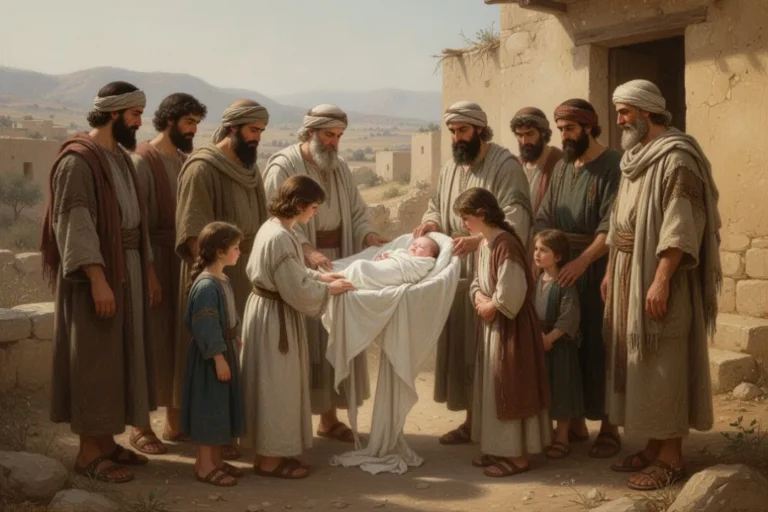
Biblical circumcision is the removal of the foreskin from the penis as a physical sign of God’s covenant with Abraham and his descendants. In the Hebrew Bible, it marked membership in the covenant people, carried religious obligations, and was normally performed on male infants on the eighth day after birth.
In the New Testament, circumcision remains part of Jewish religious identity, but the apostles teach that Gentile believers do not need to undergo the procedure to belong to Christ. Christian writings shift attention toward faith, obedience, and inner transformation, while Jewish tradition continues to regard circumcision as an important covenant practice.
Circumcision was a familiar practice in parts of the ancient Near East, but the Bible gives it a distinctive covenant meaning. The central biblical account appears in Genesis 17, where God establishes a covenant with Abram, later called Abraham, and commands circumcision for him, his household, and his descendants.
The physical act identified a male as belonging to Abraham’s covenant family. It was not presented merely as a medical custom or a cultural preference. It represented a person’s place within a people formed by God’s promise and marked by a particular relationship with him.
Genesis 17 connects circumcision with several promises: Abraham will become the ancestor of many nations, his descendants will receive the land of Canaan, and God will be their God. The sign therefore pointed both backward and forward. It recalled the covenant God had made and identified those who belonged to its community.
Central distinction: In the Bible, circumcision functioned as a covenant sign, but the sign itself did not excuse disobedience. The prophets repeatedly challenged people who possessed the outward mark while rejecting justice, mercy, and faithfulness.
The command applied to more than newborn sons. Abraham was circumcised as an adult, and the males in his household were also circumcised. A foreign servant or resident outsider connected with the household could be included in the practice, showing that covenant membership involved the broader household rather than only a narrow biological line.
Under the law given through Moses, circumcision had a clear place in Israel’s religious life. Leviticus 12:3 specifies circumcision for a male child on the eighth day. This instruction helps explain why the practice became a regular part of Jewish family life and why the Gospel accounts mention Jesus’ circumcision as an infant in Luke 2.
How circumcision functioned in the Old Testament
Old Testament references show that circumcision carried several related meanings. It identified Israel as the covenant people, distinguished Israel from surrounding nations, and expressed obedience to a command associated with Abraham and Moses. Its significance could also become especially visible at moments of national transition.
Circumcision as a covenant identity marker
For an Israelite male, circumcision signaled participation in the community descended from Abraham. It was not an isolated religious ceremony. It belonged alongside worship, family life, dietary practices, festivals, sacrifice, and the moral commands that shaped Israel’s calling.
The Passover regulations in Exodus 12 connect circumcision with participation in Israel’s central deliverance celebration. A male foreigner who joined Israel’s worship could participate in Passover after the males of his household were circumcised. The regulation illustrates how circumcision could function as a boundary marker for full inclusion in the community’s covenant worship.
At the same time, circumcision did not make every action acceptable. Israel’s prophets warned that religious signs could become empty when people oppressed the poor, practiced idolatry, or ignored God’s commands. The biblical pattern is consistent: external obedience and inward faithfulness belong together.
Joshua 5 describes a generation of Israelite men being circumcised at Gilgal after the wilderness years. The text presents this as a renewal of the covenant identity before the people began life in the land. The event also explains the place’s name and marks a transition between wilderness wandering and settlement.
This account should not be treated as evidence that circumcision was optional in the law. Instead, it reflects the specific history of a generation born during Israel’s wilderness period. The narrative emphasizes that the people needed to receive the covenant sign as they entered a new stage of their communal life.
The meaning of the eighth day
The eighth-day timing is stated in Leviticus and appears in Jewish practice connected with the birth of a son. The Bible does not provide a lengthy explanation of why the eighth day was chosen. It is best understood as a commanded covenant timing rather than as a claim that the number itself has a universal mystical meaning.
Luke 2 records that Jesus was circumcised according to Jewish custom. This detail places Jesus within the covenant and religious life of Israel from infancy. It also supports the New Testament’s presentation of Jesus as born into the Jewish people and subject to the law before the later debates about Gentile inclusion.
Why the Bible speaks about a circumcised heart
One of the most important developments in biblical teaching is the use of circumcision as a metaphor for inner devotion. The physical sign remained significant, but biblical writers also asked whether a person’s heart was responsive to God.
In Deuteronomy 10, Moses calls Israel to remove stubbornness from the heart and to love and serve God. Deuteronomy 30 speaks of God changing the hearts of his people so that they will love him fully. These passages do not erase the physical practice; they show that outward membership without inward loyalty is inadequate.
The prophets use similar language. Jeremiah challenges Judah to remove the spiritual barriers that prevent genuine repentance, and he can speak of people as uncircumcised in heart even though they possess the physical mark. The point is not that the body is irrelevant. The point is that a covenant sign cannot replace a faithful relationship with God.
Stephen makes a related accusation in Acts 7 when he describes his opponents as resisting God inwardly. Paul later develops the contrast in Romans 2, arguing that physical circumcision has value within obedience but cannot serve as a substitute for a transformed life.
Physical circumcision marks a person’s connection with the Abrahamic covenant community.
Heart circumcision describes repentance, humility, love for God, and willingness to obey.
Faithful covenant life requires more than possessing an outward religious sign.
This language is important for reading the Bible responsibly. A person should not assume that the metaphor means the original practice had no meaning. Nor should a person assume that the physical practice automatically proves spiritual faithfulness. Biblical authors hold both ideas together while placing increasing emphasis on the condition of the heart.
Reading principle: When a biblical passage contrasts outward circumcision with circumcision of the heart, it is usually confronting misplaced confidence in religious identity, not attacking every physical practice associated with the covenant.
What Jesus and the apostles taught about circumcision
Jesus lived as a circumcised Jewish man and participated in Jewish religious life. The Gospels do not portray him as dismissing the practice for Jews. His teaching instead confronts the misuse of religious rules when they are separated from mercy, righteousness, and love for God.
The most difficult question arose when non-Jewish people began accepting the message about Jesus. These Gentile believers were not naturally part of Israel’s covenant community, so early Christians had to decide whether faith in Christ required them to adopt circumcision and the wider set of Jewish boundary practices.
Acts 15 records a major meeting of church leaders in Jerusalem. Some believers argued that Gentile converts needed circumcision and obedience to the law of Moses in order to be saved. Other leaders, including Peter and Paul, testified that God had accepted Gentiles through faith and had given them the Holy Spirit.
The council did not require Gentile Christians to be circumcised. Its decision included several instructions concerning idolatry, sexual immorality, meat associated with blood, and strangled animals. These instructions addressed fellowship and holiness in mixed Jewish-Gentile communities, but circumcision itself was not imposed as a condition of salvation or church membership.
This decision was not a statement that circumcision was wrong in every circumstance. Jewish believers could continue the practice as part of their inherited religious identity. The issue was whether Gentiles had to become Jewish in this respect before they could belong to the people of God through Christ.
Paul’s teaching in Galatians and Romans
Paul treats circumcision as a serious issue in Galatians because some teachers were pressuring Gentile Christians to receive it. His concern is not with the physical act by itself. His concern is that requiring circumcision would suggest that Christ’s work was insufficient and that Gentiles needed to take on Jewish covenant markers to be accepted by God.
In Galatians, Paul emphasizes that people are made right with God through faith in Christ rather than by adopting the works that marked Jewish covenant membership. He also teaches that what matters is faith expressing itself through love and a transformed way of life.
Romans 2 argues that a Jew’s physical circumcision is valuable when joined to obedience, while an uncircumcised person who fulfills God’s will may expose the disobedience of those relying only on the outward sign. In Romans 4, Paul points to Abraham’s faith before circumcision, presenting him as the father of both circumcised and uncircumcised believers.
Paul also writes in 1 Corinthians 7 that people should not treat circumcision or uncircumcision as the basis for their status before God. The passage encourages believers not to make this bodily distinction the center of their Christian identity.
Colossians and the phrase “circumcision of Christ”
Colossians 2 speaks of believers receiving a circumcision described as spiritual and associated with Christ. Christian interpreters differ over the precise relationship between this language, conversion, baptism, and the death of the old sinful way of life.
The main point is clear within the passage: belonging to Christ involves a profound inner change, not merely a physical mark. The believer is united with Christ in death and raised to new life, and baptism serves as a visible expression of that union. The text therefore contributes to the New Testament’s broader emphasis on spiritual transformation.
How Jewish and Christian traditions understand biblical circumcision
Judaism generally continues to regard circumcision, known as brit milah, as a foundational covenant practice for Jewish males. It is traditionally performed by a trained person, often called a mohel, and is connected with the covenant made with Abraham. Customs and medical arrangements can vary, but the religious meaning remains central in Jewish life.
For many Jewish families, circumcision is not primarily a statement about earning salvation. It is an act of covenant identity, obedience, and connection with generations of Jewish history. It can remain meaningful even when a family’s level of religious observance differs in other areas.
Christianity does not have one universal position on circumcision as a medical or cultural decision. Most Christian traditions teach that physical circumcision is not required for salvation or church membership, especially for Gentile believers, because of the apostolic teaching in Acts 15 and Paul’s letters.
Some Christians choose circumcision for medical, family, or cultural reasons. Others oppose it when performed without the child’s consent, or they regard it as unnecessary unless a medical professional recommends it. These modern discussions involve ethical and medical questions that the Bible does not answer in detail.
Jewish covenant practice: Circumcision remains a meaningful sign of belonging to the Jewish people and covenant tradition.
Christian salvation: New Testament teaching does not require Gentile believers to be circumcised in order to follow Christ.
Medical decision: Families should seek current guidance from qualified healthcare professionals rather than treating biblical passages as medical instructions.
Interfaith family life: Parents may need to discuss religious identity, family tradition, consent, and health considerations together.
It is also important to avoid treating “Jewish” and “Christian” as single, uniform categories. Jewish communities differ in practice, and Christian denominations differ in how they explain the relationship between Israel’s covenant signs and the church. A careful answer should distinguish biblical interpretation from personal custom and from contemporary medical advice.
How to interpret biblical circumcision today
A useful reading begins by asking what each passage is addressing. Genesis 17 concerns the covenant with Abraham. Leviticus concerns Israel’s law and family practice. Joshua concerns a national transition. Acts 15 concerns the inclusion of Gentiles in the early Christian movement. Galatians addresses pressure to make circumcision a requirement for acceptance by God.
Reading all of these passages as though they answer the same question can create confusion. The Bible’s teaching develops across different settings, and each writer speaks to a particular covenant, community, or controversy. The shared thread is that God’s people are called to trust him and live faithfully, not to rely on a sign while ignoring the relationship it represents.
Several questions can help when studying the subject:
Who is being addressed? Is the passage speaking to Abraham’s household, Israel under Moses, Jewish believers, Gentile converts, or the church as a mixed community?
What problem is being discussed? The issue may be covenant identity, ritual obedience, hypocrisy, salvation, or pressure to adopt another group’s customs.
What does the sign represent? Circumcision can point to descent from Abraham, covenant membership, obedience, or the need for inner renewal.
How does the passage relate to faith and conduct? Biblical writers repeatedly reject the idea that an outward mark can replace love, justice, repentance, and trust in God.
The Bible’s treatment of circumcision is therefore both concrete and theological. It speaks about a physical act performed on male bodies, but it also uses that act to discuss belonging, holiness, exclusion, inclusion, hypocrisy, and transformation.
For Jewish readers, biblical circumcision can express an enduring covenant relationship and communal identity. For Christians, the New Testament teaches that Gentiles are received through faith in Christ without becoming circumcised, while the language of circumcised hearts continues to call believers toward sincere obedience. For anyone studying the Bible, the subject shows why religious signs must be understood within their covenant and historical setting.
Frequently asked questions
Is circumcision required for Christians?
The New Testament does not require Gentile Christians to be circumcised. Acts 15 records the early church’s decision not to impose circumcision on Gentile believers, and Paul argues that acceptance by God rests on faith in Christ rather than adopting Jewish covenant markers. Christians may still make personal or medical decisions about circumcision, but it is not presented as a requirement for salvation.
Why was Jesus circumcised?
Jesus was circumcised as a Jewish infant according to the law and customs of his people, as Luke 2 records. This detail emphasizes his full participation in Israel’s covenant life and his birth within the Jewish people. It does not mean the New Testament requires every Christian to copy every aspect of Jesus’ Jewish religious identity.
What does “circumcision of the heart” mean?
“Circumcision of the heart” is biblical metaphorical language for removing stubbornness and becoming genuinely devoted to God. It describes repentance, humility, faith, and obedience rather than a surgical procedure. Deuteronomy, Jeremiah, Romans, and other passages use this idea to show that an outward religious sign has little value when a person refuses to live faithfully.
Is biblical circumcision the same as modern medical circumcision?
They may involve the same physical procedure, but their purposes can differ. Biblical circumcision is presented primarily as a covenant sign connected with Abraham, Israel, and Jewish identity. Modern circumcision may be chosen for religious, cultural, family, or medical reasons. Families considering it should discuss current benefits, risks, and alternatives with a qualified healthcare professional.





Leave a Reply