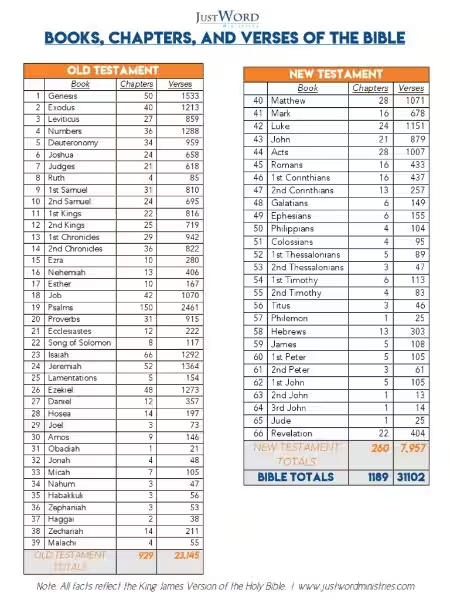
The Bible, a collection of books spanning centuries and cultures, offers a profound tapestry of stories, wisdom, and spiritual guidance. Understanding the structure of these books, specifically the chapters, is crucial to navigating its rich content effectively. Each chapter acts as a discrete unit, often focusing on a specific theme or episode. Recognizing these divisions allows for concentrated study and a deeper comprehension of the message within.
Think of the Bible as a massive library. Just as a library organizes books into sections, genres, and even individual chapters, the Bible employs a similar organizational system. This structure, while seemingly straightforward, empowers readers to pinpoint specific passages relevant to their needs. For example, if you’re seeking guidance on prayer, you can easily locate relevant sections in books like Psalms or Matthew. The structured chapters enable targeted reading and reflection.
Many books of the Bible are rich in historical narratives. Genesis, for instance, details the creation of the world, the lives of the patriarchs, and the origins of the Jewish people. The chapters often follow chronological order, recounting specific events in a linear progression. By understanding the flow of these chapters, readers gain a deeper appreciation for the historical context and the gradual unfolding of God’s plan. Understanding these chapters will help you understand the context of each story and the impact of events throughout history. For instance, Chapters 1-11 of Genesis cover the early history, while 12-50 concentrates on the lives of Abraham, Isaac, and Jacob.
Understanding the narrative flow and structure of these historical books is also vital for appreciating the subtleties of the biblical narrative. For example, the book of Exodus chronicles the Israelites’ exodus from slavery in Egypt. Each chapter typically presents distinct stages of this journey, from the plagues to the crossing of the Red Sea, highlighting the power and intervention of God. Studying these chapters allows for a more complete comprehension of the narrative and helps you see the bigger picture of the story.
Thematic and Poetic Chapters: Wisdom and Inspiration
The Bible isn’t just a historical record. It also contains profound wisdom and poetic expression. Books like Psalms and Proverbs offer guidance on living a virtuous life. The chapters in these books often focus on specific themes, such as gratitude, justice, or perseverance. Each chapter encapsulates a distinct message, creating a collection of inspiring insights that touch on every aspect of life. Recognizing the thematic structure of these books allows readers to glean specific wisdom from each chapter, empowering them to make better decisions and live more meaningful lives. Examples include chapters focusing on specific virtues or overcoming challenges.
The beauty of the biblical poetry is often found in the rhythmic structure and vivid imagery within the chapters. For example, the Book of Psalms frequently uses metaphors and similes to express emotions and spiritual experiences. Analyzing the chapters using literary tools, appreciating the poetry, and understanding the themes that connect them create a deeper appreciation for the depth and beauty of these sections. The Psalms are filled with praise, lament, and reflection, offering a profound exploration of human emotions and their relationship with divinity. Each Psalm, in its own unique chapter, offers a different perspective.
The Gospels, particularly Matthew, Mark, Luke, and John, tell the story of Jesus Christ. The narrative flow within these Gospel chapters is fascinating. Each chapter builds upon the previous one to paint a more comprehensive portrait of Jesus’ life, teachings, and ministry. The chapters often cover specific events, like sermons, miracles, or interactions with disciples. Examining these chapters in detail will provide a deeper insight and understanding of Jesus’ life and teachings. Each chapter in these books builds on the previous one, revealing the evolution of Jesus’ message and the growing impact of his ministry.
The chapters in the Gospels can be understood as part of a larger narrative arc. They highlight the progression of Jesus’ ministry, from his teachings to his eventual crucifixion and resurrection. Understanding the chapters as part of this larger narrative reveals the interconnectedness of Jesus’ life and the deeper meaning behind his actions. For instance, Mark’s Gospel often uses short, impactful chapters to underscore the urgency and immediacy of Jesus’ message. Using this understanding can help readers appreciate the Gospel message on a more personal and profound level.
Frequently Asked Questions
How many chapters are in the Bible?
The Bible has roughly 1,189 chapters, depending on the specific version and division of books.
What are the different religious beliefs in the world?
There are many different religious beliefs and traditions around the world. Some major examples include Christianity, Islam, Judaism, Hinduism, Buddhism, and Sikhism, each with its own unique doctrines, practices, and scriptures.
What is the difference between the Old Testament and the New Testament?
The Old Testament focuses primarily on the history of the Jewish people and their relationship with God, culminating in the prophecies about the coming Messiah. The New Testament centers on the life, teachings, death, and resurrection of Jesus Christ and the early Christian community.
What are some key figures in the Bible?
Key figures in the Bible include Abraham, Moses, David, Jesus Christ, and various prophets.
What are the different denominations within Christianity?
Christianity has many denominations, such as Catholicism, Protestantism (with various branches like Baptist, Methodist, Presbyterian, etc.), and Eastern Orthodoxy, each with its own interpretations and practices.
What is the importance of religious texts?
Religious texts are often seen as guides for ethical behavior, spiritual growth, and understanding the meaning of life. They provide frameworks for communities and individuals.