The Bible, a collection of sacred texts for billions, often feels daunting to newcomers. Its vast scope and complex narratives can seem overwhelming. Learning how to approach reading Bible chapters and verses systematically can transform your engagement with this rich source of wisdom and inspiration. This isn’t about memorization or dogma; it’s about developing a personal connection with the stories and messages within.
Instead of feeling lost in a sea of words, consider this guide as your compass. We will explore practical strategies for understanding passages, recognizing context, and ultimately, applying the wisdom found within. This approach will help you grasp the essence of the scriptures without over-complicating them. By focusing on key elements like the author’s intent and the historical setting, you can gain a deeper appreciation for the Bible’s enduring messages.
The Bible isn’t a single, monolithic text. It’s a collection of books grouped into different sections, often with different authors, writing styles, and historical contexts. Recognizing these structural divisions is crucial for understanding the overall message. For instance, the Old Testament comprises stories, laws, poetry, and prophecies, while the New Testament centers on the life, teachings, and early followers of Jesus Christ. Different sections have different purposes, meaning a passage in the book of Psalms will have a different character and emotional tone than a passage in the book of Acts.
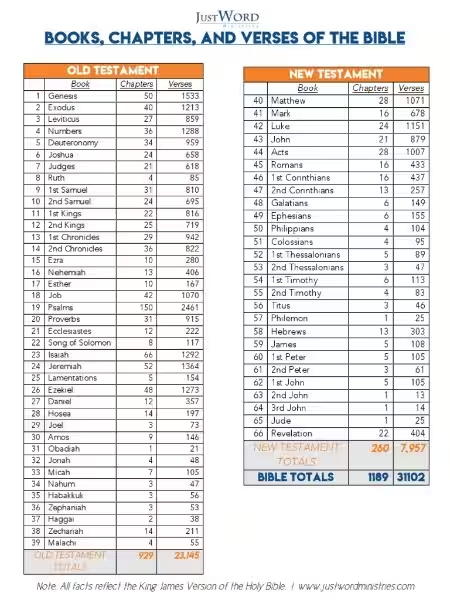
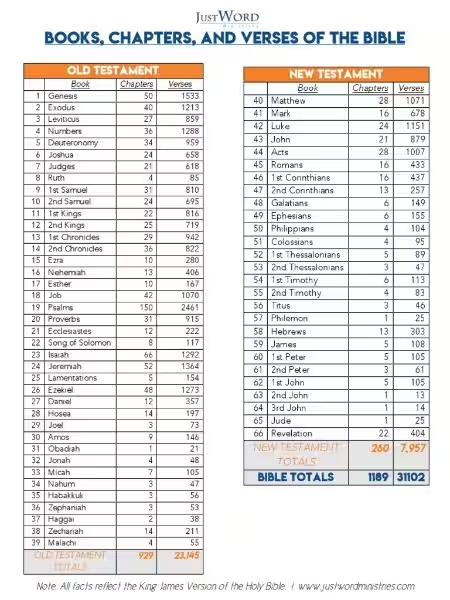
Furthermore, books are divided into chapters and verses for easier reference, a structure that aids in locating specific passages. Understanding this organizational structure is like having a roadmap for navigating the biblical landscape. By acknowledging the separate sections and their intended purposes, you will encounter the content with a better framework, which enriches your understanding of the entire Bible. Imagine the difference between navigating a sprawling city by only looking at a street-view image versus using a map with clear divisions and thorough details.
Deciphering Chapters and Verses: A Practical Approach
So, how do you actually engage with a verse? It’s not just about reading the words; it’s about engaging with the context. Start by understanding the historical setting of the passage. When was it written? What were the circumstances of the author and the intended audience? This crucial element helps you understand the passage’s meaning within its historical and cultural surroundings. Consider the author’s perspective, the intended audience, and the message’s relevance in today’s world.
Key questions to ask: Who wrote this? To whom were they writing? What is the overarching theme? What might be the deeper meaning behind these words? For example, if you read a passage about ancient Israelite law, try to place yourself in the context of that society. Then, consider how the principles underlying the passage might apply in your own life and circumstances. You might find yourself connecting the dots to contemporary situations in a new light. Don’t just read the words; engage with them actively.
Reading for Meaning: Beyond the Surface
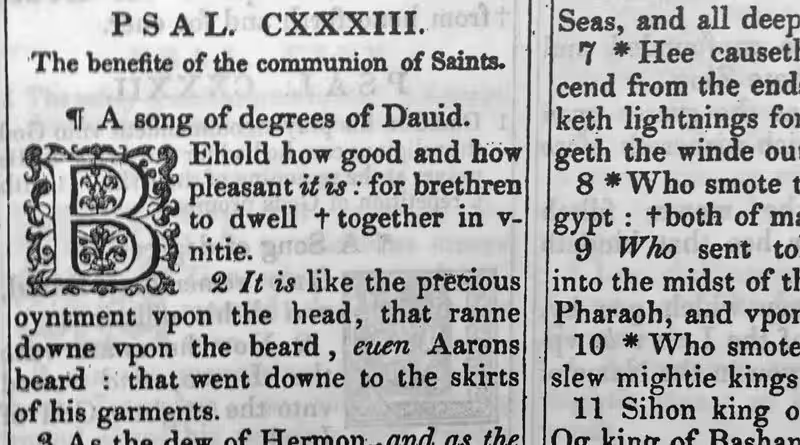
Reading the Bible isn’t just about understanding the literal words, it’s about exploring the deeper meaning and spiritual implications. Look for patterns, recurring themes, and connections between different passages. Consider applying the lessons in the text to your own life. What are the core principles being conveyed? How might these principles resonate with your personal journey? Exploring different translations can provide a richer understanding. Comparing versions can highlight the nuances and subtleties within a passage.
For example: A passage about forgiveness might encourage you to reflect on your own capacity for compassion and empathy. Reading it in a different translation might highlight a different aspect, which will enrich your understanding. Don’t be afraid to ask questions – you are not alone in this journey of discovery. Use commentaries or resources to gain further insight and context. This process is about engaging with the text on a personal level and discovering how it can speak to your life.
Putting it All Together: A Comprehensive Approach
Reading the Bible is not a passive activity; it’s an active engagement with a timeless collection of wisdom. Understanding the structure, historical context, and deeper meaning allows you to experience the Bible’s richness. Start by focusing on one chapter or verse at a time. Don’t try to tackle the entire Bible in one sitting. Instead, set aside dedicated time for reflection and study. Develop a consistent reading schedule, even if it’s just 10-15 minutes a day. This consistent approach will cultivate a deeper connection with scripture. It’s a journey of exploration and discovery – and it’s one well worth taking.
Remember, the Bible is a living document, capable of speaking to you in new ways each time you encounter it. Don’t be afraid to explore and interpret, using your own insights and experiences. By understanding the historical context, recognizing the structure, and seeking meaning beyond the surface, you can unlock the profound wisdom within these ancient texts. This journey will shape your understanding, cultivate empathy, and deepen your spiritual growth. Start by selecting a chapter and verse, and let the journey begin!
To read specific Bible chapters and verses, locate the book in the Bible. Then, look for the chapter number and verse number. For example, to read Genesis chapter 1, verse 1, you would look for “Genesis 1:1” in the text. Read the passage.
What is religion?
Religion is a set of beliefs and practices related to the spiritual realm, often involving worship of a deity or deities, moral codes, and rituals. Different religions have different beliefs and practices. Some central elements of religion often include a concept of the divine, ethical guidelines, and a community of believers.