Exploring the Chapters in Bible Books: A Journey Through Scripture
Exploring the Chapters in Bible Books: A Journey Through Scripture
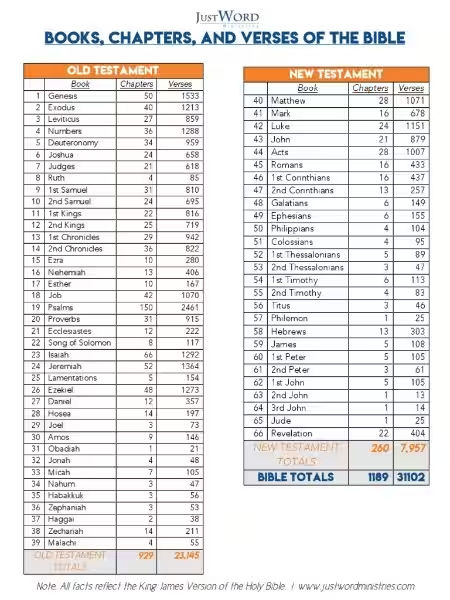
The Bible, a vast and complex collection of writings, is often daunting for newcomers. Its structure, with numerous books and intricate narratives, can seem overwhelming. Yet, understanding the organization – particularly the chapters – can unlock a deeper appreciation for the overarching message and individual stories. This exploration will break down this structure and help you navigate this rich tapestry of faith and history. By understanding chapters, you can better connect with the wisdom and guidance within the scriptures.
The division into chapters, as we know them, is a relatively recent development compared to the original manuscripts. These divisions, while not divinely inspired, serve a crucial function in our modern understanding. Chapters allow for easier referencing, study, and application of biblical teachings. They provide a logical framework for exploring themes and ideas, empowering us to connect the dots between seemingly disparate passages. The chapters themselves become important building blocks in our understanding of God’s plan and the development of faith characters.
Navigating the Books: A Deeper Look at Chapter Structure
Each book in the Bible, from the poetic Psalms to the historical accounts of Kings, varies in length and complexity. Some books, such as Proverbs, are filled with concise chapters often containing a single, impactful idea. Others, like Genesis, unfold lengthy narratives across many chapters, presenting a progression of events. Understanding this variety in structure is key to appreciating the intended message. The chapters are not random; they often build upon each other, highlighting the evolution of characters and themes. For example, the chapters in the Book of Revelation often build upon each other, employing symbolism and prophecy to express complex ideas.
The organization of chapters within a book often mirrors the book's overall message. Consider the Book of Acts, for instance. The early chapters focus on the apostles' ministry in Jerusalem, while later chapters explore the spread of Christianity across different regions. This progression, outlined by the chapters, highlights the growth and expansion of the early Christian community. This understanding allows readers to engage with the narratives in a more meaningful way, appreciating the logical flow of the historical and theological arguments.
Understanding the Significance of Verses Within Chapters
Each chapter is further broken down into verses. These verses, often short paragraphs, provide specific details, supporting arguments, and crucial insights. Often, a single verse within a chapter can hold significant meaning. Consider the powerful statement in John 3:16: "For God so loved the world, that he gave his one and only Son, that whoever believes in him shall not perish but have eternal life." Focusing on the verses within each chapter helps to dissect the key messages and teachings. These verses offer a wealth of detail, allowing for a deeper spiritual comprehension.
The verses within each chapter often work together to paint a richer picture of the story. You might find a verse in a chapter explaining a specific person's actions, while other verses in that same chapter might describe the consequences of those actions. Understanding these interconnections allows us to see the nuanced complexities of the human condition and God's interactions with humanity. Example: Several verses in the chapters of the Book of Job discuss suffering and faith. Each verse adds a facet to the overall message of resilience and unwavering trust in God.
Applying the Lessons: Chapters and Personal Growth
The Bible's chapters aren't just historical accounts or theological treatises; they offer timeless guidance for personal growth. Reading a specific chapter and reflecting upon it can provide valuable insights into navigating life's challenges. For example, chapters in the Book of Proverbs offer practical wisdom for everyday living. These chapters are applicable to every area of life: relationships, finances, and work, to name a few. Analyzing the chapters in this way can empower you to draw practical lessons that apply to your life.
Ultimately, the chapters in the Bible serve as a roadmap to understanding God's plan. From historical accounts in the Old Testament to the teachings of Jesus in the New Testament, the chapters provide a framework for discovering the underlying truths of the scriptures. By engaging with these chapters and verses, readers can deepen their spiritual connection and receive meaningful insights that can enrich their personal lives and spiritual journey. A prayerful study of the chapters can transform understanding into wisdom, and knowledge into faith-filled action.
Frequently Asked Questions
How many chapters are in the Bible?
There are over 1,100 chapters in the Bible, depending on the version and how chapters are divided.
What are the major religions of the world?
Major religions include Christianity, Islam, Judaism, Hinduism, Buddhism, and others.
What is the difference between a religion and a belief system?
A religion typically involves a set of beliefs, practices, and rituals centered around a deity or deities, while a belief system encompasses a set of principles, values, and convictions, not necessarily tied to a deity.