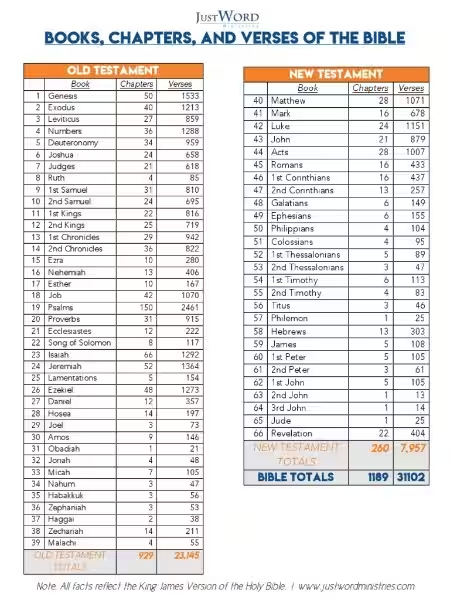
The Bible, a cornerstone of many faiths, is a vast collection of texts. Understanding its intricate structure can unlock a deeper connection with its teachings. Knowing how to navigate the Bible, using its book, chapter, and verse system, is crucial for finding specific passages and understanding their context. This guide will demystify this system, providing you with the tools to explore the richness of the Bible.
For those new to the Bible, this organized approach can feel daunting. But with practice and a little understanding, you’ll find it remarkably easy to locate specific verses. Imagine wanting to find the story of David and Goliath. Knowing the book (1 Samuel), chapter, and verse (17) will quickly lead you to the text. This system of organization allows for precise referencing, fostering deeper study and contemplation.
Understanding the Structure: Books, Chapters, and Verses
The Bible is composed of numerous books, each covering a distinct theme or historical period. These books are further divided into chapters, often representing a significant section within a book. Finally, each chapter is broken down into individual verses, allowing for even more specific referencing. For example, Genesis 1:1 refers to the first verse of the first chapter of the book of Genesis.
Think of it like a well-organized library. Each book is a separate volume, chapters are like sections within a volume, and verses are like individual paragraphs. This structured approach allows readers to locate specific passages with speed and accuracy. This precision is invaluable when studying, meditating, or simply seeking a particular message within the scriptures. This refined organization makes it easier to pinpoint exact situations in the narratives, leading to insightful analysis of various topics.
To effectively use the Bible’s book, chapter, and verse system, here are some practical tips:
Become familiar with the major and minor books of the Bible. Knowing the different books and their themes will help you locate relevant passages quickly.
Familiarize yourself with the common numbering systems. Different Bibles may use slightly different formats. Take note of the specific format used in your version.
Practice using the book, chapter, and verse format. Try to find specific verses you know exist, like Psalm 23:4. This will help you build confidence and familiarity.
For example, let’s say you want to find the famous “Sermon on the Mount.” You know it’s in the Gospel of Matthew. Knowing its location within the specific book, you will find it in Matthew, chapter 5, revealing a profound message of teachings. Using the book, chapter, and verse system, you can quickly and easily find the desired passage and delve deeper into its meaning.
Exploring Themes and Connections: Beyond Individual Verses
The Bible’s structure extends beyond simple referencing. It allows for the exploration of themes and connections across different books and passages. For instance, the theme of love is woven throughout the Bible, from the love of God to the love we should have for each other. By reading verses from different books and chapters, you can discover how this theme unfolds, enriching your understanding of God’s message.
Using the book, chapter, and verse system, it is also possible to examine a specific theme like forgiveness. You could search for verses about forgiveness in different books of the Bible, such as Matthew 6:14–15, Luke 17:3–4, or Ephesians 4:32. This exploration allows you to see the theme in different contexts, revealing different dimensions of its importance. Each passage, viewed in contrast to the others, can deepen your understanding of the overall message.
Modern technology offers valuable tools for navigating the Bible. Digital Bibles and Bible apps provide enhanced search functions. Utilize these resources to look up specific verses, find passages related to certain themes, or even compare translations. These tools greatly streamline the process of finding specific passages. For instance, using a Bible app with a search function, you can look up verses like Romans 8:28 or 1 Corinthians 13:4-7 easily.
Furthermore, Bible study tools often incorporate study notes, commentaries, and cross-references. These features help you understand the context and meaning of verses more completely. Ultimately, these tools provide a more comprehensive approach to understanding and appreciating the Bible’s wisdom. By utilizing digital resources, understanding the meaning of sections, such as John 3:16-17, becomes a more straightforward process.
Frequently Asked Questions
What is a Bible book chapter verse list?
A Bible book chapter verse list is a structured way to reference specific passages within the Bible. It uses a standard format (e.g., Genesis 3:14) to identify the book, chapter, and verse number. This allows for easy communication and location of specific texts.
What are the different types of Bible books?
The Bible contains various types of books, including historical accounts, poetry, prophecy, parables, letters, and Gospels. The different genres provide diverse perspectives on faith, history, and spirituality.
How do I find a specific verse in the Bible?
To locate a specific verse, use the book name, chapter number, and verse number (e.g., Matthew 6:25). Most Bible versions and online resources allow searching by this format.
Why are there different versions of the Bible?
Different Bible versions exist because translations are interpretations of the original languages (Hebrew, Aramaic, and Greek). Different translators utilize varying approaches to interpretation, resulting in diverse renderings.
How can I use a Bible book chapter verse list in my faith?
Using a Bible book chapter verse list allows focused study and reflection. It helps in personal devotions, group discussions, and theological research. Different verses can be used to support various aspects of faith and beliefs.