What is leaven? Meaning, uses, and biblical context
What is leaven? Meaning, uses, and biblical context
Leaven is a substance that makes dough rise by producing gas that becomes trapped in the dough. In traditional baking, leaven usually means yeast or a fermented starter; in modern recipes, it can also refer to baking powder or baking soda. The word also has an important biblical meaning, where leaven may represent growth, influence, corruption, or the difference between ordinary bread and bread used in religious observances.
The basic idea is simple: a leavening agent creates bubbles, and the dough holds those bubbles as it develops. As the dough bakes, the gas expands and the structure sets, giving bread a lighter texture instead of a dense, flat one. The exact process depends on whether the leaven is biological, chemical, or physical.
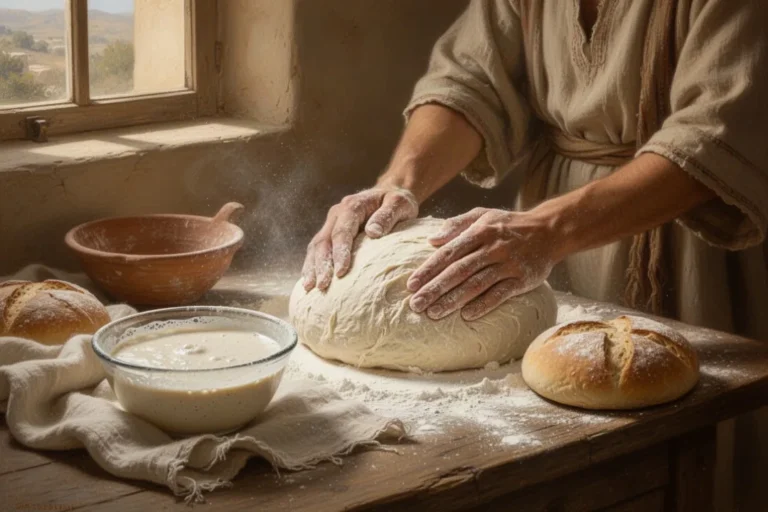
In yeast-raised bread, the leaven is a living microorganism called yeast. Yeast consumes available sugars in the dough and releases carbon dioxide and alcohol as part of fermentation. The carbon dioxide forms small pockets throughout the dough, while the alcohol and other fermentation products contribute to the bread’s aroma and flavor.
Wheat dough can hold this gas because flour contains proteins that form gluten when mixed with water and worked. Gluten creates an elastic network around the gas bubbles. The dough expands during fermentation, and heat later causes the bubbles to enlarge before the bread’s internal structure becomes firm.
Not every dough contains enough gluten to trap gas in the same way. Rye, oats, and gluten-free flours behave differently from wheat flour, so bakers often adjust the recipe, mixing method, hydration, or leavening amount. The goal remains the same: create gas and retain enough of it to produce the desired texture.
Plain definition: Leaven is anything added to dough to make it expand and become lighter. Yeast does this biologically, while baking powder and baking soda do it chemically.
The main types of leaven used in baking
Leavening methods fall into several broad categories. Some depend on living organisms, some on chemical reactions, and some on incorporating air through mixing. A recipe’s flavor, timing, texture, and handling requirements depend heavily on the type of leaven it uses.
Commercial yeast: Baker’s yeast ferments sugars and produces carbon dioxide. It is available in forms such as active dry yeast, instant yeast, and fresh yeast.
Sourdough starter: A mixture of flour and water containing naturally occurring yeast and lactic acid bacteria. It leavens bread while also creating a distinctive tang.
Baking powder: A prepared chemical leavener containing a base and one or more acids. It releases carbon dioxide when moistened and, in many products, heated.
Baking soda: Sodium bicarbonate, which needs an acidic ingredient such as buttermilk, yogurt, molasses, lemon juice, or natural cocoa to create carbon dioxide.
Whipped air: Beaten eggs, whipped egg whites, or creamed butter can trap air that expands in the oven. This is a physical form of leavening rather than fermentation.
Steam: Water in a dough or batter turns to steam in the oven and expands. Steam helps puff pastries, popovers, and some laminated doughs.
The word leaven is therefore broader than “yeast.” In everyday baking, people sometimes use the term loosely for any ingredient that causes a baked product to rise. In older culinary and biblical language, however, leaven most often refers to a piece of fermented dough or a starter used to raise new dough.
What yeast leavening does during fermentation
When yeast is mixed into dough with water and flour, it begins using available nutrients. Warmth generally speeds fermentation, while cold temperatures slow it. Salt also affects yeast activity and strengthens dough, so bakers balance the amount rather than treating salt as only a flavoring ingredient.
During the first rise, often called bulk fermentation, the dough becomes larger and more aromatic. The baker may stretch and fold it or knead it to develop strength. These actions redistribute yeast and gas, align gluten, and help create a more even crumb.
After shaping, the dough often receives a second rise called proofing. The shaped loaf continues to ferment before baking. A dough that is underproofed may be tight and dense, while an overproofed dough may lose strength and collapse when handled or placed in the oven.
Fermentation also changes flavor. Slow fermentation gives enzymes and microorganisms more time to work on the flour, producing compounds that affect taste and aroma. That is why a long-fermented loaf may taste more complex than a loaf made with a quick rise, even when both use similar ingredients.
How sourdough starter functions as leaven
A sourdough starter is a living culture maintained with flour and water. It contains wild yeast and bacteria that come from the surrounding environment and the ingredients. When a portion of the starter is mixed into fresh flour and water, the microorganisms ferment the mixture and release gas.
The bacteria in sourdough produce acids, including lactic acid and acetic acid, in varying proportions. Those acids give sourdough its characteristic flavor and affect the dough’s strength, aroma, and keeping quality. The result is not always sharply sour; a well-managed starter can produce bread with a mild, nutty, or gently tangy flavor.
To keep a starter active, a baker regularly removes some of it and adds fresh flour and water. This process is commonly called feeding. The exact schedule depends on room temperature, the flour used, the starter’s hydration, and how often the baker plans to make bread.
Sourdough is not automatically healthier or better than bread made with commercial yeast. Its nutritional qualities depend on the full recipe, fermentation time, flour type, portion size, and individual dietary needs. People with celiac disease must avoid ordinary wheat sourdough unless it is specifically made with safe, certified gluten-free ingredients.
How baking powder and baking soda differ from yeast
Yeast leavening requires time because the yeast must ferment the dough. It usually creates a bread-like flavor and a chewy or elastic structure. Chemical leaveners act much faster, making them useful for biscuits, muffins, pancakes, cakes, quick breads, and other recipes that are mixed and baked without a long rise.
Baking powder contains the ingredients needed for its reaction, so it does not usually need a separate acidic ingredient in the recipe. Double-acting baking powder releases some gas when liquid is added and more gas when heated. That gives the batter a second lift in the oven.
Baking soda is more concentrated and requires acid. If a recipe includes too much soda or not enough acid, the finished product may taste soapy, bitter, or overly alkaline. If too little soda is used, the product may be dense and may not brown as intended.
These chemical leaveners should not be substituted for yeast in equal amounts. They create gas through a different process and do not provide the same fermentation flavor or dough development. Likewise, adding extra yeast does not guarantee a better loaf; it may cause rapid fermentation, an unpleasant flavor, or a weakened structure.
Why some bread is unleavened
Unleavened bread is made without a leavening agent that causes the dough to rise. It may contain flour, water, salt, oil, or other ingredients, but it is prepared and baked without yeast or another rising agent. Flatbreads such as some forms of matzo, tortillas, and crackers illustrate how bread can be made without a risen structure, although individual recipes and religious traditions differ.
Unleavened bread is often thin and compact because no substantial network of gas bubbles develops before baking. A dough can still puff in places from steam, and some flatbreads may contain small air pockets created during rolling or cooking. That brief expansion is different from the sustained fermentation associated with yeast-raised bread.
In practical baking, choosing unleavened dough may be a matter of time, texture, tradition, or dietary preference. Without fermentation, a baker can mix and cook the dough quickly. The finished product is generally less airy and has a different bite from a loaf that has undergone a long rise.
What leaven means in the Bible
In the Bible, leaven usually refers to fermented dough or a piece of dough saved from an earlier batch to help ferment a new batch. Because a small amount could affect a much larger quantity of dough, leaven became a natural image for influence and spread.
The meaning is not always negative. In one teaching recorded in Matthew 13, Luke 13, and a related passage in Matthew’s Gospel, leaven illustrates how the kingdom of heaven works through a larger mass. A small amount of leaven is placed into flour, and the change spreads throughout the mixture. The image emphasizes gradual, extensive influence.
In other passages, leaven carries a warning. Jesus cautions his disciples about “the leaven” of certain religious and political leaders in Matthew 16, Mark 8, and Luke 12. The point is not that bread itself is morally bad; rather, a small hidden influence can shape a person’s thinking, motives, or conduct.
Paul also uses leaven as a picture of corruption spreading through a community in 1 Corinthians 5 and Galatians 5. His comparisons focus on the effects of tolerated wrongdoing or teaching. A small problem, if left unaddressed, can affect the whole group.
“A little leaven leavens the whole lump” is the central image used in several biblical discussions of influence and spread; the wording varies by translation.
These passages show why the meaning of leaven must be determined by context. The same physical process—small particles affecting a larger mass—can illustrate positive growth in one passage and harmful influence in another. It is inaccurate to assume that leaven always symbolizes evil throughout the Bible.
Why leaven mattered during Passover
Leaven has a particularly important place in the biblical instructions concerning Passover and the Feast of Unleavened Bread. Exodus describes the Israelites leaving Egypt in such haste that their dough had not risen. In remembrance of that departure, the observance included unleavened bread and restrictions concerning leaven.
Exodus 12 gives the account of the departure and the instructions for removing leaven from homes. Exodus 13 connects the practice with remembering how the Israelites were brought out of Egypt. Leviticus 23 also describes the timing and observance of the Feast of Unleavened Bread.
The practice involved more than choosing a different kind of bread. Families were instructed to remove leaven from their homes for the prescribed period. The physical act of clearing it away reinforced the memory of leaving quickly and marked the festival as a distinct religious observance.
In the New Testament, the Passover setting helps explain references to unleavened bread. The Last Supper is associated with Passover in the Gospel accounts, and Paul refers to Christ in relation to Passover in 1 Corinthians 5. Christian traditions interpret these passages in different ways, so the meaning of leaven in religious practice can vary among denominations and communities.
Context matters: In biblical passages, leaven can represent either beneficial growth or harmful influence. Read the surrounding passage before assigning it a symbolic meaning.
Common mistakes when using leaven in recipes
Many baking problems come from treating every leavening agent as interchangeable. Small changes in temperature, acidity, timing, or measurement can alter the result. The following habits help prevent the most common errors.
Confusing baking powder with baking soda: Baking powder is designed to provide an acid and a base, while baking soda needs acid elsewhere in the recipe.
Using expired chemical leaveners: Baking powder and baking soda lose effectiveness over time, especially when exposed to moisture. Test a questionable product or replace it.
Using water that is too hot for yeast: Very hot liquid can damage or kill yeast. Use the temperature recommended by the recipe or manufacturer.
Ignoring fermentation time: Yeast dough usually needs time to develop gas and flavor. Rushing the rise can produce a heavy loaf.
Letting dough rise too long: Overfermented dough may become weak, sticky, overly sour, or prone to collapse.
Measuring flour by volume carelessly: Scooping flour directly from a container can pack in more flour than intended. A scale gives more consistent results.
Adding extra leavener for more height: Too much chemical leavener can cause a bitter taste, coarse texture, or a rise that falls before the product sets.
Forgetting that altitude changes baking: At higher elevations, gases expand differently and liquids evaporate more quickly. Recipes may need adjustments.
For yeast dough, watch the dough rather than relying only on the clock. Room temperature, flour type, yeast activity, and dough hydration all affect how quickly it rises. A recipe’s suggested time is a guide, but the dough’s size, feel, and elasticity provide better evidence of readiness.
How to choose the right leaven for a recipe
Start with the texture you want. A crusty loaf with a chewy crumb generally calls for yeast or sourdough. A tender muffin, biscuit, or cake usually relies on baking powder, baking soda, whipped air, or a combination of methods.
Next, consider how much time you have. Yeast and sourdough involve fermentation and often require one or more rises. Chemical leaveners allow you to move from mixing to baking quickly, but the batter may need to go into the oven soon after it is combined because the reaction has already begun.
Flavor is another deciding factor. Fermented leavening adds complexity and can produce a stronger bread character. Chemical leavening is usually more neutral, allowing ingredients such as fruit, spices, chocolate, cheese, or herbs to remain prominent.
Finally, follow the recipe’s balance of liquid, acid, fat, sugar, and flour. Leavening does not work in isolation. The surrounding ingredients determine how much gas is created, how well it is trapped, and whether the baked structure can support the rise.
How to tell whether leavening worked
A properly leavened loaf or baked good has a structure appropriate to its recipe. Yeast bread may show an open or moderately even crumb, a developed crust, and a springy interior. A muffin or cake should rise above its original batter level without a large, wet, collapsed center.
A dense result can have several causes: inactive yeast, insufficient fermentation, excess flour, weak gluten development, incorrect oven temperature, or expired chemical leavener. A sunken result may indicate overproofing, too much liquid, too much leavening, or removing the product from the oven before its structure has set.
Visual appearance alone does not tell the whole story. Check the aroma, texture, internal moisture, and flavor. A bread can rise dramatically yet have a weak structure, while a flatter loaf may still be successful if the recipe is intended to produce a dense flatbread.
Why the word leaven still matters
The word has both a practical and a figurative life. In the kitchen, leaven describes the process that changes dense dough into a lighter baked product. In biblical writing, the same observable process becomes a picture of how an influence can spread through an individual, a family, a teaching, or a community.
Understanding the culinary meaning makes the biblical imagery clearer. A small quantity of fermented dough does not merely sit beside the new dough; it works through it. That physical detail explains why biblical writers could use leaven to communicate gradual transformation, wide influence, or hidden corruption.
The safest definition is therefore precise but flexible: leaven is a substance or process that causes dough to rise, and in biblical language it is also a metaphor whose meaning depends on the passage. Paying attention to the recipe or the surrounding verses will tell you which sense is intended.
Frequently asked questions
Is leaven the same thing as yeast?
Not exactly. Yeast is one type of leaven, and it raises dough through fermentation. The broader term can also include sourdough culture, baking powder, baking soda, steam, or whipped air, depending on how the word is being used. In older biblical and culinary contexts, however, leaven most often refers to fermented dough or a starter.
Does leaven contain alcohol?
Yeast fermentation produces a small amount of alcohol along with carbon dioxide, but most of the alcohol evaporates during baking. The amount in finished bread varies with the recipe and fermentation process. Leaven itself is not the same as an alcoholic drink, and chemical leaveners such as baking powder do not ferment sugars or produce alcohol.
Why does the Bible sometimes describe leaven positively and sometimes negatively?
The meaning comes from the image’s context. Leaven can represent influence spreading through a larger group, as in the comparison to the kingdom of heaven. It can also represent harmful teaching or wrongdoing spreading through a community. The Bible does not assign one universal symbolic meaning to leaven in every passage.
Can bread rise without yeast?
Yes. Baking powder and baking soda can create carbon dioxide through chemical reactions, while whipped eggs, steam, or creamed butter can add and expand air. These methods produce different textures and flavors from yeast fermentation. Flatbreads can also be made without any intentional leavening, although steam may cause limited puffing during cooking.











Leave a Reply