Gluten-free communion bread: What churches and families should know
Gluten-free communion bread: What churches and families should know
Gluten-free communion bread is available for many churches, but the right option depends on the denomination and the person’s medical needs. Some congregations use wafers made from rice, corn, or other gluten-free ingredients, while Roman Catholic practice generally requires bread containing at least some wheat gluten.
If you have celiac disease, a wheat allergy, or non-celiac gluten sensitivity, ask the church exactly how the bread is prepared, stored, and distributed. A product labeled gluten-free may still be unsafe if it is handled beside ordinary communion wafers or placed in a shared container.
Gluten-free communion bread is usually a small wafer, cracker, or piece of bread made without wheat, barley, or rye. Common ingredients include rice flour, corn flour, tapioca starch, potato starch, sorghum, buckwheat, and certified gluten-free oats. The specific recipe matters because “wheat-free” and “gluten-free” do not always mean the same thing.
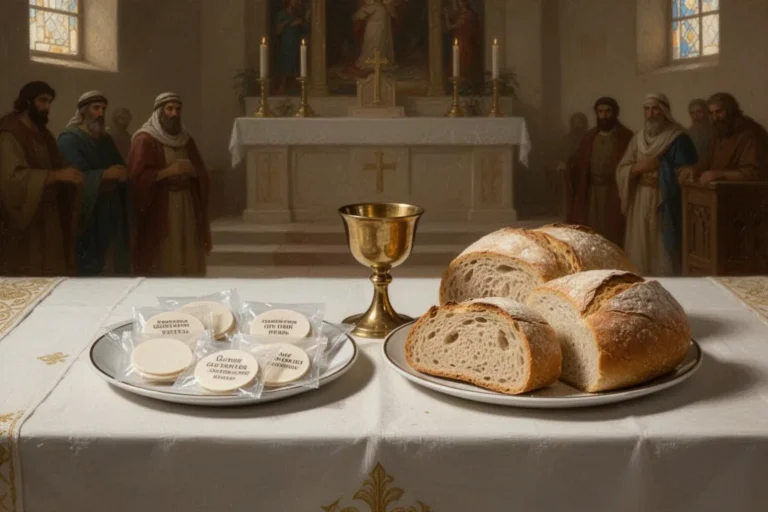
Some products are crisp and nearly tasteless, similar to traditional communion wafers. Others are soft, bread-like pieces prepared by the church or purchased from a specialty bakery. Churches may also use a commercially packaged wafer with an ingredient list and a gluten-free label, which can make ingredient review and storage easier.
Before choosing a product, check the entire label rather than relying only on its name. Ingredients such as malt, wheat starch, wheat flour, brewer’s yeast, or unspecified flavorings may require further investigation. A product can also be naturally gluten-free but contaminated during manufacturing.
Rice-based wafers: Often thin, dry, and easy to portion individually.
Corn-based wafers: Common in some gluten-free recipes, although corn allergies and cross-contact still need consideration.
Homemade bread: May be suitable when prepared in a dedicated, carefully controlled area.
Packaged communion wafers: Offer consistent ingredients and individual handling, but the label and manufacturer’s processes should be reviewed.
For someone with celiac disease, the question is not simply whether the recipe contains gluten. Crumbs, flour dust, shared utensils, and contaminated surfaces can transfer enough gluten to create a problem. A small wafer that is safe in its original package may no longer be safe after being placed in a common plate with wheat wafers.
Medical safety comes first: Ask for the church’s exact procedure, not just a verbal assurance that the bread is “gluten-free.” The preparation and distribution method can matter as much as the ingredients.
How Catholic and Protestant communion practices differ
Churches do not all answer the gluten-free communion question in the same way. Denominational rules about valid communion bread can affect which alternatives are permitted, even when a gluten-free option would be medically preferable.
Roman Catholic communion bread
In Roman Catholic practice, the bread used for the Eucharist must be made from wheat and must be bread. A completely gluten-free wafer made from rice, corn, or another grain is generally not considered valid matter for the sacrament. Catholic guidance has allowed low-gluten altar breads made with wheat in appropriate circumstances, but these are not gluten-free in the strict medical sense.
That distinction is significant for people with celiac disease. A low-gluten host may contain less gluten than an ordinary host, but “low-gluten” does not automatically mean safe for every person with celiac disease. Some individuals may need to avoid the consecrated host entirely and receive only from the chalice, when the parish and the individual’s medical needs make that appropriate.
Receiving from the chalice is not always a universal solution. The wine may be distributed from a shared vessel, and some people may have concerns about contact with lips, crumbs, or a minister’s fingers. A parish may have a separate chalice or another established procedure, but you should discuss the details with the priest beforehand.
Rules and pastoral arrangements can vary by parish and diocese. A priest can explain what the parish permits, while a healthcare professional can help you assess your personal level of risk. Do not assume that a low-gluten host is medically appropriate without checking both sides of the question.
Protestant and other Christian churches
Many Protestant churches have more flexibility in selecting communion elements. They may offer gluten-free wafers, rice crackers, corn tortillas, or another approved substitute alongside ordinary bread. Some churches serve all worshipers with a gluten-free product, which avoids the need to identify a separate portion during distribution.
Other congregations ask people to bring their own sealed communion bread or provide an individually wrapped option. Some use separate trays, while others place gluten-free pieces in a small cup or on a designated plate. The congregation’s practice may be based on its denomination, local policy, or the preferences of its worship leaders.
Non-denominational churches can have especially varied arrangements. One church may have a carefully documented allergy procedure, while another may use an informal system that does not adequately prevent cross-contact. A respectful, specific conversation before the service is the best way to determine whether the arrangement meets your needs.
Ask whether the alternative is certified or labeled gluten-free.
Ask where it is stored and whether it is sealed until communion.
Find out whether the person serving it touches ordinary bread first.
Ask whether it is placed on a separate plate or tray.
Confirm whether a clean cup or separate serving method is available.
How to prevent cross-contact during communion
Cross-contact happens when gluten from one food or surface transfers to a food that was originally gluten-free. During communion, this can occur through shared plates, serving tongs, hands, crumbs, gloves, storage containers, or table surfaces. A church does not need a commercial kitchen to reduce these risks, but it does need a consistent process.
The safest arrangement is usually an individually packaged or separately stored portion that remains protected until it reaches the person receiving it. The minister or server should know which portion is gluten-free and should handle it without touching ordinary bread immediately beforehand.
A designated container can help, provided it is clean and used only for gluten-free items. If the church stores gluten-free wafers in the same open basket as wheat wafers, the contents may become contaminated even if the ingredients are safe.
Useful safeguards include:
Keep the product sealed in its original package or a dedicated, clearly identified container.
Use a separate plate or cup that has not held ordinary communion bread.
Wash hands or change gloves before handling the gluten-free portion.
Use separate utensils for placing and serving the alternative.
Serve the gluten-free portion first, before the server handles wheat-containing bread, when that fits the service.
Tell the person receiving it where to stand or whom to approach, so the process is discreet and predictable.
Communion practices involving a shared loaf require special care. Breaking a gluten-free piece from the same loaf used for everyone else does not make it gluten-free. Similarly, dipping a gluten-free wafer into a common cup can introduce crumbs or gluten-containing residue.
Some churches distribute bread and wine separately, while others use an intinction practice in which bread is dipped into wine. If you have celiac disease, ask how the bread and cup are handled. A separate gluten-free portion and a separate serving method may be necessary.
Plan ahead for a first visit: Contact the church office or worship leader before attending, describe your needs plainly, and agree on a simple signal or location for receiving the separate portion.
How to choose gluten-free communion bread for a church
Church leaders should begin by identifying the needs of the congregation. One person may avoid gluten because of a diagnosed medical condition, while another may avoid wheat because of an allergy. These concerns overlap but are not identical, so a single product or procedure may not address every risk.
Read the product label and review the manufacturer’s allergen information. Look for a clear gluten-free claim and check whether the product is made in a facility that also processes wheat. Shared facilities do not automatically make a product unsafe, but they may be relevant for people with severe allergies or high sensitivity.
Churches should also consider the ingredients used in homemade bread. A recipe may be gluten-free on paper but become contaminated by a mixer, cutting board, baking pan, flour container, or storage shelf previously used for wheat. Dedicated equipment is preferable when the bread will be served to people with celiac disease.
Portion size and texture affect the practical experience. A very thin wafer may be easy to distribute, but it can break and leave crumbs. A soft baked piece may be easier to handle but may require more careful portioning and storage. Individually wrapped options reduce handling, though some people may find packaging disruptive during worship.
A church can create a short written procedure covering:
Which product is approved and where it is purchased.
Where the product is stored and who has access to it.
Which plate, tray, cup, or utensils are reserved for it.
Who prepares and distributes the portion.
What happens if the designated product is accidentally contaminated.
How visitors can request it without explaining private medical details publicly.
Training matters as much as the written policy. A well-intentioned volunteer may place a gluten-free wafer on a plate containing ordinary wafers simply because the distinction was not explained. Clear instructions and a small number of trained servers can make the procedure more reliable.
It is also helpful to avoid making unsupported medical promises. A church can say that it uses a labeled gluten-free product and follows a separate-handling procedure. It should not guarantee that no person could ever react, because individual medical risks differ and food preparation can involve variables outside the church’s control.
How individuals can prepare before receiving communion
Contact the church several days before a service, especially if you are visiting or attending a special event. Ask for the pastor, priest, deacon, worship director, or another person who understands the communion procedure. A general question to the greeter may not reach the person responsible for food handling.
Explain whether you need strict gluten avoidance because of celiac disease or whether you are asking about a less restrictive dietary preference. You do not need to disclose more medical information than you want to share, but the church needs enough detail to understand that ordinary bread or shared handling may not be appropriate.
Questions you can ask include:
What ingredients are in the gluten-free communion bread?
Is it stored separately from wheat-containing bread?
Will it be handled with separate utensils and clean hands or gloves?
Can I receive it from a separate plate or designated server?
How are the cup and serving vessels handled?
What should I do when I arrive so the process remains discreet?
If the church cannot provide a safe option, you may be able to bring a small, sealed portion of your own communion bread. Ask for permission in advance so the minister understands what you are doing. Keep it in its original packaging or a clean, sealed container until the appropriate moment.
Some people choose to receive only the wine, receive a blessing instead, or refrain from receiving the elements on a particular occasion. The acceptable choices depend on the church’s theology and your own convictions. Not receiving ordinary bread is a reasonable safety decision when you cannot confirm that the portion is safe.
For children, tell the adult responsible for them exactly what to do. A child may accept a regular wafer out of habit or confusion, so a practiced routine can help. The family might agree on a particular server, seating location, or quiet signal before the service begins.
What to do when a church cannot offer a safe option
A church may be willing to accommodate you but lack the equipment, product, or trained volunteers to do so safely. That does not necessarily mean the congregation is unwilling; it may mean the process needs to be developed. You can ask whether the church would consider a sealed product, a dedicated tray, or a separate distribution procedure for future services.
If the answer remains no, protect your health without feeling pressured to accept ordinary communion bread. Depending on the church, alternatives may include receiving only an element that does not contain gluten, receiving a blessing, attending without receiving, or bringing your own portion.
For people with celiac disease, accidental exposure can have consequences even when symptoms are not immediate. A lack of symptoms does not prove that cross-contact was harmless. Discuss ongoing concerns with a qualified healthcare professional, particularly if you have repeated reactions or uncertainty about how much exposure you can tolerate.
The most reliable arrangement combines clear communication, a verified product, separate storage, and careful distribution. It also respects the church’s sacramental rules rather than assuming every congregation can substitute the same ingredients. With advance planning, many people can participate in communion in a way that honors both their faith tradition and their health needs.
Frequently asked questions
Is gluten-free communion bread safe for people with celiac disease?
It can be, but safety depends on more than the ingredient list. The product should be reliably gluten-free and protected from crumbs, shared utensils, hands, trays, and storage containers that have contacted wheat. Ask the church about its full handling procedure. If the church cannot prevent cross-contact, bring a sealed portion or choose another way to participate.
Can Roman Catholics receive a completely gluten-free communion wafer?
In Roman Catholic practice, a wafer with no wheat is generally not considered valid matter for the Eucharist. Some parishes may provide a low-gluten wheat host, but that is not the same as gluten-free and may not suit everyone with celiac disease. Speak with the priest and your healthcare professional about receiving from the chalice or another permitted arrangement.
Can I bring my own communion bread to church?
Many churches will allow this, but you should ask beforehand. Bring a clearly identified, sealed portion and follow the minister’s instructions for when and how it will be used. Advance communication prevents confusion and allows the church to keep your portion separate from ordinary bread, shared plates, and contaminated serving utensils.
Are communion wafers labeled wheat-free automatically gluten-free?
No. Wheat-free products can contain barley, rye, malt, or ingredients exposed to gluten during manufacturing. Check for a specific gluten-free claim and review the ingredient and allergen information. If you have celiac disease or a serious allergy, ask the manufacturer or church about cross-contact controls when the label does not provide enough detail.












Leave a Reply