Abba means “father” in Aramaic, the language spoken by Jesus and many people in first-century Judea. In the Bible, it appears in the phrase “Abba, Father” and communicates a close, trusting relationship with God—not casual disrespect or a childish nickname.
The word is preserved in the New Testament through a Greek transliteration, so English Bibles often leave it as Abba and then provide the meaning, “Father.” Jesus uses it while praying in Mark 14:36, and the apostle Paul uses it in Romans 8:15 and Galatians 4:6 to describe how believers address God through the Holy Spirit.
Short answer: Abba is an Aramaic word meaning “father.” In Christian prayer, it points to loving access, personal trust, and reverence toward God rather than treating God as distant or unreachable.
Abba is an Aramaic form of address for a father. Aramaic was widely used in the region during the time of Jesus, and several Aramaic expressions remain visible in the Greek text of the New Testament because they carried particular significance for early Christians.
The word was written in Greek letters as abba. When the New Testament writers included it, they commonly paired it with the Greek word for father, patēr. That is why the phrase is often represented in English as “Abba, Father.” The second word explains the first while also preserving the original form.
Some readers have heard that Abba means exactly “Daddy” or “Papa.” That comparison can communicate warmth, but it can also be too narrow. The evidence does not require Abba to be a childish word used only by very young children. It is better understood as a familiar and personal way of addressing one’s father, while the exact emotional tone depended on the speaker and context.
In other words, Abba is neither a cold, formal title nor automatically a baby’s word. It can express affection and closeness while still retaining the seriousness of addressing a parent. The biblical phrase brings those ideas together: intimacy without flippancy, and reverence without emotional distance.
Why the New Testament says “Abba, Father”
The New Testament’s use of both Abba and Father has several possible purposes. The Aramaic term may preserve the wording associated with Jesus’ own prayer, while the Greek term makes its meaning clear to readers who did not speak Aramaic.
This combination also emphasizes the significance of the address. Readers hear the original term and immediately receive its translation. The phrase is not presenting two different names for two different beings. It is one form of address expressed in two languages.
Mark 14:36 records Jesus praying to God as Abba during his distress in Gethsemane. The prayer shows that closeness to God does not eliminate anguish, reluctance, or honest petition. Jesus expresses his desire that the suffering might pass, yet submits himself to the Father’s will.
That setting gives Abba a deeper meaning than simple informality. Jesus’ prayer is intimate, but it is also obedient and reverent. The word allows him to address God personally while recognizing God’s authority and purpose.
Mark 14:36 presents Jesus speaking to God with intimate trust while submitting to God’s will.
Romans 8:15 and Galatians 4:6 apply this language to believers. In both passages, Paul connects the cry of “Abba, Father” with the work of the Holy Spirit. The point is not that Christians gain access to God through a special pronunciation. The point is that God gives them a new relationship and enables them to approach him as his children.
Using Abba in prayer suggests that God welcomes a personal relationship with those who belong to him. Prayer is not presented merely as a formal appearance before a remote ruler. It includes honest conversation, dependence, worship, and trust.
At the same time, Abba does not reduce God to a human parent. Human fathers can be loving, absent, inconsistent, or harmful, so personal experience may shape how the word feels. Biblical teaching about God’s fatherhood is not based on every human family relationship. It describes God’s character as faithful, good, authoritative, and caring.
For someone who has experienced an unsafe or painful relationship with a parent, the word may be difficult. That response does not mean the person lacks faith. It can be helpful to approach the biblical idea slowly, focusing on God’s justice, compassion, protection, and reliability rather than forcing an emotional reaction to a single term.
Abba also makes room for weakness. A person does not need polished language before approaching God. The biblical image is of a child who depends on a father, not of an expert who has mastered the correct religious vocabulary. Trust matters more than pronunciation.
Abba expresses access: God is approached personally rather than treated as unreachable.
Abba expresses dependence: the person praying recognizes a need for God’s care and direction.
Abba expresses confidence: the prayer assumes that God hears and responds wisely.
Abba expresses submission: closeness to God does not cancel respect for God’s will.
How Jesus used the word Abba
Jesus’ prayer in Mark 14:36 is the clearest Gospel passage containing Abba. It occurs shortly before his arrest and crucifixion, when he is facing intense suffering. The prayer therefore connects the word with trust under pressure, not merely with peaceful or happy religious feelings.
Jesus asks whether the coming suffering can be removed, but he also places the decision in the Father’s hands. This shows that intimate prayer can include a direct request and a willingness to accept an answer that is painful. Abba is not a formula for getting whatever one wants.
The passage also helps distinguish biblical intimacy from casual speech. Jesus is close to the Father, yet he does not treat the Father as an equal whose will can be ignored. His address is personal and bold, but it remains shaped by obedience.
Christians therefore use the passage as a model for prayer in difficult circumstances. They may bring fear, grief, confusion, or desire to God without pretending that everything is easy. They can ask for relief while continuing to seek God’s purposes.
How Paul uses Abba for believers
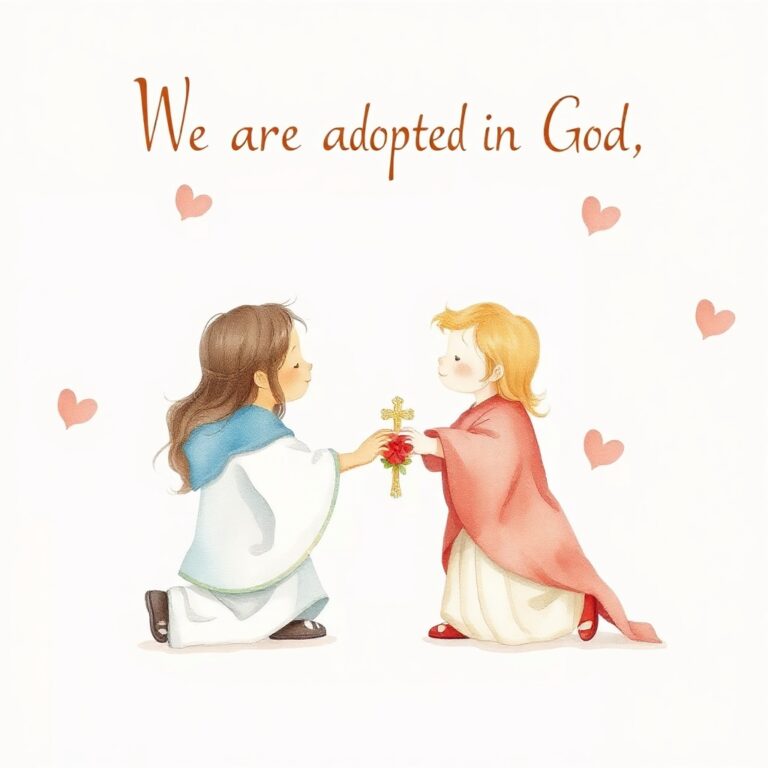
Paul uses Abba in two letters to explain the believer’s identity. Romans 8:15 contrasts a life shaped by fear and slavery with the freedom of adoption. The Spirit enables believers to cry out to God as their Father, showing that they have been welcomed into God’s family.
Galatians 4:6 makes a related point. Because believers are God’s children, God sends the Spirit of his Son into their hearts, leading them to address God as Abba, Father. The word functions as evidence of a changed relationship, not as an isolated devotional phrase.
Paul’s argument is about more than emotion. The surrounding passages concern belonging, inheritance, freedom, and adoption. To call God Abba means the believer is not approaching as a stranger trying to earn a place. The believer approaches as someone who has received a place through God’s saving work.
That teaching does not mean Christians never feel fear, doubt, or distance. It means fear does not have the final authority over their relationship with God. The Spirit’s presence assures them that they can return to God, even when their feelings are unsettled.
Keep the context in view: In Romans 8 and Galatians 4, Abba is connected with adoption and the Holy Spirit. It describes a restored relationship with God, not merely a warm word for use in private prayer.
“Daddy” can be a helpful approximate translation when it highlights affection and personal closeness, but it should not be treated as the only or exact meaning. Modern English speakers often associate “Daddy” with the speech of a small child, while Abba was not necessarily limited to that setting.
Language rarely transfers perfectly from one culture to another. A word can carry social expectations, family customs, and emotional shades that one English equivalent cannot capture. “Father,” “Dad,” “Papa,” and “Daddy” each suggest somewhat different tones in American English, yet none fully represents every use of Abba.
The safest explanation is that Abba is a personal term for father that conveys familiarity and trust. It is warmer than an impersonal reference to a male parent, but it does not require a childish tone. The surrounding passage determines how strongly affection, dependence, authority, or reverence should be emphasized.
Readers should also avoid building a complete theology on a single English gloss. The meaning of Abba comes from its use in Mark, Romans, and Galatians, as well as from the broader biblical teaching about God’s fatherhood. Translation helps, but context provides the fuller picture.
Common mistakes when interpreting Abba
Several popular explanations make the word sound simpler than it is. These mistakes can lead readers either to overstate the word’s informality or to miss its connection with obedience and spiritual adoption.
Reducing Abba to “Daddy” alone: This may suggest that the word is childish or casual in every setting. “Father” is a more reliable basic translation, with intimacy added through context.
Assuming Abba is a secret name for God: The word is a family term of address, not a magical name that makes prayer more effective.
Using it without considering Jesus’ prayer: Mark 14:36 shows that Abba belongs with honest surrender, not only with comfort and emotional warmth.
Ignoring the Holy Spirit in Paul’s teaching: Romans 8:15 and Galatians 4:6 connect the address with adoption and the Spirit’s work.
Expecting every reader to feel the same way about “Father”: Personal family history affects emotional responses, and biblical teaching should be applied with care.
Assuming intimacy removes reverence: Abba communicates closeness, but Jesus’ example still honors God’s authority and will.
A careful reading asks three questions: Who is speaking?What is happening? And what does the surrounding passage say about the relationship? Those questions prevent a single modern association from controlling the interpretation.
How you can use the meaning of Abba in prayer
If you want to reflect on Abba in your own prayer, begin with the basic meaning: God is inviting his people to approach him as a trusted Father. You do not need to use the Aramaic word every time. Saying “Father,” “God my Father,” or another sincere form of address can communicate the same biblical truth.
It can help to hold two ideas together. First, God is near enough to hear honest prayer. Second, God remains worthy of respect and obedience. A prayer that includes both trust and reverence reflects the balance found in Jesus’ prayer at Gethsemane.
Address God honestly: Name the fear, need, grief, or hope you are carrying instead of hiding it behind vague language.
Remember your relationship: Reflect on the biblical picture of adoption and belonging rather than treating prayer as an attempt to earn acceptance.
Ask clearly: Bring specific requests to God, following Jesus’ example of asking for relief in suffering.
Release the outcome: Acknowledge that God’s wisdom and will are greater than your immediate preference.
Return consistently: Use prayer as an ongoing relationship, not only as an emergency response.
Some people find it helpful to pray slowly using both forms: “Abba, Father.” The repetition can remind them that God is both personally approachable and worthy of reverence. Others may prefer ordinary language because it feels more honest. Neither practice is automatically more spiritual.
If the word “Father” brings pain, you can begin with biblical descriptions of God as merciful, faithful, just, and protective. You can also speak with a trusted pastor, counselor, or mature Christian. The goal is not to force a feeling but to understand God’s character and gradually bring your real experience into prayer.
Abba outside biblical prayer
In Christian songs, sermons, books, and church names, Abba is often used to emphasize personal closeness with God. That use can be meaningful when it remains connected to the New Testament context. The word is most helpful when it points people toward trust, adoption, and the Spirit’s work rather than functioning as a religious slogan.
Some readers may also recognize ABBA as the name of the Swedish pop group. That is a separate use of the same sequence of letters and has no connection to the Aramaic word in biblical passages. Capitalization and context usually make the distinction clear.
There are also words in other languages that resemble Abba or use related sounds for family members. Similar spelling does not automatically prove that they share the same history or meaning. When discussing the biblical term, the relevant setting is the Aramaic-speaking world of the New Testament and the Greek texts that preserve the word.
What Abba does and does not promise
Abba promises a relationship marked by access to God, but it does not promise a trouble-free life. Jesus used the term while facing suffering, and Paul connected it with life in a world where believers still groaned and waited for full redemption. Calling God Father does not make grief, illness, injustice, or uncertainty disappear.
It does promise that suffering is not faced as abandonment by an indifferent God. Christian faith interprets hardship within a relationship of belonging. The Father hears prayer, gives the Spirit, and remains faithful even when circumstances do not immediately change.
Abba also does not promise that every prayer receives the exact answer requested. Jesus asked that the cup of suffering be taken away, yet submitted to the Father’s will. The pattern is bold asking joined with trusting surrender, not a guarantee that intimacy controls God.
Finally, Abba does not give permission to treat other people carelessly. The New Testament’s language of adoption creates a community in which believers are to love one another. A person who approaches God as Father is also called to reflect God’s character through humility, mercy, forgiveness, and faithful care for others.
Why this small word matters
Abba is only a short word, but its biblical setting gives it substantial meaning. It brings together the prayer of Jesus, the adoption of believers, and the work of the Holy Spirit. It tells you that Christian prayer is not merely a performance before a distant power.
The word also protects against two opposite errors. God is not so remote that you must approach without confidence, but God is not so casual that reverence no longer matters. Abba holds nearness and holiness together.
When you encounter the phrase “Abba, Father,” read it as an invitation to trust God personally, speak honestly, and remain open to God’s will. Its central message is not the special sound of the word. It is the relationship the word names: through the Spirit, God’s people are welcomed to call on him as their Father.
Frequently asked questions
Is Abba a Hebrew or an Aramaic word?
Abba is generally identified as an Aramaic term for “father.” The New Testament preserves it in Greek transliteration, which is why English readers see the form Abba. Hebrew and Aramaic are related Semitic languages, and both were used in the biblical world, but the New Testament passages containing Abba specifically reflect the Aramaic expression.
Is it appropriate to call God Abba?
Yes. The New Testament uses Abba in Mark 14:36, Romans 8:15, and Galatians 4:6. You may use the Aramaic word in prayer, but you do not need it to pray correctly. “Father” communicates the same basic meaning, and sincerity, trust, and reverence matter more than using a particular language.
Does Abba mean God is exactly like a human father?
No. Abba presents God as a loving and accessible Father, but human parents are imperfect and differ greatly from one another. Biblical teaching about God’s fatherhood describes his faithful character rather than simply transferring every human family experience to God. People with painful parental histories may need time and support as they consider this image.
Where does the Bible use the phrase “Abba, Father”?
The phrase appears in Mark 14:36, where Jesus prays in Gethsemane. Paul uses it in Romans 8:15 and Galatians 4:6 when explaining believers’ adoption and the Holy Spirit’s work. These passages show that Abba involves both personal closeness and a relationship shaped by trust, belonging, and submission to God.









Leave a Reply