Romans 8 explains how the gospel changes life for people united to Christ: they are no longer condemned, they receive the Holy Spirit, and they have a secure hope that suffering cannot destroy. The chapter moves from present struggle to future glory, showing that God’s saving purpose reaches both the believer’s daily life and ultimate resurrection.
Paul does not present Christian faith as an escape from weakness or hardship. Instead, he describes a new way to live within a broken world: the Spirit gives power for obedience, assures believers that they belong to God, helps them pray, and holds them firmly in God’s love.
Romans 8 follows Paul’s explanation of the human problem and God’s answer in Jesus Christ. Earlier chapters have shown that both Jews and Gentiles are accountable to God, that people cannot establish their own righteousness through moral effort or the law, and that justification comes through faith in Christ.
That background matters because Romans 8 is not a set of detached inspirational sayings. Its promises rest on the work Paul has already described: Christ bears the penalty of sin, believers are counted righteous through faith, and they are brought into a new relationship with God. The chapter describes what flows from that new status.
Paul also writes against a misunderstanding of grace. If people are justified by faith rather than by keeping the law, does obedience become unnecessary? Romans 8 answers that question by showing that God does not merely forgive people and leave them unchanged. He gives them the Holy Spirit, who creates a new orientation toward God and enables a life that the flesh cannot produce.
In this chapter, “flesh” does not simply mean the physical body. Paul uses the word primarily for humanity in its fallen condition: life turned inward, resistant to God, and unable to please him through independent effort. The body itself is not evil, since Paul later speaks of its future redemption. The contrast is between two ruling powers or ways of life.
Central message: Romans 8 joins assurance and transformation. God removes condemnation for those in Christ, then gives the Spirit to lead them into faithful living while they wait for the full redemption of their bodies.
Romans 8:1-11 and freedom from condemnation
The chapter opens with one of Paul’s strongest declarations: there is now no condemnation for those who are in Christ Jesus. This is more than relief from a guilty feeling. Condemnation is a judicial verdict, and Paul says that the believer’s standing before God has changed because of Christ.
The phrase “in Christ” describes a relationship of union and belonging. A Christian is not merely someone who admires Jesus or follows his teachings from a distance. Through faith, that person is joined to Christ and shares in the benefits of his death and resurrection. The verdict over Christ’s people is therefore determined by Christ’s righteousness rather than their record of failures.
Paul connects this freedom with the “law of the Spirit of life.” Here, “law” can mean a governing principle or power, not only the commandments given through Moses. The Spirit brings release from the power of sin and death. Paul is not saying that God’s moral will has become meaningless; he is explaining that the Spirit accomplishes what sinful humanity could not accomplish by commandment alone.
The law could reveal sin and define what righteousness requires, but it could not overcome the rebellious condition of the human heart. God acted by sending his Son in genuine human likeness, while remaining free from sin, and by dealing decisively with sin through Christ’s death. The result is that the righteous purpose of the law begins to be fulfilled in people who walk according to the Spirit.
Mindset, desire, and spiritual direction
Paul contrasts the mind set on the flesh with the mind set on the Spirit. This does not describe two temporary moods. It describes a person’s deep direction and governing desire. A flesh-directed life treats self-rule as ultimate; a Spirit-directed life increasingly desires God, receives his truth, and seeks to obey him.
The flesh is hostile to God because it refuses God’s authority. Paul’s point is not that unbelievers are incapable of kindness, civic responsibility, or religious interest. His point is that human ability cannot produce reconciliation with God apart from the Spirit. External goodness and spiritual life are not identical.
The Spirit’s presence marks belonging to Christ. Paul makes the matter direct: anyone who does not have the Spirit of Christ does not belong to him. Christian identity is therefore not based on a particular personality, emotional experience, or level of religious knowledge. It is based on the Spirit’s presence, received through faith in Christ.
The same Spirit who raised Jesus from the dead lives in believers. That statement reaches in two directions. It describes present spiritual life, because the Spirit gives new life to people previously ruled by sin. It also points toward future bodily resurrection, because God will give life to mortal bodies through the Spirit.
This teaching corrects two opposite errors. One error expects instant perfection and becomes discouraged by continuing weakness. The other treats salvation as only a future promise and ignores present change. Romans 8 holds both together: believers are already alive to God, yet they still await the final renewal of their bodies.
Romans 8:12-17 and life as adopted children of God
Because the Spirit gives new life, believers are debtors—but not to the flesh. Paul means that Christians are under no obligation to obey the sinful nature that once controlled them. Sin may still exert pressure, but it no longer has the rightful claim or final authority it once appeared to have.
Paul then gives a serious warning: living according to the flesh leads to death, while putting the body’s sinful practices to death by the Spirit leads to life. This is not a call to self-salvation through willpower. Mortification is Spirit-enabled resistance; believers actively reject sin while depending on the power God supplies.
The wording guards against passive Christianity. The Spirit does not make obedience unnecessary. He makes genuine obedience possible. A believer may need to confess a recurring sin, end a destructive relationship, seek accountability, change a habit, or repair harm done to another person. These actions do not purchase acceptance with God; they express the new life God has already begun.
“Led by the Spirit” and the family of God
Those led by the Spirit are called children of God. In context, being led by the Spirit is not mainly a promise that every Christian will receive private directions about career decisions, travel, or other uncertain choices. It primarily means being brought into a pattern of life that resists sin and reflects God’s character.
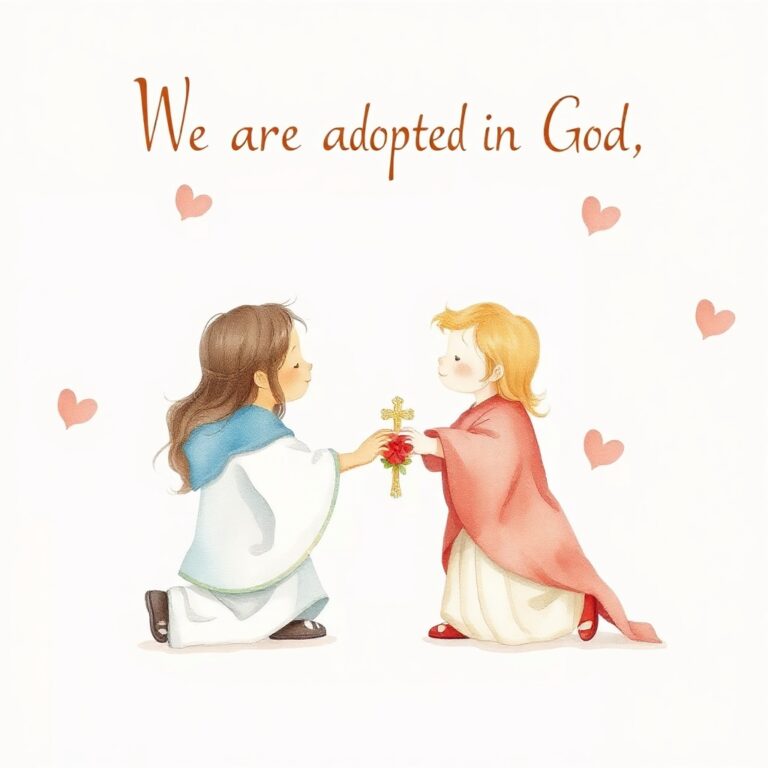
Paul describes this relationship through adoption. Believers do not receive a spirit of slavery that returns them to fear. They receive the Spirit of adoption, by whom they cry out to God as their Father. The language expresses personal access, secure belonging, and family affection, not casual familiarity without reverence.
The Aramaic expression “Abba” is preserved in Paul’s wording, followed by the Greek word for Father. Its presence shows that early Christians could address God with intimate trust while still honoring his authority. Prayer is not presented as a performance that persuades a reluctant deity. It is the speech of children who have been welcomed.
The Spirit also bears witness with the believer’s spirit that he or she is a child of God. This inward testimony should not be reduced to a constant emotional certainty. It may include settled trust, conviction of sin, growing love for God, a desire for holiness, and confidence in the gospel even when emotions fluctuate.
Adoption carries inheritance. If believers are God’s children, they are heirs with Christ. Paul immediately adds that sharing Christ’s glory involves sharing his sufferings. This does not mean suffering earns sonship. Rather, union with Christ includes both present hardship and future glory.
Christian suffering can take many forms: rejection because of faith, persecution, illness, grief, poverty, injustice, or the ordinary pain of living in a fallen creation. Romans 8 does not call every painful event good in itself. It promises that suffering will not have the final word for those who belong to Christ.
Romans 8:18-30 and suffering, creation, and future glory
Paul considers present sufferings in relation to the glory that will be revealed. He does not minimize pain, and he does not place a simplistic timetable on recovery. His comparison is theological: the coming renewal is so great that present affliction, however real, cannot outweigh what God will finally give.
Creation itself is pictured as waiting, groaning, and longing for the revealing of God’s children. This personification expresses the biblical view that the physical world is affected by human sin and awaits restoration. The Christian hope is not escape from creation into a purely spiritual existence. It includes the redemption of the created order.
Paul uses images of bondage to decay and the pains of childbirth. The childbirth image is significant because it suggests that groaning can accompany the arrival of something new. The world’s present condition is not meaningless, but neither is it already healed. Creation waits for the freedom that will come with the glorification of God’s people.
Why Christians groan while they hope
Believers also groan inwardly as they wait for adoption, identified here with the redemption of the body. Paul has already said that Christians are adopted children, so this future adoption is not a contradiction. It refers to the public completion and full manifestation of a relationship already begun.
The body matters in Christian theology. Salvation does not mean abandoning embodiment or treating physical existence as an obstacle to spirituality. God’s future work includes resurrection and transformation. For that reason, Christian hope can honor medical care, grieve death, oppose abuse, and care for creation without pretending that present conditions are permanent.
Hope, by definition, concerns what is not yet seen. It is not wishful optimism or denial of evidence. It is confidence in God’s promise while waiting for its fulfillment. Patient endurance does not mean that pain is pleasant; it means that God’s future is more reliable than present appearances.
The Spirit’s help in prayer
Human weakness appears especially clearly in prayer. Believers do not always know what to pray for or how to express their needs. Paul responds by saying that the Spirit intercedes with inexpressible groanings. The picture is not of a Christian needing to find the perfect words before God will listen.
The Spirit’s intercession assures believers that prayer rests on divine help, not verbal skill. God searches the heart and knows the Spirit’s intention, which accords with God’s will. Even wordless grief, confusion, and exhaustion are not beyond the Spirit’s ministry.
This passage should not be used to pressure every Christian into a particular prayer practice. Paul’s emphasis is comfort: weak prayer is still held within God’s care. When a person cannot organize thoughts or explain suffering, the Spirit is not absent.
God’s purpose from calling to glorification
Romans 8:28 is often quoted as a general promise that every event will feel beneficial. Paul’s meaning is more substantial. God works in all things for the good of those who love him and are called according to his purpose. The “good” is defined by the surrounding verses, especially conformity to the image of God’s Son.
That means God’s purpose is not limited to comfort, success, financial gain, or immediate answers. He may use hardship to deepen dependence, expose false hopes, strengthen compassion, correct sinful patterns, or make believers more like Christ. The verse does not call evil good. It declares that evil cannot prevent God from accomplishing his saving purpose.
Paul follows with a sequence of divine actions: those God foreknew, he predestined to be conformed to Christ’s image; those predestined he called; those called he justified; and those justified he glorified. The final step is spoken of as completed, even though glorification remains future, because God’s purpose is certain.
Christians understand “foreknew” and “predestined” in different ways. Some emphasize God’s sovereign choice of individuals for salvation; others emphasize God’s prior knowledge and his purpose to form a people like Christ. Romans 8 clearly teaches God’s initiative and the security of his saving plan, while Christians continue to discuss how that teaching relates to human responsibility and faith.
Pastoral meaning: Romans 8:28 is not permission to explain every tragedy or tell someone that a loss is easy to understand. It is a promise that God remains at work toward Christlike good, even when the reason for suffering is hidden.
Romans 8:31-39 and the security of God’s love
Paul now turns from explanation to a series of questions designed to strengthen assurance. If God is for his people, no accusation or opposing power can finally overturn his purpose. “God is for us” does not mean believers will avoid conflict. It means no conflict can defeat the God who justifies.
Paul points to God’s giving of his Son as the decisive evidence of divine generosity. If God did not withhold Christ, believers can trust him to provide everything necessary to complete salvation. This does not promise every desired possession or a painless life. It points to the certainty that God will not abandon his redemptive work.
The language of accusation and condemnation returns to the chapter’s opening. No charge can stand against God’s chosen people because God is the one who justifies, and Christ is the one who died, was raised, and intercedes. The believer’s assurance rests on the finished work of Christ and his continuing advocacy, not on a claim of personal perfection.
Paul then asks what can separate believers from Christ’s love. He lists severe experiences such as trouble, hardship, persecution, hunger, exposure, danger, and violence. These conditions are not evidence that Christ has stopped loving his people. They are precisely the circumstances in which his love remains reliable.
“More than conquerors” does not mean that Christians always dominate their circumstances or emerge physically unharmed. It means that suffering cannot separate them from God’s purpose in Christ. The victory is relational and eternal: believers remain held by the love of the one who has already defeated sin and death.
Paul closes with a sweeping list of possible threats, including death and life, spiritual powers, the present and the future, height and depth, and anything else in creation. The list reaches across every dimension of existence. Its force is simple: nothing created can sever the bond between believers and God’s love in Christ Jesus.
This assurance does not encourage carelessness about sin. A person who has received God’s love is called to live faithfully, repent honestly, and love others. Assurance creates courage for obedience because the Christian is no longer obeying to earn a place in God’s family.
How Romans 8 shapes daily Christian practice
Romans 8 provides more than doctrinal information. It gives a framework for ordinary decisions, spiritual discouragement, suffering, prayer, and relationships. Its teaching can be practiced without reducing the chapter to a list of techniques.
When guilt returns: distinguish genuine conviction, which leads toward repentance, from condemnation, which declares that failure has made restoration impossible. For those in Christ, condemnation no longer defines their standing.
When temptation appears: name the desire honestly, bring it into the light, and depend on the Spirit rather than relying only on willpower. Practical boundaries and wise support can be part of Spirit-led obedience.
When suffering continues: lament without pretending that pain is good, while holding to the promise that suffering cannot cancel God’s purpose or love.
When prayer feels impossible: speak simply, sit silently before God, or use the prayers of Scripture. The Spirit helps weak people; eloquence is not a condition of being heard.
When fear dominates: remember adoption. You approach God as a welcomed child, not as a defendant trying to negotiate a verdict.
When the future seems uncertain: place hope in resurrection and God’s completed purpose rather than in the promise of a trouble-free life.
The chapter also gives churches a way to care for one another. A Christian community shaped by Romans 8 will not shame people for weakness, offer shallow explanations for grief, or measure belonging by emotional intensity. It will encourage repentance, provide practical support, pray with those who suffer, and point continually to Christ’s secure love.
Romans 8 therefore moves in a deliberate pattern: no condemnation, new life, adoption, suffering with hope, Spirit-assisted prayer, and inseparable love. Each truth supports the next. The believer is secure not because life is predictable, but because God’s saving work in Christ is stronger than sin, suffering, weakness, and death.
Frequently asked questions
What is the main message of Romans 8?
Romans 8 teaches that those who belong to Christ are no longer under condemnation and are given the Holy Spirit to live in a new way. It also explains that suffering does not cancel God’s purpose, creation awaits renewal, the Spirit helps believers pray, and nothing can separate God’s people from his love in Christ.
Does Romans 8 promise that everything will work out well?
It promises that God works through all circumstances toward the good of those who love him, but the surrounding context defines that good as conformity to Christ and final glorification. The passage does not guarantee comfort, success, or a quick explanation for tragedy. It assures believers that suffering cannot defeat God’s saving purpose.
What does “no condemnation” mean in Romans 8?
“No condemnation” means that God’s final judgment against those united to Christ has been removed because of Christ’s death and resurrection. It does not mean Christians never experience conviction, consequences, or the need for repentance. It means failure no longer determines their standing before God or places them outside his saving mercy.
How does the Holy Spirit help Christians according to Romans 8?
The Spirit gives new spiritual life, redirects believers away from sinful patterns, confirms their adoption into God’s family, and strengthens them to resist sin. The Spirit also helps when they cannot pray clearly. His work is both present and future: he transforms believers now and guarantees the resurrection life God will complete later.






Leave a Reply