Popular gospel songs for worship, comfort, and celebration
Popular gospel songs for worship, comfort, and celebration
You may be choosing music for Sunday worship, building a playlist for a difficult week, or looking for songs that help your family sing together. The best popular gospel songs do more than sound uplifting: they give language to faith, grief, gratitude, hope, and praise.
Popular gospel music includes traditional spirituals, classic choir recordings, contemporary worship, Southern gospel, and gospel-influenced songs from Black church traditions. Some songs are ideal for a full congregation, while others work better during personal prayer or quiet reflection. The recommendations below organize familiar songs by their message and musical setting, so you can choose music that fits the moment.
A useful starting point: Choose the song’s message before its popularity. A familiar chorus can help people participate, but the most meaningful choice usually matches the emotional and spiritual purpose of the gathering.
When you need music that encourages active participation, look for songs with a clear theme, a memorable chorus, and room for repeated singing. These qualities make a song accessible to a congregation, small group, or family, even when not everyone knows every verse.
“Oh Happy Day” — Edwin Hawkins Singers: A joyful gospel classic centered on spiritual transformation and celebration.
“Every Praise” — Hezekiah Walker: An energetic praise song that repeatedly directs attention toward God rather than personal achievement.
“Total Praise” — Richard Smallwood: A powerful worship piece about looking to God for help and strength.
“My Life Is in Your Hands” — Kathy Troccoli: A reassuring song about trusting God through uncertainty and hardship.
“Praise Is What I Do” — William Murphy: A contemporary worship song that presents praise as a deliberate response to life’s circumstances.
“The Battle Is the Lord’s” — Yolanda Adams: A strong choice for listeners seeking confidence, perseverance, and dependence on God.
“Oh Happy Day” often works well at celebratory services because its arrangement builds naturally and invites group participation. “Every Praise” has a similar communal quality, although its repeated structure makes it especially suitable for praise teams and large gatherings.
For a more reflective worship set, “Total Praise” can create space for prayer and contemplation. Its central idea is simple: human strength is limited, but faith provides a place to turn when circumstances feel overwhelming.
Popular gospel songs about comfort and hope
Gospel music has long offered comfort during illness, bereavement, financial pressure, family conflict, and seasons of doubt. Songs in this category do not pretend that pain is easy. Instead, they emphasize God’s presence, endurance, and future hope.
“His Eye Is on the Sparrow” — Mahalia Jackson and many other artists: A classic message of reassurance based on God’s care for vulnerable people.
“Precious Lord, Take My Hand” — Thomas A. Dorsey: A deeply personal prayer for guidance and strength during difficulty.
“Through It All” — Andraé Crouch: A testimony about learning faith through both hardship and blessing.
“I Won’t Complain” — Rev. Paul Jones: A reflective song that acknowledges life’s troubles while expressing gratitude for God’s care.
“His Grace” — Tasha Cobbs Leonard: A contemporary song focused on the sustaining power of divine grace.
“Encourage Yourself” — Donald Lawrence & The Tri-City Singers: A reminder to strengthen your faith when outside circumstances offer little reassurance.
“Precious Lord, Take My Hand” is especially appropriate when a listener needs a prayer rather than a triumphant anthem. Thomas A. Dorsey wrote the song from personal grief, and its direct language has helped generations express dependence on God without hiding their vulnerability.
“Through It All” fits a testimony-centered playlist because it connects experience with spiritual growth. It can be meaningful after a difficult season, but it also works during ordinary reflection because its message includes both hardship and gratitude.
For a grieving listener: Avoid assuming that every song of celebration will feel comforting. Begin with music that acknowledges loss, then move toward hope when the listener is ready.
Classic gospel songs that shaped the tradition
Many songs considered popular today have remained in circulation because they are easy to remember, theologically direct, and adaptable to different musical arrangements. A choir may perform them with piano, a soloist may sing them slowly, or a congregation may turn them into a call-and-response service.
“Amazing Grace” — traditional hymn associated with John Newton: A widely known song about grace, redemption, and spiritual change.
“How Great Thou Art” — traditional hymn: A majestic expression of wonder at creation and God’s greatness.
“What a Friend We Have in Jesus” — Joseph M. Scriven: A hymn encouraging people to bring their concerns to God in prayer.
“Guide Me, O Thou Great Jehovah” — William Williams: A song about dependence on God during a demanding journey.
“Blessed Assurance” — Fanny Crosby: A confident statement of faith and belonging.
“Just a Closer Walk with Thee” — traditional gospel hymn: A prayer for daily closeness, guidance, and faithful living.
These songs may be labeled hymns rather than contemporary gospel, but they belong in many gospel playlists because gospel performance has continually reinterpreted them. A traditional melody can become a slow solo, a choir arrangement, a soulful piano performance, or a full-band worship song.
When selecting a classic, consider the version as much as the title. A recording by Mahalia Jackson may create a different atmosphere from a modern church arrangement, while a bluegrass or Southern gospel treatment may suit a family gathering better than a large choir performance.
Contemporary gospel songs for modern playlists
Contemporary gospel combines traditional Christian themes with R&B, soul, hip-hop, pop, and modern worship production. The songs often feature strong vocal performances, layered harmonies, and lyrics about identity, resilience, grace, and praise.
“You Know My Name” — Tasha Cobbs Leonard featuring Jimi Cravity: A worship song about being known and valued by God.
“Made a Way” — Travis Greene: A testimony of God creating possibilities where circumstances appeared closed.
“Intentional” — Travis Greene: A declaration of trust in God’s purposes, even when events are difficult to understand.
“Won’t He Do It” — Koryn Hawthorne: A lively song celebrating answered prayer and divine faithfulness.
“No Weapon” — Koryn Hawthorne: A confident, gospel-influenced song about protection and perseverance.
“Never Would Have Made It” — Marvin Sapp: A testimony of surviving difficult experiences through faith and support from God.
“I Smile” — Kirk Franklin: An upbeat reminder to choose joy despite pressure and adversity.
“Revolution” — Kirk Franklin: A high-energy gospel track combining praise with a call for personal and communal change.
Modern gospel playlists can serve several purposes. A song such as “Made a Way” may encourage someone facing a practical problem, while “You Know My Name” may speak more directly to loneliness or the need for reassurance. “I Smile” brings a lighter, rhythmic energy that works well for morning listening or a celebratory gathering.
Because contemporary gospel often uses polished studio production, check the recording length and arrangement before adding it to a service. A radio edit may be easier to program, while a live version may provide a stronger congregational atmosphere.
Popular gospel songs for church choirs and group singing
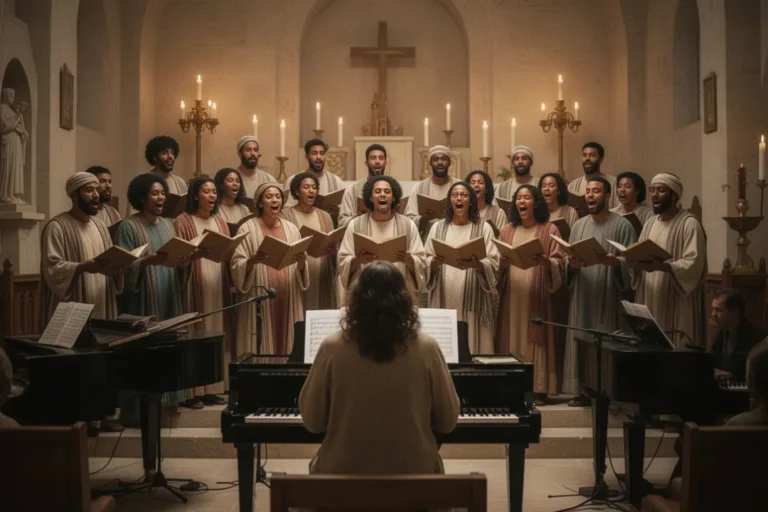
Choir music depends on more than a good melody. The arrangement must give singers manageable parts, provide space for harmonies, and allow a director to shape dynamics. Songs with repeated phrases and strong sectional contrast are often easier to adapt for a choir than highly intricate solo performances.
“Soon and Very Soon” — Andraé Crouch: A hopeful song about the future and the promise of being with God.
“The Storm Is Over” — Kirk Franklin: A dramatic choice for a choir celebrating deliverance after a difficult season.
“Order My Steps” — GMWA Mass Choir: A prayer asking God to direct daily choices and conduct.
“We Fall Down” — Kyle Lee and other artists: A worship song about repentance, restoration, and returning to God.
“I Need You to Survive” — Hezekiah Walker: A communal song emphasizing mutual care and the need for one another.
“I Won’t Complain” — Rev. Paul Jones: A flexible selection that can be performed as a solo, choir feature, or congregational meditation.
“I Need You to Survive” is particularly useful when a service focuses on community, reconciliation, or mutual responsibility. Its central message shifts attention away from isolated spirituality and toward the way people sustain one another.
For a choir rehearsal, teach the main melody before introducing harmony. Ask singers to understand the song’s emotional direction, then work on entrances, vowel matching, dynamics, and the relationship between the soloist and the choir.
Gospel songs for funerals, memorials, and difficult seasons
Music at a funeral or memorial should respect the person who died and the emotions of those who remain. A song can express sorrow, celebrate faith, remember a life, or offer hope without forcing mourners into a particular emotional response.
“Take Me to the King” — Tamela Mann: A heartfelt plea for God’s help when ordinary answers are not enough.
“I Can Only Imagine” — MercyMe: A Christian contemporary song imagining the experience of standing before God.
“Going Up Yonder” — Walter Hawkins: A hopeful gospel song about the promise of a better place.
“Soon and Very Soon” — Andraé Crouch: A hopeful selection that can support a service centered on eternal life.
“His Eye Is on the Sparrow” — traditional gospel standard: A gentle reminder of divine care in a vulnerable moment.
“Stand” — Donnie McClurkin: A song about remaining faithful and strong through adversity.
Ask the family what kind of message they want the music to convey. Some families prefer quiet songs that leave room for grief; others want a choir selection that reflects the person’s joy, church service, or confidence in Christian hope.
Also consider the setting. A song that works beautifully with a live choir may not translate well through a small sound system, and a highly rhythmic recording may feel out of place during a solemn portion of the service. Volume, tempo, and performance style matter as much as the song title.
Gospel songs with a joyful, energetic sound
Gospel music is often associated with celebration because its rhythms and vocal arrangements invite physical and communal response. Upbeat songs can support church anniversaries, family reunions, graduations, community events, and personal playlists built around gratitude.
“Celebrate” — Fred Hammond: A lively expression of gratitude and praise.
“Victory” — Yolanda Adams: A confident song about overcoming obstacles through faith.
“Stomp” — Kirk Franklin featuring Cheryl James: A rhythmic gospel crossover track designed for energetic listening.
“We’re Blessed” — Fred Hammond: A praise song focused on recognizing God’s goodness.
“Shackles (Praise You)” — Mary Mary: A gospel-pop song about freedom and responding to God with praise.
“God’s Got It” — Hezekiah Walker: A direct, celebratory reminder to trust God’s provision.
Upbeat gospel does not have to be reserved for formal worship. It can help create a welcoming atmosphere at a community meal or provide energy during household chores. When the goal is celebration, choose songs with clear rhythmic momentum and a chorus people can join after hearing it once or twice.
Keep the audience in mind, especially when using crossover gospel. Some listeners may prefer a traditional choir sound, while others connect more readily with hip-hop, funk, pop, or contemporary R&B influences. A varied playlist can honor those preferences without losing its gospel focus.
How to choose the right gospel song for your purpose
The same song can feel appropriate in one setting and unsuitable in another. Before pressing play, identify the emotional task the music needs to perform. Are you asking listeners to participate, reflect, grieve, celebrate, or regain confidence?
Name the purpose. Write down one phrase such as “quiet prayer,” “community celebration,” “comfort after loss,” or “encouragement before a challenge.”
Match the tempo. Slow songs create space for reflection, while medium and fast tempos can support movement, celebration, and active singing.
Check the message. Listen to the complete recording and make sure its central theme fits the occasion, not just the chorus you already know.
Consider participation. Choose a familiar refrain for a congregation and a more intricate arrangement for a trained soloist or choir.
Test the performance length. Live versions can be substantially longer than studio recordings because of repeated choruses, spoken ministry, or improvisation.
Plan the transition. Place songs in an order that moves naturally from gathering to reflection, prayer, celebration, or dismissal.
A simple three-song sequence might begin with a welcoming praise song, move into a slower song about trust, and finish with a hopeful declaration. For personal listening, you might arrange songs from emotional honesty toward reassurance rather than beginning with the loudest or most familiar track.
Common mistakes when building a gospel playlist
A strong playlist is not simply a collection of famous titles. It should have a clear purpose, reasonable pacing, and enough variety to keep one message from overwhelming every other part of the listening experience.
Choosing only the most familiar songs: Familiarity helps participation, but adding one or two less common selections can give the playlist depth.
Ignoring emotional context: A triumphant song may not comfort someone who is still processing fresh grief.
Using an unsuitable recording: A long live performance may not fit a timed service, while a heavily produced version may not work for congregational singing.
Overloading the playlist with one tempo: Several fast songs in a row can become tiring, while several slow songs may feel emotionally heavy.
Assuming every gospel song has the same tradition: Gospel, hymnody, spirituals, Southern gospel, contemporary Christian music, and gospel-influenced pop have different histories and sounds.
Forgetting the audience: Consider age, language, church background, cultural tradition, and whether listeners want to sing along.
Playing music too loudly: High volume can make a meaningful lyric difficult to hear and may prevent people from participating.
One of the most common problems is selecting a song because it contains a favorite phrase while overlooking the full message. Listen from beginning to end, read the official song information when available, and ask whether the recording supports the moment you are trying to create.
How gospel music styles differ
Knowing a few broad styles makes it easier to find music that matches your preferences. These categories overlap, and many artists work across several of them, but each style has recognizable musical and cultural qualities.
Traditional gospel: Often features strong lead vocals, choir responses, hand-clapping rhythms, piano, organ, and testimony-centered lyrics.
Contemporary gospel: Uses modern production and may draw from R&B, soul, pop, hip-hop, and worship music.
Southern gospel: Commonly emphasizes close harmony, narrative lyrics, acoustic instruments, and quartet or family-group arrangements.
Urban contemporary gospel: Blends gospel themes with current R&B and hip-hop sounds, often using programmed beats and polished vocal production.
Spirituals and traditional songs: Carry historical roots in African American religious expression and often communicate endurance, freedom, sorrow, or hope through symbolic language.
Gospel-influenced Christian music: Uses gospel vocals, harmony, or rhythm while sometimes belonging to a broader contemporary Christian or crossover category.
These labels can help you search, but they do not determine quality or spiritual value. A traditional hymn may speak more clearly to one listener than a modern worship anthem, while another listener may find encouragement through a gospel song with a contemporary beat.
Artists to explore after you find a favorite song
Following an artist’s catalog is often more useful than relying on a single playlist. If you respond to a particular song, look for live recordings, acoustic versions, choir arrangements, collaborations, and earlier albums by the same performer.
For classic vocal artistry, explore Mahalia Jackson, James Cleveland, and Shirley Caesar. For influential contemporary and choir-centered gospel, consider Kirk Franklin, Fred Hammond, Donnie McClurkin, Hezekiah Walker, and Yolanda Adams.
Listeners who prefer current worship and testimony-driven arrangements may enjoy Tasha Cobbs Leonard, Travis Greene, Tamela Mann, Koryn Hawthorne, Marvin Sapp, and William McDowell. These artists represent different vocal styles and production choices, so one catalog may feel more suitable for personal prayer while another works better for a large gathering.
For Southern gospel and quartet traditions, explore performers such as The Gaither Vocal Band, The Martins, and other established family or quartet groups. Their arrangements often highlight harmony and storytelling rather than the large contemporary band sound found in urban gospel.
Gospel songs are entertainment for some listeners, worship for others, and both for many people. Treating the music with attention means recognizing the traditions behind it, avoiding careless use of songs in solemn settings, and giving performers credit when sharing recordings or playlists.
If you are using a song in a church service, verify that the arrangement suits your congregation and that any required permissions or licensing are handled through the appropriate church or music service. For a public event, confirm that the playback platform and venue allow the intended use of recorded music.
Most of all, listen to the words. Gospel music often works through testimony: the singer names trouble, dependence, failure, grace, or deliverance, then invites the listener into a response. That movement from honesty toward hope is one reason these songs remain meaningful across generations.
A starter playlist of popular gospel songs
If you want a balanced starting point, combine classic, contemporary, reflective, and celebratory selections rather than choosing songs from only one era. The following sequence offers variety while keeping a clear emphasis on trust, praise, and hope.
“His Eye Is on the Sparrow” — a gentle song of reassurance.
“Precious Lord, Take My Hand” — a prayer for guidance and strength.
“Total Praise” — a powerful communal worship selection.
“Never Would Have Made It” — a testimony of endurance and gratitude.
“Made a Way” — a contemporary declaration of God’s faithfulness.
“I Need You to Survive” — a song emphasizing community and mutual care.
“Every Praise” — an energetic choice for active participation.
“Oh Happy Day” — a celebratory gospel classic.
“Soon and Very Soon” — a hopeful song to close with confidence.
You can change the order according to the occasion. For a memorial, begin with the quieter selections. For a celebration, start with a welcoming praise song and reserve the most energetic recording for the point when people are ready to sing, clap, or dance.
The most popular gospel songs continue to endure because they meet people where they are. They give a choir something to proclaim, a grieving person something to hold onto, and a congregation a shared vocabulary for praise. Start with the message you need, choose the sound that fits your setting, and let familiarity support—not replace—the meaning of the music.
Frequently asked questions
What is the most popular gospel song of all time?
No single song holds that title for every audience, because popularity varies by generation, region, and gospel tradition. “Amazing Grace,” “Oh Happy Day,” “His Eye Is on the Sparrow,” and “Precious Lord, Take My Hand” are among the most widely recognized choices. Contemporary listeners may also name songs by Kirk Franklin, Fred Hammond, Tasha Cobbs Leonard, or Hezekiah Walker.
What gospel song is good for encouragement?
“Never Would Have Made It” by Marvin Sapp is a strong choice when you want a testimony about surviving hardship through faith. “Made a Way” by Travis Greene suits listeners facing an obstacle, while “I Smile” by Kirk Franklin offers a more upbeat message about maintaining joy under pressure.
Which gospel songs are easiest for a congregation to sing?
Choose songs with a repeated chorus, a clear melody, and a moderate vocal range. “Every Praise,” “Oh Happy Day,” “Amazing Grace,” and “Soon and Very Soon” are often accessible because listeners can join after hearing the refrain. A worship leader can make unfamiliar songs easier by teaching the chorus before the first verse.
What is the difference between gospel music and contemporary Christian music?
Gospel music has deep roots in African American church traditions and commonly features testimony, call-and-response, soulful vocals, and choir-based arrangements. Contemporary Christian music is a broader category that may use pop, rock, folk, or worship styles. The categories overlap, and some artists create music that comfortably belongs to both traditions.








Leave a Reply