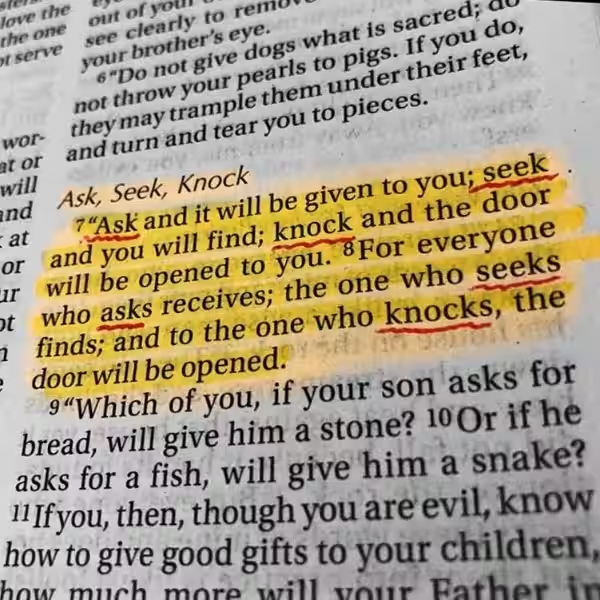
We’ve all been there. A moment of uncertainty, a desire for something more, a prayerful plea for guidance. Asking, in its simplest form, is a fundamental part of the human experience, especially when it comes to matters of faith. Asking within a religious context can be a powerful catalyst for growth, connection, and ultimately, receiving. This journey explores the significance of asking and the profound impact it can have on our spiritual lives.
Faith traditions, from Christianity to Islam to Buddhism, often emphasize the importance of prayer and supplication. These practices are essentially acts of asking – asking for guidance, for strength, for healing, and for connection with a higher power. The act of asking is not passive; it’s an active choice to engage in the divine realm. This engagement, this openness to receive, is critical to experiencing the blessings of faith. Think of it like this: you wouldn’t expect a plant to grow without water. Similarly, you won’t receive what you ask for if you’re not actively involved in the process of asking.
Asking in faith isn’t always a formal prayer. It can be a simple whisper, a heartfelt longing, or a carefully crafted plea. The sincerity and intention behind the ask are key factors. This intention must be honest and well-meaning, with the right motivations in mind. Asking for material things shouldn’t overshadow asking for guidance or help in navigating difficult times. Think of asking for directions when you’re lost. If you only ask for the destination, you miss the value of the journey that can help you to understand how to get there.
Furthermore, different religious traditions have unique ways of asking. Some emphasize meditation and contemplation as a form of communication with the divine, while others prefer structured prayers and rituals. Asking can also be expressed through acts of service, acts of kindness, or through acts of giving. These actions are powerful ways to ask for blessings on yourself and others. For instance, volunteering at a soup kitchen could be considered an act of asking for the strength to serve others, while giving to a charity could be seen as asking for a blessing on those who need it.
The Importance of Trust and Patience in Receiving
Asking isn’t a guarantee of receiving immediately. Sometimes, the answers we seek may take time to arrive. Trusting in the divine plan, even when the path isn’t clear, is essential. It’s crucial to approach the process with a sense of patience, understanding that divine timing is often different from our own. Consider this scenario: you ask a friend to help you move. You might not receive immediate support, but if you trust in your friend’s willingness to help, you will eventually receive the help you need.
It is equally important to focus on the positive impact of asking, even if the response isn’t what you initially thought. This focus can lead to personal growth. Ask yourself, “how can I use this experience to become more open to receiving”?, and reflect on the deeper meaning. If you ask for help with a problem and it doesn’t resolve exactly as you want, perhaps you will discover an even greater problem, or a better way to solve the situation later. This is the core of learning and growing.
The journey of asking and receiving isn’t just about achieving specific goals or desires. It’s about cultivating a deeper relationship with yourself and the divine. It’s about opening yourself up to the possibilities and blessings that come from faith. This openness allows you to see opportunities you may have otherwise missed. When you ask for something, you are effectively opening yourself up to receive more than you could have asked for. An example may be asking for guidance in finding a job. You may not receive the perfect job immediately, but through the process you may obtain valuable information or skills that help you find the perfect opportunity in the future.
Ultimately, the act of asking within a religious context is a testament to hope, faith, and the profound connection between humanity and the divine. It’s a journey of growth, self-discovery, and the profound realization that when we ask, we are often blessed in ways far greater than we could have imagined.
Frequently Asked Questions
What does “ask and you will be given” mean?
The phrase “ask and you will be given” is a common saying found in various religious texts, particularly in Christianity. It emphasizes the importance of prayer and faith in receiving blessings from a higher power. It doesn’t guarantee material gain, but rather suggests that by seeking God’s will and grace, one can find the strength and support needed to overcome challenges and live a fulfilling life.
Is “ask and you will be given” a promise?
Different interpretations exist. Some see it as a promise of material fulfillment, while others view it as more of a principle of seeking guidance and support from a divine source. The focus is often on the act of asking itself, rather than on the guaranteed outcome.
The concept encompasses a wide range of requests. From spiritual guidance and strength to material needs and help in difficult circumstances, the phrase suggests that faith and prayer can be a powerful tool in seeking solutions and answers. However, it’s important to consider the source’s will and that the answer may not always be what is expected or immediately apparent.
Does “ask and you will be given” apply to everyone?
This concept is generally viewed as applicable to all who seek it with sincerity and faith. The specific path and manifestation of receiving the answer may vary based on individual circumstances, but the core principle of faith and seeking guidance remains.
If I ask and don’t receive, does it mean I didn’t ask correctly?
Not necessarily. The will of a divine source is often beyond human comprehension. Sometimes, the answer may not be immediately apparent, or the situation may require a different approach. In these cases, faith and perseverance remain crucial.