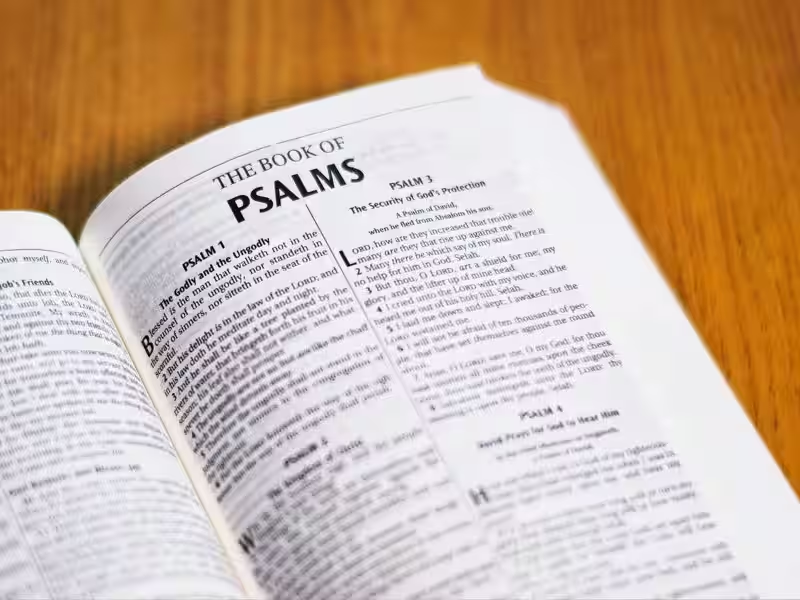
Commentary on Psalm: Discovering Hope for Worship and Daily Life
Quick Answer: A commentary on psalm helps you see how the Psalms give words to praise, repentance, fear, and trust. Rather than treating each psalm as isolated poetry, it guides you to read Israel’s worship as a living prayer for God’s people today—so your heart learns honesty with God and hope rooted in His character.
Historical Context: Israel’s Songbook as Prayer
The Book of Psalms is the worship “hymnal” of ancient Israel—used in temple seasons, festivals, and personal devotion. Many psalms were associated with specific settings: court life, pilgrimage to Jerusalem, times of national crisis, or seasons of private lament. Some psalms are linked to David; others come from the sons of Korah, Asaph, or remain anonymous. Yet across these varied authorship and circumstances, the Psalms share a consistent spiritual rhythm: God is addressed directly, faith is tested honestly, and worship becomes a response to God’s faithfulness.
Reading a commentary on psalm is especially helpful because Hebrew poetry often works with parallelism rather than modern prose logic. The psalmist may repeat themes to deepen trust—moving from distress toward clarity, from complaint toward confession, from grief toward worship. When you consider the historical and liturgical setting, you’re more likely to notice why certain images appear again and again: refuge, kingship, Zion, deliverance, and God’s steadfast love. The Psalms are not merely “about” emotions; they are emotional language shaped for faith.
Original Language Note: Key Hebrew Ideas Behind the Music
Most of the Psalms are written in Biblical Hebrew, and their language often carries theological weight beyond a simple English emotion word. For example, the Hebrew idea behind “mercy” and “steadfast love” (commonly tied to chesed) emphasizes covenant faithfulness—God’s loyal care that does not vanish when circumstances worsen. Another important concept is “salvation” language, where deliverance is not only future rescue but present help from God.
Psalms also use terms like “trust” and “refuge,” which portray God not as a distant idea but a place of safety. Because poetic Hebrew frequently employs parallel lines, one phrase will “echo” another to reinforce meaning. A good devotional commentary on Psalms will therefore pay attention to repetition, parallelism, and the way the psalmist transitions between speaking about God and speaking to God.
A psalm isn’t a dashboard of emotions; it’s a journey. Many psalms begin with raw speech—complaint, fear, confusion—and then move toward an encounter with God’s character. That movement is one reason a study guide to the Psalms can change how you pray. Instead of pretending you feel nothing, you learn to bring the truth of your heart into God’s presence.
As you read, look for “turning points.” Some psalms include a shift from “I” and “me” toward God’s name, God’s works, or God’s promises. Others shift from description to proclamation: what happened to the psalmist becomes a platform for worship. This doesn’t mean suffering is minimized. It means suffering is addressed in the light of God.
Also notice the Psalms’ covenant mindset. The psalmist often remembers God’s past faithfulness—deliverance in history becomes fuel for present trust. A biblical insights from the Psalms approach will highlight how repetition is used to strengthen hope: the same theme appears again with slight variation, teaching your heart to stay engaged with God rather than spiral in despair.
Finally, remember that the Psalms were sung. Rhythm, refrains, and repeated phrases are not accidental—they help God’s people rehearse truth until it becomes their language again and again.
2) Major Themes: Lament, Praise, Wisdom, and the Hope of God’s Reign
The Psalms cover nearly the whole range of spiritual life. Lament psalms teach honest dependence. When you pray them, you’re learning how to tell the truth to God while refusing to give your fear the final word. Praise psalms teach gratitude and worship-centered thinking: circumstances still matter, but God’s goodness is bigger than the moment.
Kingship and hope run through many psalms as well. God is described as King, and the stability of that kingship becomes a refuge for those who feel fragile. Even when enemies appear strong, the psalmist insists that God’s authority is ultimate. This is why a commentary on psalm often highlights “God-centered perspective.” The psalmist may describe threats vividly, but the ultimate focus is God’s holiness, justice, and faithfulness.
Wisdom themes also appear frequently. The Psalms contrast the righteous path with the destructive way of the wicked, not merely as moral rules but as spiritual reality—life built on God holds, while life built on self-reliance collapses. And because the Psalms are prayerful, wisdom is not cold instruction; it’s guidance from the throne of grace.
As you read, you may notice that some psalms lean into repentance and cleansing, while others emphasize perseverance under pressure. Together they show that God is concerned with both your inner life and your outward situation. In other words, the Psalms don’t separate faith from daily struggle—they train faith for daily struggle.
3) Practical Reading Habits: Make the Psalms Your Own Prayer Library
To benefit from devotional commentary on Psalms, adopt a simple practice: read a psalm, identify its main movement, then pray it back to God. Start by asking, “What problem is being faced?” Lament psalms often name distress openly. Praise psalms often name God’s attributes and deeds. Wisdom psalms often guide your choices.
Next, ask, “What does the psalm teach me about God?” Notice descriptors: refuge, shepherd, strength, deliverer, judge, steadfast love. These are not decoration; they are theological anchors. When you pray with these anchors, your emotions become fuel for trust rather than a substitute for trust.
Then, ask, “How does the psalm tell me to respond?” Sometimes the response is pleading (“How long?”), sometimes confessing, sometimes rehearsing gratitude, and sometimes waiting. The Psalms are honest enough to include anger and tears, yet stable enough to bring those experiences into worship.
A final habit: keep context in view. Many psalms mention enemies, sickness, betrayal, national conflict, or the integrity of worship. A commentary on psalm helps you avoid flattening everything into vague spirituality. Instead, it reminds you that believers in every season—whether calm or crisis—learn to speak to God with clarity.
As you do this repeatedly, the Psalms become a prayer library in your own voice. Over time, you won’t just read scripture—you will learn to pray scripture.
From the Psalms to Your Week: Pray With Honesty and Hope
Let the Psalms shape how you respond to pressure. When you feel overwhelmed, choose a lament psalm and pray it as a template for honesty—name what you’re afraid of, then let the psalm’s turn toward God’s character correct your perspective. When you feel grateful, choose a praise psalm and practice gratitude with specifics: thank God for what He has done and who He is.
When you’re tempted to despair, rehearse the psalmist’s language of refuge and salvation. This is not denial; it is training. Write one phrase that expresses God’s character and read it before stressful conversations, late-night worry, or moments when temptation tries to replace trust.
Finally, commit to worship-shaped thinking. The Psalms consistently bring worship into the foreground. If you want your prayers to become steadier, begin spending a few minutes each day reading scripture aloud, then turning it into prayer. That simple rhythm—read, reflect, pray—will make the Psalms feel less like old poetry and more like a living voice.
God is described as refuge and strength, an ever-present help in trouble.
Psalm 27:1
Though surrounded by danger, the psalmist trusts in the Lord as light and salvation.
Psalm 103:8
The Lord’s mercy and patience are highlighted as the basis for hope.
Psalm 119:105
God’s word is presented as a lamp and guidance for life’s paths.
James 5:13
Believers are encouraged to pray and sing, echoing the Psalms’ spirit of worship.
Frequently Asked Questions
Is it better to read the Psalms in order, or pick one that matches my situation?
Both are helpful. Reading in order builds a broad grasp of the whole collection. Picking a psalm for your situation is often more immediately devotional, because lament and praise psalms meet you where you are. A good psalm commentary can explain how the psalm’s movement works so you pray with clarity.
How do I understand poetic repetition without getting stuck in “literary fluff”?
In Hebrew poetry, repetition often strengthens a truth rather than repeating for no reason. Look for what changes between lines—tone, direction, or emphasis. Commentary-style notes can show the parallelism, helping you see how each echo line deepens faith.
Do the Psalms teach me to be honest about anger and fear?
Yes. Many psalms give permission to bring real fear, complaint, and grief into God’s presence. Yet they also model how to steer those feelings toward trust in God’s character. A devotional commentary on Psalms can guide you to pray those emotions without letting them become the final word.
How can I use a study guide to the Psalms without missing the heart of worship?
Use study notes to understand context and themes, then return quickly to prayer. After reading, identify one truth about God and one next step for your response. Keep worship at the center: the goal isn’t only information, but God-honoring dialogue.
A Short Prayer
Lord God, teach us to pray with honesty and hope. When we are troubled, give us courage to bring our fears to You. When we are tempted to despair, renew our trust in Your steadfast love. Help us read Your Word with understanding, and turn what we learn into worship. Make the Psalms a living voice in our hearts, until praise becomes our first response. In Jesus’ name, Amen.
Key Takeaway: The Psalms train your heart to speak honestly to God and to anchor every emotion in His steadfast love.