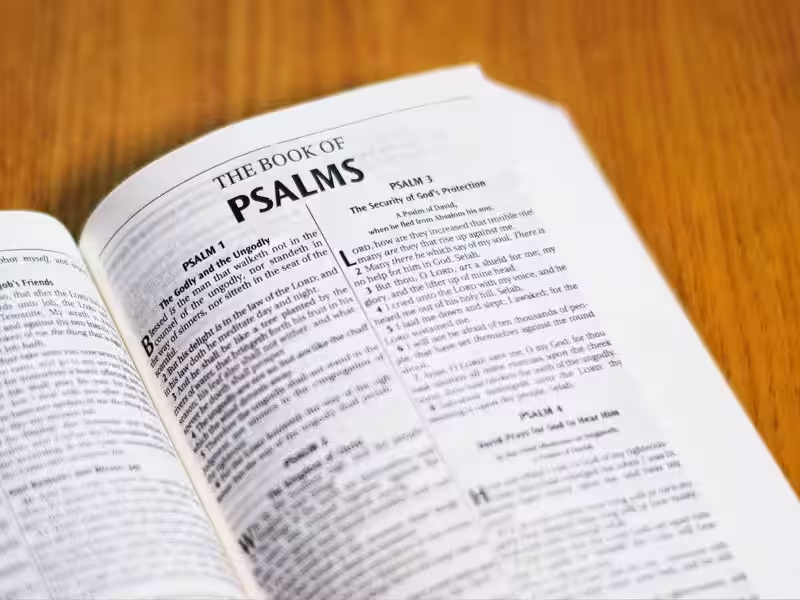
Verse by Verse Study of Psalms: Worship, Lament, and Hope
Quick Answer: A verse by verse study of psalms helps you slow down, see how each line points to God, and feel the progression from fear to faith. The Psalms move through worship, confession, lament, and praise—so you learn how to speak honestly to the Lord and trust His promises.
Historical setting: Israel’s worship songbook
The Psalms were shaped inside the worship life of Israel—sung in the temple, read in seasons of need, and used as prayers when the heart was overwhelmed. Many psalms echo covenant faithfulness: God is the King who hears, judges, and restores. Others sound like honest cries from individuals or the community when enemies seem stronger or when life is falling apart.
In many cases, the “I” of the psalm may reflect a specific person (like David) or a representative voice for God’s people. That doesn’t reduce the Psalms to private emotion; it teaches that worship includes lament and that prayer can be both personal and communal.
A verse-by-verse approach is especially helpful because the Psalms often move in stages: an opening address to God, a statement of trouble or temptation, a declaration of trust, and a concluding call to praise. Reading line by line helps you notice how themes develop—how the poet doesn’t simply describe pain, but turns pain into prayer and prayer into renewed hope.
Hebrew terms that shape how we read
The Psalms were written primarily in Hebrew. Two concepts matter often in a verse-by-verse study. First, the word translated “praise” and its related ideas are connected to acknowledging God’s worth, not merely expressing feelings. Second, lament language uses terms that emphasize speaking out one’s distress before God—petition with an expectation that God hears.
Another recurring idea is “steadfast love” (often rendered differently in English translations). This points to covenant mercy—God’s faithful character—rather than a temporary mood. Finally, the Psalms frequently use verbs in ways that reflect ongoing action: trusting, waiting, calling, remembering, and singing. Even without tracing every root precisely, you can read with the awareness that the Hebrew is not just poetic imagery—it’s structured prayer.
When you begin a verse-by-verse commentary on the Psalms, look for movement. Many psalms start with an address to God—“O LORD” or a similar form—then describe the situation (fear, guilt, oppression, or doubt). As you progress through the lines, the poet often shifts from describing circumstances to declaring truths about God.
That shift is spiritual training. A good verse by verse study of psalms doesn’t rush past the raw lines. Lament is not unbelief; it is worship that tells the truth. When the psalmist asks for help, he is not pretending the storm is gone—he is taking the storm to the Lord. Then, as faith rises, the words become more declarative: God is worthy, God is faithful, and God will act.
Practical reading tip: underline each time the psalm moves from “what’s happening to me” to “who God is.” Notice whether the psalm describes waiting, remembering, confessing, or praising. Your goal isn’t only to understand meaning historically, but to recognize how God’s Word forms your inner life.
2) Notice the “turning points” inside a single psalm
Often a single psalm contains a deliberate pivot. You may see it when the psalmist moves from complaint to confidence, or from focusing on enemies to focusing on God’s steadfast love. Verse by verse study methods help you identify those turning points, because each verse carries weight.
For example, some verses function like spiritual anchors: “Remember…” moments where the psalmist calls his own soul back to God’s character. Other verses become “weapons of worship”—they remind the reader that prayer is not only asking but also affirming. Even commands like “trust” or “hope” are not cold instructions; in context they are invitations to realign your thoughts with God.
Also watch for repetition. The Psalms often repeat phrases to teach memorization and endurance. Repetition trains the heart during prolonged trials. In other words, the psalm is not merely describing how to feel; it’s shaping how to keep trusting.
As you read, ask: What is the psalm doing at this exact verse? Is it confessing, pleading, teaching, encouraging, or praising? That question will turn your study the Psalms line by line into a living conversation with God.
While the Psalms belong to Israel’s worship, their themes point forward to the Messiah and to God’s ultimate salvation. In a verse-focused devotional approach, you can see how kingship language, righteousness, refuge, and deliverance converge.
Many psalms speak of God as refuge—someone you can run to when fear rises. Others emphasize God’s holiness and the need for purification. Still others portray a righteous sufferer whose pain is real, but whose trust is anchored in God’s justice. Those threads prepare the reader for the greater King who perfectly fulfills God’s purpose.
A helpful method: group verses by theme inside the psalm you’re studying. For example, if a psalm includes both lament and praise, label them: (1) problem description, (2) appeal to God, (3) statement of faith, (4) outcome hope. Then connect how each theme develops.
This doesn’t turn the Psalms into a puzzle to decode; it makes them a handbook for prayer. When you learn to say what the psalm says—honestly, reverently, and expectantly—you begin to pray like a disciple.
Apply it this week: pray each verse back to God
Choose one psalm (or one section of a longer psalm) and practice a simple rhythm: read one verse, pause, and pray it. Ask three questions as you go. (1) What does this verse reveal about God? (2) What does it reveal about my heart—my fear, anger, guilt, or hope? (3) What response does the verse call for—trust, confession, praise, patience?
Next, write a short “verse prayer” in your own words using the same direction as the psalm: if the verse pleads, plead; if it praises, praise; if it waits, wait. Finally, revisit the psalm later that day and notice whether your emotions changed. The goal isn’t pretending you feel better instantly—it’s learning to take your real life into God’s presence.
If you want to grow deeper, journal a “turning point” sentence for the psalm: the exact moment where faith rises. That single line will become a reminder when you face the next trial.
Related Bible Passages
Psalm 34:18
God is near to the brokenhearted, which supports the Psalms’ honest lament-to-hope movement.
God is refuge and strength, helping you read the Psalms as prayers grounded in God’s character.
James 5:13
The Bible connects suffering and singing praise, echoing the Psalms’ blend of prayer and worship.
Ephesians 6:18
Pray “always” with persistence, reflecting how the Psalms teach ongoing conversation with God.
Frequently Asked Questions
Is a verse by verse study of psalms only for people who like deep theology?
No. While it benefits serious Bible students, it also helps ordinary believers. Reading each verse slowly shows you how the psalmist prays—how to confess, ask, remember God’s character, and praise. The study becomes devotional because every line is meant to lead you into prayer.
How do I avoid getting stuck in emotional passages or dark lament psalms?
Don’t skip them—read them carefully and track the psalm’s movement. Notice where the psalm turns toward trust, remembrance, or hope. If you’re overwhelmed, focus on what the verse says about God’s nearness and faithfulness, and pray that back to Him.
What’s the best way to do a verse-by-verse Psalms study in 20–30 minutes?
Read one psalm slowly. Cover 6–10 verses, one paragraph at a time. For each verse, write one sentence: “God is…,” “I feel…,” and “I will….” End by turning the last verse into a short prayer. Repeat the pattern later in the week with another section.
How can I connect the Psalms to Christ without forcing every verse?
Look for themes the New Testament affirms: God as King, deliverance, refuge, righteousness, and the hope of vindication. Then read the psalm in its own context first, and let Christ connection be the fulfillment of what God was preparing. Keep the focus on worship and trust.
A Short Prayer
Lord, teach me to pray the way the Psalms pray. Help me tell You the truth about my fears, my sin, and my needs without hiding behind words. Give me eyes to see Your steadfast love in every verse, and a heart to turn from complaint to trust. As I study line by line, shape me into a worshiper who remains faithful through waiting, and praises You in every season. Amen.
Key Takeaway: A verse by verse study of psalms trains your heart to move from honest prayer to steadfast trust in God’s character.