Archbishop of Canterbury: role, history, and current holder
Archbishop of Canterbury: role, history, and current holder
The Archbishop of Canterbury is the senior bishop of the Church of England and the symbolic spiritual leader of the worldwide Anglican Communion.
As of 2026, Sarah Mullally holds the office. She is the first woman to become Archbishop of Canterbury, succeeding Justin Welby, who resigned in late 2024. The position combines responsibilities in church leadership, public life, international Anglican relationships, and the historic administration of the Canterbury region.
What the Archbishop of Canterbury is responsible for
The Archbishop of Canterbury has several overlapping roles, which can make the office difficult to describe in a single sentence. At its heart, the archbishop is a bishop in the Church of England, responsible for the Diocese of Canterbury and for leading the Province of Canterbury with its bishops and dioceses.
The office also carries a wider representative role. The archbishop is recognized as the spiritual leader of the Anglican Communion, a worldwide family of autonomous churches with historical and theological connections to the Church of England. This does not make the archbishop a pope or a global executive with legal authority over every Anglican church.
The archbishop’s main responsibilities include:
Leading the Diocese of Canterbury, which covers parts of Kent in southeastern England.
Serving as metropolitan bishop for the Province of Canterbury, working with the bishops of its dioceses.
Presiding at major national services, including coronations and other significant occasions when invited.
Representing the Church of England in public, political, interfaith, and international settings.
Chairing or convening Anglican Communion meetings, especially those connected with the worldwide instruments of communion.
Speaking on moral and social questions when the archbishop believes the church should contribute to public debate.
Within England, the Archbishop of Canterbury works alongside the Archbishop of York, who is the other senior archbishop of the Church of England. Canterbury is the senior see, but York has important responsibilities in the northern province and is not simply a deputy.
Authority matters: The Archbishop of Canterbury can influence, convene, encourage, and represent, but cannot unilaterally make rules for every Anglican church around the world.
How Canterbury relates to the Church of England and Anglican Communion
The Church of England is the established church in England, while the Anglican Communion is a global fellowship of separate churches. Those two facts explain both the importance and the limits of the archbishop’s position.
The Church of England has its own governing structures. Its bishops, clergy, and lay members participate in the General Synod, which debates and approves church legislation and policies. The archbishop is a leading voice within those structures, but decisions are not made by the archbishop alone.
The Church of England is organized into two provinces: Canterbury and York. The Archbishop of Canterbury is the metropolitan of the southern province, which includes most English dioceses. A metropolitan bishop has oversight and coordination responsibilities, although each diocese has its own diocesan bishop and local institutions.
The Anglican Communion includes churches and provinces across Africa, Asia, the Americas, Europe, Oceania, and other regions. These churches are connected by shared history, the Book of Common Prayer tradition, episcopal leadership, and ongoing relationships. They are not branches managed from Lambeth Palace.
The Archbishop of Canterbury has a special place in this communion because of the ancient see of Canterbury and the archbishop’s role in bringing Anglicans together. The office usually serves as a focus of unity, especially when churches disagree about theology, ethics, social policy, or church governance.
Several international bodies support that work:
The Lambeth Conference: a gathering of Anglican bishops from around the world, normally held at intervals rather than every year.
The Anglican Consultative Council: a representative body involving bishops, clergy, and lay members from the communion’s provinces.
The Primates’ Meeting: a forum for the senior bishops, or primates, of the Anglican churches and provinces.
The Anglican Communion Office: an administrative center that supports international coordination and communication.
The archbishop generally chairs or convenes some of these forums, but participation does not erase the independence of member churches. A decision made by the Church of England, for example, does not automatically become binding on the Episcopal Church in the United States, the Anglican Church of Nigeria, or any other province.
Why Canterbury became the senior Anglican see
The history of the office reaches back to the arrival of Augustine of Canterbury in England at the end of the sixth century. Pope Gregory the Great sent Augustine to lead a Christian mission among the Anglo-Saxon kingdoms, and Augustine became the first Archbishop of Canterbury.
Canterbury’s importance grew because it became a major center of English Christianity. The archbishops served as senior church leaders, advisers to monarchs, and participants in the political and religious life of the kingdom. Their influence changed over time, but the office remained one of the most important in English church history.
Before the Reformation, Canterbury was part of the Roman Catholic Church and its archbishops recognized the authority of the pope. The English Reformation in the sixteenth century changed that relationship. Under the settlement that created the Church of England as a separate ecclesial body, the Archbishop of Canterbury became the senior bishop of the established English church rather than a Catholic archbishop in communion with Rome.
That history still shapes the office today. The archbishop is associated with:
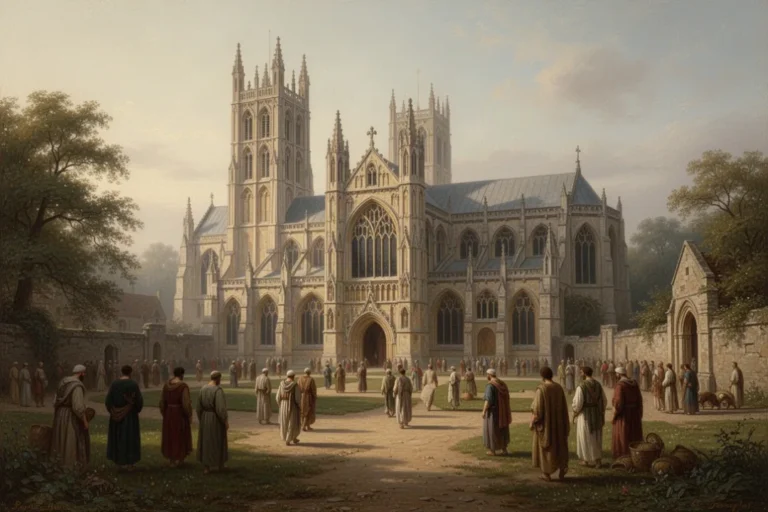
Canterbury Cathedral, the historic cathedral church of the see.
Lambeth Palace in London, the archbishop’s principal official residence and administrative center.
The Church of England’s national life, including relations with Parliament and the Crown.
Anglicanism’s international identity, which developed as English churches and missionary communities formed churches in other countries.
The office is therefore both ancient and modern. Its historical authority gives Canterbury symbolic weight, while its contemporary work depends on consultation, persuasion, public communication, and cooperation with other church leaders.
How a new Archbishop of Canterbury is chosen
The appointment process is more involved than a simple selection by the monarch or the prime minister. A Crown Nominations Commission, made up of representatives connected with the Church of England, considers candidates and seeks to identify the person best suited to lead the church at that point in its life.
The commission normally considers a candidate’s theological judgment, pastoral experience, leadership skills, public credibility, ability to work across disagreement, and understanding of the Church of England’s national and international responsibilities. The process also includes consultation and prayer, reflecting the church’s belief that the appointment is a spiritual as well as an administrative decision.
Once the commission reaches a decision, the nomination proceeds through the constitutional process. The prime minister advises the monarch, and the monarch formally appoints the new archbishop. The incoming archbishop then goes through the required legal and ecclesiastical stages before taking full office.
In practical terms, the process can be described like this:
A vacancy occurs, because an archbishop retires, resigns, or dies.
The Crown Nominations Commission organizes its work and consults people connected with the church and the vacant see.
Candidates are assessed for their spiritual, pastoral, organizational, and public leadership.
A preferred candidate is chosen through the commission’s formal process.
The nomination is submitted through the constitutional channels involving the prime minister and monarch.
The appointment is confirmed and the new archbishop takes office through the relevant church and legal ceremonies.
The process is not the same as a popular election. Members of the public do not vote directly, and ordinary parishioners do not choose among candidates in a nationwide ballot. The commission’s work is intended to weigh the needs of the church while preserving the constitutional relationship between the Church of England and the state.
Sarah Mullally and the modern expectations of the office
Sarah Mullally became the first woman to serve as Archbishop of Canterbury. Before taking the role, she was Bishop of London and had earlier worked as a nurse and held senior leadership in the nursing profession. Her background gives her experience in both church ministry and large public institutions.
Her appointment reflects the changing shape of the Church of England. Women have served as priests and bishops in the church for years, and the appointment of a woman to Canterbury represents a further development in that process. It also brings renewed attention to questions of authority, tradition, representation, and the future direction of Anglicanism.
The archbishop’s workload is unusually broad. A typical period in office may involve diocesan matters, meetings with bishops, preparation for international gatherings, public statements, pastoral visits, interfaith conversations, and engagement with government or civic leaders.
Modern archbishops are also expected to respond to difficult public issues. These can include poverty, migration, war, climate change, racial injustice, religious freedom, safeguarding, family life, and disagreements within the Anglican Communion. The archbishop must often speak carefully because different Anglican provinces hold significantly different views.
Public visibility can create a tension at the center of the role. People may expect a clear national voice on every major issue, while the archbishop must also preserve relationships among churches and communities that do not agree. Effective leadership often depends less on issuing commands than on listening, mediating, and building enough trust for people to continue working together.
For readers comparing Christian leaders: The Archbishop of Canterbury is not the Anglican equivalent of the pope. Anglican churches are self-governing, and the archbishop’s international influence is primarily relational rather than juridical.
Where the Archbishop of Canterbury has influence—and where it stops
The archbishop has substantial influence in the Church of England, but the office has defined limits. The archbishop cannot personally rewrite church law, appoint every bishop, settle every theological dispute, or direct the worship and finances of individual parishes.
Authority is distributed among bishops, dioceses, cathedrals, the General Synod, church commissioners, clergy, and lay representatives. The archbishop leads within that system and can shape its priorities, but major changes normally require the proper constitutional and legislative processes.
The international limit is even more significant. The Anglican Communion is not a single centralized denomination with one worldwide headquarters. Each province usually has its own primate, governing structures, legal system, doctrine in practice, and relationship with its national context.
That means the Archbishop of Canterbury can:
Invite leaders to meet and create space for difficult conversations.
Represent Anglican concerns in ecumenical and international forums.
Encourage common initiatives in areas such as reconciliation, education, mission, and humanitarian work.
Offer public moral leadership on issues that affect communities in England and beyond.
Help preserve relationships when provinces are divided.
But the archbishop generally cannot:
Issue binding orders to every Anglican bishop worldwide.
Remove a primate from another autonomous province at will.
Force every church to adopt the Church of England’s policies or liturgical practices.
Act as the legal head of all Anglican churches.
The office’s influence is strongest when it brings together people who need one another but cannot easily agree. Canterbury’s historical status, the archbishop’s personal relationships, and the ability to convene global leaders all matter. So do humility and patience, because the worldwide communion includes many cultures, political settings, and theological traditions.
For that reason, understanding the Archbishop of Canterbury requires more than asking who currently holds the title. The office is simultaneously a senior English bishopric, a national public role, a historic Christian see, and a coordinating center for a worldwide family of independent churches.
Frequently asked questions
Is the Archbishop of Canterbury the head of the Anglican Church?
Not in the same centralized sense that the pope leads the Roman Catholic Church. The archbishop is the senior bishop of the Church of England and the first among equals among Anglican primates. The office provides leadership and a focus for unity, but Anglican provinces govern themselves and are not legally controlled by Canterbury.
Where does the Archbishop of Canterbury live?
Lambeth Palace in London is the archbishop’s principal official residence and workplace. Canterbury Cathedral is the historic cathedral of the archbishop’s see and the setting for important services and ceremonies. The archbishop also travels extensively for diocesan duties, national events, and international Anglican meetings.
What is the difference between Canterbury and York?
Canterbury is the senior archiepiscopal see and leads the southern Province of Canterbury. York leads the northern Province of York. The two archbishops share senior leadership in the Church of England, but they oversee different provinces and have separate diocesan and metropolitan responsibilities.
Can the Archbishop of Canterbury remove Anglican bishops in other countries?
Generally, no. Churches in the Anglican Communion are autonomous and have their own rules for choosing, disciplining, or removing bishops. The Archbishop of Canterbury may facilitate discussion, express concern, or help leaders seek agreement, but does not possess a worldwide legal power to dismiss bishops in other provinces.








Leave a Reply