Prophets of the Bible: Who They Were and What They Taught
Prophets of the Bible: Who They Were and What They Taught
The prophets of the Bible were people appointed to speak God’s message to a particular audience and situation. They warned about injustice and unfaithfulness, called people back to worship, encouraged them during crises, and sometimes announced future events.
They were not simply fortune-tellers. Most biblical prophecy addressed the present before it addressed the future. Prophets interpreted events through God’s covenant, challenged kings and communities, and offered hope that God would remain faithful. The Bible includes prophets such as Isaiah, Jeremiah, Ezekiel, Daniel, Elijah, and Elisha, along with women such as Miriam, Deborah, Huldah, and Anna.
A prophet was a messenger who spoke on God’s behalf. The Hebrew Bible often describes prophets as people who received a divine message and delivered it through speech, writing, symbolic actions, or public confrontation. In the New Testament, prophecy also appears as a spiritual gift used to strengthen, encourage, and guide the church.
Prophets served different roles depending on their time and audience. Moses acted as a foundational prophet who communicated God’s law to Israel. Samuel helped guide Israel through the transition from judges to kings. Nathan confronted King David after David’s abuse of power, while Elijah challenged the worship of Baal under King Ahab.
Their messages often included several connected themes:
Faithfulness to God: Prophets called Israel away from idolatry and toward loyal worship.
Justice for vulnerable people: They condemned exploitation of the poor, widows, orphans, immigrants, and others without social power.
Warning about consequences: They explained that persistent rebellion would bring judgment, exile, or national disaster.
Hope and restoration: They promised that repentance, renewal, and God’s mercy remained possible.
God’s authority over nations: Prophets announced that foreign empires were also accountable to divine justice.
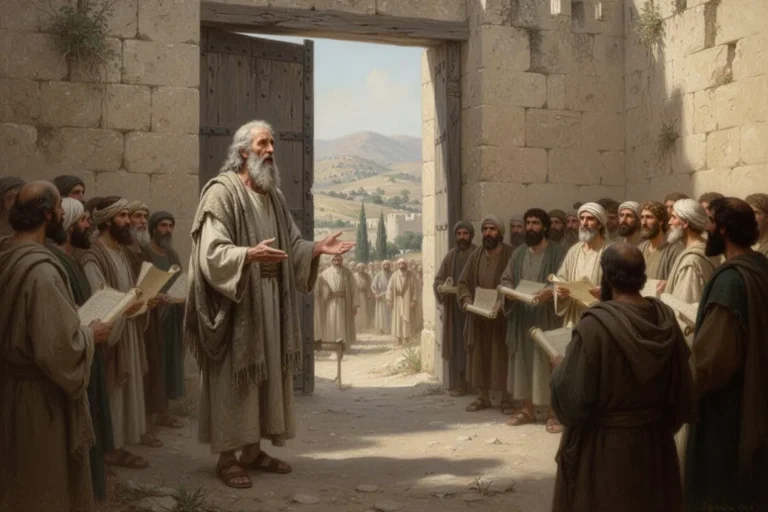
Prophetic speech could be dramatic, but its purpose was not performance. Isaiah used children’s names as signs, Jeremiah wore a yoke to symbolize submission to Babylon, and Ezekiel acted out messages about Jerusalem’s coming siege. These actions made an abstract warning visible to people who might ignore ordinary speeches.
A useful distinction: Biblical prophecy is not only prediction. It is primarily a message from God that explains what is happening, exposes wrongdoing, and calls people toward faithful action.
Prophets also spoke to individuals. Nathan corrected David, Gad advised him during a national crisis, and Huldah confirmed the significance of a recovered book of the law during King Josiah’s reforms. Their work could involve private counsel, but many prophetic messages were delivered publicly because the issue affected an entire community.
Major prophets and minor prophets in the Old Testament
The terms Major Prophets and Minor Prophets describe the length of the biblical books, not the importance or spiritual status of the people who wrote them. The Major Prophets are generally Isaiah, Jeremiah, Ezekiel, and Daniel, with Lamentations often associated with Jeremiah. The Minor Prophets are the twelve shorter books from Hosea through Malachi.
A longer book does not necessarily contain a more important prophet. Amos, for example, has a short book but delivers an exceptionally forceful message about economic injustice and empty religious ritual. Micah combines judgment with a call to practice justice, love mercy, and walk humbly with God. The shorter books can address major theological and historical questions in only a few chapters.
The Major Prophets and their central concerns
Isaiah: Isaiah addresses Judah’s sin, international conflict, judgment, comfort, and future restoration. His book includes messages about a faithful remnant, a suffering servant, God’s holiness, and the renewal of creation.
Jeremiah: Jeremiah warned Judah before and during the Babylonian conquest of Jerusalem. He criticized false confidence in the temple, mourned national destruction, and proclaimed hope through a future covenant written on people’s hearts.
Ezekiel: Ezekiel prophesied among Judean exiles in Babylon. His visions emphasize God’s holiness, the reasons for judgment, personal responsibility, and the promise that God would restore his people and give them renewed spiritual life.
Daniel: Daniel combines stories of faithfulness in foreign courts with symbolic visions about kingdoms and God’s ultimate rule. The book encourages people living under imperial power to remain loyal to God.
These books span periods before, during, and after the Babylonian exile. Their settings matter because prophetic messages responded to real political pressures: Assyrian expansion, the Babylonian destruction of Jerusalem, Persian rule, and the difficult work of rebuilding the community afterward.
The twelve Minor Prophets
The twelve Minor Prophets are Hosea, Joel, Amos, Obadiah, Jonah, Micah, Nahum, Habakkuk, Zephaniah, Haggai, Zechariah, and Malachi. They are sometimes called the Twelve because they form a recognized collection in the Hebrew Bible.
Each book has its own emphasis. Hosea uses the prophet’s troubled marriage as a sign of Israel’s unfaithfulness. Joel reflects on a devastating plague and calls the people to return to God. Amos condemns wealthy people who profit from the suffering of the poor. Obadiah announces judgment against Edom for violence toward Judah.
Jonah presents a reluctant prophet who resists God’s mercy toward Nineveh. Nahum, by contrast, announces Nineveh’s downfall because of its brutality. Habakkuk wrestles openly with the question of why violence appears to go unpunished. Zephaniah warns of judgment but also points toward restoration.
Haggai and Zechariah encouraged the returned exiles to rebuild the temple and renew their communal life. Malachi confronts careless worship and corrupt religious leadership while promising that God’s purposes will not fail. Reading these books together shows that prophecy addresses both personal conduct and public institutions.
Important prophets and prophetesses outside the writing books
Many biblical prophets are known through narratives rather than books bearing their names. Some advised rulers, some led communities, and some confronted idolatry. Their stories show that prophetic ministry was not limited to authors whose words became separate biblical books.
Abraham is called a prophet in Genesis when God speaks of his role in prayer and intercession. Moses is described as an exceptional prophet because of his unique relationship with God and his leadership of Israel out of Egypt. His sister Miriam is also called a prophetess and leads the women in worship after the crossing of the sea.
Deborah served as a prophetess and judge. She gave direction to Barak during Israel’s conflict with the Canaanite king Jabin and sang a victory song with him. Her story places spiritual discernment, public leadership, and military decision-making within the same account.
Samuel was a prophet, judge, and priestly figure who anointed Saul and David as kings. He also challenged Saul when the king disobeyed God. Samuel’s ministry illustrates how prophets could stand above royal authority rather than simply support it.
Elijah is one of the most recognizable prophetic figures in the Bible. He opposed Ahab and Jezebel’s promotion of Baal worship, defended the worship of Israel’s God, and confronted the abuse of power in the case of Naboth’s vineyard. His successor, Elisha, carried out many signs and helped individuals, families, and political leaders.
Huldah was a prophetess consulted during Josiah’s reign after a scroll of the law was found in the temple. Her message confirmed that the people had strayed from the covenant and that the king’s reforms had genuine significance. The account is notable because the royal officials sought her interpretation rather than ignoring her authority.
Other named prophetic figures include Gad, Ahijah, Micaiah son of Imlah, Shemaiah, Azariah son of Oded, and Hananiah. Their appearances may be brief, but they reveal how prophets operated within courts, armies, temples, and ordinary communities.
The Bible also mentions groups of prophets and unnamed prophets. Some accounts describe prophetic communities associated with Samuel or Elisha. This suggests that prophecy could be both an individual calling and a recognized form of religious service, although the Bible also warns that not every person claiming prophetic authority truly spoke for God.
Women prophets named in the Bible
The Bible explicitly identifies several women as prophetesses. Their stories are not identical, and the title does not always describe the same kind of activity. Some delivered messages, some led worship or public decision-making, and some helped interpret God’s will during national emergencies.
Miriam: Moses’ sister is called a prophetess and leads Israelite women in song after the escape from Egypt.
Deborah: She serves as a prophetess and judge, giving counsel and helping direct Israel during a military crisis.
Huldah: She interprets the discovered law scroll for officials sent by King Josiah.
Noadiah: Nehemiah names her as a prophetess who opposed his rebuilding work, presenting her as an example of prophetic authority used wrongly.
Isaiah’s wife: Isaiah refers to his wife as a prophetess, although the text gives limited information about her personal ministry.
Anna: In Luke, Anna is a prophetess who worships in the temple and speaks about the infant Jesus to those awaiting God’s redemption.
Jezebel’s prophetic rival: Revelation refers to a woman called Jezebel who claims to be a prophetess, but the passage condemns her teaching and conduct.
The New Testament also describes Philip’s four unmarried daughters as women who prophesied. This reference appears in Acts alongside other examples of the Spirit’s work among believers. Taken together, these passages show that prophetic speech was not presented as exclusively male, even though many of the best-known biblical prophets were men.
Read each account in context: Calling someone a prophet or prophetess describes a role or claim, not automatic approval. Scripture distinguishes between faithful messengers and people whose messages or behavior oppose God’s purposes.
Prophets in the New Testament and Jesus’ prophetic role
John the Baptist is the central prophetic voice at the beginning of the New Testament. He calls people to repentance, confronts Herod’s wrongdoing, and prepares the way for Jesus. The Gospels connect him with the prophetic tradition while also presenting him as the messenger who points beyond himself.
Jesus is sometimes called a prophet by the people who hear him, and he acts in ways associated with the prophets: he announces God’s kingdom, confronts religious hypocrisy, heals the sick, warns of judgment, and mourns over Jerusalem. Christian theology gives Jesus a role greater than that of an ordinary prophet, but the New Testament clearly presents him as speaking God’s message with prophetic authority.
Other New Testament prophets include Agabus, who gives warnings about future hardship and Paul’s arrest, and prophets and teachers in the church at Antioch. The book of Acts also records Judas and Silas encouraging believers through prophetic speech. These examples show prophecy functioning within a community rather than only through national leaders.
Paul discusses prophecy as one of several spiritual gifts in Romans and 1 Corinthians. In those passages, prophecy should build up, encourage, and comfort the congregation. Paul also insists that prophetic speech must be evaluated rather than accepted automatically, and he places love above every spiritual gift.
The New Testament therefore adds two important ideas to the biblical picture. First, prophecy can be a continuing gift among believers rather than a ministry limited to Israel’s monarchy and exile. Second, the community has a responsibility to test prophetic claims by considering their truth, character, consistency with the gospel, and effect on other people.
How the Bible distinguishes true and false prophets
The Bible takes false prophecy seriously because a false message can encourage injustice, rebellion, fear, or misplaced confidence. A prophet’s confidence, dramatic signs, or religious vocabulary does not prove that the message is genuine. The biblical tests examine both the message and the messenger.
Deuteronomy warns Israel not to follow a prophet who leads people toward other gods, even if that person offers a sign that appears to occur. Jeremiah contrasts his message with prophets who promise peace while ignoring the community’s wrongdoing. In the Gospels, Jesus warns about false prophets who appear harmless but are recognized by the results of their lives and teaching.
Several questions can help readers assess a prophetic claim:
Does the message honor God? A claim that redirects worship toward power, money, personality, or another deity conflicts with biblical prophecy.
Does it tell the truth? A prediction that fails does not become reliable because the speaker is popular or sincere.
Does it produce justice and faithfulness? Biblical prophets consistently oppose exploitation, cruelty, sexual abuse, corruption, and religious hypocrisy.
Does the messenger accept accountability? Prophets in Scripture are not beyond correction, and spiritual authority does not excuse manipulation or immoral behavior.
Does the message fit the wider biblical witness? A private revelation should not be used to cancel the central call to love God, love others, practice justice, and remain faithful.
False prophets in the Bible often tell people what they want to hear. They may promise safety when repentance is needed or claim divine approval for a ruler’s ambition. Their messages can be attractive precisely because they remove the cost of faithfulness.
Faithful prophets, by contrast, often speak uncomfortable truths. They may be unpopular, but their purpose is not to create fear for its own sake. Even when announcing judgment, they frequently leave room for repentance, mercy, and restoration. Warning and hope belong together in much of biblical prophecy.
How to read prophetic books responsibly
Prophetic books can be difficult because they combine poetry, visions, historical references, symbolic actions, and promises about the future. A responsible reading starts with the original audience. Ask what crisis the prophet addressed, who was listening, and what behavior the message confronted.
Pay attention to literary form. A vision should not automatically be read like a newspaper report, and poetic imagery may communicate truth without giving a literal description of every detail. Mountains, rivers, animals, fire, storms, and cities can function as symbols whose meaning depends on the surrounding passage.
It also helps to identify the movement of the message. Many prophetic sections follow a pattern such as:
Accusation: The prophet identifies idolatry, injustice, violence, pride, or covenant unfaithfulness.
Consequence: The message explains the judgment that follows if the behavior continues.
Invitation: The people are urged to return, repent, or change their conduct.
Promise: God offers restoration, forgiveness, renewed worship, or hope for the future.
Do not remove a promise from its setting. A passage about restoration may have first addressed exiles returning to their land, while later biblical writers may apply its themes more broadly. Reading the entire chapter and comparing related passages is safer than building a complete theory on one isolated sentence.
When Christians read Old Testament prophecy in light of Jesus, they should distinguish between the original historical meaning and later Christian interpretation. The New Testament applies many prophetic passages to Jesus, the church, or the future, but those applications do not erase the passages’ earlier settings. Careful interpretation respects both contexts.
The prophets ultimately direct attention away from speculation and toward faithful living. Their messages ask whether worship is genuine, whether leaders serve rather than exploit, whether communities protect vulnerable people, and whether hope rests on God rather than political power. Those questions explain why the prophets remain central to biblical teaching long after the historical crises they addressed.
Frequently asked questions
Who is considered the first prophet in the Bible?
Abraham is the first person explicitly called a prophet in the Bible, in Genesis 20. Moses is often regarded as the foundational prophet of Israel because he receives and communicates the covenant law, leads the people out of Egypt, and establishes the pattern for later prophetic ministry. The answer can vary depending on whether “first” means the earliest person named with the title or the first major prophetic leader.
How many prophets are named in the Bible?
There is no single universally agreed total because the Bible includes named prophets, unnamed messengers, groups of prophets, and people described as prophetesses. The named figures include major writing prophets, the twelve Minor Prophets, royal advisers, women such as Deborah and Huldah, and New Testament figures such as Agabus. Some individuals are identified as prophets only in one passage.
What is the difference between a prophet and an apostle?
A prophet speaks a message received from God and, in the New Testament, may strengthen, encourage, or guide a Christian community. An apostle is a commissioned representative, especially one sent by Jesus to witness and teach. The roles can overlap, but they are not identical. The New Testament lists prophecy and apostleship as distinct forms of ministry and service.
Are there prophets in the Bible who made mistakes?
Yes. Jonah resists God’s concern for Nineveh, Elijah becomes discouraged after confronting Ahab, and Nathan initially supports David’s plan to build a temple before receiving a different message. These accounts show that being used by God did not make a prophet flawless. Scripture evaluates prophets by their faithfulness to God’s message, not by portraying them as incapable of fear, misunderstanding, or personal weakness.




Leave a Reply