Joseph from the Bible: His story, meaning, and lessons
Joseph from the Bible: His story, meaning, and lessons
Joseph from the Bible is best known as the son of Jacob who was sold into slavery by his jealous brothers, rose to authority in Egypt, and later forgave the family that betrayed him. His story appears mainly in Genesis 37–50, where dreams, suffering, wisdom, reconciliation, and God’s providence shape the account.
The Bible also names another important Joseph: Joseph, the husband of Mary and legal father of Jesus, whose story appears in the opening chapters of Matthew and Luke. Because the two men lived in different periods and served different roles, the Joseph in Genesis is often called Joseph the patriarch, while the later figure is called Joseph of Nazareth.
Joseph was one of Jacob’s twelve sons and the first son of Rachel, the woman Jacob loved deeply. His family belonged to the line of Abraham, Isaac, and Jacob, so Joseph’s life unfolded within the larger biblical story of God’s covenant people. He was born into a family already marked by rivalry, favoritism, and painful divisions.
Jacob openly favored Joseph, and that favoritism contributed to the hostility of Joseph’s older brothers. Genesis describes Jacob giving Joseph a special garment, traditionally associated with unusual honor or status. The precise appearance of the garment is debated, but its meaning in the story is clear: Joseph received visible preference, and his brothers resented him for it.
Joseph also reported dreams that suggested his family would one day bow before him. These dreams were not presented as proof that Joseph was personally superior. Instead, they became part of a complicated pattern in which God’s purposes were revealed long before Joseph understood how they would unfold. His youthful way of sharing the dreams may also have intensified his brothers’ anger.
Joseph’s early family life shows how several problems can reinforce one another. Parental favoritism encouraged jealousy, Joseph’s brothers allowed resentment to grow, and Joseph did not always show sensitivity in the way he spoke about his dreams. The narrative does not excuse any of these failures, but it shows that God continued working through a deeply damaged family.
Why Joseph’s brothers sold him into slavery
Joseph’s brothers eventually acted on their hatred when he came to check on them while they were tending their father’s flocks. They recognized him from a distance and began plotting against him. Their initial plan was violent, but Reuben, the oldest brother, tried to prevent Joseph’s death by suggesting that they place him in a pit instead.
When a group of traveling merchants passed by, Judah proposed selling Joseph rather than leaving him to die. The brothers accepted, and Joseph was taken to Egypt. They then deceived Jacob by presenting Joseph’s garment as evidence that a wild animal had killed him. Jacob mourned intensely, while Joseph entered a foreign land with no control over his future.
The brothers’ actions involved betrayal, greed, deception, and family violence. Their later regret does not erase what they did. At the same time, the story does not portray Joseph as permanently defined by the worst thing done to him. His identity develops through the choices he makes after losing his family, freedom, language, and familiar surroundings.
A crucial distinction: Joseph’s later success does not make slavery or betrayal acceptable. The story describes evil actions honestly while showing that those actions did not have the final word over Joseph’s life.
How Joseph served in Potiphar’s household
In Egypt, Joseph was sold to Potiphar, an official connected with Pharaoh’s household. Despite his enslaved status, Joseph worked effectively, and Potiphar entrusted him with increasing responsibility. Genesis presents Joseph as a person whose work was blessed, but it also shows practical qualities such as reliability, organization, and careful stewardship.
Joseph’s position became dangerous when Potiphar’s wife tried to persuade him to have an affair with her. Joseph refused, explaining that such an act would betray his master and offend God. His refusal was not rewarded immediately. After she accused him falsely, Potiphar sent Joseph to prison.
This episode demonstrates that integrity does not always produce quick protection. Joseph did the right thing and still suffered a serious consequence because someone with greater social power believed a false accusation. The text does not suggest that his imprisonment meant he had failed or that his faith guaranteed an easy outcome.
Joseph’s response also reflects a central feature of his character. He understood morality as more than a private preference or a way to preserve his reputation. His decision was tied to loyalty toward another person and accountability before God. That combination of responsibility and faithfulness becomes important throughout his later leadership.
Joseph found himself in prison even though he had committed no crime described in the narrative. Yet he did not become passive. The prison administrator recognized his competence and placed other prisoners under his care. Joseph continued serving people in a difficult environment, using the abilities he had developed in Potiphar’s household.
Two of Pharaoh’s officials were imprisoned with Joseph: the chief cupbearer and the chief baker. Each had a troubling dream, and Joseph offered to interpret the dreams while acknowledging that interpretations ultimately belong to God. The dreams predicted that one official would be restored and the other would die.
Joseph asked the cupbearer to remember him when he returned to Pharaoh’s service. The cupbearer did return to that position, but he forgot Joseph for a time. This delay adds another layer to the story: Joseph’s hope was postponed, and his deliverance came through a chain of events he could not control.
The prison scenes are significant because they show Joseph practicing compassion and responsibility before he held political authority. He noticed the distress of others, listened to their concerns, and used his gifts to help them. His later public leadership did not emerge from nowhere; it grew through years of ordinary faithfulness under pressure.
How Joseph became second in command in Egypt
Pharaoh eventually had disturbing dreams that none of his advisors could interpret. The former cupbearer then remembered Joseph and told Pharaoh about the Hebrew prisoner who had interpreted his dream accurately. Joseph was brought before Pharaoh, cleaned up, and given an opportunity to explain the dreams.
Joseph made clear that the answer did not originate in his own brilliance. He interpreted Pharaoh’s dreams as a warning of seven abundant years followed by seven severe years of famine. He also offered a plan: appoint a capable administrator, collect a portion of the harvest during the years of abundance, and store it for the coming crisis.
Pharaoh recognized the wisdom of the proposal and appointed Joseph to oversee the preparation. Joseph received a position of extraordinary authority, second only to Pharaoh in practical administration. He was given an Egyptian name and married Asenath, the daughter of a priest from the city of On. The narrative shows Joseph adapting to Egyptian public life while retaining his connection to the God of his ancestors.
Joseph’s promotion was not merely a reward for interpreting dreams. It reflected sound crisis planning. He identified the threat, created a measurable response, organized storage, and administered resources across the land. His leadership combined spiritual humility with practical competence, a pattern worth observing in any setting where people must prepare for hardship.
How Joseph managed the famine
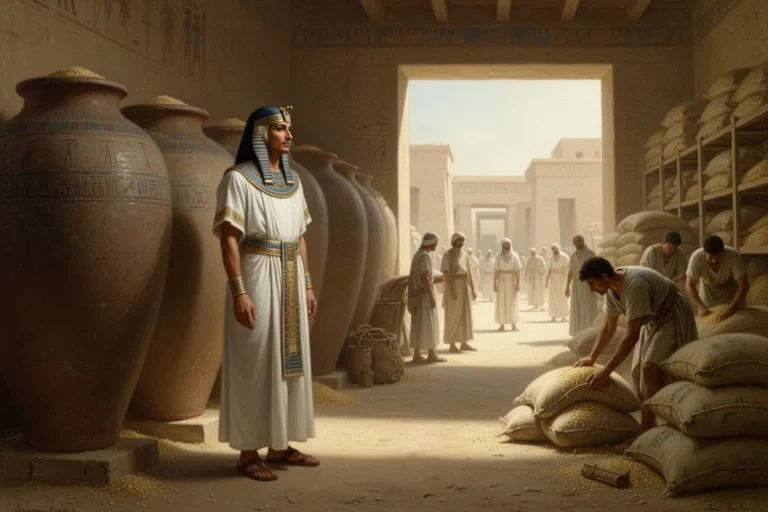
During the years of abundance, Joseph collected and stored grain in many cities. When the famine arrived, Egypt had reserves to distribute, and people from surrounding regions came to buy food. The famine eventually affected Canaan, where Jacob and Joseph’s brothers still lived.
Joseph’s administration preserved many lives, but the Genesis account also describes the difficult economic consequences of the famine. People first used their money to buy food, then exchanged livestock and land for grain. Joseph’s policies strengthened Pharaoh’s control over Egypt. Readers should therefore avoid reducing the story to a simple success narrative: Joseph acted effectively in a crisis, but the system also involved significant centralization of wealth and power.
Joseph and his family’s story includes both personal reconciliation and large-scale public policy. His authority made it possible to provide food, yet that same authority changed the economic structure of Egypt. Good leadership requires moral attention not only to outcomes but also to how vulnerable people are treated while those outcomes are pursued.
Joseph had two sons, Manasseh and Ephraim, before his brothers arrived. Their names expressed the way Joseph understood his life in Egypt: one recalled relief from past hardship and family pain, while the other reflected fruitfulness in the land of his suffering. The names suggest that Joseph remembered his losses even as he recognized new blessings.
How Joseph recognized and tested his brothers
When Joseph’s brothers came to Egypt for grain, they did not recognize him. He was dressed and positioned as an Egyptian ruler, and many years had passed since they sold him. Joseph recognized them immediately, but he did not reveal his identity at once.
Joseph accused them of being spies and required them to bring their youngest brother, Benjamin, to Egypt. Benjamin was Joseph’s full brother and the other son of Rachel, so Jacob was especially protective of him. Joseph also kept Simeon in Egypt until the brothers returned, creating pressure for them to prove their account.
Joseph’s behavior can be difficult to interpret. He was not simply expressing forgiveness, because he caused his brothers anxiety and required them to face the consequences of their earlier deception. Yet he was also not seeking revenge in the ordinary sense. His actions appear designed to discover whether they had changed and whether they would protect Benjamin as they had once abandoned Joseph.
When the brothers returned with Benjamin, Joseph arranged a final test by placing his silver cup in Benjamin’s sack. After the cup was “found,” Judah offered himself as a substitute for Benjamin. This was a major contrast with the earlier scene: Judah, who had helped sell Joseph, now showed willingness to sacrifice his own freedom to protect their father’s favored son.
Why Joseph forgave his brothers
Joseph finally revealed his identity after Judah’s plea. His brothers were terrified, but Joseph told them not to remain consumed by fear. He acknowledged that they had sold him, yet he also explained that God had worked through the events to preserve life during the famine. Genesis 50:20 presents this idea in a memorable contrast: human beings intended harm, while God brought about a life-preserving purpose.
This does not mean that God approved of the brothers’ cruelty or that the suffering was harmless. Joseph’s statement holds two truths together: the brothers were responsible for evil, and God was able to redirect the consequences toward preservation. Biblical providence in Joseph’s story is not a denial of pain; it is the claim that pain and injustice do not place limits on God’s ability to act.
Joseph’s forgiveness also had practical boundaries. He did not pretend that the betrayal never happened, and he did not return to the family as a powerless child. He occupied a position that enabled him to provide food and protection. His response suggests that forgiveness can involve releasing personal vengeance while still recognizing facts, requiring change, and establishing wise conditions for renewed trust.
Jacob’s entire household eventually moved to Egypt. Joseph provided land in the region of Goshen, where the family could live and care for their flocks. Before Jacob died, he blessed Joseph’s sons and gave special attention to Ephraim and Manasseh, who later became associated with tribes of Israel.
After Jacob’s death, Joseph’s brothers feared that Joseph would retaliate. Joseph wept when they approached him with another appeal for mercy. He assured them that he would continue to provide for them and their children. His decision to forgive was not based on forgetting the past; it was based on refusing to use power for revenge.
What Joseph’s death meant for Israel’s future
Joseph lived to see another generation of his family. Before he died, he expressed confidence that God would eventually bring Israel out of Egypt and return them to the land promised to their ancestors. He required the Israelites to carry his bones with them when that future deliverance came.
Joseph died in Egypt, and his body was placed in a coffin. Later biblical passages connect his request with the Exodus, when Moses carried Joseph’s bones out of Egypt. This detail links the ending of Genesis with the beginning of Israel’s national liberation story. Joseph’s life in Egypt was not understood as the final destination of God’s promises.
His final request shows that Joseph’s faith reached beyond his personal achievements. He had held power, managed national resources, and built a family in Egypt, but he still looked toward the promise given to Abraham, Isaac, and Jacob. Success in a foreign land did not replace his hope that God would keep the covenant with Israel.
What Joseph’s story teaches about character and faith
Joseph’s story is often presented as a lesson about patience, but patience alone does not capture its full meaning. Joseph also demonstrates the value of remaining responsible when circumstances are unfair. He served faithfully as an enslaved worker, a prisoner, and a government official, even though each role offered different pressures and temptations.
Several themes stand out:
Faithfulness can exist before circumstances improve. Joseph did not wait for freedom or recognition before acting responsibly.
Gifts should serve people, not merely elevate the gifted person. Joseph’s ability to interpret dreams became a means of protecting lives.
Wisdom includes preparation. Joseph did not treat the warning of famine as an abstract prediction; he built a plan around it.
Forgiveness is not the same as denial. Joseph named the wrong and still chose not to retaliate.
Power reveals character. Once Joseph had control over food and legal authority, he could have taken revenge, but he chose provision instead.
The story also warns against judging a person’s whole life by one season. Joseph was not defined only by his brothers’ cruelty, his time in prison, or his later position in Egypt. His character was shaped through repeated decisions made under changing conditions.
Practical lessons and common mistakes when reading Joseph
Joseph’s life can be applied carefully without turning it into a promise that every hardship will end in wealth or promotion. The text gives a particular account of God’s work in Joseph’s life, not a guarantee that every faithful person will receive the same outcome. These reading practices help preserve the story’s complexity:
Do not call every hardship a blessing. Joseph’s suffering was real, and the later outcome did not make betrayal or slavery good.
Do not assume success proves moral perfection. Joseph was wise and faithful in many ways, but his policies also concentrated economic power in Pharaoh’s hands.
Do not treat forgiveness as immediate trust. Joseph took time to learn whether his brothers had changed before restoring the relationship.
Do not ignore Joseph’s mistakes or limitations. His youthful dream reports may have lacked tact, and his decisions as administrator deserve thoughtful examination.
Do not reduce providence to passive waiting. Joseph prayed and acknowledged God, but he also planned, organized, negotiated, and worked.
Do not confuse Joseph in Genesis with Joseph of Nazareth. Their stories, historical settings, and roles are different.
For personal reflection, you might ask how you respond when you are treated unfairly, whether you use your abilities to protect others, and what boundaries are needed before trust is rebuilt. You can also examine how you exercise authority: does your power create safety and provision, or does it mainly secure your own position?
A balanced reading: Joseph’s story encourages hope without promising an easy explanation for suffering. It presents faithful action, honest grief, careful leadership, accountability, and forgiveness as parts of a mature response to a broken world.
How Joseph in Genesis differs from Joseph of Nazareth
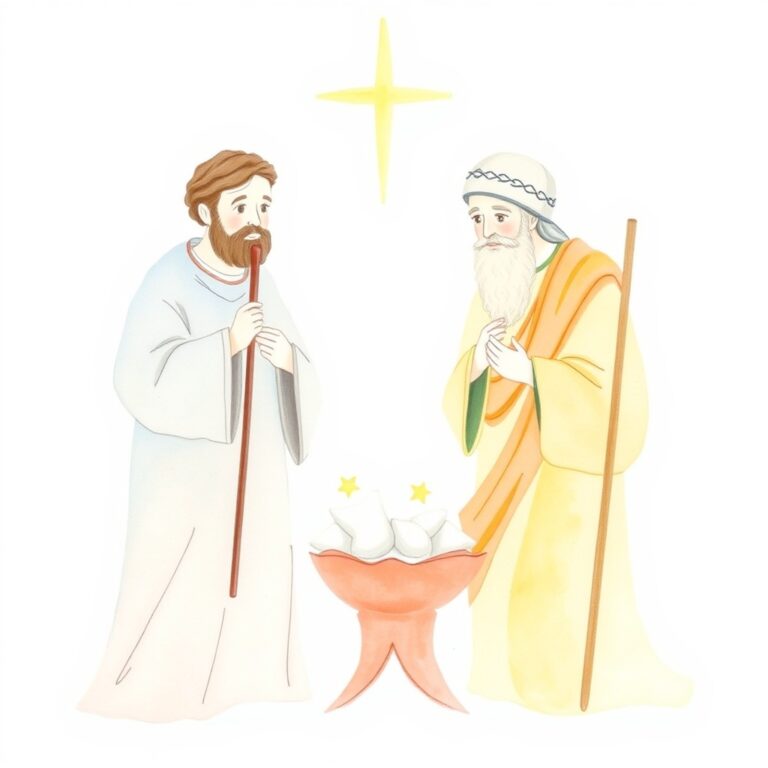
Joseph of Nazareth appears in the New Testament as Mary’s husband and Jesus’ legal father. He is described as a righteous man who chose not to publicly shame Mary when he learned she was pregnant, then followed divine guidance in taking her as his wife. Matthew records dreams that directed him to protect Mary and Jesus from Herod’s violence.
He later took his family to Egypt for safety and returned to settle in Nazareth after the danger had passed. These events create a few broad parallels with Joseph in Genesis: both men are connected with dreams, both live under the shadow of danger, and both become associated with Egypt. The similarities are literary and thematic, but the men are not the same person.
The Joseph of Genesis is a Hebrew patriarch who becomes a powerful administrator before Israel becomes a nation. Joseph of Nazareth is a first-century Jewish craftsman and guardian of Jesus. One story centers on family betrayal and famine; the other centers on obedience, protection, and the early life of Christ. Keeping the two figures distinct makes both accounts easier to understand.
Where to read Joseph’s story in the Bible
The main account of Joseph from the Bible runs through the final chapters of Genesis. Reading the story in sequence helps you see how individual scenes connect rather than treating the dreams, slavery, prison, and reconciliation as isolated episodes.
Genesis 30: Joseph’s birth is recorded within the account of Jacob’s growing family.
Genesis 37: Joseph’s favored status, dreams, sale into slavery, and Jacob’s grief are introduced.
Genesis 39: Joseph serves in Potiphar’s household and is imprisoned after a false accusation.
Genesis 40: Joseph interprets the dreams of Pharaoh’s cupbearer and baker.
Genesis 41: Joseph interprets Pharaoh’s dreams and organizes Egypt’s response to famine.
Genesis 42–45: Joseph encounters his brothers, tests them, and reveals his identity.
Genesis 46–47: Jacob’s household moves to Egypt, and Joseph manages the famine.
Genesis 48–50: Jacob blesses Joseph’s sons, Joseph forgives his brothers, and Joseph dies with hope for Israel’s future.
Additional references help explain Joseph’s place in Israel’s memory. Psalm 105 reflects on God’s care for Joseph and the events that led to Israel’s settlement in Egypt. Acts 7 retells Joseph’s story as part of Stephen’s speech, emphasizing both the brothers’ rejection and Joseph’s eventual role as a rescuer. Hebrews 11 includes Joseph among people remembered for faith because of his confidence about Israel’s future.
Frequently asked questions
Was Joseph the favorite son of Jacob?
Yes. Genesis presents Jacob as showing Joseph special favor, partly because Joseph was the first son of Rachel, Jacob’s beloved wife. Jacob’s favoritism was represented by a distinctive garment and contributed to the hostility of Joseph’s brothers. The story does not present this favoritism as wise parenting; instead, it shows how unequal treatment helped intensify an already troubled family relationship.
How long was Joseph in prison?
Genesis does not give enough information to establish an exact length of time for Joseph’s imprisonment. It describes his arrival there, his service to other prisoners, the dreams of Pharaoh’s officials, and the cupbearer’s delay in remembering him. Readers should be cautious about popular timelines that assign precise durations not stated in the biblical text.
Did Joseph really forgive his brothers?
Yes, Joseph chose not to punish or take revenge on them, provided for their household, and reassured them after Jacob’s death. His forgiveness did not mean that the betrayal was insignificant or that trust was restored instantly. He first tested whether his brothers had changed, particularly in how they treated Benjamin, and then used his authority to preserve rather than harm them.
What is the main difference between Joseph and Jesus’ earthly father?
Joseph in Genesis was Jacob’s son and became an Egyptian administrator during a famine. Joseph of Nazareth lived many centuries later and was married to Mary, serving as Jesus’ legal father and protector. Both accounts mention dreams and Egypt, but they describe different people, historical settings, and missions. The Genesis narrative appears in Genesis, while the later Joseph appears mainly in Matthew and Luke.











Leave a Reply