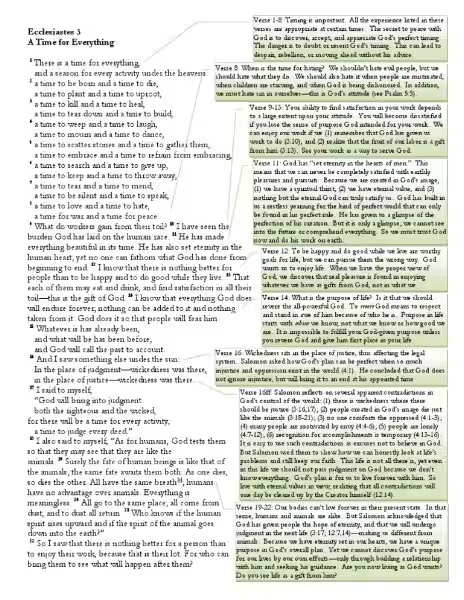
Ecclesiastes 3, a profound chapter in the Book of Ecclesiastes, delves into the cyclical nature of life and the importance of accepting its inevitable transitions. This passage, often misinterpreted as a pessimistic view of existence, offers a valuable framework for navigating the ups and downs of life. It encourages us to recognize the balance between joy and sorrow, work and rest, love and loss, and to find purpose within the ever-changing tapestry of human experience.
This exploration of life’s rhythms isn’t just an abstract philosophical discussion; it’s a practical guide to living a fulfilling life. By understanding the principles laid out in Ecclesiastes 3, we can approach life’s various seasons with a greater sense of acceptance and grace. This article will explore the key themes within Ecclesiastes 3, offering relatable examples and practical insights.
A Symphony of Time: Recognizing the Rhythms of Life
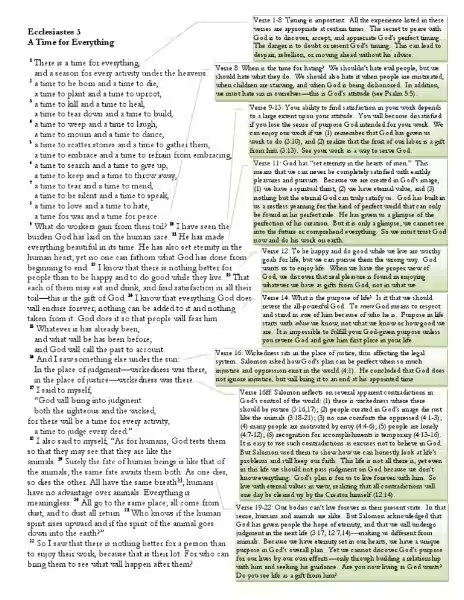
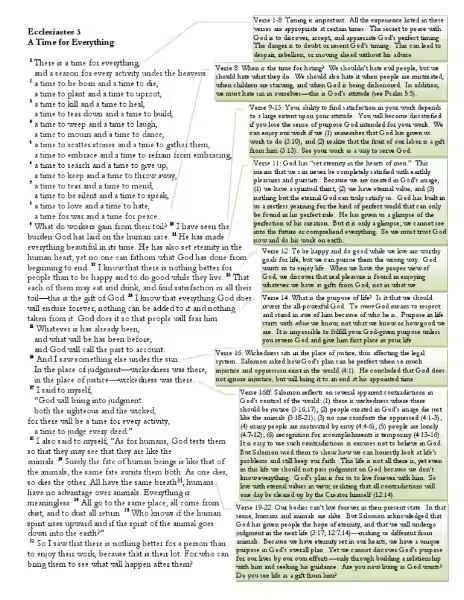
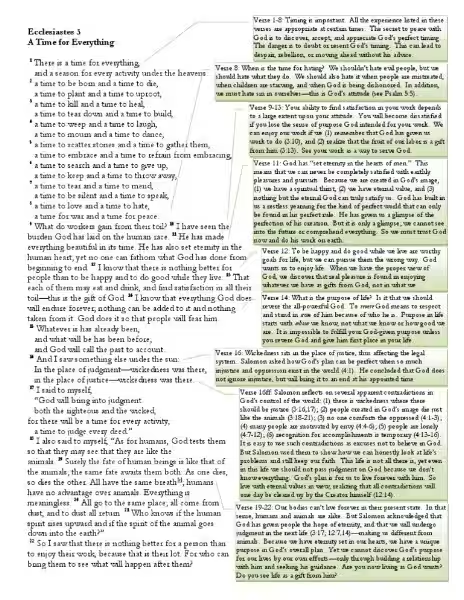
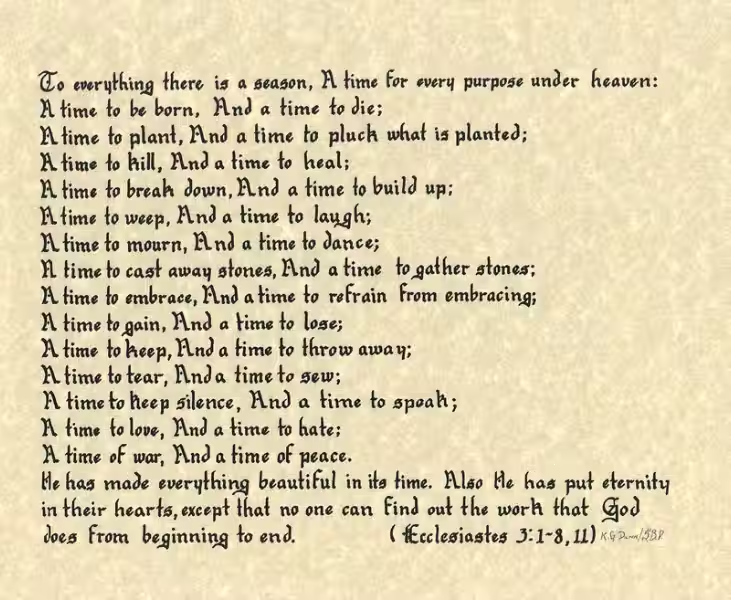
Ecclesiastes 3 highlights the cyclical nature of life, revealing that there’s a time for everything. This concept isn’t intended to instill a sense of fatalism but rather to encourage an understanding of divine order. For instance, recognizing that there’s a time for building and a time for tearing down helps us manage expectations. We can see this reflected in the different stages of life – youth, adulthood, and old age. Each stage brings unique challenges and rewards, and the passage urges us to embrace each with a sense of acceptance and purpose.
Acknowledging these rhythms isn’t about passively accepting whatever comes our way. Instead, it’s about understanding that every season has its own unique value. Imagine sowing seeds in spring and patiently waiting for the harvest in autumn. This is a microcosm of the cyclical nature of life. If a season isn’t what we expected, the passage encourages us to acknowledge the present moment and not get stuck in the past or future. The passage also speaks to the importance of embracing the present moment and finding joy within each phase. Examples include: a time to laugh, a time to weep, a time to love, a time to hate, a time to build, a time to destroy.
Finding Purpose Amidst Change: Embracing the Unpredictable
Ecclesiastes 3 also encourages us to find meaning amidst the uncertainties of life. The passage reminds us that life isn’t always predictable, and it’s crucial to accept that. We often plan for the future and crave control, but the passage urges us to release our grip on the unknown. A successful career, for instance, doesn’t always translate to happiness, and accepting this reality allows us to focus on our values and purpose. The core message revolves around finding purpose in the present, whatever it may be.
Finding purpose during challenging times can be difficult but is vital for well-being. What do we do when faced with loss, disappointment, or setbacks? Ecclesiastes 3 suggests that finding joy amid these difficulties is possible. Embrace the present. Focus on the tangible aspects of life. For example, nurture relationships, appreciate nature, and seek joy in small moments. These small acts of appreciation, kindness, or connection can add meaning and purpose even during challenging periods. This is a profound reminder to focus on what we can control rather than dwelling on what we cannot.
The Intertwined Threads of Meaning and Purpose: A Practical Application
The wisdom of Ecclesiastes 3 resonates deeply with our modern lives. By understanding the cyclical nature of life, we can move beyond the impatience and anxieties that often plague us. The passage encourages us to appreciate the different seasons of life and find meaning in their unique challenges and rewards. Finding moments of contentment in the everyday and embracing the inevitable changes are central messages.
The passage also emphasizes the importance of recognizing our finite time on earth. This understanding can motivate us to live more intentionally and with a sense of purpose. Consider how these insights might transform your approach to daily concerns. For instance, instead of dwelling on an unexpected setback at work, perhaps you could refocus on the relationships with your loved ones. By applying these concepts to your own life, you can find meaning in the many facets of life’s tapestry. These practical applications include: embracing change, releasing control, and appreciating the present.
Frequently Asked Questions about Ecclesiastes 3
What does Ecclesiastes 3 teach about the meaning of life?
Ecclesiastes 3 explores the cyclical nature of life, highlighting that everything has a time and a season. It asserts that there is a time for everything, from joy to sorrow, creation to destruction, and encourages acceptance of these varying experiences as part of the divine plan. The passage doesn’t offer a specific meaning of life, but rather acknowledges the complexity and fluidity of human existence.
What are the different interpretations of Ecclesiastes 3?
Some interpretations focus on the inevitability of change and the importance of finding purpose within those changes. Others see it as highlighting the brevity of life and the need for joy in the present moment. There’s no single, universally accepted interpretation.
Ecclesiastes 3, while seemingly philosophical, often connects to religious themes of faith, acceptance, and the divine order. The passage suggests that even seemingly random or painful events are part of a larger, purposeful design. It invites reflection on humanity’s role within this greater context.
What are some practical applications of Ecclesiastes 3 in daily life?
Understanding Ecclesiastes 3 can promote resilience by acknowledging the inevitable transitions and challenges in life. It can inspire a sense of acceptance and can encourage finding joy in the present moment, regardless of the circumstances. It also promotes recognizing that each season has its unique purpose.
Why does Ecclesiastes 3 seem contradictory at times?
The seeming contradictions highlight the complexity of human experience. Ecclesiastes 3 doesn’t offer easy answers; rather, it urges readers to grapple with the nuances of life’s journey.