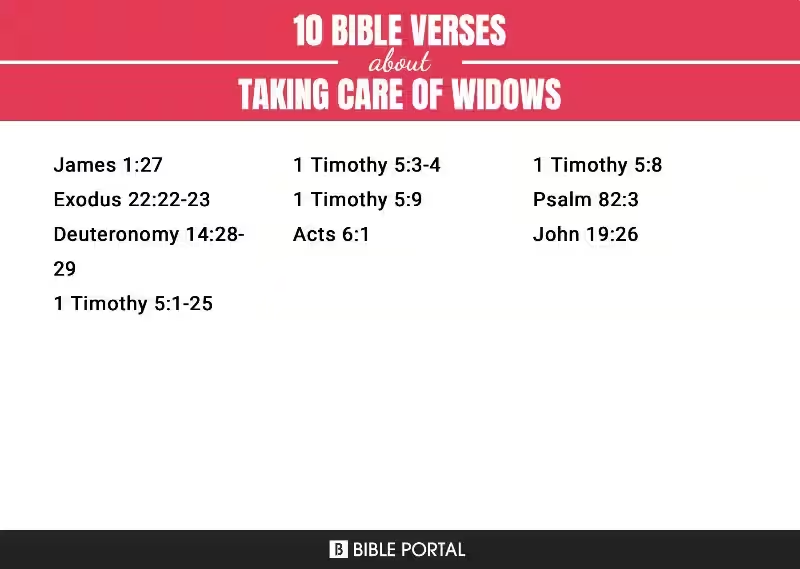
In countless religious texts, a resounding theme echoes through the ages: the importance of caring for the vulnerable. This message, often centered around the widows and orphans, speaks to a fundamental aspect of human compassion. We’re not talking about abstract concepts; we’re talking about tangible actions, about helping those who are most often left behind. It’s a call to social justice and a commitment to building a more just and compassionate society. The scriptural mandate to take care of widows and orphans isn’t merely a historical relic; it’s a timeless imperative, relevant and critical today.
The concept of caring for widows and orphans is deeply rooted in many religious traditions. This isn’t simply about providing material support; it encompasses a far broader spectrum of support. It includes emotional support, providing a sense of belonging and security, helping to navigate the challenges of loss and societal pressures. Think about practical assistance – finding housing, securing jobs, or providing educational opportunities. The scriptural imperative to take care of these vulnerable groups acts as a moral compass, guiding us towards compassion and justice. For example, a widowed mother might need help with childcare or a financial cushion to rebuild her life. These are the practical expressions of the scriptural message that go beyond simply offering a handout.
The scriptural command to care for widows and orphans often appears in conjunction with teachings about justice and righteousness. The concept is intrinsically tied to the idea of providing for the needy. It’s not a task for a select few; it’s a shared responsibility. This responsibility is often depicted in narratives that show divine intervention and human compassion working together. Consider a passage in the bible encouraging Christians to “care for those who are unable to care for themselves”. This passage is not confined to a specific cultural or religious context; it applies to everyone in every community.
Many religious texts detail the particular struggles of widows and orphans, emphasizing the need for practical assistance and social support. These struggles can stem from economic hardship, social stigma, or a lack of access to essential resources. For example, a household without a father figure can be thrown into disarray. It’s a reminder that these groups are particularly vulnerable. The scriptural commands to care for them are a strong reminder of the importance of community and empathy. Think of it as a shared responsibility, a collaborative effort to build a more equitable world. There are specific examples in various religious texts of individuals and communities offering practical assistance to vulnerable populations.
Practical Steps to Care for Widows and Orphans Today
So, how can we translate this ancient wisdom into modern action? Practical steps can be as simple as offering a listening ear, or as complex as establishing community programs to provide financial aid, support groups, and mentorship. Think about volunteering at local shelters, donating to organizations dedicated to helping disadvantaged families, or simply reaching out to those in need in your community. The scriptural command extends beyond our religious affiliation; it’s a universal call to compassion. Supporting widows and orphans often requires understanding their unique circumstances.
It’s crucial to remember that caring for widows and orphans isn’t a one-size-fits-all approach. Understanding the specific challenges faced by these groups in your community is paramount. It’s about listening to their needs and offering tailored solutions. Effective care involves not just providing resources but also creating opportunities for growth and empowerment. You could volunteer to mentor a child or start a support group for widows. Empowered widows and orphans are better equipped to overcome their challenges. There are numerous community organizations dedicated to helping these groups; partnering with them can amplify your impact. These organizations often provide valuable resources and guidance.
The scriptural imperative to care for widows and orphans is a powerful reminder of our shared responsibility to create a more just and compassionate world. It’s an opportunity to connect with our fellow human beings on a deeper level and demonstrate the power of empathy and compassion. We can all make a difference, no matter how big or small. The scriptural messages are not simply theoretical; they are a roadmap for building a community that values and supports those most in need. Consider making a difference in the lives of widows and orphans, it is a powerful act of faith that echoes the values of many religions.
Remember, the scripture’s message extends beyond religious doctrine. It serves as a reminder that we are all interconnected and that caring for the vulnerable is a shared responsibility. By choosing to care for those who have lost or are lacking, we honor the divine mandate to create a world where everyone has access to the resources and support they need to thrive. The scriptural call to care extends into our modern world demonstrating that we can embody ethical and spiritual principles into action.
Frequently Asked Questions
What does “take care of the widows and orphans” mean in a religious context?
This passage, often interpreted from various religious texts, emphasizes the importance of compassion and social responsibility. It calls for practical support for vulnerable members of the community, particularly those without family support. This can include providing food, shelter, financial assistance, and emotional care.
Which religions include this concept?
Concepts similar to caring for widows and orphans are found in many religions, including Christianity, Judaism, Islam, and Hinduism, among others. While the specific phrasing may differ, the underlying principle of supporting the vulnerable is a common thread.
Practical application varies depending on individual resources and community needs. It could involve volunteering at a local shelter, donating to charities that support these groups, or offering aid directly to those in need. It also involves advocating for policies that protect the vulnerable and ensure their basic needs are met.
What if I don’t have much to give?
Even small acts of kindness can make a difference. Offering a listening ear, sharing a meal, or helping with basic tasks are all ways to contribute. It’s also important to support organizations that serve widows and orphans.
Is this teaching still relevant today?
Absolutely. Vulnerable populations exist in every society, and the need for compassion and support remains critical. This teaching provides a timeless guideline for ethical living and social responsibility.