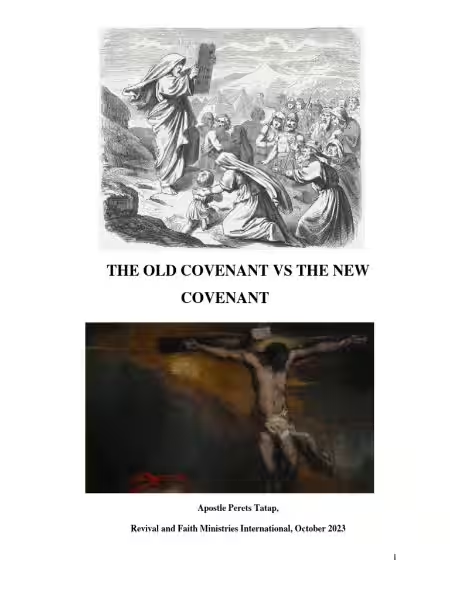
The concept of a “new covenant” resonates deeply within many religious traditions, particularly Christianity. It represents a profound shift in relationship between God and humanity, a reimagining of the terms of engagement. This new agreement, often contrasted with earlier covenants, offers a fresh perspective on faith, forgiveness, and our place within the divine order. It’s not just about adhering to rules, but about building a lasting, personal bond.
This new covenant concept, central to so many beliefs, isn’t static; it’s a living expression that evolves and adapts. It encourages a deeper understanding of God’s character, and how we, in turn, are called to respond. Think of it as a journey, not a destination. Key to this journey is a willingness to grow and change, to learn from our mistakes, and to find strength in the constant pursuit of a closer relationship with the divine.
The idea of a new covenant isn’t a sudden innovation. It’s rooted in earlier agreements, like the covenant with Abraham, highlighting God’s commitment to humanity. These past covenants were often focused on specific laws and rituals, creating a structured framework. This framework, however, sometimes felt rigid and distant, leaving room for questioning and contemplation. The concept of a new covenant, then, emerged as a natural progression, building upon the past while breaking free from its limitations.
Imagine a family that has specific rules for its children. Over time, as the children mature, those rules might not always feel appropriate. A new understanding, a new covenant, within the family might evolve. It’s about adapting to growth while respecting the foundation of the relationship. This adaptability is central to the concept of the new covenant.
Many religious texts contain verses that speak to the new covenant. These verses often highlight the themes of grace, forgiveness, and love. Consider the verse, “For he is not a God of the dead, but of the living; for to him all are alive.” (Luke 20:38). This verse, among others, speaks to the ongoing relationship with the divine, suggesting a living faith, not a mere historical event. We discover that the covenant is not just about following rigid rules, but about living a life of purpose and meaning in connection with God.
Understanding these verses is about more than just memorization. It’s about applying their principles to our daily lives, recognizing their relevance to our personal relationships and interactions. For example, “But the fruit of the Spirit is love, joy, peace, patience, kindness, goodness, faithfulness, gentleness, self-control” (Galatians 5:22-23). We can see how these virtues are integral to living according to the new covenant. These qualities define a type of relationship that transcends material possessions and worldly pursuits, reaching a deeper, more profound connection.
The New Covenant in Modern Life
The new covenant isn’t simply a relic of the past. It’s applicable to our modern lives, providing a framework for personal growth and spiritual development. We can see it reflected in our relationships with others and our approach to navigating challenges. It’s about understanding that God’s love is unconditional, regardless of our imperfections. It encourages us to extend that same love and compassion to others.
Consider how this applies to everyday situations. Imagine a time when you felt hurt or betrayed. The new covenant offers a pathway to healing and forgiveness, not just for others, but most importantly, for yourself. Ultimately, the new covenant is about embracing empathy, understanding, and grace in all aspects of our lives, creating a more compassionate and supportive world for everyone. This is not simply theoretical; it’s a call to action.
The new covenant is not merely a concept; it’s a dynamic force. It’s a promise of a transformed relationship with God and with each other. It’s about understanding the divine not as a distant judge, but as a loving guide on a shared journey. This journey of understanding and growth can be experienced by individuals of all walks of life, as it is not confined by location or ethnicity.
By understanding the new covenant and its implications, we gain valuable tools for navigating life’s challenges. It’s a powerful reminder that forgiveness, love, and grace are not just ideals, they’re the very essence of our connection to something larger than ourselves. By embracing these principles, we can move toward a more enriching and meaningful existence, both personally and collectively. It’s a call to live a life filled with purpose and love, in accordance with the teachings of the new covenant.
Frequently Asked Questions
What is a New Covenant?
A new covenant is a theological concept, particularly prominent in Christianity, referring to the renewed relationship between God and humanity established through Jesus Christ. It is considered a new agreement, replacing the older covenant established with Moses.
What is the significance of the New Covenant verse?
The significance of the New Covenant verse varies depending on the specific religious text being referred to. It often highlights the promise of a new relationship with God, forgiveness of sins, and a deeper spiritual connection.
What religions use the concept of a New Covenant?
Primarily Christianity, referencing the teachings and life of Jesus. Other religions may discuss similar concepts of renewal or a new agreement with a divine entity, but under different names and interpretations.