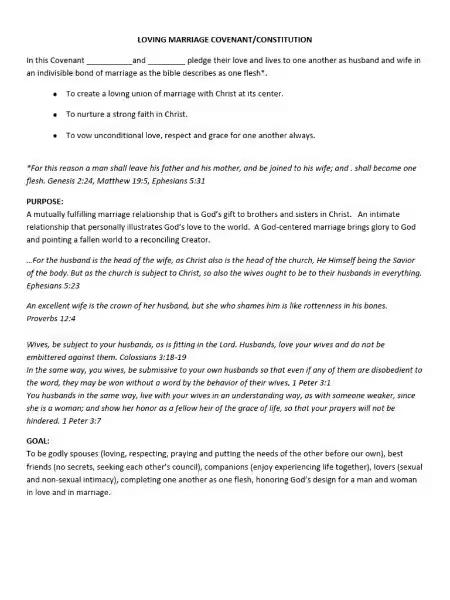
Marriage, a cornerstone of many cultures and religions, is often viewed as more than just a legal contract. It’s a sacred bond, a commitment to lifelong companionship. This understanding is deeply rooted in the concept of a covenant, an agreement with significant implications. In many religious traditions, marriage is viewed as a covenant, an agreement between two people, often witnessed and blessed by a higher power. This perspective emphasizes the importance of mutual respect, faithfulness, and shared responsibility within the marriage.
This understanding of marriage as a covenant sets it apart from a purely transactional relationship. It fosters a sense of responsibility beyond personal desires, demanding a willingness to navigate life’s challenges together. It’s not simply a matter of sharing a life; it’s a commitment to growth, support, and enduring love. Many view marriage as a partnership built on shared values, mutual respect, and a willingness to serve each other. This is often seen as a mirror of the covenant relationship between God and humanity, emphasizing the deep and lasting nature of the agreement.
The Religious Significance of Marriage as a Covenant
Different religions interpret the concept of marriage as a covenant in various ways. Christianity, for example, often views marriage as a sacrament, representing the union of Christ and the Church. This emphasizes the sacred and enduring nature of the commitment. Jewish law, on the other hand, sees marriage as a sacred contract, a covenant that is legally binding and deeply rooted in religious tradition. It’s seen as a partnership between a man and a woman, creating a sacred family unit.
In Islam, marriage is viewed as a divine institution and a covenant. It’s designed to provide a stable and supportive environment for raising families and nurturing relationships. The Quran emphasizes the importance of mutual respect, kindness, and forgiveness within marriage. Many other faiths have similar traditions, emphasizing the importance of commitment and responsibility in the covenant of marriage. This includes Hinduism, where marriage is viewed as a sacred union, a bond between two souls designed to foster spiritual growth and shared well-being.
The Practical Implications of a Covenant Marriage
Recognizing marriage as a covenant has significant practical implications in daily life. It fosters a sense of shared responsibility in navigating life’s challenges. When a covenant is centered on love and respect, couples are more likely to support each other’s dreams and aspirations. It also promotes honesty, open communication, and forgiveness as crucial elements in maintaining the bond. This understanding helps to build a strong foundation for a long-lasting relationship, and promotes the concept of shared purpose and goals.
Consider this: a marriage built on a covenant emphasizes that the couple are committed to working through conflict, not walking away from it. Open communication, understanding, and a willingness to compromise are essential aspects of this covenant. This means that couples are likely to seek solutions together, support each other regardless of circumstances, and understand that the marriage requires continuous effort and commitment. It’s a proactive approach aimed toward a shared future. This focus on mutual support highlights the vitality and strength of a covenant marriage. An example of this would be a couple working together to resolve financial disagreements, instead of allowing resentment to grow.
Maintaining a covenant marriage is an ongoing process, requiring effort and intentionality. Regular communication, showing appreciation, and actively working on the relationship are crucial. Forgiveness is incredibly important. Building trust, expressing affection, and recognizing each other’s needs are all vital components. Shared values and goals can provide a strong foundation to maintain this covenant, and remembering the initial commitment made to each other is key.
Continuous learning and growth as individuals and as a couple are also needed. It’s a collaborative journey, requiring both partners to be willing to adapt, grow, and compromise. Understanding each other’s perspectives, actively listening, and being willing to change behaviors all contribute to sustaining the covenant. This active role in maintaining the commitment is a testimony to the meaning and importance of the covenant, and it shows the intentionality and effort needed to build a lasting partnership. A couple might attend workshops or counseling sessions to strengthen their skills in communication and conflict resolution.
Conclusion: A Covenant for a Lifetime
Marriage as a covenant is more than just a legal or religious agreement; it’s a lifelong commitment to shared growth and well-being. It demands mutual respect, forgiveness, communication, and an unwavering commitment to the relationship. Viewing marriage as a covenant fosters a strong foundation for a lasting and fulfilling partnership. It’s a sacred agreement and a promise that should be cherished and nurtured diligently, leading to a shared and fulfilling journey.
Ultimately, the covenant framework provides a strong and meaningful foundation for couples to build a relationship that endures. It emphasizes the importance of proactive communication, mutual support, and adapting to the ever-changing landscape of life together. The covenant approach to marriage, rooted in many religious traditions, can be a powerful tool for building strong, enduring, and joyful relationships that last a lifetime.
A covenant in marriage is a sacred agreement, a promise made before God and witnesses, that emphasizes lifelong commitment, mutual respect, and support. It’s more than a contract; it’s a spiritual bond that transcends earthly relationships.
How does religion view marriage as a covenant?
Many religions view marriage as a covenant between two people, but also between those people and God. This covenant often signifies a sacred union, a lifelong commitment, and a partnership in faith. Specific interpretations vary across religions.
What are the implications of viewing marriage as a covenant?
Viewing marriage as a covenant emphasizes the importance of faithfulness, forgiveness, and sacrifice within the relationship. It highlights the permanence of the bond and the commitment to working through challenges together.
How does a covenant marriage differ from other types of marriage?
A covenant marriage typically involves legally binding vows, and often includes stricter requirements for divorce. These arrangements may be recognized or available in certain denominations or states.
Does every religion view marriage in the same way?
No, religious views on marriage differ across various faiths and denominations. While many emphasize a covenant-like commitment, interpretations vary regarding specifics like divorce and the role of faith in the relationship.