Marriage, a cornerstone of human society, has been shaped by various cultural and religious beliefs throughout history. One particularly influential framework for understanding marriage is the Bible, a text that offers a rich tapestry of perspectives on relationships. This article explores the principles behind biblical marriage laws, examining their historical context and how they resonate with modern relationships.
The Bible’s approach to marriage isn’t a singular, straightforward set of rules. Instead, it presents a collection of teachings, stories, and principles across different books and eras. Understanding these varying perspectives is crucial for interpreting their overall message. This nuanced approach allows for thoughtful consideration of the multifaceted nature of marriage and its applications in modern life. Furthermore, it’s important to remember that the interpretation of these passages is often open to different theological viewpoints.
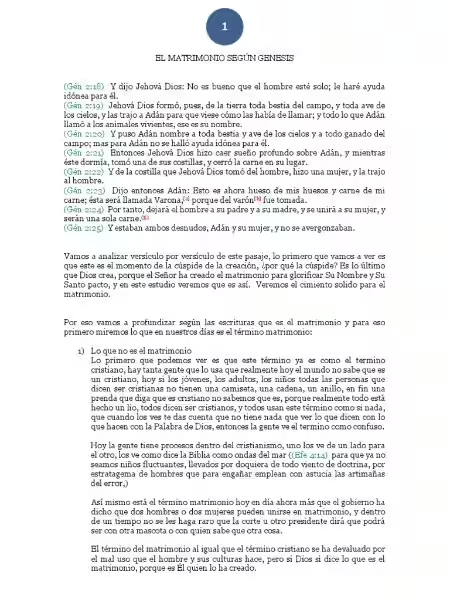
The account in Genesis 2:18-25 often serves as the foundational text for understanding biblical marriage. It details the creation of Eve as a “helper suitable for him” and the idea of a lifelong union between a man and a woman. This foundational narrative highlights the concept of complementary roles and the deep connection between a husband and wife. This concept of “helper” isn’t one of subservience, but rather of mutual support and partnership. For example, a successful business often requires different strengths working together for success, mirroring this biblical principle.
Interpretations of this passage often differ. Some see it as outlining a specific model of authority within marriage, while others focus on the interconnectedness and support that characterize a healthy relationship. The key takeaway is that the initial biblical perspective emphasizes a deep, lasting bond between two people. The story of Adam and Eve sets the stage for understanding the subsequent laws and teachings on marriage throughout the Bible. These interpretations often vary depending on the reader’s perspective and their theological background, highlighting the complexity of interpreting ancient texts.
The concept of covenant, emphasized in the Bible, significantly shapes the understanding of marriage. A covenant, unlike a simple agreement, signifies a sacred promise and a commitment to a lasting relationship. This commitment involves mutual respect, support, and fidelity. The concept of marriage as a covenant can be seen in the example of God’s covenant with His people. This concept of mutual obligation, faithfulness, and lasting commitment is a recurring theme in biblical marriage teachings.
Think of a contract between two parties. A covenant is more than just a legally binding agreement; it is a promise for life. It highlights the importance of faithfulness and commitment. By this comparison, we can see that marriage, as a covenant, goes above and beyond a mere agreement; it’s a sacred bond between husband and wife. Examples of covenants abound in the Bible, from the covenant between God and Abraham to the covenants mentioned in the books of the prophets.
Divorce and Remarriage: Navigating Complexities
The Bible offers varying perspectives on divorce and remarriage, reflecting a progression in societal views. The Old Testament often acknowledges divorce as a possibility, but the New Testament teachings, exemplified by Jesus’s words, present a more nuanced and restrictive approach. Jesus’s emphasis on the indissolubility of marriage (Matthew 19:6) significantly alters the understanding of this concept. This perspective emphasizes the sanctity of the marital union, highlighting the need for permanent commitment.
The varying perspectives on divorce and remarriage across biblical eras offer a rich understanding of the development of moral and societal views on marriage. Consider the legal and social contexts of different eras. The New Testament emphasizes the commitment of marriage, creating a moral framework where breaking this commitment is viewed as a serious matter. The principle behind this emphasis is that marriage is a sacred bond that should be maintained. It is important to understand that the interpretation of these passages varies greatly among different denominations and religious perspectives.
Applying biblical marriage laws in modern contexts necessitates careful consideration of cultural and societal shifts. The emphasis on mutual respect, support, and commitment remains highly relevant. These principles offer valuable guidance in navigating the complexities of modern marriage. A modern interpretation of the Bible’s marriage laws can offer insight into partnership, communication, and conflict resolution. For example, the concept of “helper” can be seen as encouraging mutual support and understanding in modern relationships.
The Bible’s insights into marriage offer foundational concepts for building strong and lasting relationships. It encourages selflessness, forgiveness, and a commitment to mutual growth. Understanding the nuances within the biblical texts, along with the various interpretations, allows for a richer understanding of the principles and virtues emphasized. Modern couples can draw wisdom from these principles, creating a framework for navigating the challenges and joys of married life. The principles presented in these different texts, when considered carefully, provide a strong basis for building healthy and fulfilling relationships.
Frequently Asked Questions about Bible Marriage Laws and Religion
What does the Bible say about marriage?
The Bible contains various passages related to marriage, primarily in the Old and New Testaments. Interpretations vary, but generally, the Bible views marriage as a sacred covenant between a man and a woman, emphasizing commitment, fidelity, and procreation (among other things). Specific interpretations and applications of these verses are often debated.
What are the different views on marriage in various religions?
Different religions have varying perspectives on marriage. Some religions, such as Christianity, Judaism, and Islam, have specific requirements and traditions surrounding marriage, often emphasizing the importance of a union within their faith community. Other religions may not have formal marriage rituals or may define marriage differently.
How do different denominations within Christianity view marriage?
Different Christian denominations have diverse interpretations of biblical marriage passages. Some denominations allow for same-sex marriage, while others do not. These differences often stem from varying interpretations of scripture and theological traditions.
What is the role of marriage in religious life?
Marriage is often viewed as a foundational aspect of religious life, signifying a commitment to a spiritual relationship and communal involvement. Different religions may place varying degrees of importance on the marital relationship in their religious practice.
Are there specific religious requirements for marriage?
Yes, many religions have specific requirements for marriage, such as marriage ceremonies performed within their faith community, or specific vows and commitments. These requirements vary widely depending on the religion and individual congregations.